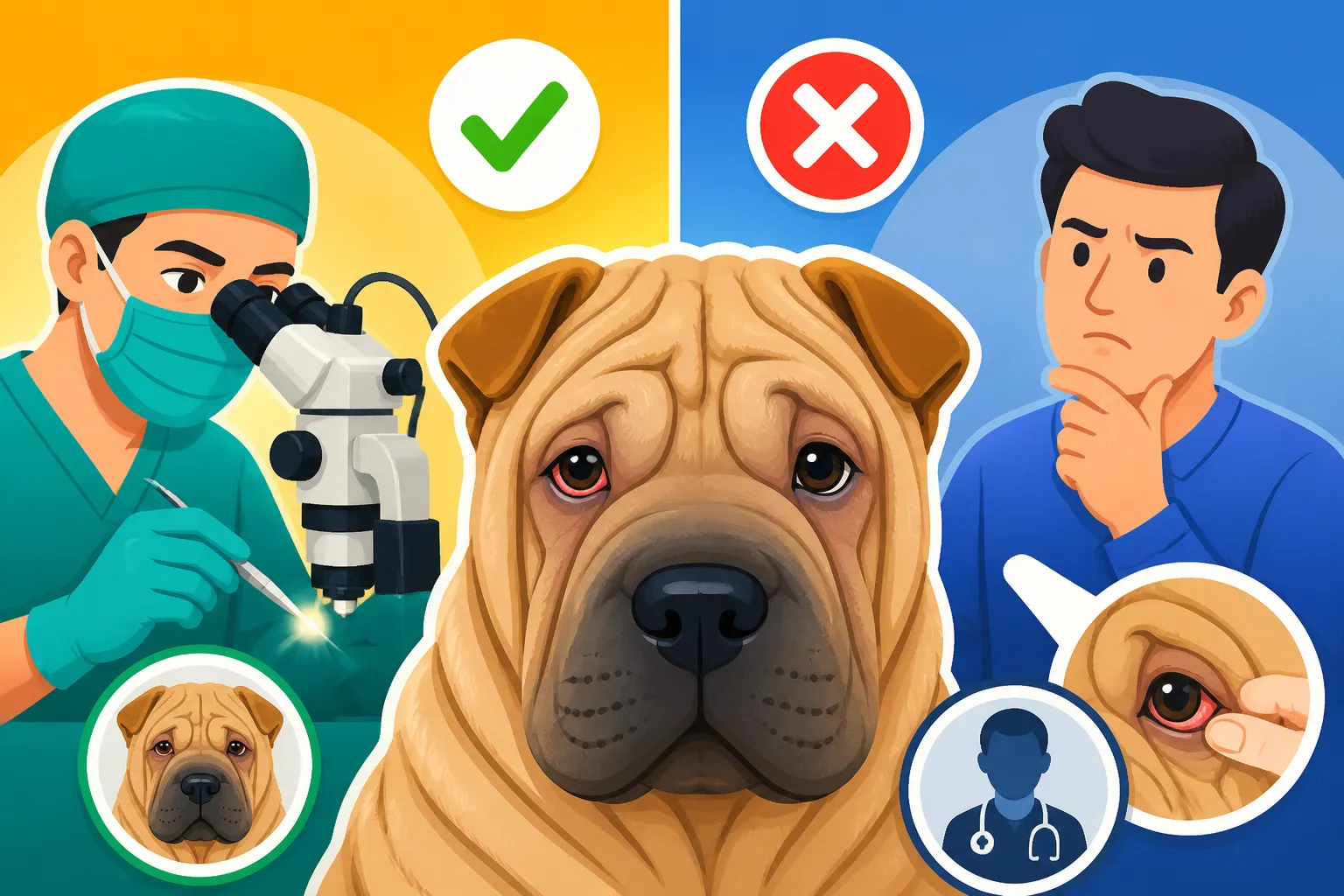
Whether a Specialist Must Do a Shar Pei’s Eyelid Surgery
Bringing a Shar Pei into your life is an absolute joy, but it also means being prepared for some very specific health challenges that are unique to the breed. One of the most common, and often one of the most urgent, is entropion – where the eyelid rolls inward, causing eyelashes and fur to rub painfully against the delicate surface of the eye. This guide will walk you through whether a veterinary specialist is a necessity for your Shar Pei's eyelid surgery, helping you understand the different stages of care and who is best equipped to provide it.
Understanding Entropion in Shar Pei
If you’ve ever owned a Shar Pei, or even just admired their distinct look, you've probably noticed their wonderfully wrinkled faces. While these wrinkles are part of their charm, they are also the root cause of one of their most significant health concerns: entropion. It’s a frustrating and often painful condition that can lead to severe complications if not addressed promptly.
What Exactly is Entropion?
Imagine having a constant irritant in your eye, like a rogue eyelash that just won't budge, but magnified by a thousand. That's essentially what entropion feels like for a Shar Pei. It's a condition where the eyelid, usually the lower one, rolls inward towards the eyeball. This inward rolling causes the hair on the outer surface of the eyelid, and sometimes the eyelashes themselves, to rub directly against the cornea – the clear, outer layer of the eye. This constant friction is incredibly irritating, leading to discomfort, pain, and a host of secondary issues. Left untreated, it's not just about discomfort; it can lead to serious, permanent eye damage.
Why Shar Pei are Prone to Entropion
The Shar Pei's defining feature – those beautiful, abundant wrinkles – are unfortunately a double-edged sword when it comes to eye health. The breed standard, especially for the "meat mouth" type, often favors a heavily wrinkled head, which creates an excess of skin around the eyes. This extra skin is what makes them so susceptible to entropion. The way their skin and facial structure develops can cause the eyelids to fold inward, a genetic predisposition that breeders have been grappling with for decades. It's not a fault of the individual dog, but a structural consequence of their unique appearance. Understanding Which Gene Duplication Causes a Shar Pei's Wrinkles helps us see the connection between their appearance and this prevalent health issue.
The Urgency of Addressing Entropion in Puppies
For a Shar Pei puppy, entropion isn't just a mild inconvenience; it's often an emergency. A puppy's eyes are still developing, and the constant irritation from rubbing fur can cause corneal ulcers, infections, and even scarring that permanently impairs vision. Many Shar Pei puppies will show signs of entropion very early on, sometimes as young as a few weeks old. This is why Entropion in a Shar Pei Puppy Is an Emergency, Not a Cosmetic Issue. You might notice your puppy squinting, tearing excessively, or trying to rub their eyes with their paws. Their eyes might look red and inflamed. Ignoring these signs in the hope that they'll "grow into their skin" is a dangerous gamble that can have lifelong consequences for your dog's sight and quality of life. The earliest signs of trouble might appear at The Age a Shar Pei Puppy Shows Entropion.
When to Consult a General Vet vs. a Veterinary Ophthalmologist
When you first suspect entropion, your primary veterinarian is your first point of contact. However, depending on the severity and complexity of the case, a specialist might be the next logical step. Knowing when to escalate care can make all the difference for your Shar Pei's vision.
The Role of Your Primary Veterinarian
Your general practice veterinarian is an invaluable partner in your Shar Pei's health journey. They are usually the first to diagnose entropion during a routine puppy check-up or when you bring your dog in for eye irritation. They can assess the severity, rule out other causes of eye irritation, and often initiate temporary treatments. For very mild cases, or as a stop-gap measure for young puppies, they might perform "eye tacking" – a temporary procedure to evert the eyelids. They can also prescribe medicated eye drops to help manage pain and inflammation, and to prevent or treat secondary infections. Your regular vet plays a crucial role in initial assessment and managing less severe or temporary solutions. They are your gatekeeper to more specialized care and can provide referrals when needed.
When a Specialist Becomes Necessary
While your general vet can handle initial diagnosis and temporary fixes, there are several scenarios where a board-certified veterinary ophthalmologist becomes not just helpful, but absolutely necessary. If your Shar Pei's entropion is severe, if it's causing deep corneal ulcers or significant scarring, or if the initial tacking procedures aren't holding up, it's time for a specialist. A specialist has advanced training, equipment, and experience specifically with complex eye conditions and delicate surgeries. They can perform detailed examinations, sometimes requiring sedation, to fully map out the extent of the problem and plan a definitive surgical solution. If your Shar Pei's vision is at risk, or if multiple surgeries might be required, an ophthalmologist offers the highest level of expertise.
What a Veterinary Ophthalmologist Offers
A veterinary ophthalmologist brings a level of precision and expertise that goes beyond what a general practitioner can typically offer for complex eye conditions. They have specialized tools, like slit lamps and tonometers, for examining the eye in intricate detail, detecting subtle damage that might be missed otherwise. Their surgical skills are honed specifically for the delicate structures of the eye, allowing them to perform permanent entropion repair with greater accuracy and a higher success rate. This kind of specialized surgery involves removing a small, crescent-shaped piece of skin and muscle from below the affected eyelid, then stitching the edges together to pull the eyelid into its correct position. They understand the nuances of the Shar Pei breed and how their unique facial structure impacts the surgery, aiming for both functional and aesthetic outcomes. They are the go-to experts for When a Shar Pei Needs Permanent Eyelid Surgery.
Here's a quick comparison to help you decide:
| Factor | General Veterinarian | Veterinary Ophthalmologist |
|---|---|---|
| Initial Diagnosis | Yes, common | Yes, often for complex or referral cases |
| Minor Procedures | Yes (e.g., eye tacking, basic medication) | Yes, but often for more nuanced tacking or advanced meds |
| Complex Surgery | May perform basic permanent entropion repair | Highly experienced in intricate permanent entropion repair |
| Specialized Tools | Standard veterinary equipment | Advanced ophthalmic equipment (e.g., slit lamp, tonometer) |
| Expertise Level | Broad veterinary knowledge | Deep, specialized knowledge of eye anatomy and disease |
| Cost | Generally lower for initial consults and basic procedures | Generally higher due to specialization and equipment |
| Risk of Complications | May be higher for complex surgeries if not their specialty | Lower for complex eye surgeries due to expertise |
| Follow-up Care | Can manage routine post-op care | Critical for detailed surgical follow-up and monitoring |
The Eyelid Surgery Process for Shar Pei
Treating entropion isn't a one-size-fits-all situation. There are temporary measures, permanent solutions, and a crucial period of post-operative care that demands vigilance.
Temporary Fixes: Eye Tacking
For Shar Pei puppies, especially those with particularly puffy faces or who are still growing, eye tacking is often the first line of defense. This procedure involves placing a few temporary sutures in the eyelid to gently pull it away from the eyeball, preventing the hair from rubbing the cornea. It's a lifesaver for puppies because it alleviates immediate pain and prevents permanent damage while they mature. What Eye Tacking Involves for a Shar Pei is less invasive than full surgery and can often be done with minimal sedation. However, it's just that – a temporary fix. As the puppy grows, the sutures might need to be replaced, or they might eventually "grow into" their eyelids and no longer need the procedure. Often, though, it merely buys time until permanent surgery is necessary. It’s important to remember that tacking doesn’t address the underlying anatomical issue; it only manages the symptom.
Permanent Solutions: Entropion Surgery
When temporary measures are no longer sufficient, or for adult Shar Pei where growth isn't a factor, permanent entropion surgery is the definitive treatment. This involves carefully excising a small portion of skin and muscle from the affected eyelid to permanently evert it. The goal is to reshape the eyelid so it sits correctly, preventing future rubbing. This surgery requires a very precise hand, as removing too much skin can lead to ectropion (where the eyelid rolls outward), and too little means the entropion will recur. This is where the expertise of a veterinary ophthalmologist truly shines. They aim to not only correct the problem but also ensure the dog's comfort and vision for the long term. This intricate procedure is usually done under general anesthesia. It's a significant step, but one that can dramatically improve your Shar Pei's quality of life and protect their sight from long-term damage and Whether a Shar Pei's Cornea Scars From Entropion.
Post-Operative Care and Potential Complications
Regardless of whether your general vet or a specialist performs the surgery, post-operative care is paramount. Your Shar Pei will likely go home with an Elizabethan collar (the dreaded "cone of shame") to prevent them from scratching at their stitches, which can cause infection or pull the sutures out. You'll need to administer prescribed eye drops or ointments, often multiple times a day, to prevent infection and reduce inflammation. Keeping the surgical site clean and dry is crucial, and monitoring for signs of infection, swelling, or irritation is vital. Complications can include the sutures coming out prematurely, infection, or in some cases, the entropion recurring if not enough tissue was removed. Conversely, removing too much tissue can lead to ectropion, which might require further surgery. Regular follow-up appointments with your vet or ophthalmologist are essential to ensure proper healing and address any issues promptly. This diligent aftercare is crucial to prevent serious issues like Whether a Shar Pei Goes Blind From Untreated Entropion.
Cost Considerations and Insurance
The thought of surgery, especially specialized surgery, can be daunting for any pet owner, and the financial aspect is often a major concern. Understanding the potential costs and how pet insurance can help is key to making informed decisions.
The Financial Reality of Entropion Treatment
Let's be real: specialized veterinary care, particularly surgery, isn't cheap. The cost of entropion treatment for a Shar Pei can vary widely based on your location, the veterinarian's fees, the severity of the entropion, and whether you opt for a general vet or a board-certified ophthalmologist. Eye tacking, as a temporary procedure, is generally less expensive, but it may need to be repeated. Permanent entropion surgery, especially with a specialist, will be a more significant investment upfront. This cost often includes the surgeon's fee, anesthesia, pre-operative blood work, medications, and post-operative follow-ups. You should ask for a detailed estimate beforehand. For specific cost breakdowns, you can look into resources like What Eye Tacking and Entropion Surgery Cost on a Shar Pei or What Permanent Entropion Surgery Costs on a Shar Pei. It’s a considerable expense, but the alternative of untreated entropion can lead to even more costly and painful complications down the line.
How Pet Insurance Can Help
This is where pet insurance can be a real game-changer. Policies like those offered by Healthy Paws can provide significant financial relief when unexpected veterinary bills arise. If you enroll your Shar Pei puppy early, before any signs of entropion or other breed-specific conditions are noted, your policy is more likely to cover these issues. Many plans will cover a percentage of specialist fees, surgical costs, medications, and follow-up care, after your deductible is met. It’s absolutely critical to read the fine print of any policy to understand what is covered, especially concerning hereditary or congenital conditions. While some conditions might be considered pre-existing if diagnosed before coverage begins, having a solid policy in place from puppyhood can help mitigate the financial stress of breed-specific health issues. You might want to explore Whether Pet Insurance Is Worth It on a Shar Pei for a deeper dive.
Sourcing Medications and Supplies
After surgery, your Shar Pei will need various medications and supplies, such as pain relievers, antibiotics, anti-inflammatory eye drops, and of course, that ever-present cone of shame. Your veterinary clinic will often dispense the initial round of medications, but for longer-term needs, or for routine supplies, you might look to online retailers. Websites like Chewy offer a wide range of pet medications (with a prescription from your vet) and general care supplies, often at competitive prices. This can be a convenient way to manage ongoing needs or stock up on essentials like gauze, antiseptic wipes for cleaning the incision area, or even specialized nutritional supplements if your vet recommends them for healing. Always ensure you're getting genuine, vet-approved products and following your veterinarian's instructions for all medications.
Disclaimer
This article is for general informational purposes only and does not constitute professional advice. Laws, prices and regulations vary by location and change over time. Consult a qualified professional for guidance on your specific situation.


