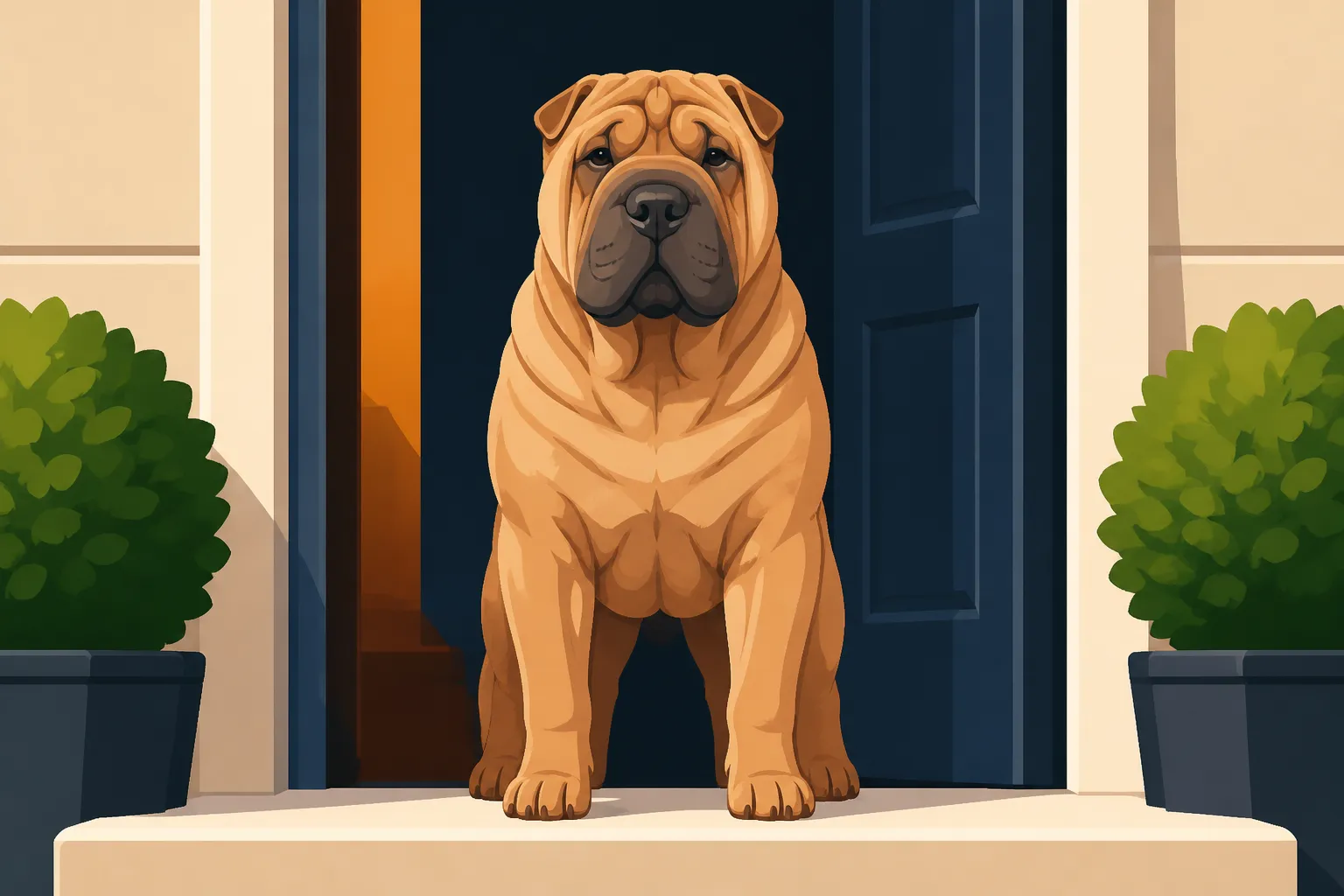
Whether a Shar Pei Guards a Doorway
It’s a common sight for many Shar Pei owners: you walk towards a doorway, and suddenly your wrinkly companion is there, perhaps lying in wait, or standing with a stoic posture that seems to say, "You shall not pass." You might wonder, is this just my dog being quirky, or is there something more ingrained happening here? The truth is, that seemingly casual blockade or intense observation at a threshold often stems from the Shar Pei's deep-seated protective instincts and their unique perception of their home. This guide will delve into why your Shar Pei might be guarding doorways, what those behaviors mean, and how to manage them effectively to ensure a harmonious household.
Understanding the Shar Pei's Innate Guardian Instincts
To truly grasp why your Shar Pei takes such a keen interest in doorways, we first need to look back at where this incredible breed came from. These aren't just pretty faces; they carry a strong historical blueprint within their genes.
Historical Roots of Guarding Behavior
Imagine ancient China, where the Shar Pei wasn't a pampered house pet, but a working dog. They served multiple roles, often acting as all-around farm dogs, helping with hunting, and most importantly, standing guard. Their job was to protect property, livestock, and family from intruders, both human and animal. This wasn't a passive role; it required vigilance, a keen sense of observation, and the readiness to act.
This history means that your modern Shar Pei, even if its biggest job today is to cuddle on the sofa, still possesses a powerful guarding instinct. They are wired to survey their surroundings, identify potential threats, and take ownership of their territory. It's not aggression for aggression's sake; it's a deep-seated commitment to keeping their loved ones safe. Understanding What a Shar Pei Was Originally Bred to Do helps us realize that these behaviors aren't random; they're echoes of a long and proud past.
Territoriality as a Core Shar Pei Trait
Territoriality in a Shar Pei is more than just being protective; it’s about defining and defending their perceived space. For many dogs, their "territory" is simply the yard or the house. For a Shar Pei, this often extends to specific rooms, furniture, or even certain people they've bonded with. They develop a strong sense of ownership over these areas and will instinctively monitor them.
Doorways, in particular, represent critical entry and exit points into their designated territory. They are natural bottlenecks, places where anyone or anything entering or leaving must pass. A Shar Pei's territorial drive often leads them to position themselves at these strategic locations, allowing them to control access and observe movement. This isn't necessarily a sign of misbehavior, but rather a manifestation of their innate desire to oversee and secure their domain, a trait that comes straight from their heritage as guardians.
The Doorway as a Strategic Point for a Shar Pei
If you've ever wondered why your Shar Pei seems to gravitate towards doorways, it's not arbitrary. These locations hold a special significance in their world.
Why Doorways Attract Guarding Behavior
Think of your home's doorways as checkpoints. For a Shar Pei, they are perfect vantage points, offering a clear line of sight to observe who is coming and going. Unlike some breeds with a wider field of vision, Shar Pei often have a more restricted peripheral view due to their unique eye structure and head shape. This means they need to physically turn their head to see things clearly, making a fixed position at a doorway ideal for monitoring their environment without constantly swiveling. Understanding Why a Shar Pei's Field of Vision Is Narrow helps explain why they adopt these strategic positions.
These natural bottlenecks allow a Shar Pei to control the flow of traffic, whether it's family members, visitors, or even just the mail carrier passing by the front window. From their perspective, positioning themselves near a doorway gives them a sense of control and allows them to act as the first line of defense if they perceive any threat or simply wish to assert their presence. It's an instinctual "I've got this" attitude, playing out in the architecture of your home.
Identifying Doorway Guarding vs. Simple Presence
It's important for Shar Pei owners to differentiate between their dog simply choosing a cool spot to nap near a door, and actively guarding it. A Shar Pei's subtle cues can be easily missed if you're not attuned to them. When truly guarding, you might notice a stiffening of their body, a low, guttural growl or rumbling sound deep in their chest, a direct and unblinking stare, or even a slight forward lean in their posture. They might physically block your path, making it difficult to pass without nudging them.
In contrast, a Shar Pei that is merely present near a doorway will appear relaxed. Their body will be soft, their eyes might be half-closed, and they'll usually move willingly if you ask them to. They might be resting, observing, or simply enjoying the traffic flow, but without the underlying tension or assertive body language that signals a guarding intent. Learning to read these nuanced signals is key to understanding your Shar Pei's mindset and responding appropriately.
| Behavior Trait | Doorway Guarding | Simple Doorway Presence |
|---|---|---|
| Body Posture | Stiff, rigid, sometimes low to the ground. | Relaxed, loose, perhaps curled up or sprawled. |
| Eye Contact | Intense, unwavering stare, pupils may be dilated. | Soft, blinking, looking around casually. |
| Vocalizations | Low growl, rumble, soft bark when challenged. | Quiet, no vocalizations related to the doorway. |
| Movement | May block path, refuse to move, or stand ground. | Moves easily if asked, shifts position readily. |
| Tail Position | Stiff, held low, or tucked; sometimes slow wag. | Relaxed, natural wag, or still. |
| Mouth/Facial Expression | Tense muzzle, closed mouth or slight snarl. | Relaxed, often panting gently or mouth slightly open. |
Common Scenarios and Shar Pei Reactions at Doorways
The guarding behavior your Shar Pei displays can vary depending on who or what is approaching the doorway. It's not a one-size-fits-all reaction, and understanding the context is crucial.
The Front Door: Visitors and Strangers
The front door is often the epicenter of a Shar Pei's guarding efforts. The moment the doorbell chimes or there's a knock, many Shar Pei transform from serene companions to alert sentinels. They might rush to the door, barking intensely, their hackles potentially raised, and their body language conveying a clear message: "Someone is here, and they need to be vetted by me." This is often a display of their inherent suspicion of strangers combined with their protective instincts.
When a visitor actually enters, a Shar Pei will typically remain aloof and wary. They won't usually greet with wagging tails and effusive licks like some other breeds. Instead, they might stand back, observing the stranger intently, or even position themselves between the visitor and their chosen family members. Their response is less about friendliness and more about assessment and control. It's a prime example of How a Shar Pei Greets a Visitor—with caution and a watchful eye, ensuring that any newcomers understand their place in the established hierarchy of the home.
Internal Doorways: Family Members and Resources
While the front door might be about external threats, internal doorways can become focal points for resource guarding or establishing dominance within the household. Your Shar Pei might guard the entrance to your bedroom, the kitchen, or even a specific spot in the living room if they perceive it as "theirs." This can be particularly frustrating when it’s directed at family members. For example, if you approach your bedroom door and your Shar Pei is lying there, they might give a low growl or refuse to budge, asserting their claim over that space.
This type of guarding can sometimes extend to resources like food bowls or favored toys, especially if they are located near a doorway. If your Shar Pei's food bowl is in the kitchen doorway, they might stand over it, preventing others from passing. This behavior aligns closely with Whether a Shar Pei Guards Its Food and can be problematic, leading to tension or even confrontation if not managed correctly. It’s their way of saying, "This is mine, and this is my space," a strong declaration that needs careful and consistent handling.
Managing and Modifying Doorway Guarding Behavior
Dealing with a Shar Pei's doorway guarding can be challenging, but it's not insurmountable. The key is a combination of early intervention, consistent training, and sometimes, intelligent management.
Proactive Socialization and Training from Puppyhood
The absolute best defense against problematic doorway guarding is a strong offense through early and consistent socialization. From the moment you bring your Shar Pei puppy home, expose them to a wide variety of sights, sounds, people, and experiences in a positive and controlled manner. This helps them learn that new things and new people aren't always threats. Pay special attention to desensitizing them to common triggers like doorbells and knocking sounds. Start by playing recordings of these sounds at a very low volume, pairing them with high-value treats and praise. Gradually increase the volume as your puppy remains calm.
Beyond exposure, teaching basic obedience cues is vital. A solid "place" command, where your dog learns to go to a designated mat or bed, is invaluable for doorway situations. Teach them to calmly settle away from the door when someone approaches. Repetition, positive reinforcement, and patience are your friends here. Resources like BAXTER & Bella offer comprehensive online puppy training programs that can guide you through these crucial early socialization and obedience steps, helping to build a well-adjusted dog from the start. Remember, When a Shar Pei Puppy Should Meet New People is a critical window that closes quickly, so make the most of it.
Setting Boundaries and Consistent Routines
Once guarding behavior has started, or even to prevent it, setting clear boundaries and maintaining consistent routines is essential. If your Shar Pei tends to block the front door when guests arrive, establish a routine where they go to their "place" before anyone even knocks. Reward them heavily for complying. Use physical barriers like baby gates to block access to certain doorways during high-traffic times or when you have visitors, effectively managing the environment to prevent the guarding behavior from happening in the first place. This isn't about punishment; it's about making the right choice easy and the wrong choice impossible.
Consistency is paramount. Every family member must be on the same page with commands and expectations. If one person allows the guarding and another tries to correct it, your Shar Pei will quickly become confused. Implement a "no dogs past this point" rule for certain doorways, if necessary, and enforce it consistently. This firm but fair approach helps your Shar Pei understand their role within the household, reducing the perceived need for them to take on the responsibility of guarding every entrance.
Tools and Techniques to Help Redirect Guarding
When training, high-value treats and engaging toys can be your best allies. If your Shar Pei starts to get worked up at a doorway, redirect their attention with a squeaky toy or a treat puzzle. This pulls their focus away from the perceived "threat" and towards something positive. For persistent doorway guarding, consider having a designated "doorbell station" away from the actual door, where your Shar Pei goes for a treat every time the bell rings or a knock occurs. Over time, they'll associate the sound with a positive reward rather than a call to guard. You can easily find a range of effective training treats and interactive toys on Amazon to assist with this redirection.
For more severe or deeply ingrained guarding, particularly if it's accompanied by aggression, seeking the guidance of a professional dog behaviorist or certified trainer is highly recommended. They can assess your specific situation and develop a tailored plan. Sometimes, what looks like simple guarding can have underlying anxiety components, which a professional can help address. The goal isn't to remove your Shar Pei's natural protective instincts entirely, as they make Whether a Shar Pei Makes a Good Watchdog a resounding yes. Instead, it's about channeling those instincts into appropriate, manageable behaviors that ensure the safety and peace of mind of everyone in the home.
The Shar Pei's Perception of Its Home
Understanding how your Shar Pei views its living space is fundamental to managing their inherent behaviors, including doorway guarding. It’s more than just a house; it’s their entire world.
The Home as a Fortress
For a Shar Pei, their home isn't just a shelter; it's their personal fortress, and they see themselves as its vigilant custodian. This deeply ingrained mindset means they are constantly monitoring the comings and goings, the sounds from outside, and the general security of their domain. This isn't necessarily born of aggression, but rather a profound sense of responsibility and loyalty to their chosen family. They truly believe it's their job to keep everyone safe, and any perceived breach of security, even a friendly visitor, warrants their careful attention.
This perception can make them appear aloof or overly cautious with strangers, but it's a testament to their dedication. They aren't trying to be difficult; they are simply acting on ancient instincts that tell them to protect what is theirs. While it might lead to behaviors like doorway guarding, it also means you have an incredibly loyal and watchful companion. The challenge for owners is to appreciate this inherent guardian trait while teaching them that you are in charge of security, and they don't need to be constantly on high alert. It's about building trust and clear leadership.
Balancing Security with Comfort
The ultimate goal in managing a Shar Pei's doorway guarding isn't to extinguish their protective spirit, but to channel it in a way that allows them to be a secure, confident dog rather than a stressed, constantly vigilant one. We want them to feel safe and understand that the home is indeed secure, without feeling the overwhelming burden of needing to guard every single entrance themselves. This involves creating an environment where they know their boundaries, understand their role, and trust their humans to handle the "threat assessment."
By consistently applying training, managing triggers, and providing clear leadership, you empower your Shar Pei to relax more. A well-adjusted Shar Pei knows they don't need to bark at every delivery person or stand guard at every internal door. Instead, they can comfortably settle, knowing that you have the situation handled. This balance allows them to express their natural instincts in a controlled manner, leading to a calmer household and a happier, more secure Shar Pei. It allows their affectionate side, which they show to their trusted family members, to truly blossom. For instance, understanding How a Shar Pei Shows Affection can reassure you that beneath that stoic exterior, there's a loving companion who simply wants to keep you safe.
Disclaimer
This article is for general informational purposes only and does not constitute professional advice. Laws, prices and regulations vary by location and change over time. Consult a qualified professional for guidance on your specific situation.


