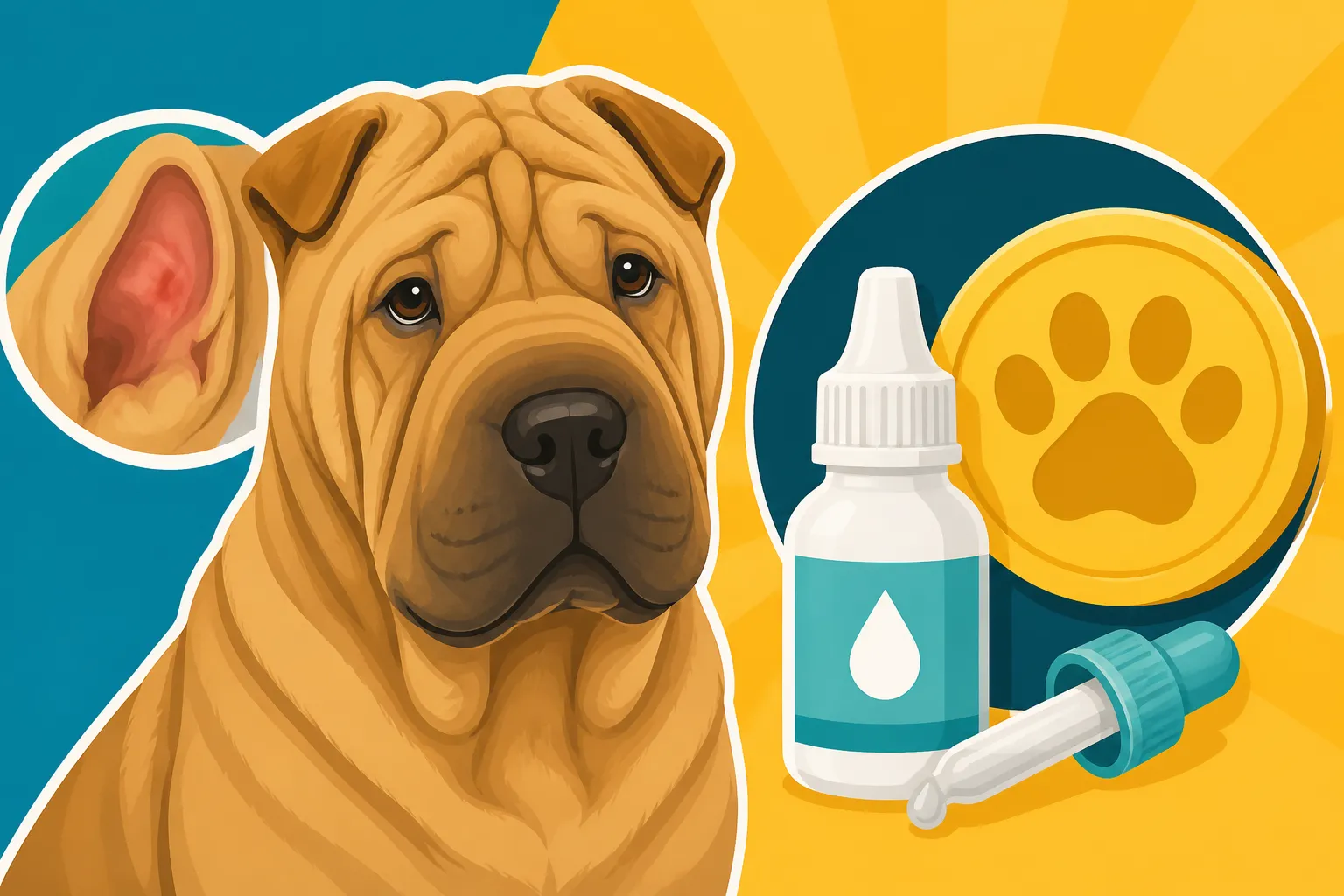
What Prescription Ear Drops Cost a Shar Pei Owner
If you're a Shar Pei owner, you've likely experienced the gut-wrenching feeling of your beloved dog shaking their head, pawing at an ear, or letting out a little whimper when you touch it. Ear infections are a sadly common, often chronic, and certainly frustrating reality for our wrinkly friends. This guide is here to shed light on exactly what those necessary prescription ear drops might cost you, from the initial treatment to ongoing management, helping you budget for this unavoidable part of Shar Pei ownership.
The Frustration of Recurring Ear Infections in Shar Pei
Owning a Shar Pei is a unique joy, but it also comes with a unique set of challenges, and their ears are definitely high on that list. It's not just a minor inconvenience; chronic ear infections can be painful, distressing for your dog, and a constant drain on your time and wallet. The frustration is real when you feel like you're constantly battling the same problem, often just weeks after finishing a course of drops.
Why Shar Pei Ears Are So Prone to Trouble
The anatomy of a Shar Pei's ear canal is, unfortunately, a recipe for trouble. Unlike many breeds with open, airy ears, our Shar Pei have incredibly narrow ear canals. Imagine trying to air out a tiny, winding cave – that's what their ears are up against. This narrowness creates a perfect storm for moisture and warmth to get trapped deep inside, especially after a bath or if they've been playing in damp grass. This warm, moist environment then becomes an ideal breeding ground for yeast and bacteria to flourish. It's not a matter of if your Shar Pei will get an ear infection, but often when and how often. It’s a sad reality, but knowing the structural predisposition helps us understand why we're fighting an uphill battle. You might want to read more about A Shar Pei Has the Narrowest Ear Canals of Any Breed to truly grasp this challenge.
The ear flap itself, often thick and heavy, also contributes to poor air circulation, compounding the issue. Even if you're meticulously cleaning the visible part of the ear, the deeper canal can remain a humid haven for microbes. This structural problem is why we, as Shar Pei owners, become experts in ear care sooner rather than later.
Recognizing the Early Signs of an Ear Infection
Catching an ear infection early is key to quicker, less painful resolution and potentially lower costs. But sometimes, especially with a breed that can be stoic, it's hard to tell until it's really flared up. One of the first signs you might notice is your Shar Pei shaking their head more than usual, or perhaps scratching vigorously at an ear with a hind paw. You might see them tilting their head to one side persistently.
As the infection progresses, the signs become more obvious and heartbreaking. You might observe redness inside the ear flap, swelling around the ear canal opening, or a noticeable discharge. This discharge can range from a dark, waxy build-up to a yellowish, pus-like substance, often accompanied by a distinct, unpleasant odor – usually yeasty or sour. Your dog might become sensitive to touch around the head and ears, even recoiling or yelping when you try to pet them there. Lethargy, loss of appetite, or an unusual irritability can also be indicators that something is seriously wrong and causing them significant discomfort. Don't ignore these subtle cues; they're your Shar Pei's way of telling you they're hurting.
The Cycle of Treatment and Relapse
For many Shar Pei owners, managing ear infections feels like a never-ending cycle. You bring your dog to the vet, they get diagnosed, you dutifully administer the prescription ear drops for the prescribed period, and things seem to clear up. You breathe a sigh of relief, only to find the head shaking or scratching starting again a few weeks or months later. This is incredibly frustrating, and it's a common experience. The underlying anatomical issues mean that even if an infection is cleared, the predisposition for another one remains.
Factors like humidity, swimming, food allergies, or even stress can trigger a new flare-up. It's not a reflection of poor care on your part; it's simply the nature of the beast with this breed. This recurring pattern means that prescription ear drops often become a recurring expense, not a one-off purchase. We need to be prepared for the fact that managing a Shar Pei's ear health is a marathon, not a sprint. This continuous battle is why understanding How Often a Shar Pei Gets an Ear Infection is so crucial for preparing yourself.
Understanding the Different Types of Prescription Ear Drops
When your Shar Pei develops an ear infection, it's not a one-size-fits-all situation for treatment. The type of infection – whether bacterial, yeast, or a combination – dictates the specific medication your vet will prescribe. Each type of prescription drop is formulated with active ingredients designed to target the particular culprits causing the discomfort. Understanding these differences can help you understand why costs might vary.
Antifungal Medications for Yeast Infections
Yeast infections are incredibly common in Shar Pei ears, largely due to that warm, moist environment we discussed. The culprit is often Malassezia pachydermatis, a type of yeast that naturally lives on a dog's skin but can overgrow rapidly in favorable conditions. When your vet diagnoses a yeast infection, they'll likely prescribe antifungal ear drops. These drops typically contain active ingredients like clotrimazole, miconazole, or nystatin.
These medications work by disrupting the yeast cell walls, effectively killing them or inhibiting their growth. A typical course might last anywhere from 7 to 14 days, sometimes longer for stubborn cases. The cost of these drops can vary based on the specific antifungal used, its concentration, and the volume of the bottle. Some drops are single-ingredient, while others combine antifungals with other agents to address multiple issues simultaneously. It's not uncommon for a bottle to last a full course of treatment, but for persistent cases, you might find yourself refilling it more often than you'd like.
Antibacterial Solutions for Bacterial Overgrowth
Bacterial ear infections are another frequent visitor in Shar Pei ears, often occurring alongside or even as a secondary infection to yeast. Common bacterial culprits include Staphylococcus, Streptococcus, and even more aggressive strains like Pseudomonas. If your vet suspects a bacterial infection, especially if it's severe or recurrent, they might perform an ear culture to identify the specific bacteria and determine which antibiotics will be most effective. This step, while an added cost, is vital for targeted and successful treatment, avoiding the use of ineffective antibiotics that only contribute to resistance.
Antibacterial ear drops contain antibiotics such as gentamicin, neomycin, polymyxin B, or florfenicol. These work to kill or inhibit the growth of bacteria. Just like antifungals, the cost can fluctuate based on the specific antibiotic, the brand, and the size of the bottle. Some broad-spectrum antibiotics are effective against a range of bacteria, while others are more specialized. A course of antibacterial drops can also run for several weeks, and adherence to the full course is critical, even if the symptoms improve quickly, to prevent relapse and antibiotic resistance.
Steroidal Drops for Inflammation and Pain Relief
Often, an ear infection – whether yeast or bacterial – brings with it significant inflammation, swelling, and pain. Your poor Shar Pei's ear canal can become so swollen that it’s almost impossible for the medicated drops to penetrate effectively. In these cases, especially when the dog is very uncomfortable, your vet will often prescribe ear drops that include a corticosteroid, such as prednisone, dexamethasone, or triamcinolone.
These steroids are powerful anti-inflammatory agents that quickly reduce swelling and alleviate pain and itchiness. By bringing down the inflammation, they not only make your dog more comfortable but also help to open up the ear canal, allowing the antifungal or antibacterial components of the drops to reach the infection site more effectively. Many prescription ear drops are combination products, meaning they contain an antifungal, an antibacterial, and a steroid all in one bottle. While convenient and often highly effective, these multi-ingredient drops can sometimes be pricier than single-ingredient formulas. The immediate relief they offer, however, is often invaluable for a suffering pet.
Factors Influencing the Cost of Shar Pei Ear Drops
You've probably noticed that the price of medications, even for the same condition, can vary quite a bit. This holds true for prescription ear drops for your Shar Pei. It’s not just about the specific type of infection; several other factors play into the final cost you'll see at the vet or pharmacy.
Active Ingredients and Formulation Complexity
The primary drivers of cost are the active ingredients themselves and the complexity of the formulation. Simple, single-ingredient drops that target, say, only yeast, might be less expensive than a sophisticated, broad-spectrum product. Many of the most effective Shar Pei ear drops are combination products, designed to tackle bacteria, yeast, and inflammation all at once. These multi-action formulas, while incredibly convenient and often more effective because they address all aspects of the infection simultaneously, usually come with a higher price tag.
For example, a drop containing a potent, newer generation antibiotic combined with a strong antifungal and a fast-acting steroid will naturally cost more to develop and produce than an older, single-agent medication. Sometimes, the carrier solution or other inactive ingredients also contribute to the drug's stability, absorption, or ease of application, further impacting manufacturing costs and, subsequently, the retail price. So, while it might seem like a simple bottle of drops, there's a lot of science and formulation expertise that goes into those more complex, highly effective treatments.
Brand Name vs. Generic Options
Just like with human medications, veterinary prescription ear drops come in brand-name and generic versions. Once a drug's patent expires, other manufacturers can produce generic versions, which contain the same active ingredients in the same dosage form and strength, meaning they are bioequivalent to the brand-name product. The significant difference is typically the cost. Brand-name drugs usually have higher prices due to the initial research, development, and marketing costs incurred by the original pharmaceutical company.
Generic ear drops, on the other hand, are often significantly more affordable. If your vet prescribes a particular brand-name ear drop, always ask if a generic equivalent is available. Often, there is, and it can save you a considerable amount of money without compromising efficacy. Some vets might automatically offer the generic, but it never hurts to ask, especially when you're facing ongoing, recurrent infections. Companies like Chewy's online pharmacy often offer competitive pricing on both brand-name and generic veterinary medications, making it easier to shop around and find the best value for these essential treatments.
Duration of Treatment and Bottle Size
The total cost isn't just about the price per bottle; it's also about how much you need and for how long. The duration of treatment for a Shar Pei ear infection can vary widely, from a week to several weeks, depending on the severity and type of infection. Some chronic cases might even require intermittent "pulse therapy" where drops are given a few times a week indefinitely to keep infections at bay.
Consequently, the size of the bottle you purchase directly impacts the total expenditure. Smaller bottles are cheaper upfront but may not contain enough medication for a full course, requiring a second purchase. Larger bottles might have a higher initial cost but often offer a better value per milliliter if you know you'll need the full amount or for ongoing management. Always clarify with your vet how much medication is needed for the full course. It’s a common pitfall to buy a small bottle, treat for a few days until symptoms improve, stop, and then have the infection immediately rebound, leading to another vet visit and more drops. This can make What a Shar Pei's Lifetime Ear Bill Comes To a substantial figure.
| Factor | Impact on Cost (Generally) | Considerations for Shar Pei Owners |
|---|---|---|
| Active Ingredients | Multi-agent (antibiotic + antifungal + steroid) > Single-agent | Shar Pei often need comprehensive treatment for mixed infections. |
| Formulation Complexity | Newer, highly stable, or unique delivery systems > older, standard formulations | May offer better penetration into narrow ear canals, justifying cost. |
| Brand Name vs. Generic | Brand Name > Generic | Always ask your vet if a generic is available to save money. |
| Bottle Size | Larger volume (per ml) often more cost-effective for full course/recurrent use | Shar Pei typically need full courses; larger bottles can be economical. |
| Treatment Duration | Longer courses/chronic management increase overall cost | Ear infections are often recurrent; budget for ongoing needs. |
| Vet Clinic Pricing | Prices can vary between clinics and geographic locations | Shop around if possible for medication, or ask for written prescription. |
| Pet Insurance Coverage | Can significantly reduce out-of-pocket costs for chronic ear infections, if covered | Essential to check policy details; chronic issues can be pre-existing. |
Beyond the Drops: Related Costs in Managing Shar Pei Ear Health
It would be lovely if the cost of ear care simply ended with the drops. Unfortunately, for Shar Pei owners, managing ear health is a more comprehensive and often expensive endeavor. The prescription drops are just one piece of a much larger puzzle, and there are several other necessary expenses that contribute to the overall bill.
Veterinary Consultation and Diagnostics
Before your Shar Pei can even get those crucial prescription ear drops, they need to see a veterinarian. This initial visit is vital for diagnosing the problem correctly. Your vet will perform an otoscopic exam to look deep into the ear canal, check for foreign bodies, polyps, or ruptured eardrums, and assess the severity of the inflammation. They'll also likely take a swab from the ear to perform cytology – examining the cells under a microscope to identify whether yeast, bacteria (and their shapes), or mites are present. This critical step ensures the right medication is prescribed.
These consultations and diagnostic tests come with their own set of fees. A standard vet visit might include an exam fee, plus separate charges for cytology, which is almost always necessary for an accurate diagnosis of an ear infection. For stubborn or recurrent infections, your vet might recommend further diagnostics, such as an ear culture and sensitivity test, which costs more but is invaluable for identifying specific resistant bacteria. There's also the potential for sedated ear cleanings if the dog is in too much pain or the ear is too packed with debris to examine properly, adding significantly to the bill. All these diagnostic steps are necessary to ensure the chosen ear drops actually work and aren't just masking the problem.
Ear Cleaners and Maintenance Solutions
Prevention and maintenance are crucial in breaking the cycle of recurrent ear infections in Shar Pei. This means regularly cleaning their ears, even when they appear healthy. Your vet will often recommend specific ear cleaning solutions, which are different from the medicated drops. These cleaners are designed to remove wax and debris, dry the ear canal, and create an environment less hospitable to yeast and bacteria. They often contain ingredients like salicylic acid, boric acid, or witch hazel.
These maintenance solutions are an ongoing cost. While not as expensive as prescription drops, you'll need to purchase them regularly. Some Shar Pei might need their ears cleaned once a week, others every few days, depending on their individual predisposition and the humidity of your environment. Using the right cleaner, as recommended by your vet, is important, as some over-the-counter products can be irritating or ineffective for Shar Pei's sensitive ears. Incorporating regular ear cleaning into your routine, as discussed in How Often a Shar Pei's Ears Need Cleaning, is a proactive step that can help reduce the need for costly prescription treatments down the line.
The Role of Diet and Allergy Management
It's a common misconception that ear infections are purely a local issue. For many Shar Pei, recurrent ear infections are often a symptom of an underlying systemic problem, most commonly allergies. Whether it's environmental allergies (like pollen or dust mites) or food allergies, the body's immune response can manifest as inflammation and itching, especially in the ears and on the skin. If your Shar Pei is constantly battling ear infections, your vet might suggest an allergy workup, which can involve dietary trials or even referral to a veterinary dermatologist.
Addressing the root cause, such as managing food allergies with a specialized diet, can dramatically reduce the frequency and severity of ear infections. Prescription diets formulated for sensitive skin and food allergies, like those offered by brands such as Ollie or certain lines from Chewy, can be significantly more expensive than standard kibble. Similarly, allergy testing and potential immunotherapy injections (allergy shots) also represent substantial long-term costs. However, investing in allergy management can ultimately reduce the need for frequent, costly prescription ear drops, making it a potentially worthwhile investment for your Shar Pei's overall health and your wallet in the long run. Learning about Food Allergies in a Shar Pei and What a Shar Pei's Allergy Workup Costs can give you a clearer picture of these potential expenses.
Long-Term Strategies to Reduce Ear Care Expenses
Dealing with recurrent Shar Pei ear infections can feel like an endless battle, both for your dog's comfort and your financial planning. However, by implementing smart long-term strategies, you can significantly reduce the frequency of infections and, consequently, the associated costs. It’s all about being proactive, informed, and strategic.
Proactive Prevention and Regular Home Care
The absolute best way to save money on prescription ear drops is to prevent infections from taking hold in the first place. This requires a dedicated and consistent home care routine. As we've discussed, Shar Pei ears are uniquely designed for trouble, so regular maintenance is non-negotiable.
First, invest in a vet-approved ear cleaning solution and use it regularly. For some Shar Pei, this might mean weekly cleanings; for others, it could be every few days, especially during humid weather or after swimming. Always dry their ears thoroughly after baths or any water exposure. Never use cotton swabs deep inside the ear canal, as this can push debris further in and damage the delicate structures. Instead, use cotton balls or gauze pads to gently wipe the visible parts of the ear. Teach your Shar Pei to tolerate ear handling from a young age; positive reinforcement and gentle training will make this routine much easier for both of you. Consistent home care means you're creating a less hospitable environment for yeast and bacteria, keeping those nasty infections at bay. This consistent effort can also help reduce the chances of needing more invasive procedures later, such as those covered in What Ear Canal Surgery Costs on a Shar Pei.
Pet Insurance Considerations for Chronic Conditions
When faced with recurring health issues like ear infections, many Shar Pei owners wonder about pet insurance. It can be a lifeline for unexpected emergencies and major illnesses, but coverage for chronic conditions, especially those considered breed-specific or "pre-existing," requires careful consideration. If your Shar Pei has already been diagnosed with ear infections before you acquire pet insurance, it's highly likely that future ear infection treatments will be considered a pre-existing condition and therefore excluded from coverage.
This highlights the importance of getting pet insurance early in your Shar Pei's life, ideally before any health issues arise. Read policy documents thoroughly to understand what is covered and what isn't, especially regarding chronic conditions and breed-specific predispositions. While some policies might not cover the initial diagnosis of a chronic ear infection if it's deemed pre-existing, they might cover secondary complications or new, unrelated ear issues. Companies like Healthy Paws are often praised for their comprehensive accident and illness plans, but the "pre-existing" clause is standard across the industry. Understanding Whether Pet Insurance Is Worth It on a Shar Pei is critical for managing potential long-term costs effectively.
Seeking Specialist Advice for Stubborn Cases
If your Shar Pei's ear infections are relentless, despite consistent vet care and adherence to treatment protocols, it might be time to consider a referral to a veterinary dermatologist. These specialists have advanced training and diagnostic tools specifically for skin and ear conditions. They can perform more in-depth diagnostics, such as advanced imaging of the ear canal or biopsies, and often have access to a wider range of specialized treatments that a general practitioner might not.
While a specialist consultation and their recommended treatments will undoubtedly add to your initial costs – What a Shar Pei's Dermatology Referral Costs can be significant – this investment can often lead to a definitive diagnosis and a long-term management plan that finally breaks the cycle of infection. A dermatologist might identify an underlying allergy, immune-mediated condition, or anatomical abnormality that has been overlooked, leading to a tailored approach that is more effective and, in the long run, more economical than continually treating symptomatic flare-ups. Sometimes, spending more upfront on specialist care can save you money and heartache in the years to come by finally achieving control over the problem.
Disclaimer
This article is for general informational purposes only and does not constitute professional advice. Laws, prices and regulations vary by location and change over time. Consult a qualified professional for guidance on your specific situation.


