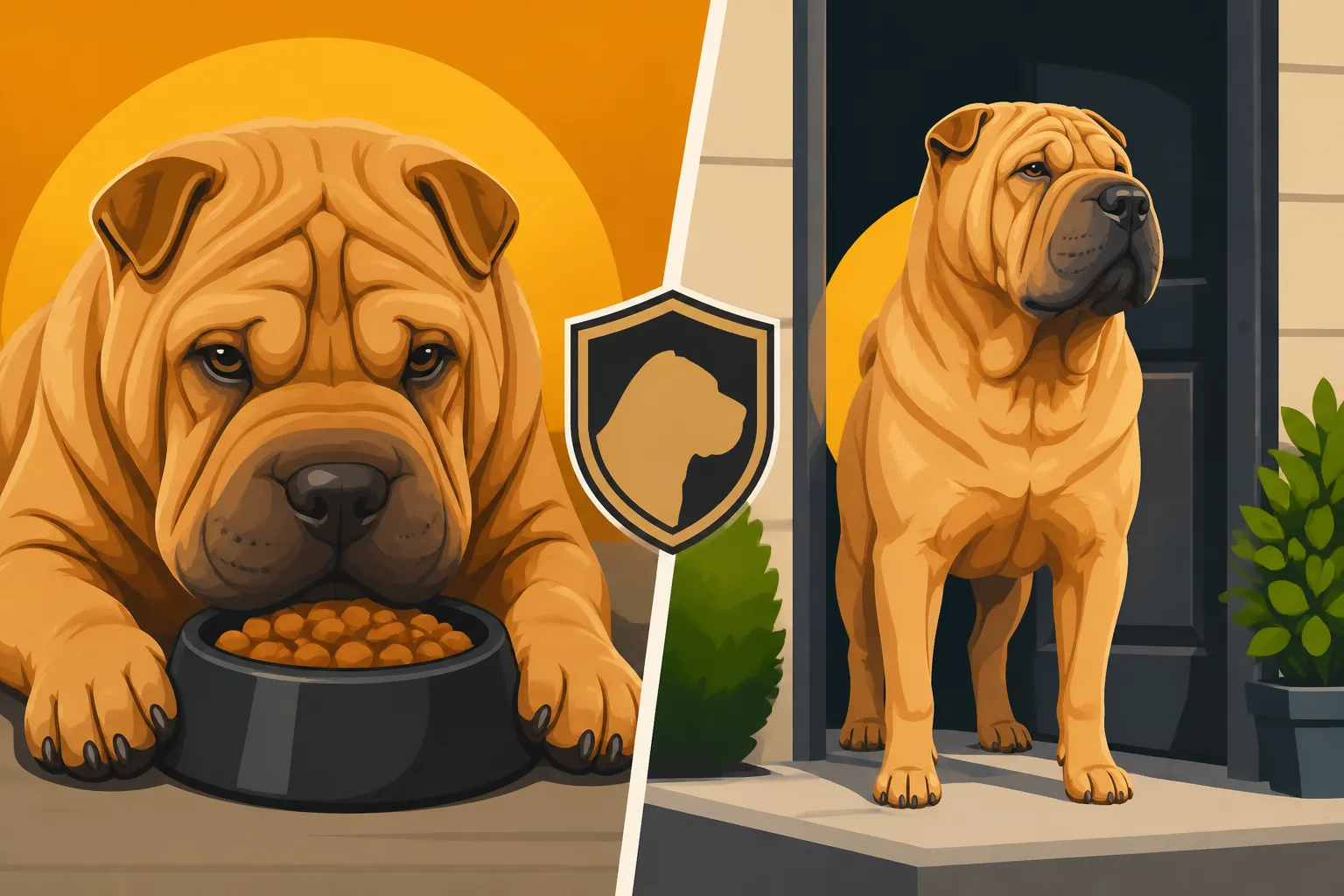
Why a Shar Pei Guards Its Food and Its Doorway
One of the most common and often frustrating challenges Shar Pei owners face is their dog's instinct to guard what they perceive as their own, whether it's their food bowl, a favorite toy, or even the very entrance to your home. This isn't just a quirky habit; it can lead to stressful confrontations and even create safety concerns for family members or visitors. This comprehensive guide will delve deep into why Shar Pei exhibit these specific guarding behaviors, help you understand the roots of these powerful instincts, and provide practical, empathetic strategies to manage and mitigate them, fostering a safer and more harmonious household.
Understanding the Shar Pei's Guarding Instincts
It’s easy to feel personally offended when your beloved Shar Pei growls over their kibble or snaps at a delivery person approaching your front door. You might think, "Why can't they just be like other dogs?" But to truly manage these behaviors, we need to step back and understand that these aren't random acts of disobedience. They are deeply ingrained instincts, amplified by the unique history and temperament of the Shar Pei breed. Ignoring this history is like trying to fix a leaky faucet without knowing where the pipes are – you’re just guessing.
The Shar Pei's Historical Role: Guarding its Territory and Resources
Imagine the rural villages and farms of ancient China. The Shar Pei wasn't bred to be a fluffy lapdog or a friendly greeter at the local pub. No, these dogs were working animals, guardians of homesteads, livestock, and families. Their original purpose was to be alert, watchful, and protective – traits that were absolutely essential for their survival and for the safety of their human companions. This isn't a romantic notion; it's a cold, hard fact of their genetic makeup. They were meant to be formidable in the face of perceived threats, whether that threat was a wild animal or an unwelcome human stranger. This history directly informs their behaviors today.
When a Shar Pei growls over its food or stiffens as someone approaches the front door, it's not necessarily being "aggressive" in a malicious sense. Instead, it's channeling centuries of instinct. This dog is doing precisely what its ancestors were bred to do: protect valuable resources and defend its territory. Their inherent suspicion of strangers and their territorial nature are not flaws in their character; they are features of the breed. This protective streak means they are naturally inclined to be wary of anything or anyone new encroaching upon what they consider theirs. Understanding this helps us approach the behavior with patience and a clearer strategy, rather than frustration. You can read more about their original purpose in What a Shar Pei Was Originally Bred to Do.
"Mine!" — Resource Guarding Explained
Resource guarding, at its heart, is a perfectly natural canine behavior. In the wild, animals must protect their food, mates, and den sites to survive. If a wolf didn't guard its kill, it might starve. While our domestic dogs no longer live in the wild, this primal instinct is still very much alive, especially in breeds like the Shar Pei with strong territorial and protective drives. For a Shar Pei, a "resource" can be anything from their food bowl, a favorite chew toy, a comfortable sleeping spot, or even a human family member. It’s their way of saying, "This belongs to me, and I’m going to make sure no one takes it."
The manifestation of resource guarding can range from subtle signals like a slight stiffening of the body or a quick glance, to more overt displays like growling, snapping, or even biting. With food, it often begins with a dog eating faster when approached, escalating to warnings if you get too close. This isn't about dominance; it's about perceived insecurity. The dog feels a need to protect something they value, and they believe you, or another pet, might try to take it away. It’s crucial not to punish these early warning signs, as that often teaches the dog to skip the growl and go straight to a bite, making the behavior more dangerous and unpredictable. Instead, we want to understand the triggers and work to alleviate that underlying insecurity.
The Doorway: A Shar Pei's Castle Entrance
For many dogs, the front door is just a door. For a Shar Pei, it's often the main gateway to their perceived territory, the primary point of entry for potential "intruders." This makes doorway guarding a particularly potent expression of their protective instincts. It's not just about a person entering; it's about someone crossing a boundary they feel responsible for maintaining.
The Door as a Boundary Marker
Think of your front door from your Shar Pei's perspective: it's the most vulnerable point in their territory. Every sound from outside—a delivery truck, a neighbor walking by, the doorbell ringing—is a potential breach. For a breed bred for guardianship, this means constant vigilance. They often see themselves as the first line of defense, the noble protector of the family castle. This isn't necessarily a bad trait; it's why they make such excellent watchdogs. However, without proper management, it can quickly become an overwhelming and sometimes dangerous behavior.
This inherent need to control access means that the simple act of a doorbell ringing can trigger a powerful, instinctual response. Your Shar Pei might rush to the door, barking furiously, hackles raised, even if the person on the other side is a beloved friend or family member. They aren't trying to be rude; they're fulfilling their perceived duty. Their job, as they see it, is to assess and deter anything new that approaches their space. This is why you often see them patrolling the windows, standing guard at the threshold, or sleeping in a spot where they can monitor both inside and outside movements. They are acutely aware of their surroundings, and the door represents a significant part of that awareness. A Shar Pei Was Bred to Guard, Not to Greet elaborates on this specific temperament.
Warning Signs and Escalation at the Door
Recognizing the early warning signs of doorway guarding is vital for prevention and management. It rarely starts with an outright attack. More commonly, you'll observe a progression of behaviors:
- Initial Alertness: Ears perk, head cocks, a low whine or soft woof at an external sound.
- Increased Vigilance: Moving closer to the door, stiffening posture, a focused stare at the door or window.
- Vocalizations: Barking, which can range from excited to deep and assertive, often accompanied by growling.
- Body Language: Raised hackles, a tucked tail (indicating fear or conflict, not necessarily submission), lunging at the door, or even nipping at the air.
If these early warnings are ignored or met with punishment, the behavior can escalate. A Shar Pei might learn that barking isn't effective enough and resort to more physical deterrence, like nipping or blocking entry. This is especially true if they've had past negative experiences with people entering unannounced or too quickly. The goal is to intervene before it reaches the point of significant distress for your dog or a dangerous situation for guests. It’s important to remember that these dogs have relatively Why a Shar Pei Cannot See to the Side, meaning an unexpected approach from the side or behind can easily startle them and trigger a defensive reaction at the door.
Food Guarding: Beyond Just the Bowl
Food guarding in a Shar Pei is often more nuanced than simply growling when someone touches their bowl. It can extend to high-value treats, chew toys, or even food dropped on the floor. Understanding the specific triggers helps you create a safe eating environment and implement effective training strategies.
What Triggers Food Guarding in a Shar Pei
Food guarding isn't always about outright aggression. It often stems from a feeling of insecurity or fear that a valued resource will be taken away. For a Shar Pei, known for its independent and sometimes reserved nature, this can be particularly pronounced.
- Proximity of Others: The most common trigger is someone (human or another pet) approaching while the Shar Pei is eating. Even a well-meaning glance can be perceived as a threat. In a multi-dog household, this can become a significant issue, potentially leading to fights over food.
- High-Value Items: Guarding behaviors are often more intense with high-value items like raw bones, bully sticks, or especially tasty treats compared to their regular kibble. They know these items are special and worth protecting fiercely.
- Past Experiences: If a Shar Pei was previously in a situation where they had to compete for food (e.g., in a large litter, a shelter, or a home where resources were scarce), or if their food was frequently taken away, they are more likely to develop guarding tendencies. They learn that they must protect their food or lose it.
- Sudden Movements or Sounds: A sudden noise, a child running by, or an unexpected touch can startle a Shar Pei while they're eating, triggering a defensive, guarding response even if no threat was intended. Their instinct is to protect themselves and their meal.
It’s crucial to recognize that this isn't a sign of a "bad" dog, but a dog acting on deep-seated instincts. The goal is not to punish the guarding, which can suppress the warning signs and make the dog more dangerous. Instead, we want to change their emotional response to people approaching their food, transforming fear into positive anticipation.
Strategies for Managing Food Guarding
Managing food guarding requires a consistent, patient approach focused on building trust and positive associations. The aim is to teach your Shar Pei that human presence near their food bowl means good things are coming, not that their meal is being threatened.
One of the most effective strategies is the "Trade Up" method. Start by standing a distance from your Shar Pei while they eat, dropping a higher value treat than what's in their bowl near them. This teaches them that your approach doesn't mean you're taking their food, but that you're adding something even better. Gradually, over many sessions and days, you can decrease the distance. Never reach for their bowl directly unless you have something far more enticing to offer immediately. With repetition, they'll associate your presence with an upgrade, not a threat.
Creating a calm and predictable eating environment is also key. Feed your Shar Pei in a quiet, undisturbed area where they feel safe and won't be bothered by other pets or children. If you have multiple dogs, feed them in separate rooms or crates. Consider using a slow feeder if your Shar Pei eats very quickly, as this can reduce anxiety around their meal disappearing too fast. Tools like slow feeders are readily available on platforms like Amazon. Ensure children are taught never to approach a dog while it's eating, no matter how gentle the dog usually is. Supervision is paramount, especially during mealtimes. This consistent management, combined with positive reinforcement techniques, helps to slowly chip away at the deeply ingrained instinct to guard their precious meal.
Managing Doorway Guarding Safely and Effectively
Doorway guarding can be one of the most stressful behaviors to deal with, especially when you have frequent visitors or deliveries. The key is to take proactive steps to manage the environment and train alternative behaviors, so your Shar Pei doesn't feel the need to take on the "bouncer" role.
Creating a "No-Go" Zone at the Door
The first step in managing doorway guarding is to prevent your Shar Pei from being in a position to guard the door in the first place when guests arrive. This isn't about punishment; it's about setting them up for success and teaching them a different routine.
- Barrier Training: Invest in sturdy baby gates or pet gates. Before anyone comes to the door, gate your Shar Pei in another room, a quiet kennel, or even behind another barrier in the same room, far enough from the door that they cannot see or hear the immediate interaction. This physically removes them from the triggering situation, allowing them to calm down before meeting guests on your terms.
- "Place" Command: Train a strong "place" command. This involves teaching your Shar Pei to go to a designated spot (like a bed or mat) and stay there until released, even with distractions. Practice this before visitors arrive, gradually increasing the duration and distractions. When the doorbell rings, direct them to their "place" with a calm voice and reward them for staying. This gives them a job and a sense of purpose without the pressure of guarding. The online courses from BAXTER & Bella offer excellent guidance on teaching foundational commands like "place" and building up to distractions.
- Pre-emptive Management: If you know a delivery is coming or a guest is arriving, use these management tools proactively. Before the knock or bell, get your Shar Pei secured in their "no-go" zone. This prevents them from rehearsing the guarding behavior and reinforces the new, desired routine.
Consistency is absolutely vital here. Every time they are allowed to rush the door and perform their guarding behavior, it reinforces the habit. By creating a controlled environment, you break the cycle and open the door (pun intended!) for new, more appropriate responses.
Desensitization and Counter-Conditioning for Doorway Triggers
Once you have a management system in place (like a "no-go" zone), you can start working on changing your Shar Pei's emotional response to doorway triggers. This is called desensitization and counter-conditioning, and it requires patience and a systematic approach.
- Desensitization to Sounds: Start by playing recordings of doorbells or knocking at a very low volume. As soon as you hear the sound, immediately reward your Shar Pei with a high-value treat. The goal is for them to associate the sound not with an intruder, but with something wonderful. Gradually increase the volume over many, many sessions, always pairing the sound with treats.
- Controlled "Visitors": Enlist a friend or family member to help. Have them stand outside your door and knock/ring the bell. Keep your Shar Pei on a leash in their "place" or behind a gate. When the sound happens, calmly treat. Then, have your "visitor" open the door slightly, give a treat, then close it. The key is to keep the dog under threshold – meaning they react, but don't escalate into full-blown guarding. If they start intense barking or lunging, you've gone too fast, and need to reduce the intensity of the trigger.
- Structured Introductions: Once your Shar Pei is calm with the sounds and brief door openings, you can work on introducing people. Have your guest wait outside while you settle your Shar Pei in their designated "place." Once settled, let the guest in. Have them ignore your dog completely at first. Once your Shar Pei is calm, the guest can gently toss a treat from a distance. The goal is to teach your Shar Pei that new people mean good things happen, and there’s no need to guard. This process takes time, sometimes weeks or months, but it's crucial for long-term success and a peaceful home. You will often find your Shar Pei has How a Shar Pei Greets a Visitor which is not what you expect.
Understanding the Shar Pei's Unique Temperament and Vision
Beyond just instinct and training, some physical and behavioral traits unique to the Shar Pei can profoundly influence their guarding behaviors. Understanding these nuances allows for a more tailored and compassionate approach to their training and management.
Narrow Peripheral Vision and Startle Response
One of the most significant factors contributing to a Shar Pei's startle response and potential for guarding is their unique physical conformation, specifically their deep-set eyes and wrinkled forehead. This combination gives them a notoriously narrow field of peripheral vision. Imagine walking around with blinkers on all the time – that's often how a Shar Pei experiences the world.
Because they cannot easily see objects or people approaching from their sides, sudden movements or unexpected presences can trigger an instant defensive reaction. They might genuinely not see someone until they are directly in front of them, leading to a feeling of being surprised or ambushed. This isn't aggression; it's a natural fight-or-flight response to a perceived threat. When someone suddenly appears at the doorway, or a child rushes past them while they're eating, their limited vision means they have less time to process the situation, making them more likely to react defensively. This is a crucial piece of the puzzle when you're observing guarding behavior, particularly if it seems to come out of nowhere. It's often because, from their perspective, something did come out of nowhere. Understanding this physical limitation underscores the importance of approaching them carefully, announcing your presence, and avoiding sudden movements around them. Learn more about this in Why a Shar Pei Startles: It Cannot See You Coming.
The Independent and Protective Nature of the Breed
The Shar Pei isn't a Golden Retriever or a Labrador. They aren't typically "people-pleasers" in the traditional sense, eager to perform tricks for a treat or greet every stranger with a wagging tail. Their independence is a defining characteristic, often coupled with a fierce loyalty to their chosen family. They bond deeply with their inner circle, and it is this bond that fuels their protective drive.
They see their family, and by extension, their home, as their responsibility to protect. This means they are constantly vigilant, often observing their environment with a serious, discerning gaze. They are less likely to seek constant reassurance or direction from their owner in a tense situation, preferring to assess and act on their own judgment. This independent streak is why they excel as watchdogs, but it also means that persuading them to not guard something they deem important requires consistent, patient, and trust-based training, rather than force or intimidation. Their protective nature is a testament to their love and dedication, but it needs to be channeled appropriately through clear boundaries and positive reinforcement so it doesn't become a liability. How a Shar Pei Bonds to Its Family delves deeper into their unique attachment style.
Training Foundations and Professional Help
While understanding the "why" behind Shar Pei guarding behaviors is crucial, putting that knowledge into action through effective training is what truly makes a difference. This journey starts early and sometimes requires expert guidance.
The Importance of Early Socialization and Consistent Training
The window for effective socialization in puppies is incredibly short, typically closing around 12 to 16 weeks of age. For a breed like the Shar Pei, with its inherent wariness and protective instincts, making the most of this period is absolutely paramount. Early socialization means exposing your Shar Pei puppy to a wide variety of sights, sounds, people, and other well-behaved dogs in a positive and controlled manner. This helps them learn that the world isn't a constant threat and that new experiences can be safe and even enjoyable.
A well-socialized Shar Pei puppy is more likely to grow into an adult who is confident and less prone to extreme fear-based guarding behaviors. This isn't about making them extroverted greeters, but about building a foundation of resilience and neutrality towards new stimuli. Alongside socialization, consistent, positive reinforcement training from day one is essential. This includes teaching basic obedience commands, establishing clear household rules, and building a strong, trusting relationship based on respect, not fear. Every positive interaction, every successful training session, reinforces your role as their trusted leader and helps them understand that you've got things covered, reducing their perceived need to guard everything themselves. Learn more about this crucial period in Socialize a Shar Pei Before Twelve Weeks or Pay for It Later.
When to Seek Professional Guidance
Sometimes, despite your best efforts with management and training, guarding behaviors can be deeply ingrained, severe, or even dangerous. This is not a sign of failure on your part, but an indication that it's time to call in the professionals. Trying to manage severe resource guarding or doorway aggression on your own, especially with a powerful and protective breed like the Shar Pei, can be counterproductive and even risky.
A certified professional dog trainer or a veterinary behaviorist can offer invaluable expertise. They can accurately assess the root cause of the guarding behavior, identify specific triggers you might be missing, and develop a customized training plan that is safe and effective for both you and your dog. They have specialized knowledge in behavior modification techniques, such as desensitization and counter-conditioning, and can guide you through the process step-by-step. They can also help you understand the nuances of Shar Pei body language, which can be difficult to read due to their wrinkles, and ensure you're communicating clearly with your dog. Investing in professional help early can prevent the behavior from escalating, improve your bond with your Shar Pei, and ensure a safer, happier home for everyone. Don't hesitate to seek help; it's an act of responsible pet ownership. For more on this, consider When a Shar Pei Needs a Behaviorist.
Comparing Guarding Behaviors in Shar Pei
To really get a handle on managing these specific Shar Pei traits, it helps to see how they stack up against each other. While both food and doorway guarding stem from protective instincts, their triggers, manifestations, and primary management strategies can differ.
| Feature | Food Guarding (Resource Guarding) | Doorway Guarding (Territorial Guarding) |
|---|---|---|
| Primary Resource | Food, treats, chew toys, sometimes specific objects. | The home's entrance, perceived territory. |
| Core Emotion | Insecurity, fear of loss, perceived scarcity. | Vigilance, protectiveness, territorial defense. |
| Common Triggers | Person/pet approaching while eating, high-value items. | Doorbell, knocking, visitors, delivery people, sounds from outside. |
| Typical Body Language | Stiffening, freezing, hard stare, growl, quick bites. | Rushing to door, barking, lunging, raised hackles, blocking entry. |
| Primary Goal of Dog | Keep possession of the valuable item. | Deter perceived intruders from entering territory. |
| Management Focus | Building positive associations, "trade-up" games, controlled feeding environment. | Environmental management (gates), "place" command, desensitization to door triggers. |
| Danger Level | Can lead to bites if resource is directly challenged. | Can lead to bites/confrontation with approaching strangers. |
| Long-term Solution | Teach that human presence means gain, not loss. | Teach that owner handles "intruders," no need to guard. |
This table clearly illustrates that while the underlying protective drive is similar, the specific application of that drive means you need different, targeted approaches for each type of guarding. One size does not fit all, and understanding these distinctions will make your training efforts much more effective. The Headstrong Streak Nobody Trains Out of a Shar Pei emphasizes the need for consistency in any training endeavor.
Living Harmoniously with a Guarding Shar Pei
Living with a Shar Pei that exhibits guarding behaviors isn't always easy, but it is absolutely manageable with the right approach. It requires a commitment to understanding your dog, setting clear expectations, and being consistent in your training and management strategies. The goal isn't to eliminate their protective nature entirely – after all, it's a part of what makes them a Shar Pei – but to channel it into acceptable behaviors and ensure the safety and comfort of everyone in your home.
This journey is about building trust. Your Shar Pei needs to believe that you are capable of handling perceived threats, whether it's managing the delivery person or ensuring their food is safe. When they trust you to be the primary decision-maker and protector, the burden of guarding falls from their shoulders, allowing them to relax and be the loyal, affectionate companions they truly are at heart. Remember, a Shar Pei’s loyalty to its family is profound, and managing these guarding instincts is just another way to honor that bond.
Disclaimer
This article is for general informational purposes only and does not constitute professional advice. Laws, prices and regulations vary by location and change over time. Consult a qualified professional for guidance on your specific situation.


