Socialize a Shar Pei Before Twelve Weeks or Pay for It Later
Bringing home a Shar Pei puppy is an exciting time, full of dreams about long walks and cuddles on the couch. However, many new owners quickly discover that these unique, often aloof dogs come with specific needs, and overlooking early socialization is one of the most common and costly mistakes. Without careful, consistent exposure during a crucial developmental window, your charming Shar Pei puppy can quickly mature into an anxious, reactive, or even aggressive adult, creating a host of behavioral challenges that can overshadow the joy of ownership. This guide will delve into why early socialization is non-negotiable for a Shar Pei, what can go wrong if it's neglected, and how you can proactively ensure your puppy grows into a well-adjusted, confident companion, saving yourself heartache and significant expense down the line.
The Critical Window: Why Early Socialization Matters So Much for a Shar Pei
For any dog breed, the period between approximately 3 and 16 weeks of age is often referred to as the "critical socialization window" or "imprint period." During this time, puppies are like sponges, absorbing every new experience and forming their fundamental understanding of the world. For a Shar Pei, with its distinct breed characteristics and historical purpose, this window isn't just important—it's absolutely vital. Neglecting it sets the stage for a lifetime of behavioral struggles.
The Shar Pei's Natural Reserve and Guarding Instincts
Shar Pei were historically bred for guarding, hunting, and even fighting in ancient China. They were never meant to be overly gregarious or eager to please strangers. This lineage means they possess a natural reserve and strong protective instincts that are hardwired into their DNA. While this can make them excellent watchdogs and devoted family members, it also means they tend to view anything unfamiliar with suspicion. If not properly introduced to a wide variety of people, places, and situations during their early developmental phase, this natural caution can quickly escalate into fear, anxiety, and territorial aggression. They need to learn that not every stranger is a threat and not every new sound is cause for alarm. Without this foundational understanding, their innate guarding tendencies can become a significant liability. You'll find that A Shar Pei Was Bred to Guard, Not to Greet.
Imagine a scenario where your Shar Pei puppy, say a beautiful fawn brush coat, only ever interacts with your immediate family in your quiet suburban home. He grows up seeing the same faces, hearing the same sounds, and exploring the same backyard. When he's six months old, you take him to a bustling park for the first time. The sudden cacophony of children laughing, dogs barking, skateboards rolling, and strangers trying to pet him overwhelms his senses. Instead of viewing these as novel experiences, his natural guarding instincts kick in. He might bark frantically, try to hide, or even lunge at people or other dogs, seeing them as invaders of his personal space. This isn't because he's "bad"; it's because he wasn't given the tools during his critical period to process and accept these stimuli as normal parts of the world.
This natural aloofness and propensity for guarding are traits that can be managed and channeled with early exposure, but they can rarely be completely "trained out" of an adult dog if the foundation isn't laid correctly. It's about teaching them appropriate responses and building positive associations, rather than trying to suppress their inherent nature entirely. Owners often lament that their Shar Pei isn't a "dog park dog" or is "unfriendly," but often, it's a direct result of inadequate early socialization, rather than an unfixable personality flaw. Understanding Why a Shar Pei Is Aloof With Strangers is key to addressing this.
The Perils of a Narrow Field of Vision
Another critical factor unique to the Shar Pei, and one that often gets overlooked, is their distinctive physical conformation, particularly their head shape and eye placement. Their deeply set eyes, combined with the heavy folds of skin around their face, significantly limit their peripheral vision. Unlike many other breeds that can see a wide arc around them, a Shar Pei has a much narrower field of view, meaning things can appear "out of nowhere" to them. This isn't just an inconvenience; it's a major source of potential anxiety and reactivity. Why a Shar Pei Startles: It Cannot See You Coming.
Picture this: your Shar Pei puppy is trotting along, focused on sniffing the ground. A child on a scooter whizzes up silently from behind and to the side. To another dog, this might be a momentary curiosity. To a Shar Pei, it's a sudden, unexpected blur appearing in their limited visual field, triggering an immediate startle response. This startle can manifest as a jump, a yelp, or a defensive snap. If this happens repeatedly without positive associations, the Shar Pei quickly learns that the world is full of sudden, frightening surprises, making them perpetually on edge and reactive.
Early socialization, especially with this visual limitation in mind, needs to be deliberate. It means introducing your puppy to moving objects, people approaching from different angles, and various stimuli in a controlled, positive manner. It's about teaching them that even though they might not see things coming, these things are rarely a threat. This helps build resilience and confidence, rather than allowing their limited vision to fuel fear. If you don't address this early, you might find yourself constantly apologizing for your dog's reactions or restricting their interactions in ways that ultimately diminish their quality of life.
Missing the Imprint Period: A Lifelong Challenge
The "imprint period" is a sensitive developmental stage when a puppy's brain is optimally wired to form strong, lasting connections and understandings about the world. During this time, they are most receptive to learning what is safe, what is normal, and how to react to various stimuli. For Shar Pei puppies, this critical window typically closes around 12 to 16 weeks of age. Once it closes, while learning can still occur, it becomes significantly more challenging to reshape deeply ingrained perceptions and emotional responses. It's like trying to bend a young sapling versus trying to bend a mature oak tree—one is far more pliable and responsive to guidance.
If a Shar Pei puppy misses out on broad, positive socialization experiences during this formative time, they may develop deeply ingrained fear responses or reactiveness that require extensive, costly, and often lifelong behavioral modification. They might struggle to accept new people, exhibit fear-aggression towards other dogs, or panic in unfamiliar environments. It's a bit like trying to teach a child to swim only after they've developed a profound fear of water; it's possible, but far harder and more emotionally taxing than gentle introduction when they're young and curious. Understanding The Age a Shar Pei's Socialization Window Closes is paramount.
The consequences of missing this window often manifest as resource guarding, leash reactivity, or general anxiety. You might find yourself dreading walks, avoiding visitors, or even having to medicate your dog for anxiety. These are the "payments" you make later for neglecting early opportunities. It's not about creating a perfectly bomb-proof dog, but about building a resilient, confident foundation that allows your Shar Pei to navigate the world without constant stress and fear, making life more enjoyable for both of you.
What Happens When Socialization is Missed or Incomplete
When the critical socialization window is missed or a Shar Pei puppy's experiences are too limited, the consequences can be profound and deeply impact their quality of life, and yours. These aren't just minor quirks; they are often serious behavioral issues that can be emotionally and financially draining.
The Rise of Fear-Aggression
One of the most common and distressing outcomes of inadequate socialization in a Shar Pei is the development of fear-aggression. Because they are naturally reserved and possess a strong guarding instinct, a lack of positive exposure teaches them that the world beyond their immediate circle is a place of potential threats. When confronted with something unfamiliar—a new person, an approaching dog, a strange noise—their primary response becomes defensive. They might bark, lunge, growl, snap, or even bite, not out of malice, but out of intense fear. They are trying to make the "threat" go away.
Consider a situation where your Shar Pei wasn't properly introduced to a variety of people as a puppy. Now, as an adult, every new person who walks into your home is perceived as a potential danger. He might retreat, trembling, or become stiff, fixating on the visitor before erupting in a barking frenzy. This isn't a pleasant experience for anyone. The constant vigilance and defensive behavior take a huge toll on the dog's mental state, leaving them in a perpetual state of stress. For the owner, it means limiting social gatherings, constantly managing situations, and feeling embarrassed or isolated. How a Fearful Shar Pei Becomes Aggressive underscores this trajectory.
This fear-aggression isn't easily "trained out" with a few obedience commands. It requires patient, consistent counter-conditioning and desensitization, often with the guidance of a professional behaviorist. It can also be dangerous, especially if the dog's warning signals are missed or ignored, leading to an escalated bite response. Preventing this outcome starts by ensuring your puppy has countless positive, low-pressure encounters with all sorts of people from a young age, so they learn that humans are generally benign and often bring good things.
Leash Reactivity and Barrier Frustration
A common manifestation of poor socialization, particularly when it comes to other dogs, is leash reactivity. This is when your Shar Pei becomes overly excited, frustrated, or aggressive towards other dogs (or even people) while on a leash. It often presents as barking, lunging, pulling, and general frantic behavior every time another dog comes into view. This isn't usually an issue of true aggression or a desire to fight; rather, it's often a mixture of fear, frustration at not being able to properly investigate or greet, or an over-aroused state stemming from insufficient calm introductions during puppyhood. Leash Reactivity in a Shar Pei is a well-known issue.
Imagine trying to take your beautiful Shar Pei for a relaxing walk, only to have it turn into a wrestling match every time another dog appears. The experience is stressful for both of you. You might start avoiding popular walking routes, shortening walks, or even giving up on them altogether, which then impacts your dog's physical and mental exercise needs. This problem often stems from a lack of appropriate, controlled interactions with other polite dogs during their formative weeks. The puppy never learned the subtle cues of canine communication or how to confidently navigate meeting other canines.
Barrier frustration is similar, where a dog becomes agitated or aggressive when a barrier (like a fence, window, or leash) prevents them from reaching a desired stimulus or escaping a perceived threat. This can lead to incessant barking at passersby from the yard or frantic behavior when crated near other dogs. These behaviors are exhausting and can quickly erode the joy of dog ownership. Addressing them involves slow, careful desensitization and counter-conditioning, often a long and arduous process that could have been largely avoided with early, deliberate socialization.
Inability to Cope in New Environments
Beyond specific interactions, an unsocialized Shar Pei will often struggle to cope with any novel environment or experience. Taking them to a new place—a friend's house, a pet supply store, the vet's office—can be a source of intense stress and anxiety. They may freeze, shake, pant excessively, drool, or try desperately to escape. This isn't just an inconvenience; it severely limits their ability to participate in family activities and enjoy a full, enriching life.
Think about the simple act of a vet visit. For a well-socialized Shar Pei, while perhaps not their favorite activity, it's a manageable one. For an unsocialized dog, the strange smells, unfamiliar sounds, and handling by strangers can be terrifying, making routine health checks a nightmare. This anxiety can even impact their physical health, as stress can suppress the immune system and exacerbate existing conditions. When it comes to something as vital as a visit to the veterinary office, you need your Shar Pei to be as calm and cooperative as possible.
Anxiety in new environments can also manifest as destructive behaviors or inappropriate urination/defecation. A dog constantly on edge is a dog whose welfare is compromised. The cost, both emotionally and financially, of managing a Shar Pei with severe environmental anxiety can be substantial, involving medication, specialized training, and a significant reduction in your family's freedom and activities. It's a clear example of the "paying for it later" consequence—a direct result of not investing the time and effort during that crucial early socialization window.
Crafting a Comprehensive Socialization Plan for Your Shar Pei Puppy
So, if early socialization is so vital, what does it actually look like for a Shar Pei? It's much more than just letting your puppy meet a few dogs; it's a deliberate, thoughtful, and continuous process of positive exposure to the world around them.
Safe Encounters with Diverse People
Your Shar Pei puppy needs to meet a wide variety of people, and not just quickly in passing. These encounters should be positive, controlled, and create good associations. This means people of all ages, sizes, ethnicities, and appearances—wearing hats, glasses, uniforms, carrying umbrellas, using mobility aids, with different voices and gaits. The goal is to generalize that "people are good" and not just "my family is good." When a Shar Pei Puppy Should Meet New People is critical here.
When introducing your puppy to new people, always prioritize safety and positive reinforcement. Ask friendly strangers to gently offer a high-value treat, like a tiny piece of cooked chicken or cheese, and then ignore the puppy, letting the pup approach on their terms. Avoid letting people crowd the puppy or force interactions, especially reaching over their head. A good approach is to have new people offer the treat at puppy height or toss it a few feet away, so the puppy can choose to approach. Keep initial interactions brief and positive. If the puppy shows any signs of fear (tail tucked, backing away, lip licking, yawning), calmly remove them from the situation, and try a less intense encounter later. The quality of the interaction always trumps the quantity. Aim for short, sweet, and successful meetings, not overwhelming ones. This helps them build confidence rather than fear, learning that strangers often bring good things, like yummy snacks.
Consider using a secure backpack or stroller for very young puppies who haven't completed their full vaccination series, so they can observe the world safely without direct contact with unknown dogs or contaminated ground. This allows them to experience the hustle and bustle of a park or outdoor cafe from a safe distance, taking in the sights and sounds without the risk of illness or overwhelming physical interaction. Remember that every new person met means a new positive association, gradually eroding their natural reserve.
Gradual Introductions to Other Dogs and Animals
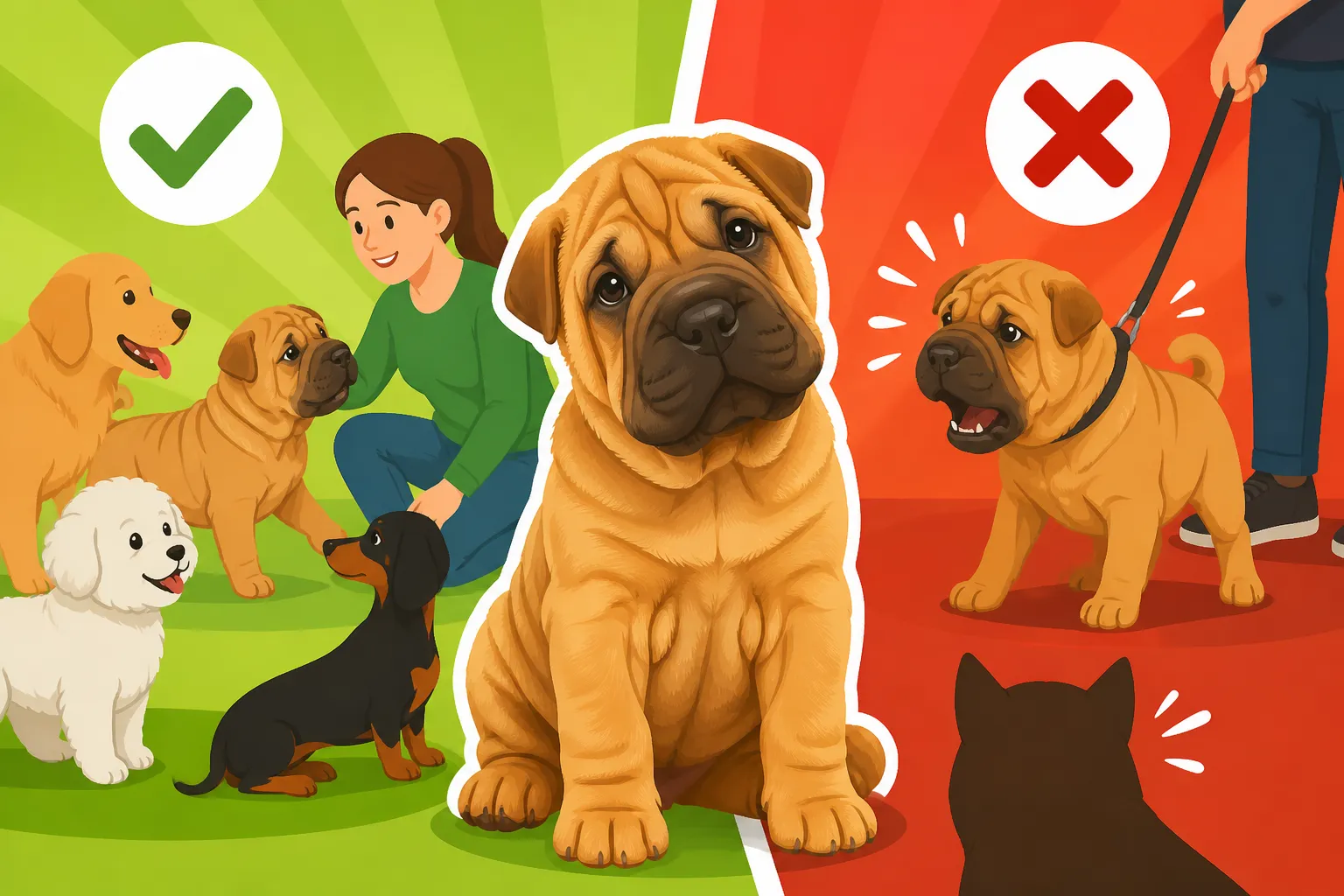
While Shar Pei are often noted for being dog-selective as adults, positive, early introductions to well-socialized, calm dogs and other animals are incredibly important. The key word here is "gradual." You're not looking for boisterous play at the dog park with every dog on day one. Instead, seek out known, vaccinated, friendly adult dogs who have a track record of being gentle and tolerant with puppies. These "mentor" dogs can teach appropriate canine manners and help your Shar Pei puppy learn how to interact politely. How a Shar Pei Behaves Toward Other Dogs is often tied to these early experiences.
Puppy classes are an excellent structured environment for this. Not only do they offer controlled play sessions with other puppies of similar size and temperament, but they also provide invaluable guidance from experienced trainers. Trainers can help you read your Shar Pei's body language and intervene if interactions become too intense or fearful. Look for classes that emphasize positive reinforcement, teach basic manners, and offer off-leash play in a safe space. A good trainer can also advise on how to safely introduce your Shar Pei to other family pets, like cats. For example, if you have an older, calm cat, introduce them slowly, always with a leash on the puppy, allowing the cat an escape route, and rewarding calm behavior from both animals.
Avoid forcing interactions or putting your puppy into situations where they are overwhelmed or frightened by another dog. One bad experience can set back weeks of positive progress. Instead, focus on short, successful meetings. Even simply sitting at a distance from other dogs, rewarding your puppy for calmly observing, is a valuable form of socialization. This teaches them that other dogs can exist peacefully in their environment without being a threat, building a foundation of tolerance that can be crucial for a dog that naturally tends toward being "one-person" and dog-selective. How Widely a Shar Pei Puppy Should Be Socialized is important here.
Exploring New Sights, Sounds, and Textures
Socialization isn't just about living beings; it's about the entire sensory world your Shar Pei will inhabit. Expose your puppy to a wide variety of sights, sounds, and textures in a positive and controlled manner. This includes different floor surfaces (tile, carpet, grass, gravel, concrete), loud noises (vacuum cleaners, doorbells, thunder, traffic sounds, construction), and various objects (umbrellas, strollers, bicycles, trash cans, children's toys).
For sounds, you can play desensitization tracks online that feature common environmental noises like thunderstorms, city traffic, or baby cries at a very low volume while your puppy is engaged in a positive activity, like eating a meal or playing with a favorite toy. Gradually increase the volume over time, ensuring your puppy remains relaxed. This helps them habituate to potentially startling sounds, making them less reactive later in life. On Amazon, you can find various "puppy sound training" CDs or digital downloads.
When it comes to sights and textures, take your puppy on short, frequent outings to different locations. Visit quiet parks, stroll through hardware store aisles (if allowed and not too overwhelming), walk on different sidewalks, and introduce them to car rides. Let them investigate new objects at their own pace, always associating these new experiences with high-value treats and praise. The key is to keep these experiences positive and avoid overwhelming them. You want your Shar Pei to associate novelty with good things, not fear or anxiety. A little bit of controlled exposure daily is far more effective than one big, overwhelming outing once a week.
Tools and Techniques for Effective Socialization
Successful socialization isn't just about what you expose your Shar Pei to, but how you do it. The methods you use are crucial for building positive associations and confidence, rather than fear or indifference.
Positive Reinforcement and High-Value Rewards
Positive reinforcement is the cornerstone of effective socialization for any breed, but it's especially important for a Shar Pei with their inherent independent streak. This means immediately rewarding desired behaviors or calm responses to new stimuli with something your puppy truly values—be it a delicious treat, a favorite toy, or enthusiastic praise. The goal is to create a strong, positive emotional association with everything new and potentially scary. You want your puppy to think, "Oh, a strange person! This means chicken!" or "Another dog! Yay, playtime!"
High-value rewards are crucial here. Kibble might be fine for basic obedience at home, but for socialization experiences, pull out the big guns: tiny pieces of cheese, cooked chicken, hot dogs, or liver treats. These are powerful motivators that can help override natural apprehension. For example, when a new person enters the room, immediately mark a moment of calm (even just a pause in barking or a soft gaze) with a verbal "yes!" and follow it with a delicious treat. If the person then tosses a treat, even better. This forms a direct link between the new stimulus and a positive outcome. Remember, the timing of the reward is just as important as the reward itself; it needs to happen within a few seconds of the desired behavior.
Another aspect of positive reinforcement is never punishing fear or aggression during socialization. Punishing a growl or a lunge will only teach your Shar Pei to suppress those warning signs, making them more likely to escalate to a bite without warning. Instead, identify the threshold at which your dog becomes uncomfortable, stay below it, and use positive reinforcement to change their emotional response through gradual exposure. This approach builds trust and confidence, essential for a breed that can be sensitive to harsh handling (How a Shar Pei Responds to Harsh Handling).
Gentle Exposure and Desensitization
Desensitization is the process of gradually reducing your Shar Pei's sensitivity to a particular stimulus. This means exposing them to new things at a level where they notice it but are not overwhelmed or fearful, and then slowly increasing the intensity or proximity over time, always paired with positive experiences. For instance, if your puppy is afraid of the vacuum cleaner, don't just turn it on full blast next to them. Start by having the vacuum in the room, turned off, while you play or feed treats. Then, turn it on in a distant room at a low volume. Over days or weeks, slowly bring the vacuum closer and increase the volume, all while providing treats and praise for calm behavior.
Similarly, for meeting other dogs, start with parallel walks at a distance where your Shar Pei is aware but not reacting, showering them with treats. Gradually decrease the distance over multiple sessions as their comfort level increases. The idea is to keep them "under threshold"—the point at which they start to show signs of stress or fear. If they react, you've gone too far, too fast, and need to take a step back. This slow, steady approach is far more effective than trying to "force" them to confront their fears, which often backfires and intensifies the phobia.
Consistency is key with desensitization. Short, frequent sessions (5-10 minutes) are more effective than infrequent, long ones. It's about slowly reprogramming their emotional response from fear or apprehension to neutrality or even anticipation of good things. This systematic approach builds a resilient and adaptable dog, one step at a time. It’s a marathon, not a sprint, especially with a breed as discerning as the Shar Pei.
Utilizing Puppy Classes and Professional Guidance
Enrolling your Shar Pei puppy in a well-run puppy class is one of the best investments you can make in their socialization and overall training. These classes offer a safe, controlled environment for your puppy to interact with other vaccinated puppies of various breeds and sizes, learning appropriate play behavior and canine social cues. More importantly, they provide invaluable guidance from certified professional dog trainers who can help you navigate common puppy challenges and offer breed-specific advice.
A good puppy class will also incorporate various exercises that expose your Shar Pei to different surfaces, sounds, and gentle handling by different people. They will teach you positive reinforcement techniques and help you understand your puppy's body language, enabling you to identify early signs of stress or discomfort. This structured learning environment is particularly beneficial for Shar Pei puppies, as it provides consistent, positive experiences that reinforce confidence and good manners. Brands like BAXTER & Bella offer online puppy programs that can supplement in-person classes, providing a wealth of resources and guidance for owners to implement structured socialization at home.
Beyond puppy classes, if you find yourself struggling or notice any concerning behaviors (excessive fear, growling, resource guarding), don't hesitate to seek individual guidance from a certified professional dog trainer or a veterinary behaviorist. Early intervention is crucial. A behaviorist can help you understand the root cause of the behavior and develop a tailored plan to address it, potentially saving you years of frustration and stress. Remember, it's never too early to ask for help, and a small investment in professional guidance early on can prevent much larger, more difficult issues down the road. When a Shar Pei Needs a Behaviorist is often earlier than owners realize.
Addressing the Unique Challenges of Shar Pei Socialization
While the principles of socialization apply to all dogs, the Shar Pei's specific breed traits present unique challenges that owners must acknowledge and actively work with. Ignoring these inherent qualities will only make the socialization process harder.
Overcoming a Shar Pei's Natural Stubbornness
Shar Pei are renowned for their independent, headstrong nature. They are not typically a breed that lives to please, like a Golden Retriever. This can make training and socialization feel like an uphill battle at times, as they may not immediately comply or show enthusiasm for what you're trying to teach them. Their intelligence is often channeled into figuring out what benefits them, rather than simply following commands. The Headstrong Streak Nobody Trains Out of a Shar Pei is a reality.
To navigate this, consistency and patience are your best friends. Establish clear boundaries and routines from day one. Use high-value rewards to make training and socialization exercises highly motivating. If your Shar Pei sees a clear benefit in cooperating (e.g., "sit means chicken!"), they are far more likely to engage. Keep training sessions short, fun, and varied to prevent boredom. A Shar Pei will quickly tune out if they feel redundant or coerced. Instead of demanding compliance, frame interactions as invitations to earn a reward. For example, instead of forcing them to greet a stranger, entice them with a tossed treat from the stranger, allowing them to make the choice to approach.
Avoid relying on force or punishment. Not only is it detrimental to their emotional well-being and trust in you, but a headstrong Shar Pei will often shut down or become more resistant when confronted with harsh methods. Instead, focus on positive reinforcement, clear communication, and making all new experiences as enjoyable and rewarding as possible. Your goal is to build a partnership based on trust and mutual respect, which is the most effective way to guide an independent spirit like the Shar Pei.
Managing the "One Person" Tendency
Many Shar Pei develop a strong bond with one primary person in the household, often becoming intensely devoted to them while remaining more aloof or wary of others. While this can be flattering for the chosen human, it can also create challenges for socialization, particularly if other family members or frequent visitors are not seen as part of the core "pack." This "one-person" tendency can be exacerbated if the primary caretaker is the only one engaging in socialization activities. The One Person Streak in a Shar Pei needs careful management.
To counteract this, it's crucial that everyone in the household participates in socialization and training activities with the puppy. Each family member should spend quality time with the Shar Pei, feeding meals, playing, walking, and practicing basic cues. This helps the puppy form positive associations with all family members, recognizing them as sources of good things and reliable caregivers. When introducing the puppy to strangers, ensure that different family members are present and also involved in facilitating positive interactions.
For a Shar Pei who leans heavily into their one-person bond, ensure that other people are consistently the bringers of highly desirable things—special treats, exciting toys, or unique games. This helps to broaden their circle of trust and reduces the likelihood of them becoming overly possessive or protective of their primary person. It teaches them that positive experiences can come from many sources, not just one. This balanced approach helps ensure your Shar Pei is a well-adjusted family member, rather than a dog who only tolerates everyone else.
The Importance of Breed-Specific Knowledge
Owning a Shar Pei means committing to understanding their breed-specific needs, not just during puppyhood but throughout their lives. Their unique physical characteristics (wrinkles, narrow ear canals, deep-set eyes, specific coat types) and predisposition to certain health conditions (like Familial Shar Pei Fever or skin issues) directly impact how they experience the world and how they should be socialized and trained. For example, understanding their limited peripheral vision (as discussed earlier) informs how you introduce them to new situations, always ensuring they have time to process what's happening. One Mutation Gave the Shar Pei Its Wrinkles and Its Fever and Skin Is the Shar Pei's Largest Problem by Surface Area highlight some of these unique characteristics.
A Shar Pei owner needs to be aware that their dog might be more prone to skin fold infections, which could make them sensitive to touch in certain areas. Early, gentle handling exercises during puppyhood, regularly checking their ears and paw pads, and getting them comfortable with being examined are all part of good socialization and preventative care. This also means choosing the right vet who understands the breed's nuances, and a trainer who is familiar with their personality.
Having breed-specific knowledge also means being a strong advocate for your dog. You might need to educate well-meaning strangers on how to approach your Shar Pei, explaining their reserved nature or their limited vision. It's about setting your dog up for success by understanding their world from their perspective. This deep understanding allows you to tailor your socialization efforts to their unique needs, rather than applying a generic approach that might not be effective for a Shar Pei.
The Lifelong Commitment: Continuing Socialization Beyond Puppyhood
While the puppy socialization window is critical, socialization is not a "one-and-done" task. It's an ongoing, lifelong commitment that adapts as your Shar Pei matures. Just like humans, dogs can become rusty if they don't regularly practice their social skills.
Maintaining Exposure as an Adolescent and Adult
As your Shar Pei transitions from puppy to adolescent and then to adulthood, it's vital to continue providing varied, positive exposures to the world. Adolescence (roughly 6 months to 2 years) can be a challenging period, as dogs often "test" boundaries and might revisit old fears or develop new ones. What your puppy once tolerated, your adolescent might now react to. This is where continued, consistent socialization becomes crucial. Regularly introduce them to new places, people, and experiences, ensuring each encounter remains positive and low-pressure. Take them on car rides to different destinations, visit pet-friendly stores (if appropriate for their temperament), or explore new walking trails.
The goal is to reinforce their confidence and ensure they remain comfortable and adaptable in a changing world. Even a well-socialized adult Shar Pei needs regular opportunities to practice their social skills. This doesn't mean forcing them into situations they dislike, but rather finding appropriate avenues for continued exposure. For example, if your adult Shar Pei is generally dog-selective, don't stop all dog-to-dog interaction. Instead, seek out one or two calm, friendly canine companions for controlled, supervised playdates, or continue parallel walks where they can calmly observe other dogs from a distance.
Think of it like exercise for humans: you don't just work out intensely for a few months and expect to stay fit for life. You need to maintain a level of activity. Similarly, a Shar Pei needs mental and social stimulation throughout their lives to remain well-adjusted. This ongoing commitment prevents regression and strengthens the positive associations built in puppyhood, contributing to a happy, confident companion.
Recognizing and Addressing Setbacks
Even with the best intentions and consistent effort, setbacks can occur. Your Shar Pei might suddenly become reactive to something they previously ignored, or show renewed fear towards a type of person or situation. This is normal and doesn't mean all your early socialization efforts were in vain. Triggers can sometimes develop later due to a single negative experience, a change in environment, or even an underlying health issue.
When a setback occurs, the first step is to identify the trigger and the circumstances surrounding it. Was there a loud noise? A startling movement? Has their routine changed? Rule out any underlying medical causes by consulting your vet; pain or discomfort can often manifest as behavioral changes. Once medical issues are excluded, you'll need to re-engage in gentle desensitization and counter-conditioning, taking a few steps back in your training plan.
For instance, if your Shar Pei suddenly develops a fear of children, revisit the strategies you used as a puppy: expose them to children from a safe distance, paired with high-value treats, gradually decreasing the distance as their comfort increases. Never punish fear, as it will only exacerbate the problem. Instead, create a safe space for them to retreat to, and always advocate for their comfort. It's about being observant, patient, and understanding that fear or reactivity is often a plea for help, not an act of defiance.
Seeking Professional Help When Needed
There's no shame in admitting you need professional help with your Shar Pei's behavior, especially with a breed that comes with such unique characteristics. In fact, it's often the smartest and most responsible course of action. If you're experiencing persistent fear, aggression, severe anxiety, or if you feel overwhelmed by your Shar Pei's behavior, it's time to consult with a certified professional dog trainer, a canine behavior consultant, or a veterinary behaviorist.
These professionals have the expertise to assess your dog's specific situation, identify the root causes of their behavior, and develop a tailored modification plan. They can teach you advanced techniques, help you understand canine body language, and guide you through the process safely and effectively. Trying to tackle complex behavioral issues on your own can often lead to frustration, worsen the problem, or even put you and others at risk. A certified professional will use humane, evidence-based methods, focusing on positive reinforcement and force-free techniques. This is particularly important for a Shar Pei, who can shut down or become more resistant to harsh methods.
Investing in professional guidance can save you immense stress, improve your dog's quality of life, and strengthen the bond between you. It's never too late to start working on behavioral issues, although early intervention is always ideal. Remember, your Shar Pei deserves to live a confident, happy life, and sometimes, expert help is the key to unlocking that potential. Whether a Shar Pei Needs a Behaviorist is something to consider early.
Preventing the "Pay for It Later" Scenario
The title of this article isn't just a catchy phrase; it's a stark reality for many Shar Pei owners. The "payment" for neglected socialization isn't always financial, though it often is. It's also paid in stress, heartache, restricted lifestyles, and a diminished quality of life for your beloved companion.
The Financial and Emotional Costs of Behavioral Issues
Let's talk about the cold, hard cash first. An unsocialized Shar Pei who develops significant behavioral issues can become a massive financial drain. Think about it:
- Specialized Training: Hiring a professional dog trainer or behaviorist can be a significant investment. While a good puppy class might cost a few hundred dollars, individual behavior modification sessions can run much higher, and often require multiple sessions over an extended period. What an Emergency Visit for Shar Pei Fever Costs might be a one-off, but behavior modification is ongoing.
- Medical Interventions: For severe anxiety or fear-aggression, a vet might prescribe anti-anxiety medications or supplements to help manage symptoms, which are ongoing monthly costs.
- Damage Control: A reactive dog might chew through leashes, crates, or even furniture due to stress. If aggression escalates, there could be vet bills for another dog or person, or even legal fees.
- Restricted Lifestyle: You might need specialized boarding facilities (which are often more expensive) if your dog cannot cope with regular kennels, or you might find yourself unable to travel or participate in activities that once brought you joy.
Beyond the financial outlay, the emotional toll is immense. Living with a constantly stressed, reactive, or aggressive dog is exhausting. You might feel guilty, frustrated, isolated, or even resentful. The dream of a calm, friendly companion can quickly be replaced by a feeling of constant vigilance and management. This emotional burden can strain family relationships and impact your overall well-being.
The Impact on Your Dog's Quality of Life
More importantly, neglecting early socialization profoundly impacts your Shar Pei's quality of life. A dog living in a perpetual state of anxiety or fear isn't a happy dog. They may constantly scan their environment for threats, be unable to relax, or feel trapped by their own emotional responses. They miss out on the simple joys of exploring new places, meeting friendly people, or engaging in appropriate play with other dogs.
Imagine being afraid of every new person you meet, every new sound you hear, or every unfamiliar place you visit. That's often the reality for an unsocialized dog. Their world shrinks, and their opportunities for enrichment and happiness are severely limited. They might spend their days pacing, hiding, or exhibiting stress behaviors, rather than truly enjoying their existence as a cherished family member. This isn't the life any owner wants for their dog.
Providing a well-socialized life allows your Shar Pei to be confident, adaptable, and comfortable in various situations. It allows them to relax, to trust, and to experience the world's wonders without constant fear. This translates to a longer, healthier, and more fulfilling life for them, and a much more peaceful and joyful one for you.
The Importance of Breeder Responsibility
The foundation for good socialization doesn't start the day you bring your puppy home; it begins with the breeder. A responsible breeder plays a crucial role in the very first stages of socialization, providing their puppies with early, varied, and positive experiences even before they go to their new homes. This includes gentle handling by different people, exposure to various household sounds, and interaction with their littermates and dam.
A good breeder will also provide you with a health guarantee, a detailed contract, and transparent information about the puppy's parents' temperaments and health clearances. They should be asking you lots of questions to ensure their puppies are going to responsible homes that understand the commitment involved, especially with a breed like the Shar Pei. They will be actively promoting and educating prospective owners on the importance of continued socialization once the puppy is home. If a breeder doesn't prioritize early puppy experiences or downplays the need for extensive socialization, it's a major red flag. What a Shar Pei Breeder's Contract Should Cover and Whether a Shar Pei Breeder Should Show Fever History are important topics to discuss.
Responsible breeding, paired with diligent early owner efforts, creates the best possible start for a Shar Pei. It's a partnership where the breeder provides a sound genetic and early behavioral foundation, and the owner builds upon that with consistent, positive socialization and training. This collaborative approach is essential for preventing the costly and heartbreaking "pay for it later" scenario and ensuring your Shar Pei thrives.
| Socialization Milestone | Age Range (Approximate) | Key Experiences & Goals | Potential Consequences of Neglect |
|---|---|---|---|
| Neonatal Period | 0-2 Weeks | Dam/litter care, gentle human handling. Building tolerance to touch. | Increased stress, reduced handling tolerance. |
| Transition Period | 2-4 Weeks | Sensory development, brief sound/sight exposure. | Delayed sensory development, increased fear. |
| Primary Socialization | 4-12 Weeks | Crucial! Exposure to diverse people, sounds, sights, surfaces, other dogs (vaccinated & known). Positive associations. | Fear-aggression, leash reactivity, anxiety, inability to cope. |
| Fear Imprint Period | 8-10 Weeks | First major fear period. Very cautious exposure, positive reinforcement only. Avoid negative experiences. | Intensified fears, lasting phobias. |
| Secondary Socialization | 12-16 Weeks | Continuation of diverse exposures, puppy classes. Introduce novel environments. | General anxiety, difficulty adapting to new places. |
| Adolescence | 6-24 Months | Continued maintenance of social skills, structured training. Navigating "testing" phases. | Regression of skills, development of new fears/reactivity. |
| Adulthood | 2 Years + | Lifelong maintenance of positive experiences, mental enrichment. | Social skill erosion, increased boredom, reduced quality of life. |
Disclaimer
This article is for general informational purposes only and does not constitute professional advice. Laws, prices and regulations vary by location and change over time. Consult a qualified professional for guidance on your specific situation.