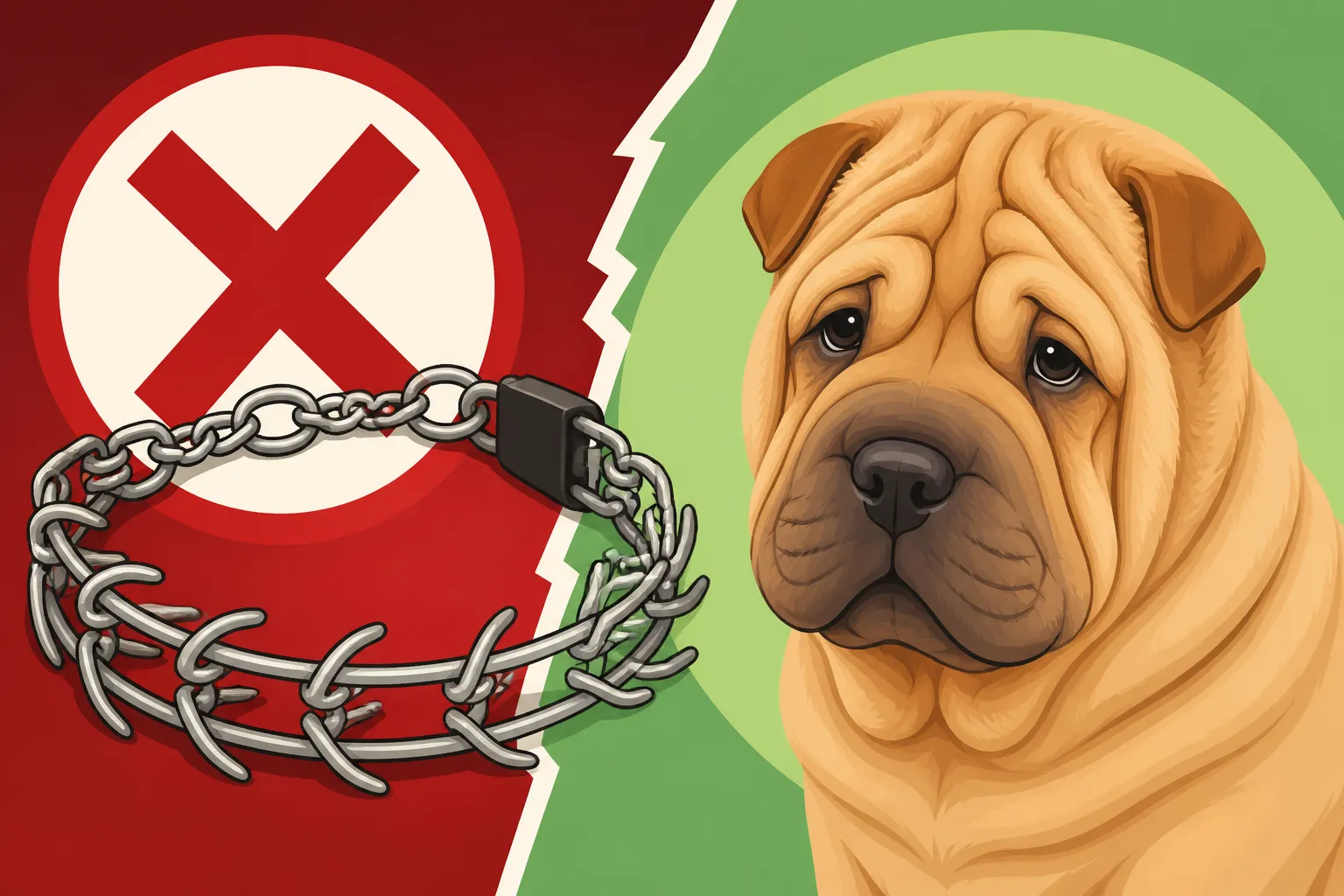
Why a Prong Collar Is Wrong for a Shar Pei
It’s a frustrating moment when you feel like you’ve tried everything to manage your Shar Pei’s leash pulling or reactivity, and someone suggests a training tool that promises quick fixes. For many Shar Pei owners, the prong collar can seem like a last resort, but understanding why this tool is fundamentally wrong for our unique, sensitive companions is crucial for their well-being and your bond. This guide will explain why prong collars are a poor choice for a Shar Pei and introduce more effective, humane training methods.
The Basic Idea Behind Prong Collars and Why They're Appealing
When you're walking your beloved Shar Pei, and they suddenly lunge at a squirrel or another dog, it can be incredibly jarring and even dangerous. You might feel your arm nearly yanked out of its socket, and the frustration quickly builds. In these moments of desperation, many owners are introduced to prong collars, also known as pinch collars. These collars are designed with blunt metal prongs that pinch the loose skin around a dog’s neck when the leash is tightened. The idea is to mimic a mother dog correcting her puppies by grabbing their neck, or to create an uncomfortable pressure that deters pulling and unwanted behaviors.
For a busy owner, the appeal is often the promise of immediate results. A dog that pulls relentlessly might stop almost instantly when introduced to a prong collar, simply because the pressure is unpleasant enough to make them pause. Trainers who advocate for them often frame them as a way to communicate clearly and quickly with a strong or stubborn dog. They might argue that the prongs distribute pressure more evenly than a choke chain, or that they don't cause long-term harm if used "correctly." However, this quick fix often overlooks the deeper behavioral and physical implications, especially for a breed as special and sensitive as the Shar Pei. The immediate cessation of a behavior doesn't mean the dog has learned what you want them to do, only that they've learned to avoid discomfort.
Why a Shar Pei's Unique Anatomy Rejects the Prong Collar
Our Shar Pei friends are known for their distinctive wrinkles and dense, often horse-like coat, which make them utterly charming. But these very features, along with their unique bone structure, create significant reasons why a prong collar is completely inappropriate and potentially harmful for them. It’s not just about discomfort; it’s about outright physical risk and psychological damage that outweighs any perceived benefit.
Delicate Neck Skin and Mucinosis
One of the most defining characteristics of a Shar Pei is their abundance of loose skin, particularly around the neck. This skin is not just for show; it's a part of their genetic makeup that contributes to their unique appearance. However, this loose skin is incredibly susceptible to injury when subjected to the sharp, concentrated pressure points of a prong collar. The prongs, while blunt, are designed to create a pinching sensation. On a dog with tighter skin, this might distribute pressure somewhat, but on a Shar Pei, it can easily catch and tear the delicate skin and underlying tissues.
Furthermore, many Shar Pei suffer from a condition called cutaneous mucinosis, where there's an overproduction of mucin in the skin, giving it a puffy, swollen feel. This condition makes their skin even more fragile and prone to damage. Imagine the prongs pressing into skin that is already compromised; it's a recipe for irritation, skin breakdown, and potentially severe infections. A prong collar could exacerbate existing skin issues or create new ones, turning what should be a pleasant walk into a painful experience. Instead of building positive associations with walks, your Shar Pei could develop a strong aversion, associating the leash with pain and fear. You might even find yourself dealing with open sores or localized inflammation, requiring veterinary intervention and further stress for both you and your dog.
Restricted Vision and Startle Reflex
Shar Pei possess a unique head structure, often with deep-set eyes and prominent brow wrinkles. This gives them a characteristic squinty appearance and, more importantly, significantly limits their peripheral vision. Unlike many other breeds that can see movement from a wide angle, a Shar Pei often needs to turn its entire head to get a full view of its surroundings. Why a Shar Pei Turns Its Whole Head to Look is not just a quirky trait; it's a fundamental aspect of how they perceive the world.
This restricted vision makes them more prone to startling. Imagine you're walking along, focused straight ahead, and suddenly something appears to your side that you didn't see coming. Your natural reaction is a jump or a quick turn. For a Shar Pei, this happens more frequently. When a Shar Pei startles and lunges or jumps on a prong collar, the sudden, sharp correction can be extremely distressing. It doesn't teach them to be less reactive; it teaches them that unexpected things hurt. This can lead to increased anxiety, fear-based aggression, or a general distrust of their environment. Instead of helping them cope, it makes them more fearful and less resilient to surprises. Why a Shar Pei Startles: It Cannot See You Coming is a vital concept for any Shar Pei owner, and applying a tool that punishes this natural reaction is counterproductive and cruel.
Behavioral Consequences: Why Prongs Undermine Trust in a Shar Pei
Beyond the physical risks, prong collars carry significant behavioral downsides that are particularly detrimental to the bond you share with your Shar Pei. Our Shar Pei are intelligent, loyal, and capable of deep affection, but they also have a strong sense of independence and can be quite sensitive. Using punitive tools like prong collars fundamentally misunderstands their nature and can erode the very trust we strive to build.
The Problem with Punitive Training
Shar Pei are known for their "one person" streak and their independent, often stubborn nature. They are not dogs that respond well to harsh handling or force. How a Shar Pei Responds to Harsh Handling is typically with resistance, shut-down behavior, or an increase in fear and anxiety, rather than compliance. Prong collars operate on the principle of aversives—applying an unpleasant stimulus to stop a behavior. While it might stop the pulling in the moment, it doesn't teach your Shar Pei what to do instead. It simply teaches them that pulling (or reacting to a trigger) results in pain or discomfort, which often creates negative associations with walks, other dogs, or even you, the handler.
Instead of fostering a cooperative spirit, punitive tools can make a Shar Pei withdraw or become more defiant. They might learn to associate the pain with the sight of other dogs, for example, leading to increased anxiety and aggression when they see them, rather than a calm response. The "stubborn" label often given to Shar Pei is frequently a misunderstanding of their need for clear, fair, and positive guidance. Trying to "dominate" a Shar Pei with a prong collar often backfires, creating a dog that is less willing to engage, less trusting, and potentially more prone to lashing out when cornered or stressed. This is especially true given their limited ability to visually assess threats, making them more reliant on a trusted handler for safety cues.
Damaging the Human-Animal Bond
At the heart of any successful relationship with your dog is trust. Your Shar Pei needs to feel safe and secure with you, knowing that you are their protector and guide. When a prong collar is used, especially for reactivity or fear-based behaviors, the dog often associates the pain or discomfort not just with the trigger (e.g., another dog), but also with the person holding the leash. They don't understand that you are trying to correct them; they simply feel pain when you are present and holding the leash.
This can severely damage the bond you've worked so hard to build. A Shar Pei, while sometimes aloof with strangers, forms a deep and powerful connection with its chosen family. How a Shar Pei Bonds to Its Family involves loyalty and a quiet devotion. Introducing pain into that relationship can lead to a dog that fears your corrections, becomes hesitant to engage, or even learns to avoid you in certain contexts. Instead of looking to you for reassurance when encountering something scary or exciting on a walk, they might brace themselves for the next correction. This erodes their confidence and creates a barrier to effective communication. Ultimately, you want your Shar Pei to want to work with you, not to be forced into submission through discomfort.
Kinder, More Effective Alternatives for Training Your Shar Pei
The good news is that there are many humane, effective, and trust-building methods for training your Shar Pei, even for common challenges like leash pulling and reactivity. These methods focus on positive reinforcement, clear communication, and understanding your Shar Pei's unique motivations and needs. They might take a bit more patience and consistency than a quick "correction," but the long-term rewards—a happy, confident, and well-behaved Shar Pei with whom you share a strong, loving bond—are immeasurable.
Harnesses for Better Control and Comfort
For managing leash pulling without discomfort, a well-fitting front-clip harness is often a game-changer for Shar Pei owners. Unlike collars that put pressure on the neck, a front-clip harness redirects your dog's momentum back towards you if they pull. When your Shar Pei pulls, the leash attachment point on their chest gently turns them to the side, making it physically difficult for them to continue pulling forward. This naturally encourages them to walk by your side without causing any pain or strain on their delicate neck or trachea.
Many brands offer excellent front-clip harnesses, and finding one that fits a Shar Pei's unique body shape (broad chest, often thick neck but with loose skin) is key. You can find a wide variety of options on platforms like Amazon, allowing you to read reviews from other owners and select one that is comfortable and secure. Look for harnesses with good padding and adjustable straps to ensure a snug but not restrictive fit. A proper harness allows your Shar Pei to move freely, breathe easily, and experience walks as a positive outing, rather than a source of discomfort. Whether a Harness Suits a Shar Pei Better is a resounding yes for many owners struggling with pulling.
Positive Reinforcement and Engaging Training
The core of effective Shar Pei training lies in positive reinforcement. This means rewarding the behaviors you want to see, rather than punishing the ones you don't. Shar Pei are highly intelligent, and while they can be particular about their motivations, they respond incredibly well to high-value treats, praise, and engaging activities.
- Lure and Reward: Instead of yanking the leash, use a treat to lure your Shar Pei into the desired position (e.g., walking nicely beside you) and then immediately reward them. Over time, the treat can be phased out, and your verbal cues or hand signals become the reward predictor.
- Clicker Training: A clicker is a fantastic tool for precise communication. The moment your Shar Pei performs the desired behavior (e.g., slack in the leash), you click and immediately follow with a reward. This marks the exact moment they got it right, helping them understand what earned the treat.
- Engaging Exercises: Keep training sessions short, fun, and varied. Shar Pei can get bored with repetition, so mix things up. Consider incorporating scent work or short bursts of obedience training during walks. BAXTER & Bella offers comprehensive online training programs that are built entirely around positive reinforcement, providing structured lessons and support for owners who want to deepen their understanding of humane training techniques. This can be especially helpful for addressing specific behavioral challenges like reactivity or loose-leash walking.
Managing Reactivity with Confidence
If your Shar Pei exhibits reactivity (barking, lunging) towards other dogs or people, positive reinforcement is even more critical. Punishment can intensify fear and anxiety, making the reactivity worse.
- Identify Triggers: Understand what sets your Shar Pei off. Is it other dogs? Certain types of people? Cars? Distance is your friend here.
- Threshold Training: Work at a distance where your Shar Pei notices the trigger but doesn't react. The moment they see the trigger and remain calm, reward them with a high-value treat. This creates a positive association: "Oh, other dog means yummy treats!"
- Counter-Conditioning: Gradually decrease the distance to the trigger over many, many sessions, always rewarding calmness and positive attention towards you. If your Shar Pei starts to react, you've gone too close, too fast. Increase the distance again.
- Desensitization: Slowly expose your Shar Pei to their triggers in a controlled, low-stress manner, always pairing the exposure with positive experiences.
- Structured Socialization: Ensure your Shar Pei had appropriate socialization as a puppy. If not, or if they have past negative experiences, a professional force-free trainer or behaviorist can provide invaluable guidance. The Shar Pei in Puppy Class is a good start, but continuous, positive exposure throughout their life is vital.
Remember, building a strong, positive relationship with your Shar Pei is a marathon, not a sprint. Choosing humane and effective training methods will not only lead to a well-behaved companion but also strengthen the unique bond you share, ensuring a happy and healthy life together.
| Training Tool | Shar Pei Suitability | Pros for Shar Pei | Cons for Shar Pei | Best Use Case |
|---|---|---|---|---|
| Prong Collar | Unsuitable | Perceived immediate stop to pulling | Physical harm (skin tearing, mucinosis exacerbation), anxiety, fear, bond damage | None, for a Shar Pei |
| Flat Buckle Collar | Limited | Basic ID, comfortable when not pulling | Can cause neck/tracheal damage with pulling, escape risk with loose skin | For ID tags, light walks on a well-trained dog |
| Front-Clip Harness | Highly Suitable | Redirects pulling without pain, comfortable, secure, no neck pressure | May take time for dog to adjust to fit/feel | Loose-leash walking, reactivity management, general walks |
| Head Halter | Suitable (with care) | Excellent control, good for strong pullers or reactive dogs | Some dogs resist initial use, needs proper introduction, can rub face folds | For specific training challenges, short-term management |
| Clicker | Highly Suitable | Precise positive communication, builds focus | Requires consistency from owner | Foundation training, teaching new cues, behavior modification |
| High-Value Treats | Highly Suitable | Strong motivator for Shar Pei | Can contribute to weight gain if not balanced with diet | Reinforcing desired behaviors, counter-conditioning |
Disclaimer
This article is for general informational purposes only and does not constitute professional advice. Laws, prices and regulations vary by location and change over time. Consult a qualified professional for guidance on your specific situation.


