Dog to Dog Is the Shar Pei Problem, Not Dog to Person
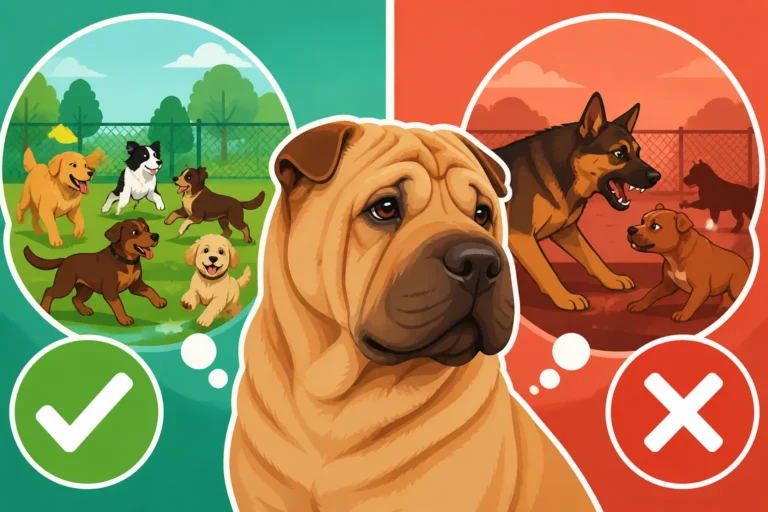
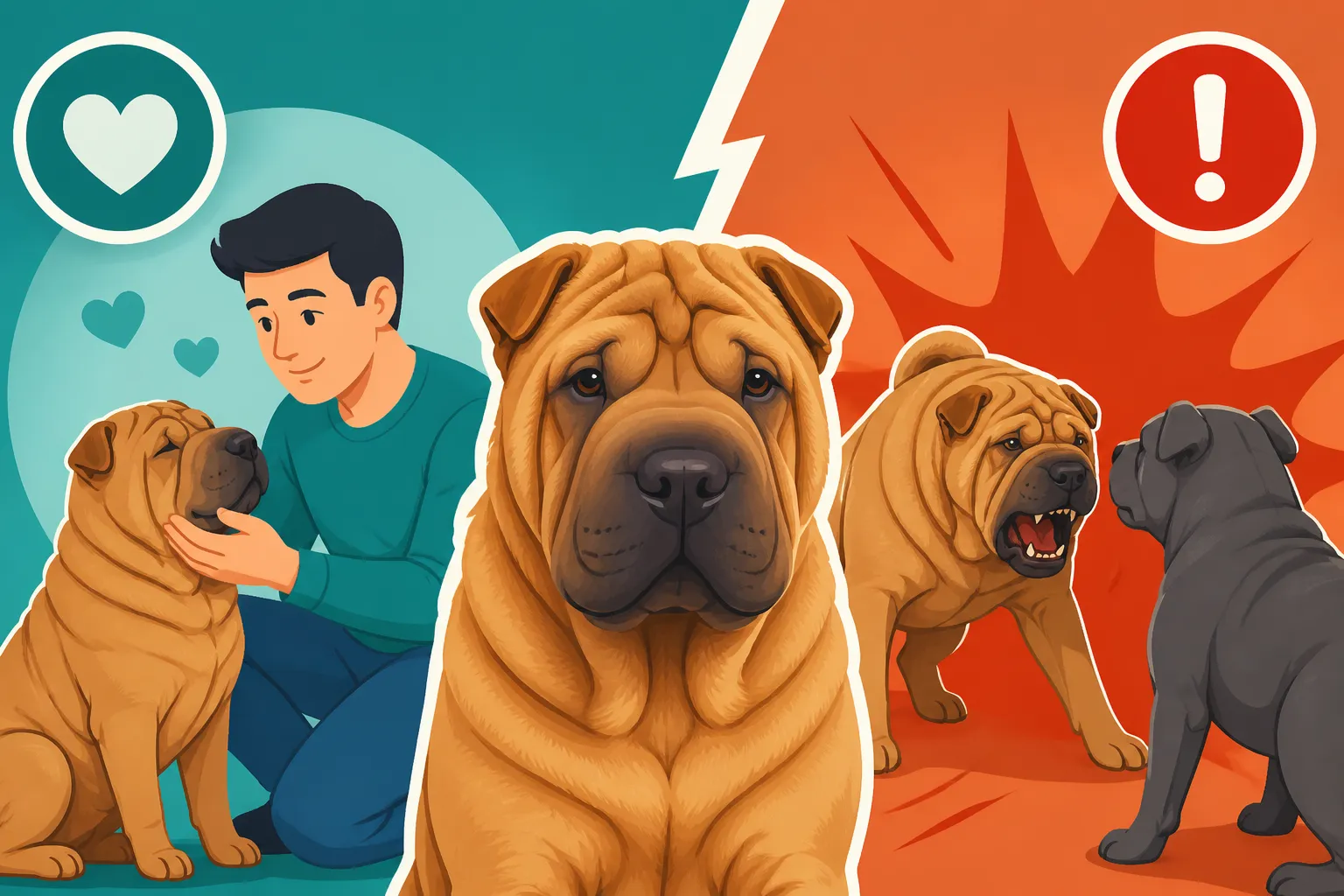
It’s a scenario so many of us Shar Pei owners know all too well: you’re walking your beautiful, loyal companion, who is a perfect angel with every human they meet, only for them to turn into a reactive, lunging, barking mess the moment another dog appears. This can be incredibly frustrating, embarrassing, and frankly, heartbreaking. This guide will dive deep into why dog-to-dog interactions are often the biggest behavioral challenge for Shar Pei owners, helping you understand the unique factors at play and providing actionable strategies to navigate these tricky situations.
Understanding the Shar Pei's Dog-to-Dog Dynamics
The challenge of dog-to-dog interactions in Shar Pei isn't a random quirk; it's deeply rooted in their history and unique physical traits. These aren't your average Golden Retrievers or Labradors who joyfully greet every canine they encounter. Instead, many Shar Pei come wired with a predisposition for caution, territoriality, and sometimes, outright conflict with other dogs. It’s not a reflection of your failure as an owner, but rather a characteristic ingrained in the breed.
Historical Context: Bred for Solitude, Not Packs
To truly understand why your Shar Pei might eye another dog with suspicion rather than excitement, we have to look back at what they were bred for. The Shar Pei originated in ancient China as a multi-purpose farm dog. Their jobs included guarding livestock, protecting their family's property, and even hunting. These were solitary roles, not jobs that required them to be part of a large pack or to joyfully mingle with strange dogs from other farms. Their survival, and their family's well-being, depended on their vigilance and their ability to deter threats – which often included other animals, canine or otherwise. They were not developed to be naturally gregarious with other dogs in the way many modern companion breeds are. This historical imperative often translates into a lower tolerance for unfamiliar dogs and a strong sense of personal space, making dog parks or busy walking trails potential minefields. A Shar Pei Was Bred to Guard, Not to Greet is an important piece of their genetic puzzle.
Imagine a farmer in rural China whose livelihood depended on his few animals. He wouldn't want his dog making friends with every stray that wandered by, potentially bringing disease or simply distracting from their duties. His dog's loyalty was to him and his property. This deeply ingrained sense of duty means that a Shar Pei often sees other dogs as potential competitors for resources or territory, even if those "resources" are just your attention on a walk. They might tolerate familiar pack members at home, but outside, their ancestral instincts often kick in, making casual greetings a high-stakes affair. This isn't aggression for aggression's sake, but often a deeply rooted defensive posture.
Subtle Communication: Wrinkles and Narrow Vision Impacting Social Cues
Adding another layer of complexity to Shar Pei dog-to-dog interactions are their distinctive physical features, particularly their wrinkles and narrow field of vision. Dogs communicate primarily through body language – subtle shifts in posture, ear position, tail wags, and facial expressions. For many breeds, a quick glance at another dog's face or ears can convey a wealth of information: "I'm friendly," "I'm nervous," "Stay away." But for a Shar Pei, these signals are often obscured.
Their deep wrinkles, especially around the face and forehead, can make it incredibly difficult for other dogs to read their expressions accurately. A typical dog might misinterpret a Shar Pei's perpetually furrowed brow as a sign of aggression or deep concentration, even when the Shar Pei is feeling perfectly neutral. Conversely, your Shar Pei might struggle to interpret the nuances of another dog's facial cues, leading to misunderstandings and increased anxiety. Furthermore, their small, deeply set eyes and the excess skin around them can significantly limit their peripheral vision. This means they often can't see another dog approaching from the side without turning their entire head, which can lead to startling and reactive responses. Why a Shar Pei Startles: It Cannot See You Coming is a real problem in social situations.
Think about walking through a crowded room with blinders on, unable to see anything beyond what's directly in front of you. Every sudden movement or sound from your periphery would be startling, right? That's often what a walk can feel like for a Shar Pei. They might not see a bouncy Labrador approaching until it's right in their space, leading to a sudden, defensive reaction that appears aggressive to the other dog and owner. This communication barrier can be a significant source of stress for both your Shar Pei and the dogs they encounter, often snowballing into reactivity as they learn that a sudden outburst might keep unwanted visitors at a distance. It's a self-reinforcing cycle that requires careful management and understanding from us as owners.
Recognizing the Signs of Discomfort and Reactivity
Before you can effectively manage your Shar Pei's interactions with other dogs, you need to become a master at reading their body language. Shar Pei can be notoriously stoic, and their unique physiology can sometimes make their signals harder to interpret than those of a more expressive breed. Ignoring these early warnings can lead to escalated reactions, making future encounters even more challenging. Learning to spot the subtle cues of discomfort or impending reactivity is your first line of defense.
Body Language Nuances: Shar Pei-Specific Signals
While many general dog body language cues apply, Shar Pei have specific quirks that can make them harder to read for both humans and other dogs. Their small, often tightly held ears might not show the same range of movement as a German Shepherd's or a Labrador's. Their "scowling" facial expression, a result of their wrinkles, can be misinterpreted as aggression even when they are simply neutral or slightly nervous. A truly happy, relaxed Shar Pei will often have soft eyes, a slightly open mouth with the tongue barely visible, and a loosely carried tail, often with a gentle wag. But pay close attention to the subtle shifts.
When a Shar Pei starts to feel uncomfortable or threatened by another dog, you might see their muscles tense, their tail might become rigid or tuck slightly, and their eyes might narrow, focusing intensely on the other dog. They might hold their breath for a moment or give a hard stare. Sometimes, you'll see a quick lick of the lips, a yawn, or a head turn away – all signs of stress or an attempt to de-escalate that might be missed by an approaching, boisterous dog. If they begin to lower their head, flatten their ears even further, or lean their body away, they are signaling "I don't want to engage." Understanding these subtle indicators is crucial for intervening before a full-blown reaction occurs.
Escalation Ladder: From Subtle to Overt Reactions
Understanding the "escalation ladder" of a Shar Pei's reactivity is vital for proactive management. It rarely goes from zero to a hundred in an instant. Typically, there's a progression of signals, starting subtly and becoming more overt as their discomfort increases and their warnings are ignored. Initially, your Shar Pei might just stiffen, avert their gaze, or offer a low, rumbling growl – often so low it’s barely audible. This is their polite way of saying, "Please create more space."
If these subtle warnings are missed or disregarded by the approaching dog or human, the Shar Pei's reactions will escalate. You might then see a more pronounced growl, a snarl showing teeth, a raised hackle, or a quick lunge on the leash. These are clearer "back off" signals. If pushed beyond this point, especially if they feel cornered or truly threatened, they may resort to snapping or biting. It’s important to remember that these are not unprovoked attacks; they are the final stage of a communication process where all earlier warnings were ignored. Our job as owners is to recognize these early signals and create distance or redirect them long before they feel the need to use their most extreme forms of communication. Keeping a Whether a Shar Pei Owner Should Keep a Fever Log is common for health; consider a similar log for reactivity to track triggers and responses.
The Critical Window: Early Socialization and Its Impact
The foundation for a Shar Pei's behavior, particularly concerning other dogs, is laid during a crucial period in their puppyhood. Many owners, eager to ensure their Shar Pei is friendly and well-adjusted, might mistakenly believe that simply exposing their puppy to as many dogs as possible is the key. However, with a breed like the Shar Pei, proper socialization is about quality and positive experiences, not just quantity. Miss this window, or do it incorrectly, and you might be facing an uphill battle for years to come.
Puppyhood Imperatives: Why the First Few Months Are Crucial
The period between approximately 3 to 16 weeks of age is often referred to as the critical socialization window for puppies. During this time, their brains are like sponges, eagerly absorbing information about the world around them and forming foundational impressions that will shape their adult personalities. For a Shar Pei puppy, this means exposing them to a variety of positive, controlled experiences with other dogs. It’s not about letting them run wild at a dog park, but about careful, supervised introductions to calm, well-mannered, vaccinated adult dogs who are known to be good with puppies.
The goal isn't to make your Shar Pei love every dog, but to teach them that other dogs aren't inherently a threat and that polite interactions are possible. Without this crucial early exposure, especially considering their breed predisposition for wariness, a Shar Pei puppy can quickly develop fear-based reactions towards other dogs. They learn that unfamiliar canines are something to be feared, avoided, or confronted, rather than simply coexisted with. A lack of proper socialization during these early months can contribute significantly to reactivity, aggression, and anxiety towards other dogs later in life. Socialize a Shar Pei Before Twelve Weeks or Pay for It Later highlights the urgency of this period.
Quality Over Quantity: Controlled and Positive Exposures
When it comes to socializing a Shar Pei puppy with other dogs, less can often be more, provided that "less" is carefully curated and consistently positive. Forget the crowded dog park where you can't control the behavior of every dog. Instead, focus on setting up structured playdates with one or two known, gentle adult dogs who are patient and tolerant of puppy antics. These interactions should be short, sweet, and always end on a positive note. Think of it as teaching a child social etiquette – you wouldn't throw them into a mosh pit and expect them to learn manners.
The key is to create positive associations. Pair the presence of another dog (at a comfortable distance, where your puppy isn't showing signs of stress) with high-value treats or praise. This helps them learn, "Oh, other dogs mean good things!" If your puppy shows any signs of fear or discomfort, you've gone too far too fast. Retreat to a distance where they are calm and try again later, or with a different dog. Puppy classes can be beneficial, but choose those that prioritize small class sizes, positive reinforcement, and experienced trainers who understand breed-specific challenges. Platforms like BAXTER & Bella offer online resources that can guide new puppy owners through structured socialization plans, even if in-person opportunities are limited or need supplementing. Remember, every positive encounter builds confidence, while every negative or overwhelming one can set you back significantly.
Managing On-Leash Reactivity
One of the most common and challenging dog-to-dog issues Shar Pei owners face is on-leash reactivity. Your dog might be perfectly calm at home, but the moment they spot another dog during a walk, the barking, lunging, and pulling begin. This isn't just frustrating; it can be dangerous if your dog gets away or if the reaction escalates. Managing this effectively requires a combination of strategic environmental management and consistent positive reinforcement training.
Environmental Management: Avoiding Triggers
The first, and often most effective, step in managing on-leash reactivity is proactive environmental management. This means becoming a master strategist on your walks. Your primary goal is to prevent your Shar Pei from being put in situations where they feel the need to react. Every time your dog reacts, the behavior is reinforced, making it harder to extinguish. So, avoid triggers whenever possible.
This might mean walking at off-peak hours when fewer dogs are out, choosing less crowded routes, or even driving to quiet parks or industrial areas for your walks. Invest in a good management tool like a front-clip harness or a head halter, which can give you more control without causing pain or discomfort. Websites like Amazon offer a wide array of choices for these tools, allowing you to find what works best for your Shar Pei's unique build. Be vigilant. Scan ahead constantly. If you see another dog approaching, calmly change direction, cross the street, or duck behind a car or bush. The goal isn't to let your Shar Pei "get used to" other dogs by forcing proximity, but to maintain a comfortable distance where they can remain calm and focused on you. Leash Reactivity in a Shar Pei is often a direct result of feeling trapped and overstimulated.
Training Techniques: Desensitization and Counter-Conditioning
Once you've mastered trigger avoidance, you can start working on actively changing your Shar Pei's emotional response to other dogs through desensitization and counter-conditioning. This is a gradual process that teaches your dog to associate the sight of another dog with something positive, rather than something to be feared or reacted against. Find a "working distance" – a distance from another dog where your Shar Pei notices the other dog but doesn't react. This might be 50 feet, 100 feet, or even further.
At this distance, as soon as your Shar Pei sees another dog, immediately start feeding them high-value treats (think cooked chicken or cheese, not just kibble) rapidly, one after another. The moment the other dog disappears, stop the treats. The idea is to create the association: "Other dog appears = yummy food! Other dog leaves = yummy food stops." You are essentially changing their emotional response from "Oh no, a dog!" to "Yay, a dog means treats!" Gradually, over weeks and months, you can slowly decrease the distance as long as your Shar Pei remains calm and responsive to you. Never push them past their threshold, and always keep sessions short and positive. Consistency is key here; a few minutes a day, every day, will yield far better results than one long, overwhelming session a week.
Navigating Multi-Dog Households
Bringing a Shar Pei into a home with existing dogs, or adding a second dog to a home with a Shar Pei, requires careful planning and a deep understanding of their unique social dynamics. While some Shar Pei can live peacefully with other dogs, especially if raised together, their independent nature and guarding instincts can make multi-dog households challenging. The key is thoughtful introduction and consistent management to prevent conflicts and ensure a harmonious environment.
Introductions and Integration: Slow and Steady Wins the Race
Introducing a new dog, especially another Shar Pei, into your home needs to be a meticulously managed process. Forget the idea of just letting them meet in the living room and hoping for the best. Initial introductions should always happen on neutral territory, such as a park they don't frequent, with both dogs on leash. Keep the leashes loose to avoid creating tension, and have two handlers. Allow them to sniff each other from a distance, then walk parallel to each other, gradually decreasing the distance if they seem calm. Watch their body language intently – stiff postures, hard stares, or raised hackles mean you need to create more space.
Once they seem comfortable in a neutral setting, move to a supervised, short visit in your yard, followed by brief, supervised periods indoors. Always separate them when you can’t supervise, even if it means crating one or both in different rooms. Feed them in separate areas, provide separate resting spots, and don't leave high-value toys or chews lying around that could become points of contention. Some online programs, like those offered by BAXTER & Bella, include modules on integrating multiple pets, which can be invaluable for navigating this delicate process successfully. Patience is your greatest tool; forcing interactions too quickly can lead to negative associations that are very hard to undo. The Shar Pei in a Multi Dog Household can be a wonderful experience, but it rarely happens without deliberate effort.
Resource Guarding Prevention: Keeping the Peace at Home
Shar Pei have a strong natural inclination to guard their resources – food, toys, beds, and even their favorite humans. This instinct, combined with their territorial nature, can be a major source of conflict in a multi-dog household. To prevent resource guarding from escalating, proactive management is absolutely essential. Never allow competition for resources.
Feed dogs in separate rooms or crates, ensuring they cannot see or reach each other's food bowls. Pick up all toys, chews, and bones when you're not actively supervising their play. Provide multiple, clearly defined resting spots – beds, crates, or blankets – so each dog has their own safe space that isn’t shared. When you're interacting with one dog, be mindful of the other and try to spread your affection evenly to prevent jealousy or guarding of human attention. If you see even a subtle sign of resource guarding – a stiffening over a toy, a low growl when another dog approaches their bed – intervene immediately by calmly redirecting the guarding dog or removing the guarded item. This is about teaching them that resources are plentiful and don't need to be defended, rather than letting the behavior become entrenched.
When to Seek Professional Help
There comes a point for many Shar Pei owners where the challenges of dog-to-dog interactions feel overwhelming, and self-help methods aren't cutting it. It's crucial to understand that getting professional guidance is not a sign of failure, but a responsible and often necessary step towards ensuring the safety and well-being of your Shar Pei and others. Knowing when to reach out for expert advice can make all the difference in achieving a more harmonious relationship with your dog.
Identifying Problem Behavior: When It's More Than Just a Quirky Trait
While a certain level of aloofness or selectivity towards other dogs is characteristic of the Shar Pei, true problem behaviors go beyond that. If your dog's reactivity involves consistent lunging, snapping, growling, or attempts to bite, if they become utterly unmanageable on leash around other dogs, or if you're experiencing actual fights in a multi-dog household, it's time to acknowledge that this is more than just a breed trait. These are serious behavioral issues that pose a risk to your dog, other dogs, and even yourself.
Other red flags include your Shar Pei showing signs of extreme fear or anxiety (trembling, excessive drooling, hiding) whenever another dog is present, or if their behavior is starting to limit your ability to provide them with adequate exercise and enrichment. If you find yourself avoiding walks, dreading encounters, or feeling constantly stressed, then the situation has moved beyond manageable DIY training. Don't wait until an incident occurs to seek help. Proactive intervention is always better, and often more successful, than reactive damage control. When a Shar Pei Needs a Behaviorist is a common question, and early intervention is usually the answer.
Finding the Right Professional: Trainers, Behaviorists, and Veterinary Support
When seeking professional help, it’s important to understand the different types of professionals and what they offer. For on-leash reactivity or general dog-to-dog etiquette, a certified professional dog trainer (CPDT) who specializes in positive reinforcement and has experience with guarding breeds can be incredibly helpful. They can teach you management techniques, leash skills, and counter-conditioning protocols. Look for trainers who focus on force-free methods and understand how to work with a dog’s emotional state rather than just suppressing symptoms.
For more severe cases of aggression, fear, or anxiety, particularly if there have been bites or significant conflicts, a board-certified veterinary behaviorist (DACVB) or a certified applied animal behaviorist (CAAB) is the gold standard. These individuals have advanced degrees and can prescribe medication if necessary, offering a more holistic approach that addresses both the behavioral and physiological components of the problem. They often work in conjunction with your regular veterinarian, who can rule out any underlying medical conditions that might be contributing to the behavior. A table might help clarify:
| Professional Type | Focus Areas | When to Consult |
|---|---|---|
| Certified Dog Trainer (CPDT) | Basic obedience, leash manners, mild reactivity, skill-building, positive reinforcement techniques. | On-leash pulling, barking at a distance, general lack of manners, basic socialization challenges. |
| Veterinary Behaviorist (DACVB) | Complex behavioral issues, aggression, severe anxiety, fear, compulsive disorders, medication management. | Bites, serious fights, chronic severe fear/anxiety, aggression unresponsive to training, suspected underlying medical cause. |
| Applied Animal Behaviorist (CAAB) | Similar to DACVB but without medical degree, focuses on behavior modification strategies. | Complex behavioral issues, aggression, severe anxiety, fear, if medication is not the primary focus or a vet is already involved. |
Always ask for references, inquire about their methods, and ensure they have experience with breeds like the Shar Pei and their unique challenges.
The Role of Owner Consistency and Patience
Ultimately, living with a Shar Pei who struggles with other dogs is a journey that demands unwavering commitment from you, the owner. There’s no magic wand or quick fix. It’s a marathon, not a sprint, and your consistency, patience, and understanding will be the most powerful tools in your arsenal. Without these, even the best training advice will fall flat.
Being the Leader: Setting Clear Boundaries
Being a leader for your Shar Pei doesn't mean being harsh or dominant. Instead, it means being a reliable, consistent, and clear communicator who sets boundaries and provides structure. Your Shar Pei needs to know that you are in charge of their world, and that you will keep them safe. This builds trust and reduces their need to "take matters into their own paws" when faced with other dogs. If they believe you have the situation under control, they are less likely to feel the need to react defensively.
This translates into consistent rules about appropriate behavior, clear expectations on walks, and predictable routines. If you sometimes allow them to lunge and bark, and other times you try to correct it, you're sending mixed signals. Every walk, every interaction, is an opportunity to reinforce the behaviors you want to see. This includes teaching a solid "leave it" cue, a reliable recall, and focusing on you even when distractions are present. Utilizing online programs, like BAXTER & Bella, can help you build these foundational obedience skills that are critical for managing more complex behavioral challenges. Your calm, confident demeanor is also contagious; if you're stressed on a walk, your Shar Pei will pick up on it and become more stressed themselves.
Long-Term Commitment: It's a Journey, Not a Sprint
It's vital to adjust your expectations and understand that changing deeply ingrained behaviors takes time, often months or even years. Some Shar Pei may never be the type to happily greet every dog at the dog park, and that's okay. Your goal might be simply to achieve peaceful coexistence on walks, or to have controlled, calm interactions with specific, known dogs. Celebrate the small victories: a walk where they only gave a soft growl instead of a full bark, or where they chose to look at you instead of lunging.
There will be setbacks. You'll have days where an unexpected dog appears, and your Shar Pei has a full-blown reaction, leaving you feeling defeated. In these moments, take a deep breath, learn from the experience, and recommit to your plan. Remember that your Shar Pei isn't trying to be "bad"; they are reacting out of instinct, fear, or a lack of appropriate coping mechanisms. Your job is to be their advocate, their guide, and their protector, helping them navigate a world that isn't always designed for a dog with their unique needs. With persistent positive reinforcement, smart management, and a whole lot of love, you can significantly improve your Shar Pei's comfort and behavior around other dogs, leading to a much happier life for both of you.
Disclaimer
This article is for general informational purposes only and does not constitute professional advice. Laws, prices and regulations vary by location and change over time. Consult a qualified professional for guidance on your specific situation.