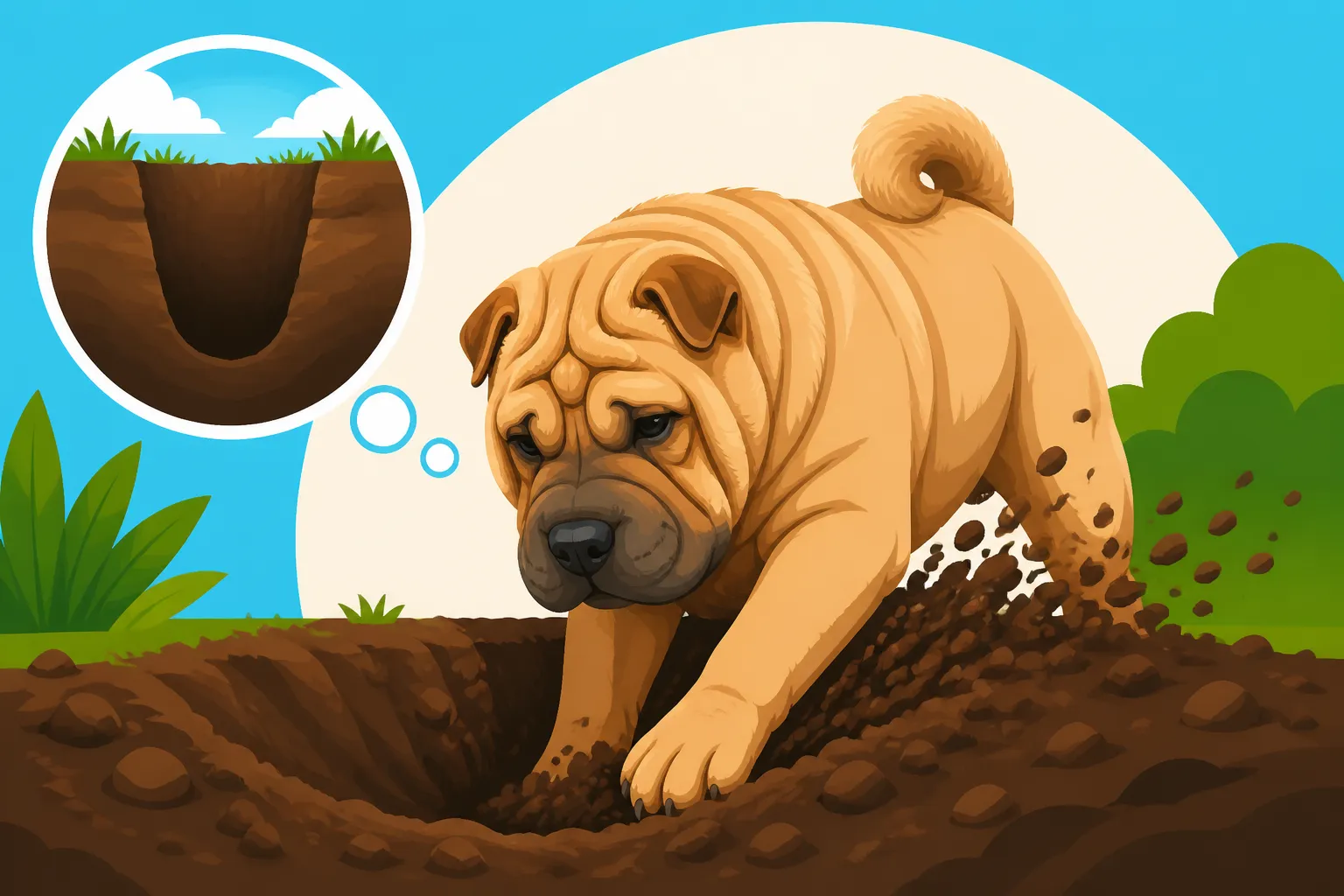
How Much a Shar Pei Digs
It’s incredibly frustrating to walk into your backyard, expecting a peaceful green space, only to find it riddled with craters and fresh dirt piles, courtesy of your beloved Shar Pei. You bought that beautiful shrub last spring, and now it’s leaning precariously, its roots exposed. Or perhaps you’re tired of tripping over mounds of dirt while trying to enjoy your evening. This guide is here to help you understand why your Shar Pei digs, how much you can realistically expect them to, and most importantly, practical strategies to manage and redirect this often-destructive behavior, saving your yard and your sanity.
Understanding the Shar Pei's Natural Instinct to Dig
Let's be real, dogs dig. It's not usually personal, though it can certainly feel that way when your prize-winning rose bush becomes the latest victim. For Shar Peis, like many breeds, digging is deeply rooted in their history and natural instincts. Understanding these primal urges is the first step toward managing the behavior rather than just getting angry about it.
The Ancestral Roots of Digging Behavior
Think about where dogs came from. Their wild ancestors dug for survival. They'd dig dens to create safe, secluded spaces to rest, raise their young, or escape predators. They'd also dig to cache food, burying excess prey to save for later, a habit many modern dogs still exhibit with their toys or treats. Beyond that, hunting small prey often involves digging. A rustle under the ground, a scent that promises a tasty morsel, and suddenly your Shar Pei is channeling their inner excavator.
While your Shar Pei might not be hunting rabbits for dinner in your suburban backyard, that instinct is still there, lurking just beneath the surface. It's part of their genetic makeup, a residual echo of what they were designed to do. Historically, the Shar Pei was a versatile working dog in rural China, often serving as a farm dog, guard dog, and even a hunting companion. What Job the Shar Pei Held in Rural China This means they weren't just decorative; they had jobs that tapped into these natural instincts, including scenting out and potentially digging for vermin. So, when you see those muddy paws, remember, they might just be doing what their ancestors did for millennia.
Is it Boredom or Instinct?
This is the million-dollar question for many frustrated owners: is my dog digging because they need to, or because they have nothing better to do? The answer is often a bit of both, but boredom can certainly amplify an underlying instinct. A Shar Pei, while sometimes perceived as a low-energy couch potato, still needs mental and physical stimulation. They might not be the breed that demands miles of running every day, but a lack of engaging activities can quickly lead to destructive behaviors like excessive digging.
Imagine being stuck in the same small space all day with no puzzles to solve, no interesting sights or smells, and no one to interact with. You'd probably find ways to entertain yourself, right? For a Shar Pei, that entertainment might manifest as systematically excavating your flowerbeds. If your Shar Pei isn't getting enough walks, playtime, or enrichment, that natural digging instinct finds an easy outlet in your yard. A tired dog, both physically and mentally, is generally a well-behaved dog. If your Shar Pei is only getting a quick trot around the block once a day, or worse, just let out into the yard alone, they're likely to have a surplus of energy and an understimulated mind, making them prime candidates for becoming champion diggers. How Much Exercise a Shar Pei Needs
Common Reasons Your Shar Pei Might Be Digging
Beyond the deep-seated ancestral instincts, there are several more immediate and observable reasons why your Shar Pei might be turning your lawn into a lunar landscape. Pinpointing the specific trigger for your dog's digging is key to finding an effective solution.
Temperature Regulation and Comfort Seeking
Shar Peis are not built for extreme heat. Their unique physiology, including their short snout and dense coat (even the "horse coat" is quite thick), can make them more susceptible to overheating. If you notice your Shar Pei digging shallow scrapes in shady areas, under bushes, or even against the cool foundation of your house, they are likely trying to create a cooler spot to lie down. It’s a very natural instinct for a dog to seek out cool earth on a warm day.
This is especially true if you live in a climate where summers can be brutal, or if your yard lacks sufficient shade during the hottest parts of the day. They’re not trying to be naughty; they’re trying to prevent themselves from getting uncomfortably hot. Think about it: wouldn't you try to find a way to cool down if you were wearing a fur coat in the middle of July? It's a survival mechanism. Paying attention to What Temperature a Shar Pei Is Comfortable In and understanding Why Heat Limits a Shar Pei's Walk can help you recognize this behavior for what it is—a desperate attempt to get comfortable. Providing alternative cooling solutions, like a kiddie pool, a cooling mat, or simply bringing them inside during peak heat, can significantly reduce this type of digging.
Hunting and Prey Drive
While the Shar Pei isn't typically thought of as a dedicated hunting breed in the same vein as a terrier, they do possess a natural prey drive. Many dogs are fascinated by the scurrying creatures that inhabit our yards – moles, voles, gophers, mice, or even large insects like cicadas. If your Shar Pei is digging vigorously, often with intense focus and dirt flying everywhere, and the holes tend to be narrow and deep, especially along fences or at the base of trees, they might be on the hunt.
You might even see them pause, listen intently with one ear cocked, and then suddenly plunge their nose into the ground before digging frantically. They might even emit little huffs and grunts as they work. This isn't usually about making a comfortable spot; it's about pursuing a scent or a sound that promises a chase or a catch. While you might not want a mole infestation in your yard, it’s also important to recognize that your Shar Pei is simply acting on a deeply ingrained predatory instinct. They’re not being disobedient; they're being a dog.
Attention Seeking or Stress Relief
Sometimes, the digging is less about instinct and more about communication. Your Shar Pei is a smart cookie, and they quickly learn what gets your attention. If they dig, and you immediately rush out, even to scold them, they've achieved their goal: your focus. For some dogs, any attention is better than no attention, and they'll repeat the behavior that yields a response. This type of digging might be more widespread, less focused, and often happens when you're nearby or can easily see them.
Beyond attention, digging can also be a coping mechanism for stress, anxiety, or frustration. A Shar Pei left alone for long periods, or one experiencing changes in their environment, might resort to digging as a way to relieve pent-up energy or nervous tension. Just like humans might pace or bite their nails when anxious, a dog might dig. If your Shar Pei has Separation Anxiety in a Shar Pei, you might find digging becomes more pronounced when they're left alone. Other signs of stress or anxiety might accompany the digging, such as pacing, excessive barking, destructive chewing indoors, or changes in appetite. Recognizing these accompanying behaviors can help you address the root cause, rather than just the digging itself.
Strategies to Manage and Redirect Shar Pei Digging
Okay, so we've established why your Shar Pei might be digging. Now for the practical stuff: what can you actually do about it? The good news is that with patience, consistency, and a bit of creativity, you can definitely manage and redirect this behavior.
Enriching the Environment and Increasing Exercise
A bored or under-exercised Shar Pei is a digging Shar Pei. It's a simple equation. The first and most critical step is to ensure your dog is getting enough physical activity and mental stimulation. This isn't just about walks; it's about engagement.
- Daily Walks & Sniffaris: Aim for at least two good walks a day. Shar Peis, especially those with a horse coat, can be quite energetic, and even a brush coat needs regular movement. Don't just walk; let them sniff! "Sniffaris" where they can explore scents are incredibly mentally stimulating. Remember, An Hour a Day Suits a Shar Pei, and Heat Cuts It Short, so plan walks for cooler times of day.
- Puzzle Toys & Treat Dispensers: These are lifesavers for mental enrichment. Toys that require your Shar Pei to think and problem-solve to get a treat can keep their minds busy for extended periods. You can find a huge variety of these on platforms like Amazon, from simple Kongs you stuff with peanut butter to more complex interactive feeders.
- Training Sessions: Even 10-15 minute training sessions throughout the day can make a huge difference. Shar Peis are intelligent, even if they can be a bit headstrong. Learning new cues, practicing old ones, or even trying a trick or two uses brainpower and strengthens your bond. Short, positive sessions are far more effective than long, frustrating ones.
- Interactive Play: Tug-of-war, fetch (if your Shar Pei is into it), or hide-and-seek with toys can burn off physical energy and provide a healthy outlet for their natural drive.
By providing plenty of appropriate outlets for their energy and intelligence, you reduce the likelihood that they'll resort to digging as their primary form of entertainment.
Creating a Designated Digging Zone
Sometimes, it's easier to redirect a natural behavior than to suppress it entirely. If your Shar Pei loves to dig, why not give them a sanctioned spot to do it? This is often the most successful strategy for persistent diggers.
- Choose the Right Spot: Pick an area of your yard that's out of the way, perhaps a corner or a spot that already has some damage.
- Build a Digging Pit: A simple sandbox (without a lid, of course!) or a raised garden bed can work perfectly. Fill it with loose soil, sand, or a mix of both. Make it appealing and easy to dig in.
- Bury Treasures: To encourage your Shar Pei to use their new digging pit, bury high-value toys, long-lasting chews, or even some yummy treats in it. Do this while they're watching, then encourage them to "find it." Repeat this several times until they start to associate the pit with exciting discoveries.
- Praise and Reward: When you see your Shar Pei digging in their designated spot, praise them enthusiastically and offer a treat. This positive reinforcement reinforces that this is the right place to dig.
Consistency is key here. Every time you catch them digging elsewhere, gently interrupt, redirect them to their pit, and encourage digging there. It takes time, but many Shar Peis quickly learn the rules.
Deterrents and Supervision
While redirection is ideal, there will be times when you need to protect specific areas of your yard from your Shar Pei's excavations. This is where safe and effective deterrents come into play, combined with vigilant supervision.
- Physical Barriers: For areas you absolutely don't want dug up (like under a fence or around delicate plants), physical barriers are often the most effective. Bury chicken wire horizontally just under the soil surface or place large, heavy rocks in the digging spots. This makes it impossible or unappealing for your Shar Pei to dig there.
- Unpleasant Textures/Smells: Some dogs dislike certain textures or smells. You can try scattering pine cones, citrus peels, or coffee grounds in problem areas. There are also commercial pet deterrent sprays available at stores or on Amazon that use bitter tastes or strong scents, but always test a small area first to ensure it won't harm your plants or your Shar Pei.
- Supervision is Crucial: No deterrent is foolproof if your Shar Pei is left unsupervised for long periods. When your Shar Pei is in the yard, be out there with them, or at least have them in an area where you can easily observe their behavior. Catching them in the act allows you to redirect immediately. If you can't supervise, bring them inside or ensure they are in a truly dig-proof and engaging area.
Remember, the goal isn't to punish digging, but to teach your Shar Pei where and when it's appropriate. Harsh punishment can lead to anxiety and sneakier digging, which is much harder to manage. How a Shar Pei Responds to Harsh Handling
Training and Behavioral Adjustments
Effective management of digging, like any behavioral challenge, ultimately comes down to consistent training and, sometimes, addressing deeper behavioral issues with professional help.
Consistency and Positive Reinforcement
Training your Shar Pei out of destructive digging habits requires a commitment to consistency and a firm belief in positive reinforcement. Yelling, scolding, or punishing your dog after the fact when you discover a new hole rarely works, as they won't associate the punishment with the digging itself, only with your unpredictable anger.
Instead, focus on teaching your Shar Pei what to do rather than what not to do.
- Interrupt and Redirect: The moment you see your Shar Pei start to dig in an forbidden spot, calmly and cheerfully interrupt them. A simple "Ah-ah!" or calling their name is usually enough. Immediately lead them to their designated digging spot, or engage them in an alternative, approved activity, like playing with a favorite toy or practicing a known command.
- Reward Desired Behavior: When they choose not to dig in the wrong place, or when they happily dig in their designated pit, heap on the praise and treats. This positive association is powerful. They'll quickly learn that digging in the sandbox earns them good things, while digging elsewhere does not.
- "Leave It" Command: Teaching a strong "leave it" command is invaluable. You can use it to redirect their focus away from a tempting digging spot. Practice this regularly in various contexts, starting indoors with low distractions, then gradually moving to the yard.
- Structured Training Programs: Sometimes, having a structured approach helps. Programs like BAXTER & Bella offer online resources and guidance that can walk you through positive reinforcement techniques for various behaviors, including impulse control and redirection, which are vital for managing digging. They often provide step-by-step instructions and support that can be invaluable for consistent training.
Remember, changing ingrained behaviors takes time. There will be setbacks. Don't get discouraged. Stick with your plan, and your Shar Pei will eventually catch on.
Addressing Underlying Issues
If you've tried all the environmental enrichment, redirection, and training techniques, and your Shar Pei is still digging obsessively or destructively, it might be time to consider if there are deeper issues at play. This is particularly true if the digging seems frantic, compulsive, or is accompanied by other signs of distress.
- Veterinary Check-up: First and foremost, rule out any medical reasons. Sometimes, an underlying discomfort, itchiness (especially common for Shar Peis with their skin issues), or even an internal parasite could be contributing to obsessive behaviors. A vet can also assess their general health and advise on appropriate exercise levels.
- Consult a Professional Behaviorist: If the digging is severe, accompanied by anxiety, aggression, or other complex behavioral issues, a certified professional dog behaviorist or trainer specializing in behavior modification can be a game-changer. They can assess your Shar Pei's specific triggers, body language, and home environment to create a tailored plan. When a Shar Pei Needs a Behaviorist This is especially important if you suspect separation anxiety or other stress-related disorders are driving the digging. They can also help identify if the digging is a symptom of a larger problem, such as insufficient mental stimulation for a highly intelligent dog, or chronic anxiety that requires a multi-faceted approach.
| Reason for Digging | Description | Common Signs | Management/Redirection Strategies |
|---|---|---|---|
| Instinct/Boredom | Innate drive to dig; exacerbated by lack of mental/physical stimulation. | Large, indiscriminate holes; happens when left alone or inactive. | Increase exercise (walks, playtime), provide puzzle toys (Amazon has many options), engage in regular training sessions. |
| Temperature Regulation | Seeking cooler spots in the earth, especially in heat. | Shallow scrapes, often in shade or near foundations; more frequent in warm weather. | Provide alternative cooling (indoor access, cooling mats, kiddie pool), ensure shade, walk during cooler hours. |
| Hunting/Prey Drive | Pursuing underground critters (moles, voles, insects). | Focused, deep, narrow holes; intense sniffing/listening before digging. | Monitor yard for pests; supervise closely; redirect with high-value toys; use a long leash for controlled exploration. |
| Attention Seeking | Learned behavior: digging gets owner's attention (even negative attention). | Digging often occurs when owner is present or easily visible; may stop when attention is gained. | Ignore the digging in unwanted areas (if safe to do so); reward heavily for not digging or for digging in a designated spot. Increase positive attention for calm behavior. |
| Stress/Anxiety | Coping mechanism for anxiety, fear, or frustration (e.g., separation anxiety). | Excessive, frantic digging; accompanied by other stress signals (pacing, barking, destructive chewing). | Address the root cause of anxiety (consult vet/behaviorist), increase mental exercise, provide a safe den-like space; consider structured training programs like BAXTER & Bella for consistent guidance on confidence building and stress management. |
| Resource Guarding (rare) | Burying valuable items (toys, bones) to hide them. | Digging to "hide" treasured items; often shallow covering. | Provide a designated "burying spot"; ensure enough chew items/toys that they don't feel the need to hide them; supervise during high-value treat times. |
The journey to a dig-free yard with your Shar Pei can be a challenging one, full of ups and downs. But by understanding their instincts, identifying the specific reasons behind their digging, and implementing consistent, positive strategies, you can turn a destructive habit into a manageable, or even redirected, behavior. Remember, your Shar Pei isn't trying to be difficult; they're simply expressing their innate dog-ness in ways that might not always align with your landscaping goals. Patience, observation, and a willingness to adapt your approach are your best tools for success. With time, you'll be able to enjoy your beautiful Shar Pei and your beautiful backyard.
Disclaimer
This article is for general informational purposes only and does not constitute professional advice. Laws, prices and regulations vary by location and change over time. Consult a qualified professional for guidance on your specific situation.


