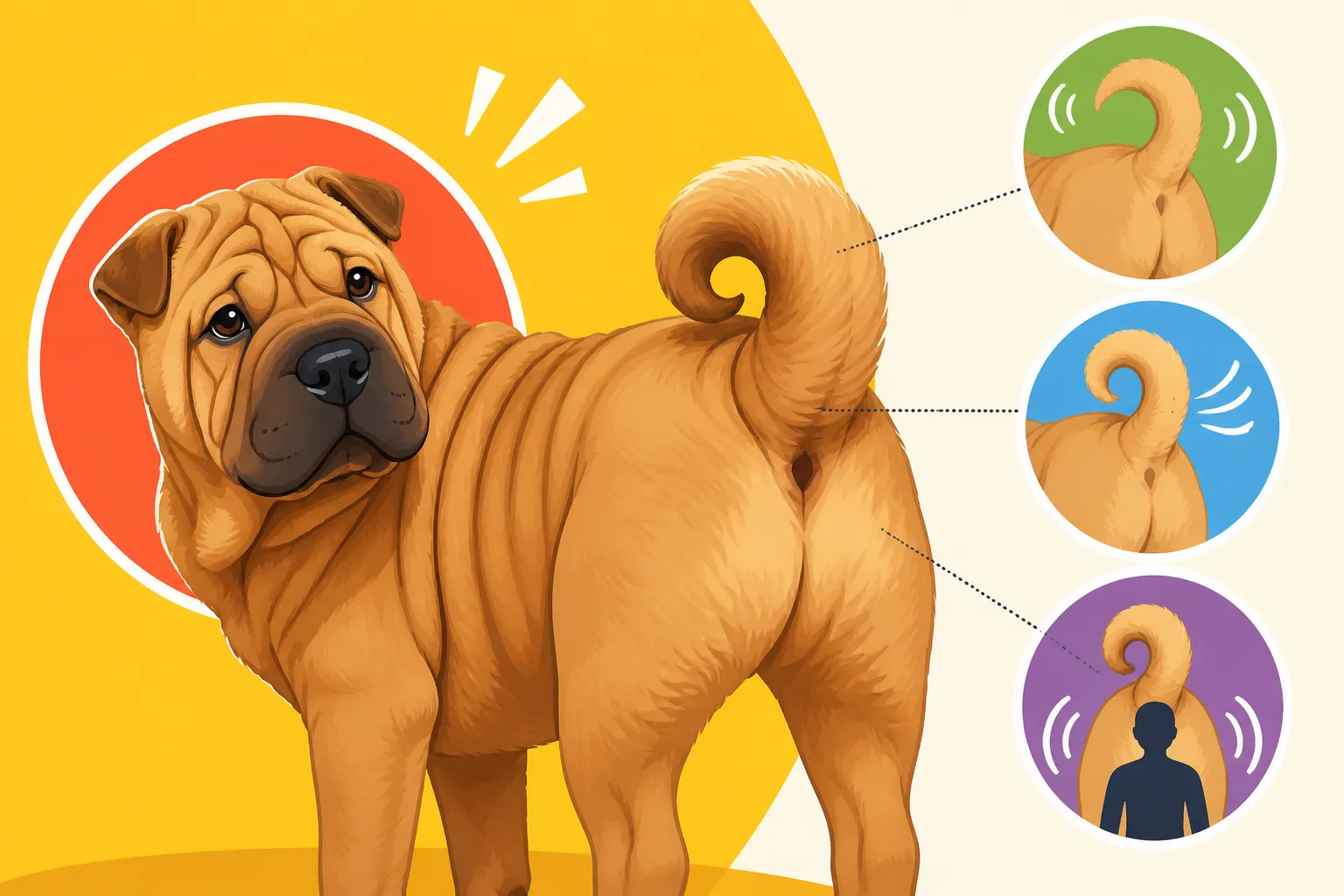
How a Shar Pei Uses Its Tail
It's no secret that Shar Pei are a breed unto themselves, full of unique quirks and characteristics that make them incredibly special, but also, let's be honest, sometimes a little hard to read. One of the biggest puzzles for new owners often comes down to their tail. Unlike many breeds with expressive, sweeping tails that tell you their mood from a mile away, a Shar Pei's tail is usually a tight little curl, often pressed close to their body. This can leave you wondering: "What on earth is my dog trying to tell me with that compact little spiral?" This guide is here to help you unravel the mystery of the Shar Pei tail and understand the subtle language hidden within its unique carriage.
The Distinctive Shar Pei Tail: A Visual Signature
When you picture a Shar Pei, that distinctive, tightly curled tail is probably one of the first things that comes to mind, right after all those wonderful wrinkles! It’s a hallmark of the breed, a compact statement that sets them apart from the tail-wagging crowd. But this unique anatomy also means we have to adjust how we "read" our dogs.
The 'Curled Over the Back' Standard
For most Shar Pei, their tail is typically set high and carried in a tight curl, often resting snugly over their back or draped gracefully over one hip. This isn't just a stylistic choice; it's a defining characteristic of the breed standard. Many new Shar Pei owners mistake this high, tight curl for a sign of tension or even aggression, because in other breeds, a stiff, high tail can indicate arousal or dominance. However, for a Shar Pei, this is often their completely normal, relaxed, or alert posture. It's their default setting, if you will.
Imagine you're watching a Golden Retriever whose tail is wagging a mile a minute – you instantly know they're thrilled. A Shar Pei's communication is far more subtle. Their tightly coiled tail is simply how it sits when they are comfortable and observing their world. It doesn't necessarily signal an impending confrontation or a strong emotion; it often just means they are present and aware. What an Adult Shar Pei Should Have Head Wrinkles Only can give you more insight into their breed specifics. Understanding this baseline is crucial, because if you don't know what's normal, you can easily misinterpret their signals and inadvertently escalate a situation, or simply miss cues that your dog is trying to give you. The way a Shar Pei carries its tail is as much a part of its physical identity as its skin, and Whether the Shar Pei's Tail Curls for a Reason explores some of the historical and genetic aspects behind this unique trait.
Different Tail Types and Their Impact
While the tight curl is characteristic, there's actually a bit of variation in how Shar Pei tails present. Some dogs have an incredibly tight, almost double-coiled tail, reminiscent of a cinnamon bun, that lies very flat against their back. Others might have a slightly looser curl, or one that sits a little higher or lower on their spine. These variations are generally considered within the range of normal for the breed and simply add to their individual charm.
However, these subtle differences can have a minor impact on how visible their tail movements are. A dog with an extremely tight, flat-lying tail might have even less perceptible movement when they're happy or mildly excited. You might see just a slight quiver or a tiny vibration at the very tip, rather than any broader motion. This means you, as the owner, need to be even more observant and attuned to the most minute shifts in their posture. It’s like trying to read a whispered message in a noisy room – you have to lean in and pay close attention. Regardless of the exact style of their curl, the fundamental 'language' of the tail, once you learn it, remains consistent across most Shar Pei. It just means you have to be extra vigilant, and look for those tiny, almost imperceptible twitches that other breeds express with much more fanfare.
Decoding Shar Pei Tail Language: More Than Just a Wag
Since the Shar Pei tail isn't a giant pendulum, interpreting its "wag" or position requires a different kind of understanding. It's less about broad sweeps and more about subtle shifts, tensions, and tremors.
Interpreting the High, Tightly Curled Tail
As we touched on earlier, the high, tightly curled tail is often a Shar Pei's neutral, alert, or confident state. If your Shar Pei is walking around the house, checking out the yard, or observing people from a distance with their tail in this position, it's generally a sign that they are comfortable and feeling secure in their environment. They're present, they're aware, and they're often just doing their Shar Pei thing.
However, context is everything. While this high, tight curl isn't inherently aggressive, it can accompany a more aroused or dominant posture if other body language cues support it. If your dog is staring intensely, has a stiff body, wrinkles drawn tight on their forehead, and a high, unmoving tail, that's a very different picture than the same tail on a dog with soft eyes, a relaxed mouth, and a loose body. Shar Pei were historically bred to be guardians, so their default state is often one of quiet vigilance rather than effusive greeting. A Shar Pei Was Bred to Guard, Not to Greet emphasizes this inherent trait. So, when you see that high, tight curl, think of it as a neutral starting point that you then modify with other observations. It's not a wag of joy, but it's also not automatically a warning sign; it's just them.
The Slightly Lowered or Looser Tail
When a Shar Pei begins to truly relax, you might notice a subtle change in their tail carriage. Instead of being held in an extremely tight, almost spring-like coil, the curl might soften slightly, becoming a bit looser or resting more gently against their back or flank. Sometimes, the very base of the tail might even droop a tiny bit from its high set, indicating a decrease in muscle tension. This is usually a good sign that your dog is feeling content, comfortable, and at ease.
On the other end of the spectrum, a tail that starts to unfurl or drop significantly lower than its typical high carriage, especially if it's tucked between the legs, is a clear and undeniable signal of fear, anxiety, or submission. This is your Shar Pei saying, "I'm scared," "I'm uncomfortable," or "Please don't hurt me." A tucked tail is a universal canine sign of distress, and while a Shar Pei's curl might prevent it from tucking as dramatically as a longer-tailed breed, the intent is the same. If you see this, it’s a strong indication that something in their environment is causing them stress, and you should calmly investigate and remove them from the stressful situation if possible. Pay close attention to these subtle shifts; they are incredibly important messages from your dog.
The Subtle Shar Pei Wag
Forget the broad, sweeping arcs that make a Labrador's whole back end wiggle. A Shar Pei's "wag" is a much more understated affair, often barely discernible to the untrained eye. It's typically a quick, tight quiver or a slight oscillation of the curled tail itself, or sometimes just a rapid vibration of the tail tip. It's not about big movement; it's about subtle energy.
This unique wag, when present, is usually a positive sign, indicating happiness, excitement, or a friendly disposition. You might see it when you come home, when they anticipate a treat, or when they're engaging in playful behavior with a trusted family member. The key is to combine this subtle tail movement with other signs of positive body language: soft, almond-shaped eyes, a relaxed mouth that might even show a hint of a "smile," and a loose, relaxed body posture. If you're observing these composite signals, that tiny tail quiver is indeed your Shar Pei expressing joy. It's a quiet celebration, but a celebration nonetheless. How a Shar Pei Shows Affection can give you more insights into these subtle displays. You truly have to be present and observant to catch it, but once you do, you'll feel a deep connection in understanding their unique way of expressing happiness.
The Challenges of Reading a Shar Pei's Tail
Let's be frank: reading a Shar Pei's tail is not always easy. Their unique anatomy, combined with their naturally reserved demeanor, means owners have to be particularly astute observers of canine body language. It's a skill that develops over time, but it starts with recognizing the inherent challenges.
Anatomy and Visibility
The very structure of a Shar Pei’s tail – its tight curl, high set, and often thick, dense coat – naturally limits the range and visibility of its movement. While a Pointer's tail might offer a clear, unobstructed view of every twitch and wag, a Shar Pei’s tail is often pressed snugly against their back or flank, obscuring much of the action. This isn't a design flaw; it's just how they are! But it does mean that the dramatic, easily interpretable signals you might see in other breeds are simply not there.
Because of this anatomical reality, you won't get those big, obvious "read-me" signals from their tail alone. This makes it challenging, particularly for new Shar Pei owners or those accustomed to more outwardly expressive breeds. You have to learn to look for the nuances, the almost imperceptible changes in tension, the slight shifts in how tightly it's coiled, or that faint, rapid vibration that substitutes for a full wag. Why a Shar Pei Is Hard to Read explains how their general stoicism and physical characteristics contribute to this challenge. It demands a higher level of attention and interpretation, requiring you to consider the whole picture of your dog's demeanor.
The Importance of Context and Other Cues
Because the Shar Pei's tail alone can be an ambiguous signal, it's absolutely crucial to interpret it within the broader context of their entire body language and the surrounding situation. Think of their tail as just one instrument in an orchestra; to truly appreciate the music, you need to hear all the instruments playing together. A high, tightly curled tail might be their neutral, but if it's accompanied by stiff posture, a hard stare, ears pulled back, and wrinkles that look tense, it tells a very different story than if that same tail is paired with soft, blinking eyes, a relaxed jaw, and a loose, forward-leaning body.
Their deep-set eyes and wrinkled faces, while adorable, can also mask traditional canine expressions. How a Shar Pei's Wrinkles Hide Its Expression dives deeper into this specific challenge. So, when trying to understand your Shar Pei, look at the whole picture:
- Eyes: Are they soft, blinking, or hard and staring? Are the whites showing (whale eye)?
- Ears: Are they relaxed, forward, or pinned back?
- Mouth: Is it loose and slightly open, or tightly closed with lips pulled back?
- Body Posture: Is their weight shifted forward, or are they leaning away? Is their body loose or stiff?
- Hair: Is the hackles raised on their back?
Understanding these composite signals is the key to accurately deciphering your Shar Pei's mood and intentions. Resources like online puppy schools or behavior programs, such as those offered by BAXTER & Bella, can be incredibly helpful in teaching owners how to observe and interpret these comprehensive cues, moving beyond just the tail.
Learning to Observe Subtle Shifts
Becoming proficient at reading your Shar Pei's subtle body language, especially their tail, takes time and dedicated observation. It's not something you'll master overnight; it's a journey of learning your individual dog. The best way to learn is by spending quality time simply watching them in various situations.
Observe your Shar Pei when they are:
- Completely relaxed: What does their tail look like when they're snoozing on the couch, or just calmly chewing a toy? This is your baseline for "neutral."
- Happily excited: How does their tail change when you pick up the leash for a walk, or when you offer a favorite treat? You might notice that subtle quiver.
- Curious or alert: What happens when a new sound or scent catches their attention?
- Apprehensive or uncertain: When they encounter a new person, object, or another dog, what subtle changes occur in their tail, eyes, and body? How a Shar Pei Greets a Visitor can give you examples of situations where you'd be looking for these cues.
- Playing: How does their tail move when they're engaging in rough-and-tumble with a trusted playmate?
Keeping a mental log, or even a written one, of these observations can significantly improve your ability to recognize the nuances. The more you watch, the more these subtle shifts will become obvious to you. You'll begin to understand your Shar Pei's unique dictionary of body language, moving past the common frustrations of owning a breed that doesn't wear its heart (or its tail) on its sleeve.
Practical Tips for Shar Pei Owners
Deciphering your Shar Pei's tail language is an ongoing process, but there are practical steps you can take to become a more skilled interpreter of their unique communication.
Establish a Baseline
Every Shar Pei is an individual, and while breed tendencies are real, your dog's "normal" might be slightly different from the Shar Pei down the street. The most important thing you can do is establish a solid baseline for your dog's relaxed, comfortable tail carriage. Observe your Shar Pei when they are feeling completely safe, secure, and happy in their familiar home environment. Is their tail a super-tight coil? A slightly looser curl? Does it consistently rest on one side or straight over their back?
This is their default. Any deviation from this relaxed baseline is what you need to pay close attention to. If their tail usually lies in a tight curl, and you suddenly see it slightly lower or less coiled, that's a signal. If it's usually relaxed and suddenly becomes stiff or rigid (even if still curled), that's also a signal. Knowing your individual dog's normal helps you spot the changes that communicate their feelings. Just like monitoring your dog's health can be aided by a consistent log, as discussed in Whether a Shar Pei Owner Should Keep a Fever Log, observing their behavior trends helps you catch subtle shifts in mood.
Combine Tail Observation with Environmental Awareness
Your Shar Pei's body language, including their tail, is almost always a reaction to something in their environment. To truly understand what their tail is telling you, you must also be acutely aware of what they are reacting to. Did their tail suddenly tuck when a loud car backfired? Or did it give that tiny, excited quiver when they spotted you getting out the treat jar?
Always consider the context of the situation. A slightly lowered tail could mean mild apprehension if a strange dog is approaching them at the park, or it could simply mean deep relaxation if they're dozing on your lap. Similarly, a high, alert tail might signal interest in a squirrel in the yard, or it might be part of a warning display if they feel threatened by an unknown person entering their space. How a Shar Pei Behaves Toward Other Dogs is a crucial read for understanding how your Shar Pei might react in social situations, and how their tail will play a part in those interactions. By consistently linking their tail movements (or lack thereof) to specific triggers and situations, you'll build a much clearer picture of your Shar Pei's emotional state.
Tools and Resources for Understanding Your Shar Pei
While your Shar Pei's communication style is unique, the principles of canine body language are universal. There are many excellent resources available that can help you become a more fluent reader of your dog's signals. Books on general canine behavior and body language, which are readily available on platforms like Amazon, can provide a foundational understanding. Remember to apply the general principles with an awareness of your Shar Pei's unique physical characteristics.
Beyond books, consider:
- Online Training Programs: For those seeking structured, expert guidance, platforms like BAXTER & Bella offer comprehensive online training programs. These programs often include modules on understanding canine communication, which can be invaluable for Shar Pei owners learning to decipher subtle cues. They can help you connect tail signals with other parts of their body language for a holistic understanding.
- Certified Professional Dog Trainers (CPDTs) or Behaviorists: If you're struggling to understand specific behaviors or reactions, especially if they involve fear or aggression, a professional can offer personalized guidance. They can observe your dog and help you identify cues you might be missing.
- Enrichment Toys: Sometimes, a dog's behavior, and thus their body language, can be influenced by their mental and physical needs. Providing appropriate enrichment, such as durable puzzle toys or sniff mats (also widely available on Amazon), can help reduce stress and boredom, leading to a more relaxed and communicative dog.
Understanding your Shar Pei's tail language is truly an act of love and dedication. It requires patience, careful observation, and a willingness to learn their unique dialect. But the reward is a deeper bond and a more harmonious life with your extraordinary companion. Remember, Socialize a Shar Pei Before Twelve Weeks or Pay for It Later to provide a strong foundation for their overall behavior and communication skills, which will only make reading their subtle cues easier as they grow.
Disclaimer
This article is for general informational purposes only and does not constitute professional advice. Laws, prices and regulations vary by location and change over time. Consult a qualified professional for guidance on your specific situation.


