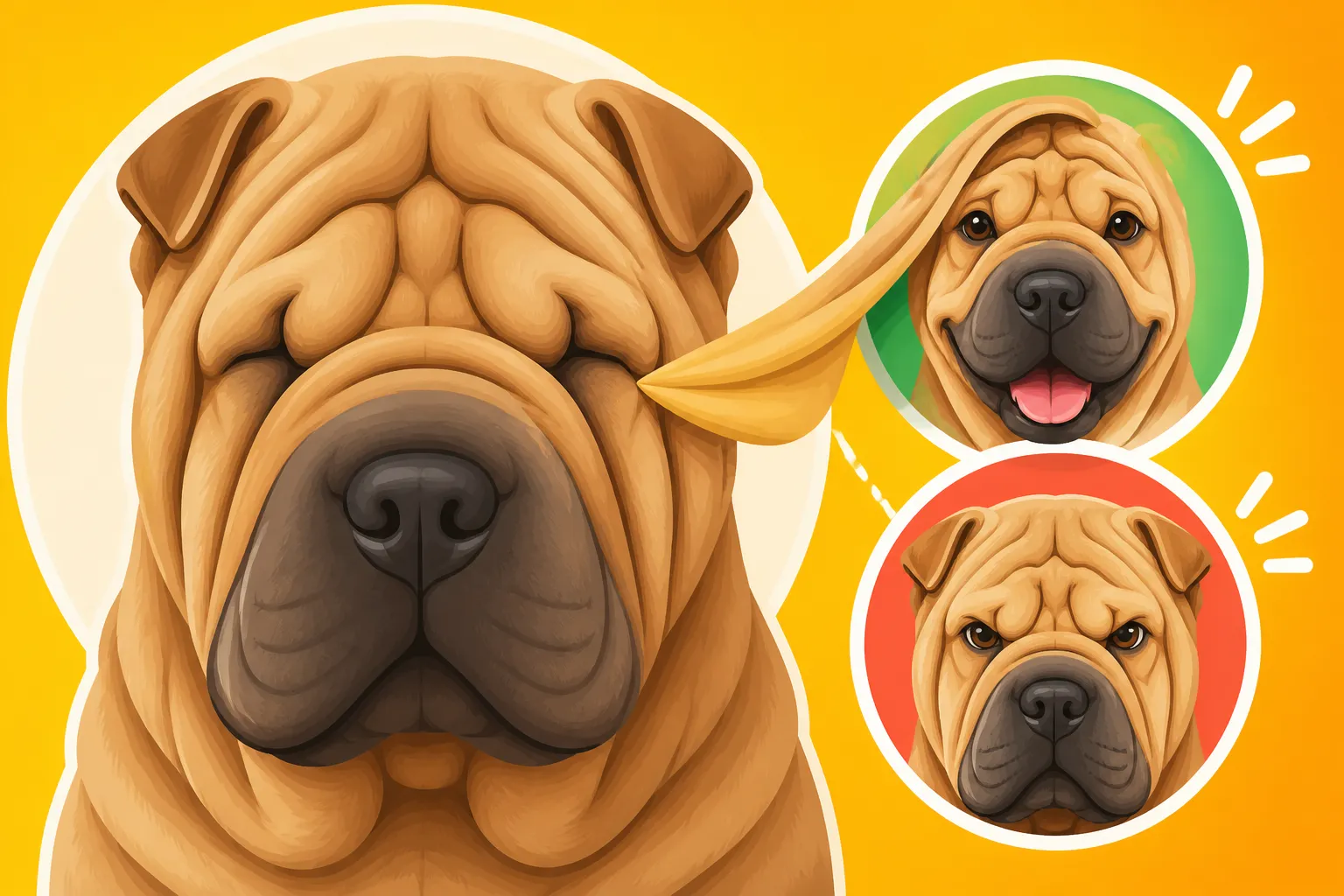
How a Shar Pei’s Wrinkles Hide Its Expression
It’s a frustration many Shar Pei owners know all too well: trying to figure out what exactly your beautiful, wrinkled companion is thinking or feeling. Unlike many other breeds whose emotions are practically plastered across their faces with every twitch of an ear or flicker of an eyebrow, a Shar Pei's unique facial structure, while undeniably charming, often acts like a dense, crinkled curtain, obscuring the subtle cues that other dogs and humans rely on for communication. This guide will help you learn to read beyond the folds and understand the true language of your Shar Pei.
The Wrinkled Veil: Why Reading a Shar Pei's Face is a Challenge
For centuries, dogs have evolved alongside humans, developing clear ways to communicate their needs and emotions. Much of this communication happens through nuanced facial expressions – the raising of an eyebrow, the slight tensing around the mouth, the dilation or constriction of pupils. However, the very features that make a Shar Pei so distinctive, namely those deep, abundant wrinkles and tight skin, fundamentally alter their ability to display these universal canine signals, making them notoriously difficult to interpret. It's not that they lack emotion, it's that their anatomy makes it challenging to broadcast it in the way we've come to expect from other breeds.
Obscured Facial Muscles and Expressions
Think about a Labrador, for instance. When happy, their eyes soften, their brow relaxes, and their mouth might form a gentle, open-mouthed smile. When nervous, their brow furrows, their eyes dart, and their mouth might be tightly closed or even trembling. Now picture a Shar Pei. Their deep-set eyes are often partially hidden by skin folds, making it hard to see the whites of their eyes or the subtle changes in pupil size. The heavy folds around their muzzle and forehead can mask the tensing or relaxing of muscles that would typically indicate stress, happiness, or fear. Even the corners of their mouths, which can convey so much in other breeds, are often lost within the deep jowls, leaving you guessing whether that's a contented pout or a sign of discomfort.
This anatomical quirk means that the tiny, incremental shifts in expression that we use to gauge a dog's mood are simply not visible on a Shar Pei. It's like trying to read a book where half the words are covered up. Owners often describe their Shar Pei as having a perpetually "scowling" or "grumpy" look, regardless of their actual emotional state. This default expression, while endearing to some, can lead to serious misunderstandings, not just for us, but for other dogs who might misinterpret their placid or neutral stance as aggression or disinterest. It's a constant effort to look past the superficial appearance and delve into their deeper forms of communication.
The Perceptual Gap for Humans and Other Dogs
This challenge in facial interpretation creates a significant perceptual gap. For humans, it means we have to work harder, becoming keen observers of their entire body, rather than relying on a quick glance at their face. Imagine trying to explain to a stranger that your Shar Pei, who looks utterly stone-faced, is actually thrilled to see them. Their lack of overt facial expression can make them appear aloof, stubborn, or even menacing to people unfamiliar with the breed. This perception is often at odds with the deep affection they hold for their chosen family members, as discussed in How a Shar Pei Bonds to Its Family.
For other dogs, this perceptual gap can be even more critical. Dogs communicate extensively through facial signals, ear positions, and direct eye contact. A Shar Pei's small, often hidden ears, combined with their deep-set eyes, means they may not be sending or receiving these crucial signals effectively. A playful dog approaching a Shar Pei might miss the subtle "back off" look that another breed would display, or the Shar Pei might not register the appeasement signals from an intimidated dog. This lack of clear visual communication can unfortunately lead to misunderstandings and altercations, which is why Dog to Dog Is the Shar Pei Problem, Not Dog to Person is a common observation. They are often misread, and they, in turn, may struggle to read others, creating a cycle of miscommunication that owners must actively manage.
Beyond the Folds: Learning Your Shar Pei's Other Cues
Since the face is a less reliable indicator, becoming fluent in "Shar Pei" means shifting your focus to the rest of their body and their vocalizations. Your Shar Pei is communicating with you constantly, but their language isn't always spoken through their wrinkles. It requires a commitment to observation and a deep understanding of their breed-specific quirks. It's about learning their unique dictionary of movements, sounds, and postures that tell you exactly what's on their mind.
Body Language Speaks Volumes
The tail is often called the "second face" of a dog, and for a Shar Pei, it's arguably the first. A high, tightly curled tail often indicates alertness, happiness, or confidence, while a tail tucked low or hanging loosely can signal fear, submission, or discomfort. Pay attention to how the tail moves and where it rests. Is it wagging with a wide, full-body sway, or just a hesitant, low flick? The entire posture of your Shar Pei also provides immense insight. A relaxed Shar Pei might have a loose, almost rolling gait, or lie in a soft, open position. A tense or anxious Shar Pei, however, might stand stiffly, with their weight shifted, and their head held slightly lower or higher than usual.
Even the way they carry their head, the position of their often-small ears (even if partially hidden), and the stance of their legs can tell you a story. A sudden stillness might indicate intense focus or apprehension. A low crouch could be an invitation to play, or a sign of fear, depending on the context. If their hackles are raised, even slightly, it's a clear warning sign, regardless of what their face looks like. Learning to differentiate these nuanced full-body cues is paramount. For example, a relaxed mouth often indicates contentment, but because the folds obscure it, you must look at their overall body—are they loose, stretching, sighing? Or are they stiff, ears back, avoiding eye contact (even if their eyes are hard to see)? This holistic approach is key to truly understanding your Shar Pei's emotional state.
Vocalizations and Subtle Signals
While Shar Pei aren't typically known as vocal screamers, they are masters of subtle sounds. Many owners will tell you their Shar Pei communicates through a fascinating array of grunts, snorts, sighs, and huffs. A contented Shar Pei might let out a deep, rumbling sigh when settling down next to you. A sharp huff could be their way of expressing annoyance or demanding attention. Some Shar Pei have a distinctive "rooing" sound that's a softer, more drawn-out bark, often reserved for family members or specific greetings. They might also make tiny "whisper barks" that are barely audible to anyone but you.
These unique vocal cues are precious, as they often fill the communication gap left by their facial structure. Beyond direct sounds, pay attention to their breathing patterns. Rapid, shallow breathing can indicate stress or pain, while deep, even breaths suggest relaxation. Even the subtle flick of a tongue across their nose can be a sign of nervousness or appeasement. It takes time and close observation to learn your individual Shar Pei's "language," as each dog has their own unique dialect. Tools like a camera, easily found on Amazon, can help you record and review these subtle interactions, allowing you to catch what you might miss in the moment and build a deeper understanding over time.
The Importance of a Full Body Scan
Ultimately, decoding your Shar Pei is about performing a constant "full body scan." You can't just glance at their face for an answer. You need to take in the whole picture:
- Tail: Position, movement, speed of wag.
- Ears: Are they pinned back, alert, relaxed? Even if small, their slight movements are telling.
- Posture: Relaxed, stiff, hunched, leaning forward, weight shifted.
- Hair (Hackles): Any raising along the back or neck?
- Mouth/Tongue: Licking lips, yawning (often a stress signal in dogs), panting (if not hot).
- Eyes: Even if deep-set, can you see tension, darting movements, or a softer gaze?
- Overall Movement: Fluid and confident, or hesitant and stiff?
This comprehensive observation becomes second nature to experienced Shar Pei owners. They learn to see the whole dog as a cohesive canvas of communication. It's a skill that takes patience and dedication, but it’s incredibly rewarding, fostering a deeper bond and preventing misunderstandings.
Practical Strategies for Decoding Your Shar Pei
Understanding your Shar Pei's communication style is an ongoing journey, but there are concrete steps you can take to become a more attuned observer and a better communicator back to your dog. It starts with conscious effort and building a consistent routine of interaction and observation.
Observe and Document
One of the most powerful tools you have is consistent observation. Spend time simply watching your Shar Pei when they are relaxed, playing, eating, and interacting with different people or other animals. What does their body language look like when they are truly happy? What do they do when they want something? How do they react to new sounds or visitors? The more you observe, the more patterns you'll notice. Consider keeping a small journal or even taking short videos with your phone. Reviewing these videos can help you catch subtle cues you might have missed in the moment. For instance, you might notice that a particular ear twitch always precedes a playful pounce, or that a specific sigh happens only after a long walk.
This documentation isn't just for you; it can also be invaluable for your veterinarian or a professional behaviorist if you ever encounter issues. If you’re struggling to interpret a certain behavior, showing a video can provide context that a verbal description might miss. Many general pet supply retailers, like those found on Amazon, offer pet cameras that allow you to monitor your Shar Pei's behavior when you're not home, providing even more insights into their natural, unobserved communication.
Early Socialization and Exposure
Starting early with broad, positive socialization is crucial for a Shar Pei. A well-socialized Shar Pei puppy learns to navigate the world with more confidence and is better equipped to understand and communicate with others, even with their unique physical traits. The window for effective socialization is typically before twelve to sixteen weeks of age, as highlighted in Socialize a Shar Pei Before Twelve Weeks or Pay for It Later. During this critical period, expose your puppy to a wide variety of sights, sounds, people, and appropriate dogs.
This early exposure isn't just about teaching them to be polite; it also hones your observational skills. You'll see how your puppy reacts in different scenarios and begin to link their internal state to their external cues. While their facial expressions remain challenging, a confident, well-adjusted Shar Pei will use their whole body more openly, making their intentions clearer. Furthermore, an online puppy training program, such as those offered by BAXTER & Bella, can provide structured lessons on puppy behavior and body language, often with video examples, helping you decode those tricky Shar Pei signals from day one.
Building a Strong Bond and Trust
At the heart of all good communication is a strong, trusting relationship. When your Shar Pei trusts you implicitly, they are more likely to express themselves openly, even if their expressions are subtle. Spend quality time together, engaging in positive reinforcement training, play, and quiet companionship. Learn their preferences, their favorite games, and their comfort zones. A Shar Pei will often form an incredibly deep bond with their primary caregiver, often developing a unique language just for them, which can be explored further in How a Shar Pei Treats the Family It Chose.
This bond allows you to anticipate their needs and moods. You'll learn the difference between a contented grunt and a slightly frustrated huff. You'll recognize the subtle lean against your leg that means "pet me," versus the slightly stiffer lean that signals "I'm a little unsure about this new person." Over time, you'll develop an almost intuitive understanding of your Shar Pei, translating their nuanced signals into clear intentions. Your presence alone can often be enough to reassure them, making their overall demeanor more relaxed and easier to read.
Common Misinterpretations and Their Consequences
Because a Shar Pei's facial expressions are so difficult to read, they are often subjected to misinterpretations that can have real-world consequences, both for their safety and for their relationships with humans and other animals. Understanding these common pitfalls is vital for responsible ownership.
The "Always Scowling" Look
One of the most frequent misinterpretations is that a Shar Pei always looks grumpy, aggressive, or aloof. Their deep-set eyes, heavy brow, and often downward-turned mouth can create a perpetual frown, leading people to believe they are unfriendly or unhappy. This can be problematic in public settings. A child, thinking the dog looks "mad," might approach with caution or even fear, which can elicit a different reaction from the dog. Similarly, other dog owners might steer clear, assuming the Shar Pei is aggressive, even if the dog is perfectly amiable.
This constant "resting scowl" can also lead owners to overlook genuine signs of distress or pain. If your Shar Pei always looks a bit downcast, you might not notice a subtle shift in their expression that actually signals discomfort from an eye issue like entropion. This is why careful observation of their entire body, and not just their face, is so critical. A Shar Pei might be in agony from an ear infection, but their facial expression won't necessarily scream "pain" in the way a floppy-eared dog's might. Checking for symptoms like head shaking, pawing at the ear, or a strong odor is far more indicative than relying on a facial cue that isn't there. A Shar Pei Has the Narrowest Ear Canals of Any Breed also contributes to common health issues that might be hidden by a "scowl."
Missing Early Warning Signs
The inability to read subtle facial cues means that a Shar Pei's early warning signals can often be missed, leading to escalated reactions. In other breeds, a slight lip curl, a direct stare, or a stiffening of the muzzle would be clear indicators of discomfort or impending aggression. With a Shar Pei, these cues are often hidden beneath layers of skin and wrinkles. This means an owner might not recognize their dog's increasing anxiety until it manifests in a more overt, and potentially reactive, behavior.
For example, a Shar Pei might be feeling overwhelmed by an approaching stranger or an unfamiliar dog. Without the ability to display a clear "back off" look with their face, they might go from a neutral-looking stance directly to a growl or a snap if their personal space is invaded. This is particularly relevant given their guardian instincts, as discussed in A Shar Pei Was Bred to Guard, Not to Greet. Owners must learn to watch for very subtle body shifts – a slight stiffening of the body, a lowering of the head, a quick tongue flick, or even just turning their head away – as early indicators that their Shar Pei is uncomfortable. Missing these can lead to unfortunate incidents, often unfairly labeling the Shar Pei as unpredictable or aggressive, when in reality, their signals were simply too subtle for us to interpret quickly enough. Training and awareness are key to preventing such misunderstandings and ensuring everyone's safety.
Comparison of Canine Communication Cues
To illustrate the difference, here's a general comparison of how various emotions might be expressed in a typical dog versus what you might need to look for in a Shar Pei. This table emphasizes the need for Shar Pei owners to broaden their interpretive lens beyond the face.
| Emotion | Typical Dog Cues (Often Facial) | Shar Pei Cues (Focus on Whole Body & Sound) |
|---|---|---|
| Happy/Playful | Relaxed open mouth, soft eyes, wagging tail, bouncy gait | High, curled tail with wide wag, loose body, playful "rooing" sounds, ears slightly forward, open mouth without tension. |
| Relaxed/Content | Soft gaze, slight smile, relaxed ears, deep sighs | Deep sighs or grunts, soft body rolls, loose posture, tail at rest or gentle sway, relaxed breathing. |
| Anxious/Fearful | Ears back, wide eyes showing white, lip licking, panting, tucked tail | Low or tucked tail, hunched posture, ears flattened, yawning (stress sign), avoidance of eye contact, tight mouth, soft growl/whimper. |
| Alert/Curious | Ears forward, direct stare, still body, slight head tilt | High, still tail, stiff body, ears slightly forward (if visible), prolonged stare, snorting or huffing sounds, may turn whole head. |
| Aggressive/Threatened | Hard stare, snarling, raised hackles, stiff body, teeth baring | Very stiff body, tail held low and stiff or high and rigid, ears flattened, growling/low rumbling, direct hard stare (even if eyes are deep), refusal to move. |
| Submissive/Appeasement | Averted gaze, lip licking, low posture, tucked tail, expose belly | Low posture, tucked tail, licking their owner's hand/face, averting gaze, slow movements, soft whines. |
This article is for general informational purposes only and does not constitute professional advice. Laws, prices and regulations vary by location and change over time. Consult a qualified professional for guidance on your specific situation.


