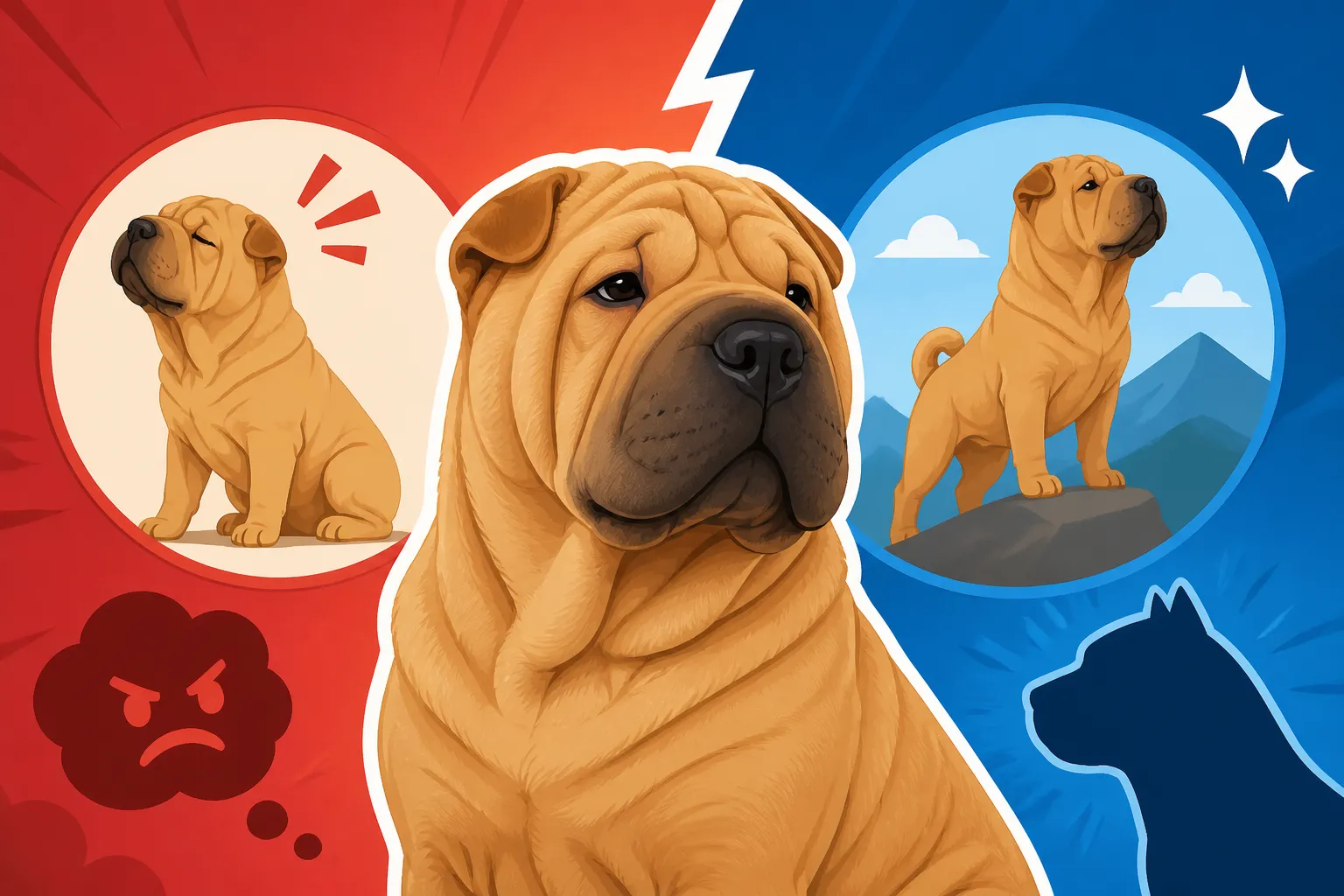
Stubborn or Independent: Reading a Shar Pei
It’s a tale as old as time for many Shar Pei owners: you issue a perfectly clear command, one you know your dog understands, and they just… stand there. Or maybe they give you that characteristic "Shar Pei stare," unblinking and utterly unreadable, leaving you to wonder if they're deliberately defying you or simply lost in their own independent thought process. This common frustration can make training feel like an uphill battle, but understanding the unique temperament of your wrinkly companion is the first step toward a more harmonious relationship. This guide aims to peel back the layers of that enigmatic Shar Pei personality, helping you distinguish between true stubbornness and their inherent independence, and ultimately empowering you to communicate more effectively with your distinctive dog.
The Shar Pei's Independent Spirit: A Breed Legacy
To truly understand your Shar Pei, we have to go back to their roots. These aren't dogs bred for endless retrieve games or eager-to-please obedience. The Shar Pei originated in ancient China, performing roles that required intelligence, self-reliance, and a keen sense of observation. They were estate guardians, protectors of livestock, and even skilled hunters. Their very existence depended on their ability to assess situations, make their own judgments, and act accordingly, often without direct human instruction. They were never meant to be pushovers; they were meant to be thinking, proactive partners.
This historical context is crucial because it explains why your Shar Pei might hesitate when you ask for a simple "sit." It's not necessarily defiance, but rather a momentary processing of information. Is the command relevant? Is there a perceived benefit to complying right now? Is there something more important in their environment that demands their attention? They are weighing the request against their own internal logic and the immediate surroundings. This isn't like a Golden Retriever, whose instinct is often to perform the requested action simply because you asked for it. A Shar Pei needs to see the point.
Their independent spirit also manifests in their selective affection and their "one person" tendencies. While they bond deeply with their chosen family, they're often aloof with strangers and can appear quite reserved. This isn't rudeness; it's a protective instinct. They are evaluating newcomers, deciding if they are worthy of their attention or trust. This aloofness can sometimes be mistaken for an unwillingness to connect, but it's simply how their independent nature expresses itself. Understanding this fundamental aspect of What a Shar Pei Was Originally Bred to Do will help you set realistic expectations for their behavior and interaction style. They aren't trying to be difficult; they are simply being true to their nature.
When Independence Looks Like Stubbornness
It's easy to label a Shar Pei as "stubborn" when they don't immediately comply, but often, what we perceive as obstinance is actually their independent nature at play. Imagine calling your Shar Pei from across a busy park. They might stop, look at you, look at the squirrel darting up a tree, consider the interesting smell by their paw, and then, eventually, perhaps saunter over. To us, this is infuriating; it feels like they're choosing to ignore us. But in their mind, they're processing a multitude of stimuli and prioritizing. The squirrel or the smell might, at that moment, seem more compelling than your request.
This cognitive process, where they evaluate and decide, can manifest as what we call a The Headstrong Streak Nobody Trains Out of a Shar Pei. It's not that they don't know the command; it's that they've decided, in that specific context, not to execute it immediately. This is particularly noticeable if the perceived reward isn't high enough or if they're bored with repetition. Shar Pei are intelligent, but they can get bored quickly with endless drills. If you're running through the same "sit-stay-come" routine for the tenth time, your Shar Pei might just check out. They might stare off into the distance, lie down, or simply refuse to engage. This isn't them being disrespectful; it's them signaling that the exercise isn't engaging their intellect or offering sufficient motivation. How Fast a Shar Pei Gets Bored of Repetition is a real factor in their training.
Another factor contributing to the "stubborn" perception is their unique physical attributes. Their deep-set eyes and wrinkled faces can make their expressions incredibly hard to read. A slight change in eye direction or a subtle muscle twitch that might signal hesitation or confusion in another breed can be completely obscured by a Shar Pei's folds. This lack of clear facial communication means we often miss the nuances of their internal state, leading us to default to "stubborn" as an explanation. How a Shar Pei's Wrinkles Hide Its Expression is a genuine challenge for owners trying to understand their dog's thoughts and feelings, making it difficult to discern if they are truly refusing or simply processing information slowly. This often leads owners to wonder Why a Shar Pei Ignores a Cue It Knows in different environments, forgetting that the context changes everything for these thoughtful dogs.
Effective Strategies for Training the Independent Shar Pei
Given their unique disposition, training a Shar Pei requires a nuanced approach that leans into their intelligence and independence rather than trying to stifle it. Forget harsh corrections or trying to "dominate" your dog; this breed will simply shut down or become reactive. Instead, focus on building trust, making training fun, and consistently proving that cooperating with you leads to good things.
Embrace Positive Reinforcement and High-Value Rewards
The cornerstone of successful Shar Pei training is positive reinforcement. These dogs thrive on rewards, especially high-value ones. Think tiny pieces of cooked chicken, cheese, or their absolute favorite treat. Praise and toys can also be motivators, but often, a tasty morsel is the quickest way to get their attention and make them think, "Hmm, maybe doing what they ask is worth it." It's not about bribing them; it's about making them want to work with you. If you rely on harsh corrections, you'll find that How a Shar Pei Responds to Harsh Handling is typically by becoming resistant, fearful, or even aggressive. They don't respond well to heavy-handed methods; they need encouragement and positive associations.
Make Training Their Idea
One of the best ways to get an independent Shar Pei to comply is to make them believe they thought of it themselves. This involves luring, shaping, and capturing behaviors. Instead of forcing them into a "sit," lure them with a treat into the position. When they sit, then reward them. Over time, they associate the command with the action and the reward, feeling like they're making a choice rather than being ordered around. Keeping training sessions short and engaging is also crucial. How Long a Shar Pei's Training Session Should Be should generally be no more than 5-10 minutes, especially for puppies or when learning new skills. Shar Pei are smart, but they get bored easily with endless repetition. Vary your rewards, change up locations, and keep the energy positive to maintain their interest.
For those looking for structured guidance, online platforms like BAXTER & Bella offer excellent programs that focus on positive reinforcement and building a strong relationship. Their approach aligns well with the independent nature of a Shar Pei, teaching owners how to motivate their dogs effectively rather than resorting to force. You can also find a vast array of engaging puzzle toys and high-quality training treats on Amazon to keep your Shar Pei mentally stimulated and rewarded during training.
Prioritize Early and Ongoing Socialization
An independent dog, particularly one with guardian instincts, needs robust socialization. Socialize a Shar Pei Before Twelve Weeks or Pay for It Later is not just a catchy phrase; it's a critical piece of advice. Exposing your Shar Pei puppy to a wide variety of sights, sounds, people, and appropriate dog interactions in a positive way during their critical socialization window can prevent many issues down the line. A well-socialized Shar Pei is more confident and less likely to react defensively to new situations, which can often be misinterpreted as stubbornness or aggression. Continue this socialization throughout their lives, making sure encounters are always positive and controlled.
Understand What Truly Motivates Your Shar Pei
Every dog is an individual, and a Shar Pei is no exception. While many are food-motivated, some might be more driven by a specific squeaky toy, a game of fetch, or even just a good ear scratch. Experiment to find What Motivates a Shar Pei most effectively. Is your Shar Pei a food connoisseur who only responds to gourmet treats? Are they obsessed with a particular type of tug toy? Once you identify their ultimate motivators, training becomes much easier. Keep these high-value rewards exclusively for training to maintain their special status.
Distinguishing Between True Stubbornness and Independent Thought
It can still be tricky to tell the difference between a Shar Pei who is genuinely being stubborn and one who is exercising independent thought. The key lies in observation, context, and understanding your dog's capabilities and current state.
Stubbornness: A Barrier to Learning or Compliance
True stubbornness, in the negative sense, often stems from a lack of understanding, fear, or a learned behavior where the dog has discovered that resisting leads to getting their own way (even if unintended by the owner). A dog might appear stubborn if they don't understand what you're asking, if they're too overwhelmed or fearful to comply, or if the consequences of not complying are less impactful than the perceived benefit of resisting. For example, if your Shar Pei consistently refuses to go out in the rain, it might be stubbornness born from discomfort or a learned aversion, rather than an independent decision to stay dry. In these cases, you need to break down the task, make it less intimidating, and build positive associations.
Independence: A Deliberate Choice
Independent thought, on the other hand, is when your Shar Pei processes a command or situation and chooses a course of action based on their assessment. This isn't defiance; it's decision-making. If you ask your Shar Pei to "stay" and they break it to investigate a sudden interesting smell, they're not being stubborn; they've independently decided that the smell is a higher priority. They weighed their options and acted. The goal here isn't to crush that independent spirit, but to teach them that your priorities should often outweigh their own, especially for safety. This requires consistent, rewarding training that reinforces that listening to you consistently yields better outcomes than making their own choices.
Here’s a simple table to help you categorize common scenarios:
| Behavior | Interpretation as Stubbornness | Interpretation as Independent Decision-Making | Effective Training Approach |
|---|---|---|---|
| Refusal to move on walk | He's being difficult, asserting dominance | Assessing surroundings, investigating a scent, comfortable in current spot | Lure with a high-value treat, make moving forward more rewarding, gentle encouragement |
| Ignoring recall at dog park | He doesn't respect me, being disobedient | Too many distractions, prioritizing playtime/exploration, low value for recall | Practice in low-distraction environments, use a long line, high-value rewards, vary practice |
| Hesitation to learn new trick | He's just not getting it, being dense | Not understanding the cue, insufficient motivation, boredom with method | Break down steps, use luring/shaping, increase reward value, shorten sessions |
| Refusal to go outside in rain | He's spoiled, trying to get his way | Discomfort with wetness, strong aversion to elements | Gradual exposure, high-value rewards for going out, use rain gear, make it a quick, positive trip |
| Guarding a toy or space | He's aggressive, trying to control | Instinctual behavior to protect perceived valuable resources | Counter-conditioning and desensitization, trade-up games, professional help for severe cases |
Understanding the context and the potential motivations behind your Shar Pei's actions is critical. Are they truly being stubborn, or are they being a Shar Pei? Often, it's the latter, and by adjusting your training methods to respect their intelligence and independent nature, you can foster a much stronger bond and see better results. They might never be a dog who slavishly obeys your every whim, but they can be a loyal, attentive, and incredibly rewarding companion who chooses to work with you.
Disclaimer
This article is for general informational purposes only and does not constitute professional advice. Laws, prices and regulations vary by location and change over time. Consult a qualified professional for guidance on your specific situation.


