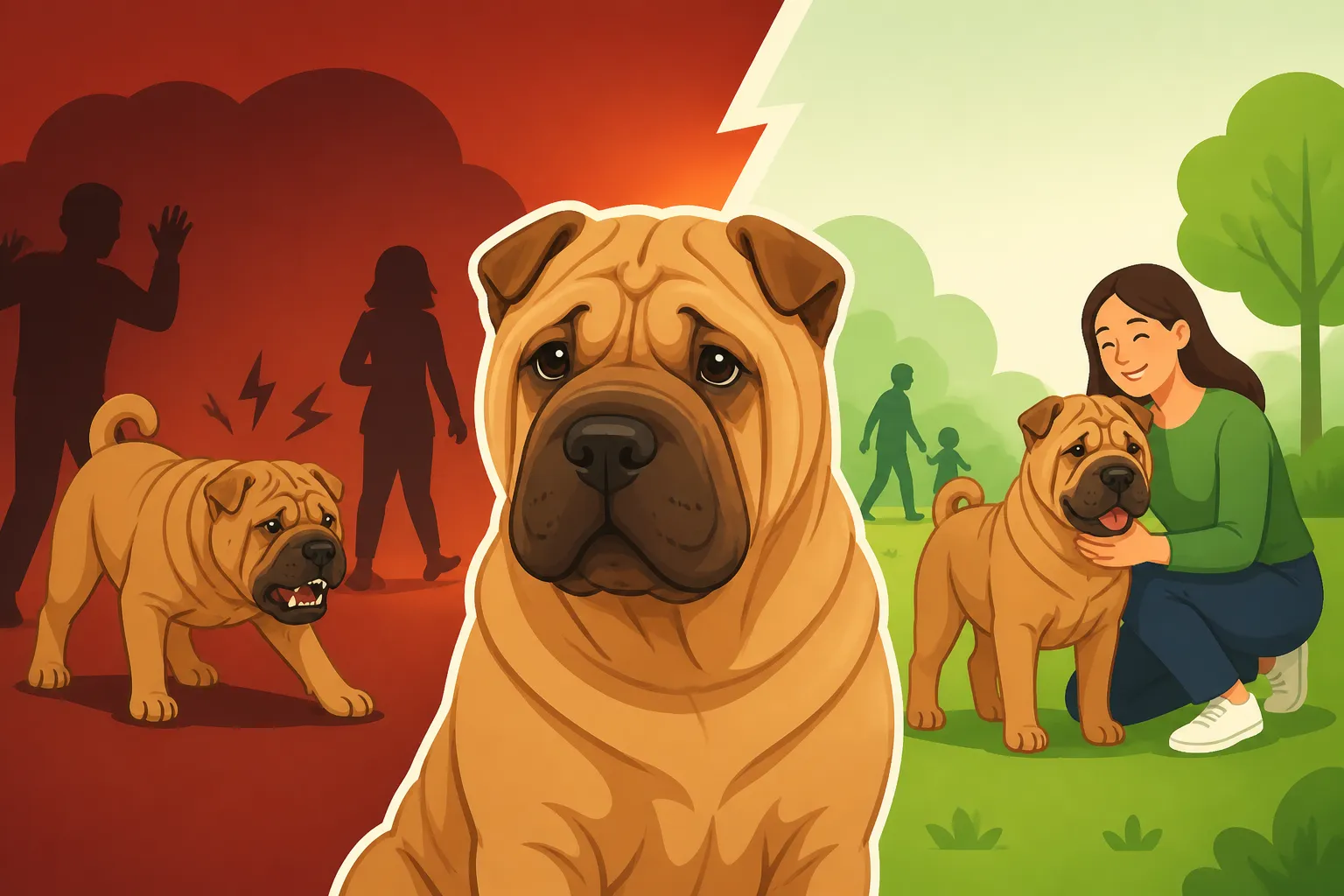
What Happens to an Undersocialized Shar Pei
It’s a heartbreaking sight to watch your beloved Shar Pei cower from a friendly face, lunge at a passing dog, or tremble uncontrollably at the sound of a delivery truck. Many Shar Pei owners find themselves grappling with anxiety, reactivity, and fear-based behaviors in their adult dogs, often stemming from inadequate socialization during their crucial puppyhood. This guide will delve into the profound and lasting effects of undersocialization on a Shar Pei, helping you understand why these behaviors manifest and what can be done to manage and even mitigate them, whether you're starting with a puppy or trying to help an adult dog.
The Foundations of Shar Pei Temperament
Understanding the breed's inherent traits is the first step to truly grasping why socialization is so incredibly vital for a Shar Pei. They aren't golden retrievers; their natural leanings make the consequences of insufficient early exposure even more pronounced.
Their Natural Inclination: Guarding and Aloofness
From their ancient origins, Shar Pei were bred for specific roles that required independence, intelligence, and a strong protective instinct. They were property guardians, hunters, and even fighting dogs in some historical contexts. This means they are inherently watchful, often reserved with strangers, and possess a strong sense of territory. It’s not aggression for aggression's sake, but rather a deep-seated instinct to observe, assess, and protect their chosen family and space. A Shar Pei Was Bred to Guard, Not to Greet explains this well. This natural aloofness is a double-edged sword: it makes them wonderfully devoted to their inner circle, but it also means they don't inherently possess the "love everyone" gene that some other breeds do.
Without proper, consistent, and positive introductions to the wider world, this natural wariness can quickly tip over into fear, suspicion, or even outright reactivity. A Shar Pei's natural protective instincts, when unchecked by socialization, can lead to guarding resources, people, or places with an intensity that can be challenging for even experienced owners. They aren't trying to be difficult; they are simply acting on ancient programming that tells them to be cautious and to defend what is theirs.
The Critical Early Window: Why Puppyhood Matters So Much
Just like human children, puppies go through critical developmental stages where their brains are like sponges, soaking up every experience and forming foundational impressions of the world. For dogs, this prime socialization window typically closes by around 12 to 16 weeks of age. During this brief but incredibly impactful period, puppies need to be exposed to a vast array of sights, sounds, smells, people, dogs, and environments, all in a positive and non-threatening way. Think of it as building a robust emotional vocabulary; the more positive words they learn now, the better equipped they'll be to communicate and cope with the complexities of adult life.
For a Shar Pei, with their already cautious nature, missing this window is particularly detrimental. Socialize a Shar Pei Before Twelve Weeks or Pay for It Later isn't an exaggeration; it's a stark reality for this breed. If they don't learn that strange people often have treats, that different dog breeds are usually friendly, or that loud noises aren't always a threat, they'll default to fear and defense. The experiences (or lack thereof) during these few weeks lay the groundwork for their entire adult personality and their ability to navigate a human-centric world confidently. Neglect in this period doesn't just create an unsocialized dog; it creates a dog that views the world as a potentially scary or hostile place.
Common Behaviors of an Undersocialized Shar Pei
When a Shar Pei misses out on crucial early life experiences, the results aren't just subtle quirks; they manifest as distinct, often disruptive, behavioral patterns that can profoundly impact the dog's quality of life and the owner's ability to integrate them into society.
Reactivity Towards Strangers and New Experiences
One of the most immediate and distressing signs of an undersocialized Shar Pei is their reaction to unfamiliar people. This isn't just shyness; it often escalates into full-blown reactivity. You might see barking, lunging, growling, or even attempts to snap if a stranger tries to interact with them, even with the best intentions. This behavior usually stems from fear, not malice. Because they weren't taught during their formative weeks that most strangers are benign, their instinct is to ward off the perceived threat.
Furthermore, new environments or experiences can be incredibly unsettling. A trip to the vet, a walk through a busy park, or even a novel object placed in their home can trigger extreme anxiety. They might freeze, attempt to flee, or again, react aggressively. Their limited peripheral vision, a characteristic of the breed due to their deep-set eyes and facial folds, can make them easily startled, compounding their fear of the unknown. Why a Shar Pei Startles: It Cannot See You Coming highlights this visual limitation. An undersocialized Shar Pei essentially lives in a heightened state of alert, constantly scanning for potential dangers because they haven't learned to differentiate between threats and everyday occurrences.
Challenges with Other Dogs
For many Shar Pei owners, dog-on-dog interactions become a major point of stress. An undersocialized Shar Pei often struggles immensely with appropriate canine communication. They may not understand play cues, might react aggressively to other dogs' friendly overtures, or become highly territorial when encountering them on walks or in shared spaces. This can manifest as relentless barking, stiff body language, growling, or even outright fights if not carefully managed. How Dog Aggressive a Shar Pei Really Is addresses this common Shar Pei trait, and undersocialization exacerbates it greatly.
Their lack of early positive experiences with a variety of other dogs means they haven't developed the social graces needed to navigate canine interactions. They might lack bite inhibition, be too rough in play, or simply interpret other dogs' normal behavior as challenging or threatening. This often leads to isolation, as owners feel compelled to avoid dog parks, walking trails, or even neighborhood strolls to prevent tense encounters. The irony is that the more isolated they become, the less opportunity they have to learn, creating a vicious cycle of fear and reactivity.
Anxiety and Fear in Novel Environments
Beyond specific triggers like people or other dogs, an undersocialized Shar Pei often lives with a pervasive sense of anxiety about the world in general. Everyday events that most dogs take in stride can become major stressors. Think about vet visits, for example. What should be a routine check-up can turn into a battle, requiring muzzles, sedatives, or multiple handlers, not because the dog is "mean," but because the clinic, the smells, the sounds, and the handling are all terrifyingly unfamiliar. This isn't just inconvenient; it can impact their access to essential healthcare.
The fear can extend to things like car rides, household noises, or changes in routine. They might tremble, pant excessively, drool, or even become destructive as a coping mechanism when left alone or faced with an unfamiliar situation. This persistent state of low-level stress can have serious long-term health implications, including a weakened immune system and increased susceptibility to other stress-related conditions. It's a heavy burden for a dog to carry, and it's a testament to the profound impact that early environmental enrichment has on their psychological well-being.
The Impact on Daily Life and Well-being
Living with an undersocialized Shar Pei isn't just challenging; it fundamentally changes the daily lives of both the dog and its human family. The consequences stretch far beyond occasional inconvenient behaviors, affecting everything from simple walks to the dog's overall happiness and the owner's peace of mind.
Restricted Activities and Limited Enjoyment
For many dog owners, the joy of having a canine companion includes sharing activities like leisurely walks in the park, visits to pet-friendly cafes, or weekend trips. With an undersocialized Shar Pei, these simple pleasures often become impossible or fraught with anxiety. Dog parks are usually out of the question due to potential dog-dog aggression or fear. Busy public places become minefields of triggers, leading to reactive outbursts that are embarrassing and stressful for everyone involved. Even a quiet stroll around the block can turn into a tense exercise in vigilance, where the owner is constantly scanning for potential triggers like approaching strangers, children, or other dogs.
This restriction means the Shar Pei misses out on vital mental and physical stimulation that helps keep any dog happy and healthy. Their world shrinks, often confined to the home and perhaps a very familiar, quiet walking route. This lack of varied sensory input and the inability to explore new places can lead to boredom, frustration, and a further entrenchment of their fearful or reactive behaviors. Ultimately, the dog's life, and by extension the owner's, becomes much smaller and less enriching than it should be, a sad outcome for a loyal breed.
Increased Stress for Both Dog and Owner
Imagine constantly being on high alert, anticipating danger around every corner. That's the daily reality for an undersocialized Shar Pei. Their cortisol levels are often elevated, leading to chronic stress that impacts their physical health, sleep patterns, and overall demeanor. They may struggle to relax, always listening, always watching, and never truly feeling safe outside their most controlled environment. This constant state of anxiety is profoundly unfair to the dog and severely diminishes their quality of life.
For the owner, the stress is equally immense. There's the constant worry about what might happen on a walk, the guilt that their dog isn't living its best life, and the social isolation that can come from managing a dog with significant behavioral issues. Owners might feel judged by others who don't understand the complexities of their dog's temperament, leading to feelings of frustration, exhaustion, and even resentment. This shared stress often strains the human-animal bond, making it harder for the owner to enjoy their dog and for the dog to trust its owner as a source of comfort and safety. It's a heavy emotional toll for everyone involved.
Potential for Escalated Behavioral Issues
The behaviors of an undersocialized Shar Pei rarely remain static; without intervention, they tend to worsen over time. What starts as mild fear or shyness can quickly escalate to barking, lunging, snapping, and in severe cases, biting. This is often a progression born out of desperation – the dog has learned that its initial, softer signals of discomfort (like lip licking or turning away) are ignored, so it resorts to more dramatic measures to make the "threat" go away. How a Fearful Shar Pei Becomes Aggressive perfectly describes this trajectory. Resource guarding, where the dog protects food, toys, or even its owner from others, can also become a significant problem, as the dog perceives these resources as scarce or vulnerable.
This escalation can transform a once manageable dog into one that is dangerous or deeply unhappy. The risk of injury to other dogs, people, or even the owner increases dramatically. At this point, the options for management become more limited and often require intense professional intervention. It highlights the critical importance of early socialization and, if that opportunity was missed, seeking help immediately rather than hoping the problem will resolve itself. Ignoring these escalating behaviors is not only irresponsible but deeply unfair to a dog that is simply trying to cope with a world it doesn't understand.
Strategies for Managing an Undersocialized Adult Shar Pei
While it’s true that the critical socialization window closes early, it doesn’t mean an undersocialized adult Shar Pei is a lost cause. With patience, consistent effort, and often professional guidance, you can absolutely help your dog become more confident and less reactive. It’s a marathon, not a sprint, but the progress you see will be incredibly rewarding.
Professional Guidance: When to Call for Help
If you're dealing with an adult Shar Pei exhibiting significant fear, anxiety, or aggression stemming from undersocialization, the absolute best first step is to seek professional help. This isn't a sign of failure on your part, but rather a responsible and proactive approach to your dog's well-being. Look for a certified professional dog trainer (CPDT) or a veterinary behaviorist (DACVB). These professionals have the knowledge and experience to assess your dog's specific triggers, body language, and underlying motivations. When a Shar Pei Needs a Behaviorist delves into this in more detail.
They can help you develop a tailored behavior modification plan using positive reinforcement techniques, such as desensitization and counter-conditioning. This might involve controlled exposure to triggers at a distance where your dog remains comfortable, paired with high-value rewards. A professional can also help you identify environmental changes or management strategies that can reduce your dog's overall stress levels. Sometimes, pharmacological interventions might even be recommended by a vet or veterinary behaviorist to help manage extreme anxiety, making it easier for your dog to learn and respond to training.
Controlled Exposure and Positive Reinforcement
The core of helping an undersocialized Shar Pei involves very carefully controlled exposure to their triggers, always ensuring they stay below their "threshold" – the point where they start to react. This is a delicate dance. You want to expose them to just enough of a stimulus (a person, another dog, a new sound) that they notice it, but not so much that they become overwhelmed and reactive. The moment they notice the trigger, you immediately reward them with something incredibly high-value, like boiled chicken or special treats. The goal is to change their emotional response from "scary thing!" to "scary thing means yummy treats!"
This process, called counter-conditioning, needs to be done gradually, starting at a great distance and slowly decreasing it as your dog shows comfort and positive responses. For example, if your Shar Pei reacts to other dogs, you might start by simply sitting with them across a large field from another dog, rewarding them for calm observation. Over many sessions, you might slowly reduce the distance. This also goes hand-in-hand with desensitization, where you gradually expose them to sounds (like city traffic played softly), sights, or textures they previously found alarming. Patience is paramount, and celebrating tiny victories is essential.
Creating a Safe and Predictable Home Environment
Beyond direct training, making your home a sanctuary for your undersocialized Shar Pei is crucial. A predictable routine provides immense comfort and reduces anxiety. Consistent feeding times, walk schedules, and play sessions help them feel secure in their world. Providing them with a safe, quiet space they can retreat to, like a crate covered with a blanket or a designated room, gives them an escape hatch when they feel overwhelmed. This is their "den," and it should be a place where they are never bothered.
Enrichment activities are also vital to mental well-being. Puzzle toys, snuffle mats, and engaging chews can provide mental stimulation and outlet for their energy, reducing boredom and stress. You can find a wide variety of these products on platforms like Amazon. For dogs struggling with separation anxiety or general nervousness, a structured training program that builds confidence and provides mental work can be invaluable. Even if you're not dealing with a puppy, online programs like BAXTER & Bella can offer structured guidance for adult dogs, teaching new skills and strengthening the bond between you and your Shar Pei. A calm, consistent home environment, combined with appropriate mental exercise, forms the bedrock of an undersocialized Shar Pei's rehabilitation.
Preventative Measures: Socialization Done Right
While we've focused heavily on managing the challenges of an undersocialized adult Shar Pei, the absolute best approach is prevention. Laying a strong foundation during puppyhood is the most effective way to ensure your Shar Pei grows into a confident, well-adjusted companion. It takes dedication, but the rewards are immeasurable.
The "Rule of Twelves" and Beyond
A popular guideline for puppy socialization is the "Rule of Twelves." This suggests that by 12 weeks of age, a puppy should have experienced at least 12 different surfaces, 12 different people, 12 different sounds, 12 different locations, 12 different types of friendly dogs, and so on. While it's a helpful mnemonic, the core idea is variety and positive association. Every new experience should be paired with praise, treats, and a relaxed, happy demeanor from you. Never force interaction, and always allow your puppy to retreat if they're uncomfortable. The goal is positive exposure, not forced exposure.
Beyond the initial 12 weeks, the work doesn't stop. Socialization is an ongoing process throughout your Shar Pei's life. Continue to expose them to new, positive experiences, but always at their comfort level. A wide range of experiences helps them build resilience and adaptability. Remember, their world is seen through their eyes, and a broad, positive view built early on prevents so many issues down the line.
Puppy Classes and Structured Socialization
One of the best investments you can make for your Shar Pei puppy is enrolling them in a well-run puppy socialization class. These classes, often held in sterile environments to mitigate disease risk before full vaccination, provide a safe and controlled setting for your puppy to interact with other puppies of various breeds and sizes. Crucially, they are supervised by experienced trainers who can guide appropriate play, intervene if a puppy becomes overwhelmed, and teach you how to read your puppy's body language.
Such classes also offer invaluable opportunities for exposure to different people, gentle handling by strangers, and positive experiences with new sights and sounds associated with learning. Beyond interaction, many puppy classes introduce basic obedience cues, helping to build a strong communication foundation between you and your Shar Pei. For those who can't attend in-person classes, or want to supplement, online resources like BAXTER & Bella offer comprehensive puppy training guides that cover socialization strategies, helping you implement best practices from the comfort of your home and neighborhood.
Continued Lifelong Exposure
Socialization isn't a one-time event that ends when your puppy turns four months old. It’s an ongoing commitment that evolves as your Shar Pei matures. As adults, they still benefit from novel experiences and maintaining their comfort levels with the world around them. Regular walks in different neighborhoods, visits to pet-friendly stores (if they can handle it calmly), and continued, controlled interactions with calm, known dogs help reinforce their positive associations.
Even as a senior, a Shar Pei can benefit from gentle exposure to new things, tailored to their physical abilities and preferences. It’s about maintaining their confidence and curiosity, rather than letting their world shrink. The goal is to ensure they remain adaptable and comfortable, able to navigate life's inevitable changes with minimal stress. Consistent, positive reinforcement during these exposures continues to strengthen the bond between you and your Shar Pei, making them a more confident, happier companion for their entire life.
| Impact Area | Undersocialized Shar Pei | Well-Socialized Shar Pei |
|---|---|---|
| Strangers | Barking, lunging, growling, fear, anxiety, potential biting | Reserved, tolerant, may accept gentle interaction, calm |
| Other Dogs | Reactivity, aggression, poor communication, fights | Tolerant, may engage in appropriate play with known dogs, calm |
| New Environments | Trembling, freezing, panic, destruction, avoidance | Curious, adaptable, may be cautious but recovers quickly |
| Daily Life | Restricted activities, high stress, isolation | Enjoys walks, outings, less stress for dog and owner |
| Behavioral Issues | Escalation of fear/aggression, resource guarding | Stable temperament, less prone to behavioral problems |
| Overall Well-being | Chronic anxiety, reduced quality of life | Confident, happy, resilient |
Disclaimer
This article is for general informational purposes only and does not constitute professional advice. Laws, prices and regulations vary by location and change over time. Consult a qualified professional for guidance on your specific situation.


