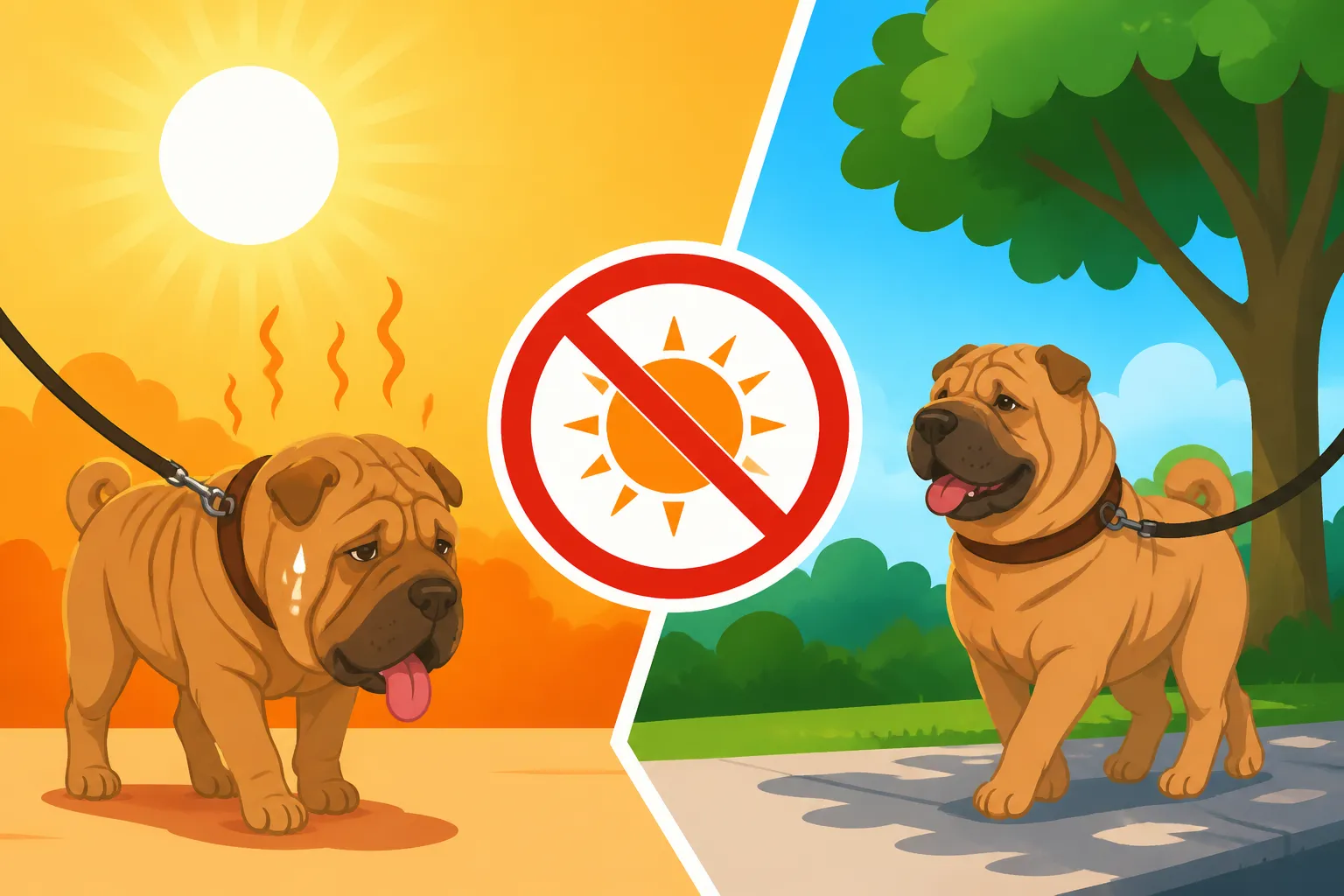
Why a Shar Pei Should Not Be Walked at Midday
It’s a beautiful day, the sun is high, and you instinctively reach for the leash, ready to take your beloved Shar Pei for a walk. But wait – that midday sun, while lovely for us, can be a silent danger for our wrinkly companions. This guide will walk you through precisely why a Shar Pei should never be walked during the hottest parts of the day and offer practical tips to keep them safe, cool, and healthy, even when the mercury rises.
The Unique Physiology That Makes Midday Walks Dangerous for Your Shar Pei
When we talk about dogs and heat, many people think of flat-faced breeds like bulldogs or pugs, and while Shar Peis aren't quite as extreme, they certainly share some predispositions. Their unique anatomy and physiology make them particularly susceptible to overheating, far more than many other breeds. It’s not just about comfort; it’s about their very ability to regulate their body temperature.
The Impact of a Shar Pei's Muzzle and Airway
Unlike a long-nosed breed that can pant efficiently and rapidly exchange air to cool itself, a Shar Pei has a relatively short muzzle. This isn't strictly brachycephalic in the same way some other breeds are, but it significantly impacts their ability to cool down. Think of it this way: their airways are shorter and sometimes narrower, meaning less surface area for heat exchange when they pant. When the air itself is hot and humid, their natural cooling system becomes far less effective.
Imagine trying to cool a room with a tiny, inefficient fan on a stifling summer day; it just can't keep up. That's what happens to your Shar Pei's respiratory system during a midday walk. They work harder to breathe in the same amount of oxygen, and that increased effort generates more body heat, creating a dangerous cycle. This inefficiency means that even a moderate walk under the sun can quickly escalate into a serious health risk. It's a critical factor in How Easily a Shar Pei Overheats.
The Role of Coat Density and Skin Folds in Heat Retention
While a Shar Pei's coat is often described as feeling like sandpaper, it's actually quite dense and acts as an insulator. This is fantastic in cooler weather, keeping them cozy, but it's a major liability when the sun is beating down. That thick layer of hair traps heat against their body, making it incredibly difficult for their skin to release warmth into the environment.
Then there are those magnificent wrinkles and folds – the very feature that makes them so distinct and adored. Unfortunately, these folds, especially around the head and neck, can also trap heat and moisture. They reduce the surface area of skin directly exposed to cooler air, further hindering heat dissipation. It's like wearing multiple layers on a hot day; the heat has nowhere to go. This combination of a dense coat and heat-trapping folds means that the sun's rays are absorbed and held, rather than reflected or dissipated, pushing their core temperature up much faster than you might realize.
Recognizing the Signs of Overheating in Your Shar Pei
Knowing why they overheat is one thing, but being able to spot the signs when it happens is absolutely critical. Shar Peis, like many dogs, can be stoic, and sometimes the early signs of distress might be subtle. Missing these cues can turn a potentially manageable situation into a life-threatening emergency.
Early Warning Signs to Watch For
Before full-blown heatstroke sets in, your Shar Pei will likely give you some subtle, or not-so-subtle, hints that they're struggling. One of the first things you'll notice is excessive panting – much heavier and more rapid than normal after a short exertion. Their tongue might appear wider, longer, and a deeper red or purplish-red than usual. They might also become noticeably less enthusiastic, lagging behind on the walk, seeking shade, or even refusing to move forward.
Other early signs include drooling, which might be thicker and more profuse than usual, and a general air of discomfort or anxiety. Their gait might become a little wobbly or uncoordinated. You might touch their ears or inner thighs and find them unusually hot to the touch. These are all alarm bells telling you to stop, find shade, and start cooling them down immediately. Don't wait for more severe symptoms; early intervention can make all the difference. Remember, prevention is key, but recognition is salvation.
Advanced Symptoms and What Constitutes an Emergency
If those early warnings are missed, or if the heat exposure continues, your Shar Pei's condition can rapidly deteriorate. Advanced symptoms of heatstroke are unmistakable and demand immediate veterinary attention. These include staggering, collapsing, or being unable to stand. Their gums might turn a very dark red, purple, or even bluish-gray, indicating a lack of oxygen. Vomiting and diarrhea, sometimes bloody, are also severe signs.
One of the most concerning symptoms is a change in mental state, such as disorientation, seizures, or even loss of consciousness. At this point, their body's internal systems are shutting down, and their core temperature is dangerously high. This is an absolute emergency. You should immediately begin cooling measures while en route to the nearest emergency veterinary clinic. Every second counts. Familiarize yourself with What Temperature a Feverish Shar Pei Reaches so you understand the severity of internal heat even when it's not a "fever" in the traditional sense, but rather a dangerous rise in body temperature due to external factors.
Adapting Your Shar Pei's Exercise Routine for Safety
Since midday walks are off the table, what can you do to ensure your Shar Pei still gets the physical and mental stimulation they need? Adjusting their routine isn't just a suggestion; it's a fundamental part of responsible Shar Pei ownership, especially in warmer climates or during summer months.
Timing Your Walks for Cooler Parts of the Day
This is perhaps the most straightforward and effective adjustment: shift your walking schedule. The coolest parts of the day are typically early morning, right after sunrise, and late evening, after the sun has set and the asphalt has had a chance to cool down. A general rule of thumb is to avoid walking between 10 AM and 4 PM, but this can vary depending on your specific climate and the day's temperature and humidity. On exceptionally hot days, even 8 AM might be too late, and 6 PM might be too early.
Pay attention to the "five-second rule" for pavement: place the back of your hand on the asphalt. If you can't hold it there comfortably for five seconds, it's too hot for your dog's paws. Not only can hot pavement burn their delicate paw pads, but it also radiates heat directly up into their body, contributing to overall overheating. Early morning walks offer the added benefit of a quieter environment, which can be less stressful for a naturally reserved breed like a Shar Pei. Consider Why Two Short Walks Suit a Shar Pei even when the weather is mild, but especially when heat is a factor.
Alternative Activities for Mental and Physical Stimulation
Sometimes, even early mornings and late evenings are just too hot, or your schedule doesn't allow for those specific windows. This doesn't mean your Shar Pei has to become a couch potato. There are plenty of fantastic indoor and shaded activities that can provide both mental enrichment and physical exercise without risking heatstroke. Puzzle toys, for example, can keep their intelligent minds engaged as they work to retrieve treats. Interactive games like "hide and seek" with you or a toy can get them moving in a controlled, cool environment.
Indoor obedience training sessions are another excellent option. Short, fun sessions practicing known commands or teaching new tricks can be surprisingly tiring for a dog, especially when they involve thinking. For these kinds of engaging activities, resources like BAXTER & Bella can offer fantastic guidance and structured lessons that you can do from the comfort of your air-conditioned home. If you have a securely fenced yard with ample shade, controlled playtime with a hose or a shallow splash pool can be a safe way for some Shar Peis to cool off and burn energy – but always supervise closely and ensure they don't ingest too much water.
Essential Gear and Practices for Hot Weather Management
Beyond adjusting your schedule, having the right tools and knowing a few key practices can significantly enhance your Shar Pei's safety and comfort during warmer months. Think of it as creating a heat-management toolkit.
Hydration and Cooling Accessories
Water, water, and more water! Ensuring your Shar Pei has constant access to fresh, cool water is non-negotiable. On walks, even short ones, carry a portable water bottle and a collapsible bowl. There are many great options available on Amazon, from simple portable bowls to bottles with built-in dispensers. Offering water frequently, even if they don't seem thirsty, is a proactive measure.
Beyond hydration, cooling accessories can be incredibly helpful. Cooling vests or bandanas, soaked in cold water, can provide evaporative cooling on their torso and neck. Cooling mats, especially those gel-filled ones, can be a godsend for dogs resting indoors after even light activity. These items work by drawing heat away from their body or providing a cooler surface to lie on. For more ideas on how to keep your pup comfortable, check out Whether a Cooling Mat Helps a Shar Pei. Just ensure any cooling garment isn't too restrictive around their neck or chest, as this could impede their breathing.
Creating a Safe, Cool Environment at Home
Your home should be a sanctuary from the heat for your Shar Pei. This means ensuring they have access to cool, shaded areas, especially during the hottest parts of the day. If you have air conditioning, keep it running, or at least ensure good air circulation with fans. Remember, what feels comfortable to you might still be too warm for a dog with a dense coat and inefficient cooling system.
Tile or hardwood floors can be a preferred resting spot over carpets in hot weather, as they stay cooler. Block out direct sunlight from windows with curtains or blinds. Never, ever leave your Shar Pei in a parked car, even with the windows cracked. The temperature inside a car can skyrocket to deadly levels in minutes, even on a seemingly mild day. Creating this safe, cool haven at home is just as important as managing their outdoor time. It's all part of Heat Management Is Daily Work With a Shar Pei for your beloved companion.
Emergency Preparedness
Despite all precautions, emergencies can happen. Being prepared means knowing what to do and having essential items on hand. Keep your vet's number and the number for the nearest 24-hour emergency vet clinic prominently displayed or saved in your phone. If your Shar Pei starts showing signs of heatstroke, you need to act fast.
Immediate cooling measures include getting them to shade, offering small amounts of water, and applying cool (not ice cold) water to their skin, especially on the inner thighs, armpits, and neck. You can use damp towels or a gentle stream from a hose. Do not use ice water or immerse them in ice, as this can cause their blood vessels to constrict and actually hinder cooling, or even cause shock. Once initial cooling has begun, transport them to the vet immediately. Having a rectal thermometer can be helpful to monitor their temperature, as anything above 104°F (40°C) is dangerous. Understanding What to Do When a Shar Pei Spikes a Fever can provide useful context, even though heatstroke is different from a fever, the principles of cooling are similar.
| Symptom Category | Early Warning Signs | Advanced Emergency Signs |
|---|---|---|
| Respiration | Heavy, rapid panting, snorting | Extreme gasping, respiratory distress, foaming at mouth |
| Oral | Bright red tongue, profuse drooling | Purple/blue gums, thick, ropy saliva |
| Behavior | Restlessness, seeking shade, lethargy | Staggering, collapsing, disorientation, seizures |
| Body Temp. | Hot ears/skin, rapid pulse | Body temperature over 104°F (40°C), weak pulse |
| Other | Vomiting, mild diarrhea | Bloody vomit/diarrhea, loss of consciousness |
Always remember, your Shar Pei relies on you to make these crucial decisions for their safety. Being proactive about heat management and understanding their unique needs will ensure they can enjoy a long, happy, and cool life by your side.
Disclaimer
This article is for general informational purposes only and does not constitute professional advice. Laws, prices and regulations vary by location and change over time. Consult a qualified professional for guidance on your specific situation.


