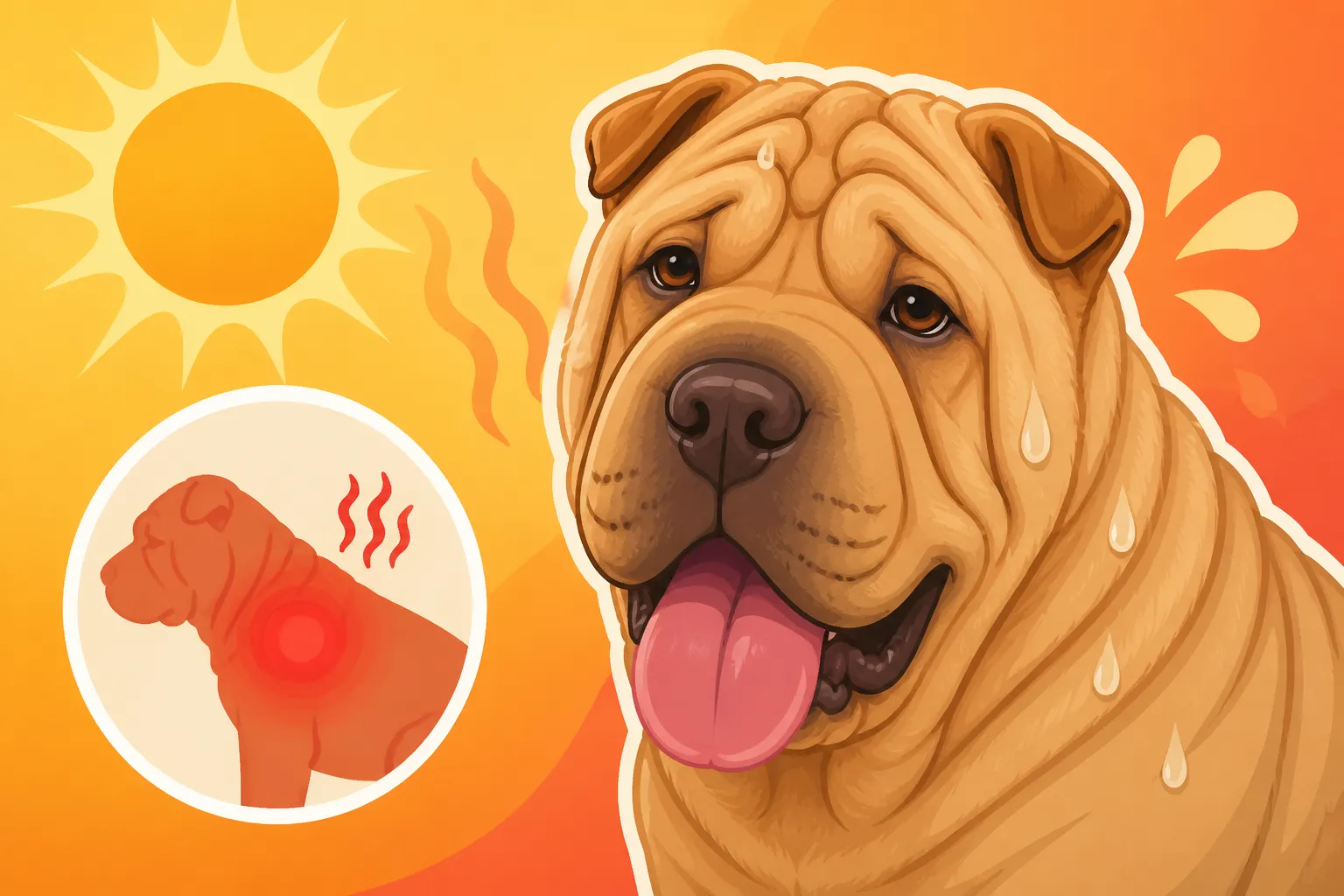
How Easily a Shar Pei Overheats
It's a hot, sunny day, and you're out for a walk with your beloved Shar Pei, enjoying the sunshine. Suddenly, you notice them panting more heavily than usual, maybe even stumbling a little. It's a terrifying moment that many Shar Pei owners face: the realization that your wrinkly companion is dangerously close to overheating, or worse, already in trouble. This comprehensive guide will walk you through exactly why Shar Pei are so susceptible to heatstroke, how to spot the early warning signs, and crucially, what you can do to prevent it and respond effectively if it happens.
The Built-In Challenges: Why Shar Pei Overheat So Easily
Shar Pei are truly unique dogs, with their distinctive wrinkles and proud demeanor. But beneath that charming exterior lies a physiology that makes them particularly vulnerable to heat. Unlike many other breeds, a Shar Pei isn't just "a bit warm" on a hot day; their body struggles in ways that can quickly become life-threatening. Understanding these inherent challenges is the first step in keeping them safe.
The Dense Double Coat's Role
While often described as having a "short" coat, many Shar Pei possess a dense double coat, particularly the brush coat variety. This coat, originally designed to protect them from both cold and the elements in their native China, acts like a heavy blanket when temperatures rise. It's incredibly efficient at trapping a layer of insulating air close to their body, which is fantastic in winter but disastrous in summer. This insulation prevents their body heat from escaping into the cooler air, essentially turning their own fur into a heat-retaining barrier.
Think of it like wearing a thick wool sweater in the desert—it might be great for cool evenings, but brutal when the sun is high. Unlike a single-coated dog that can dissipate heat more readily from its skin, a Shar Pei's dense undercoat makes this process far less efficient. This is especially true for those with a thicker, longer "brush coat" rather than the very short, prickly "horse coat." Owners often underestimate the insulating power of this coat, leading to situations where a seemingly mild day can quickly become too much for their dog.
Furthermore, humidity exacerbates this problem. When the air is already saturated with moisture, the evaporative cooling that dogs rely on through panting becomes far less effective. Their dense coat, combined with high humidity, creates a perfect storm for heat accumulation, making every summer stroll a calculated risk if not properly managed. It's not just about the ambient temperature, but also the "feels like" temperature when humidity is factored in. Heat Management Is Daily Work With a Shar Pei.
Wrinkles and Respiratory Realities
The iconic wrinkles that give the Shar Pei its distinctive look also contribute to its heat vulnerability, especially those around the muzzle and neck. These deep skin folds can trap heat and moisture, creating localized warm zones that are difficult for the dog's body to cool. Beyond the wrinkles, however, is a more critical respiratory challenge: their head shape. While not considered a true brachycephalic (short-nosed) breed like a Bulldog or Pug, many modern Shar Pei have a somewhat shortened muzzle and narrower airways compared to their historical "bone mouth" ancestors.
This slightly compromised airway means that the physical act of panting, which is a dog's primary method of cooling down, is less efficient. Imagine trying to breathe through a slightly pinched straw; it takes more effort to move the same amount of air. When a Shar Pei pants, they are trying to exchange warm air from their lungs for cooler air from the environment, and also to evaporate moisture from their tongue and mucous membranes. If their airway is restricted, this crucial heat exchange is hampered, forcing them to pant harder and faster to achieve the same cooling effect, which in turn generates more body heat. It's a vicious cycle.
The combination of a dense coat and potentially less efficient panting capability means a Shar Pei can go from comfortable to critically overheated much faster than many other breeds. Owners must be hyper-aware of these anatomical predispositions and not simply assume their Shar Pei can handle the same conditions as a longer-nosed, single-coated dog. Understanding Why a Shar Pei's Muzzle Affects Its Breathing can help you recognize this subtle but significant risk factor.
The Impact of Their Stoic Nature
Shar Pei are known for being incredibly stoic dogs, often hiding discomfort or pain. This can be a double-edged sword when it comes to overheating. While their calm demeanor is often admired, it can also mean they don't always vocalize or outwardly show distress until they are already in a dangerous state. Many other breeds might whine, try to escape the heat, or collapse dramatically at earlier stages, prompting their owners to act quickly. A Shar Pei, however, might try to push through, leading to a more advanced stage of heatstroke before the owner realizes the severity of the situation.
This stoicism requires Shar Pei owners to be exceptionally vigilant and proactive. You can't always rely on your Shar Pei to "tell" you they're too hot. Instead, you need to be constantly assessing their environment, activity level, and subtle physical cues. They might simply slow down a little, seek out shade quietly, or just seem a bit less enthusiastic than usual. These are the moments an owner needs to intervene, rather than waiting for obvious signs of distress like staggering or collapse.
This breed trait underscores the importance of strict heat management protocols. It's a fundamental aspect of Caring for a Shar Pei Past Seven and throughout their entire life. Never assume that because your Shar Pei isn't overtly complaining, they are perfectly fine. Their quiet resilience can unfortunately mask a rapidly developing crisis, placing a greater burden on the owner to predict and prevent.
Spotting the Danger: Recognizing Overheating Signs in Your Shar Pei
Since Shar Pei can be so stoic, learning to read their subtle cues for overheating is absolutely critical. What might seem like a minor inconvenience to another breed could be a rapid descent into heatstroke for your Shar Pei. Don't wait for dramatic collapse; know the signs, both early and late, and act fast.
Subtle Early Warnings
The first signs of a Shar Pei getting too warm are often easy to miss if you're not specifically looking for them. They typically begin with changes in their normal behavior and an increase in their cooling mechanisms. One of the most common early indicators is increased panting. While all dogs pant, a Shar Pei who is panting excessively, with a faster and deeper rhythm than normal, especially when not engaged in strenuous activity, is signaling distress. Their tongue might also appear wider and longer than usual as they try to maximize the evaporative surface.
Another subtle sign is seeking out cooler spots. Your Shar Pei might start deliberately moving to shade, lying on cool tiles, or pressing their body against cooler surfaces. They might also become less active, refusing to play or walk further, or simply lying down more frequently during a walk. Look for changes in their facial expression too; sometimes their eyes might appear a little more anxious or glassy. Their gums might be a brighter red than usual, indicating increased blood flow as their body tries to dissipate heat. These seemingly minor shifts are your dog's way of saying, "I'm struggling, please help." Ignoring these can quickly lead to more severe problems.
It's also worth noting how much they might drink. While increased thirst is a natural response, excessive or frantic drinking could indicate they're trying desperately to regulate their internal temperature. Even if the day doesn't feel scorchingly hot to you, remember that their internal thermometer works differently. What feels comfortable to you might be pushing your Shar Pei past their limits, and these early signs are their only way of communicating that. Keep an eye on How Far a Shar Pei Should Walk Daily and adjust based on temperature.
Escalating Symptoms and Emergency Signs
If the early warnings are missed, your Shar Pei's condition can quickly escalate into a full-blown emergency. These more severe symptoms require immediate intervention and often veterinary attention. Vomiting and diarrhea are common signs of advanced heat stress, as the body struggles to maintain normal function, and organs begin to shut down. Their stool might be soft or even bloody in severe cases, and vomiting can be profuse.
As their body temperature continues to rise, their nervous system is affected. You might notice your Shar Pei stumbling, staggering, or showing a loss of coordination. They may appear disoriented, confused, or even collapse. Muscle tremors, twitching, or even seizures can occur as heatstroke progresses. Their gums might become very dark red or even bluish, indicating poor oxygenation, and their saliva might be thick and sticky. Their breathing will become more labored and shallow, and they might make gurgling sounds.
These are critical, life-threatening symptoms. If you see any of these, your Shar Pei is in immediate danger. Time is of the essence. You need to begin cooling them down and get them to an emergency veterinarian as quickly as possible. Don't delay, even for a moment. This stage is far beyond simple discomfort; it's a medical emergency. What Temperature a Feverish Shar Pei Reaches can indicate a serious issue.
Here's a quick reference table for recognizing overheating signs:
| Symptom Category | Early Warning Signs | Advanced/Emergency Signs |
|---|---|---|
| Breathing | Increased panting, deep/fast | Labored, shallow, gurgling |
| Behavior | Restlessness, seeking shade | Stumbling, disorientation, collapse, seizures |
| Physical | Redder gums, wide/long tongue | Dark red/blue gums, thick saliva, vomiting, diarrhea |
| Activity | Reduced energy, reluctant to move | Unresponsive, loss of coordination |
| Body Temp | Feeling warm to the touch | Very hot to the touch, rectal temp > 104°F |
Why Early Recognition Is Crucial
For a Shar Pei, the difference between a minor overheat and a fatal heatstroke can be minutes. Their unique physiology means they don't have the same buffer zones as other dogs. The internal damage caused by overheating, especially to organs like the kidneys, liver, and brain, can begin rapidly and be irreversible even if the dog survives the immediate crisis. This is why relying on those subtle, early cues is so incredibly important. Acting at the first sign of discomfort can prevent a visit to the emergency vet, potentially saving their life and preventing long-term health complications.
Early intervention means you can easily move them to a cooler spot, offer water, or apply a cool towel, and they'll likely recover quickly without lasting effects. Waiting until they are staggering or collapsing significantly reduces their chances of full recovery and often incurs substantial veterinary costs. It's truly a matter of being proactive rather than reactive. Every Shar Pei owner needs to be constantly evaluating their dog's comfort level, especially in warm weather or during exercise.
Educating yourself and family members about these signs is a responsibility that comes with owning this particular breed. A child, for example, might not recognize excessive panting as a danger sign, but an adult who understands the Shar Pei's predispositions will. This proactive approach is fundamental to a Shar Pei's well-being and longevity, as issues like Amyloidosis Is What Actually Kills a Shar Pei can be exacerbated by stress on the body.
Staying Ahead of the Heat: Practical Prevention Strategies
Knowing that your Shar Pei is prone to overheating is half the battle; the other half is implementing effective prevention strategies. It’s not just about avoiding walks on hot pavement, but creating a lifestyle that prioritizes their comfort and safety in warmer temperatures. This means being mindful of their environment, exercise, and hydration every single day.
Smart Exercise Management
Exercise is vital for a Shar Pei's physical and mental health, but it must be managed carefully when temperatures rise. The golden rule is to avoid the hottest parts of the day. This usually means scheduling walks and playtime for early mornings or late evenings when the sun is less intense and the air temperature is lower. On really hot days, even those times might be too warm, and you might need to limit outdoor time to quick potty breaks in the shade. An Hour a Day Suits a Shar Pei, and Heat Cuts It Short isn't a suggestion, it's a critical adjustment.
Consider the intensity and duration of activity. Instead of a long, brisk walk, opt for several shorter, slower strolls. If your Shar Pei loves to play, keep sessions brief and allow for plenty of rest in a cool, shaded area. Concrete and asphalt absorb and retain heat, becoming scalding hot for paw pads and radiating heat back up to your dog's body. Always test the pavement with the back of your hand; if it's too hot for you to hold for five seconds, it's too hot for your Shar Pei's paws. Stick to grassy areas or shaded trails when possible.
During any outdoor activity, always carry fresh water for your Shar Pei and offer it frequently. A portable dog water bottle or a collapsible bowl is an excellent investment. Watch your dog carefully for any signs of slowing down or increased panting. If you see them, stop immediately, find shade, and offer water. On exceptionally hot or humid days, indoor games and mental stimulation might be the safest way to meet their exercise needs, even if it means sacrificing that walk.
Creating a Cool Home Environment
Your home should be a sanctuary from the heat for your Shar Pei. Air conditioning is ideal if you have it. Keep your home cool and comfortable, especially in the rooms where your Shar Pei spends most of their time. If air conditioning isn't an option, use fans strategically to create air circulation, but remember that fans primarily move air; they don't cool it significantly for dogs in the same way they do for sweating humans.
Ensure your Shar Pei always has access to cool, fresh water. Multiple water bowls around the house can encourage more frequent drinking. Adding ice cubes to their water bowl can help keep the water cool and enticing. Consider a raised water bowl if your Shar Pei struggles to reach a floor-level bowl comfortably, as straining to drink can increase body heat.
Cooling mats are another excellent tool for keeping your Shar Pei comfortable indoors. These mats, often available from retailers like Amazon, contain a gel that activates when pressure is applied, providing a cool surface for your dog to lie on. Some cooling mats can also be refrigerated for an extra boost of coolness. Shaded areas in your yard are also important if your dog spends any time outdoors. Access to shade from trees, awnings, or dedicated dog houses is non-negotiable. Remember, Whether a Shar Pei Needs Air Conditioning is often less about luxury and more about essential health.
Hydration and Cooling Aids
Maintaining hydration is key to helping your Shar Pei regulate their body temperature. Always ensure they have access to fresh, cool water, both inside and out. Beyond plain water, you can offer frozen treats, like ice cubes made from low-sodium chicken broth, or canine-specific popsicles to encourage fluid intake. Some dogs enjoy chewing on ice cubes, which can also provide a small internal cooling effect.
Cooling aids can be incredibly helpful. In addition to cooling mats, consider cooling vests or bandanas. These products, often purchased from places like Amazon, use evaporative cooling (wetting the fabric) or gel inserts to help lower your dog's core temperature. When using these, ensure they are not left on for too long if they become warm, and always check that they don't restrict your Shar Pei's breathing or cause discomfort around their neck or chest.
It's also a good idea to keep a spray bottle filled with cool (not ice-cold) water handy. A light misting on their paws, ear flaps, and belly can help, as these are areas where heat can dissipate more easily. Never use ice water or immerse an overheated dog in ice water, as this can cause blood vessels to constrict and actually hinder cooling or lead to other dangerous complications. The goal is a gradual, steady reduction in body temperature. What a Shar Pei's Cooling Gear Costs is a small price for their safety.
When the Worst Happens: Responding to a Shar Pei in Heatstroke
Despite all best efforts, sometimes a Shar Pei can still succumb to the heat. Recognizing when your dog is in a critical state and knowing the immediate steps to take can literally be the difference between life and death. Acting quickly and calmly is paramount.
First Aid Steps at Home
If you suspect your Shar Pei is experiencing heatstroke, the very first thing to do is get them out of the heat source immediately. Move them to the coolest possible environment – air-conditioned room, shaded area, or even a car with the AC blasting. Once in a cooler spot, the priority is to lower their body temperature. Apply cool (not ice-cold) water or wet towels to their body, focusing on areas with less fur and more blood flow, such as the armpits, groin, belly, and paw pads. You can gently fan them to enhance evaporative cooling.
Offer small amounts of cool water if they are conscious and willing to drink, but do not force it, as they could aspirate. If they are unconscious or severely disoriented, do not offer water by mouth. You can also apply rubbing alcohol to their paw pads, as it evaporates quickly and helps draw heat away. Monitor their temperature with a rectal thermometer if you have one; your goal is to bring their temperature down to between 102-103°F (38.9-39.4°C). Once they reach this range, stop active cooling to prevent hypothermia.
It's crucial to understand that even if your Shar Pei seems to improve with your first aid, a veterinary visit is still essential. Internal damage might not be immediately apparent, and a vet can assess organ function and provide supportive care to prevent complications. Early cooling at home is vital, but it's rarely a complete solution on its own for serious heatstroke. This is especially true for a breed like the Shar Pei, which has a predisposition to conditions like Familial Shar Pei Fever Is Not an Infection which can present with similar symptoms, complicating at-home diagnosis.
Knowing When to Seek Emergency Veterinary Care
Any Shar Pei suspected of having heatstroke, especially if exhibiting advanced symptoms like staggering, vomiting, collapse, or dark red gums, needs immediate veterinary attention. Do not hesitate. Call ahead to your nearest emergency veterinary clinic while you are performing first aid, so they can be prepared for your arrival. Time is of the essence, and even a few minutes can significantly impact the outcome.
During transport, continue to cool your dog with wet towels and keep the car's air conditioning on high. Place them on a cooling mat if you have one. Providing the veterinary team with as much information as possible—when the overheating started, what symptoms you've observed, and what first aid you've administered—will help them quickly assess and treat your Shar Pei. They will be able to provide intravenous fluids, medications to protect organs, and monitor their core temperature safely.
Don't underestimate the severity of heatstroke in a Shar Pei. It's not something to "wait and see" about. Even if they appear to recover fully at home, internal damage to kidneys, liver, or other organs can manifest days later. A professional evaluation is always the safest course of action to ensure there are no lingering effects and to prevent potentially fatal complications. What an Emergency Visit for Shar Pei Fever Costs can give you an idea of the expense, but a life saved is priceless.
Long-Term Recovery and Prevention of Recurrence
After a heatstroke episode, your Shar Pei will require careful monitoring and follow-up veterinary care. They may need continued supportive care for several days, including fluids, medications, and monitoring of their kidney and liver function. Full recovery can take time, and some dogs may experience lasting organ damage, which could require ongoing management. Your vet will advise you on the specific care plan and any necessary dietary or medication adjustments.
For the long term, prevention of recurrence becomes even more critical. A dog that has experienced heatstroke once is more susceptible to it again. You'll need to be even more vigilant about managing their exposure to heat and exercise. This might involve completely altering your walking routine, investing in more cooling aids, or ensuring they are never left unsupervised in warm conditions, even for a moment.
Consider a professional training program, such as those offered by BAXTER & Bella, to teach your Shar Pei to calmly accept cooling vests, a cooling mat, or even a quick spray with water if they're resistant. Positive reinforcement can make these life-saving interventions easier for both of you. It's a fundamental shift in how you approach their daily care, recognizing their specific vulnerabilities and actively working to mitigate the risks associated with heat. Your Shar Pei relies on you to be their advocate and protector, especially when it comes to the hidden dangers of overheating.
Disclaimer
This article is for general informational purposes only and does not constitute professional advice. Laws, prices and regulations vary by location and change over time. Consult a qualified professional for guidance on your specific situation.


