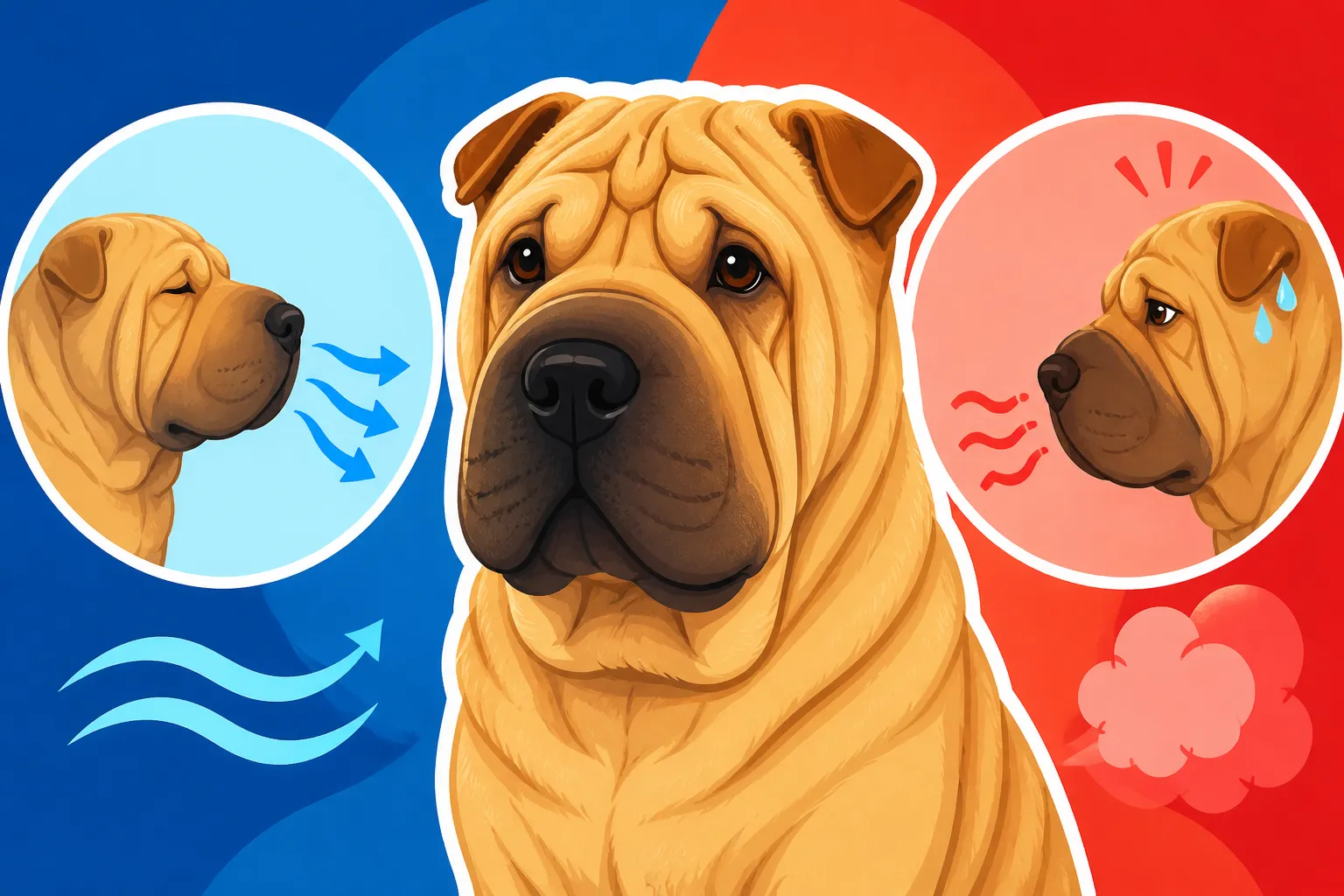
Whether the Shar Pei’s Muzzle Affects Its Breathing
A Shar Pei’s broad, padded muzzle can look as though it might make breathing difficult, but appearance alone doesn’t tell you how well a dog is moving air. Some Shar Pei breathe comfortably; others have narrowed nostrils or airway tissue that needs veterinary attention. This guide explains what may be normal, which signs are concerning, and when to seek help.
How the Shar Pei muzzle relates to breathing
A broad muzzle does not automatically mean an obstructed airway
Shar Pei have a distinctive head shape, and the fleshy, padded muzzle associated with the meat-mouth type can make the face look especially full. That appearance is not, by itself, proof that a dog has trouble breathing. The important question is whether air can move comfortably through the nostrils and airway—not simply whether the muzzle looks short, wide, or wrinkled.
A Shar Pei’s facial structure can vary. Some dogs have nostrils that appear relatively open; others have openings that seem narrow or compressed. Thick tissues around the muzzle and nostrils may contribute to resistance in some individuals. A veterinarian can assess the openings, listen to breathing, and decide whether further examination is needed. A photograph or breed label cannot reliably establish how much airflow a particular dog has.
People often wonder whether the breed counts as brachycephalic. The answer depends on what they mean by the term: Shar Pei are not shaped exactly like the most familiar flat-faced breeds, but a dog can still have airway problems without fitting a simple category. For more context on the breed’s head shape, see Whether a Shar Pei Is a Brachycephalic Breed. The practical takeaway is to judge the individual dog’s breathing and comfort rather than relying on a label.
The nostrils and airway matter more than the wrinkles
Narrow nostrils can make inhaling harder, particularly when a dog is exercising, excited, hot, or dealing with nasal irritation. A dog may compensate at rest and show the problem only when its demand for oxygen rises. That is why a Shar Pei that seems comfortable on the couch may struggle during a brisk walk or in warm, humid weather.
A veterinarian may look at nostril shape and airflow, listen to the chest, and examine the mouth and throat. Depending on the dog’s signs, they may consider other causes as well. Noisy breathing can have more than one explanation, and a muzzle’s appearance alone cannot confirm a particular airway condition. A useful overview of the breed’s facial structure is Meat Mouth and Bone Mouth Are Two Different Shar Pei, but neither type guarantees effortless breathing or predicts a problem on its own.
Facial folds are also worth keeping clean and dry, but they are not the same thing as an internal airway obstruction. Skin irritation, discharge, or swelling near the nose can make breathing seem noisier or more uncomfortable and should be discussed with a vet. Avoid pulling folds aside forcefully or putting wipes, ointments, or other products into the nostrils unless your veterinarian has recommended them.
Signs your Shar Pei may be having trouble breathing
Distinguish ordinary snuffling from signs of respiratory distress
Some Shar Pei make soft snuffling or snoring sounds, especially while sleeping. A sound that has been present for a long time and does not interfere with activity may be less concerning than a sudden change, but “it’s normal for the breed” is not a safe way to dismiss persistent or worsening symptoms. If your dog’s breathing is noisy when awake, becomes louder over time, or limits ordinary activity, arrange a veterinary assessment. You can compare common sleep sounds with more concerning changes in Whether a Shar Pei Snores.
Look for patterns, not just one sound. Notice whether your dog breathes comfortably while resting, whether it can walk at its usual pace, and how quickly it settles after activity. Watch for nostrils flaring, the belly or chest working harder than usual, repeated pauses during activity, or a need to stop and recover. A short video of an episode can help the vet understand what you’re seeing, especially if the signs do not happen during the appointment.
Seek emergency veterinary care if your dog is struggling to breathe, breathing with its mouth open while resting, showing blue or gray gums or tongue, collapsing, becoming unusually weak, or unable to settle. Keep the dog calm and move it to a cool, quiet place while contacting an emergency clinic. Do not force food, water, medication, or a muzzle on a dog that is in respiratory distress.
| What you notice | Why it matters | What to do |
|---|---|---|
| Mild, familiar snuffling during sleep | May be harmless, but a change in sound or comfort deserves attention | Monitor and mention it at a routine veterinary visit |
| Noisy breathing while awake or during light activity | Could indicate restricted airflow or another health problem | Arrange a veterinary assessment |
| Increasing effort, frequent stops, or slow recovery after exercise | The dog may not be tolerating the activity or conditions | Stop the activity and contact your vet |
| Open-mouth breathing at rest, blue or gray gums, collapse, or severe distress | May signal an emergency | Seek emergency veterinary care immediately |
Pay attention to changes, not just breed expectations
A sudden increase in snorting, coughing, gagging, or nasal discharge should not automatically be blamed on the muzzle. These signs can occur for different reasons, and a vet needs to consider the whole picture. Note when the change began, whether it happens indoors or outdoors, whether it follows exercise or eating, and whether your dog is otherwise eating and behaving normally.
It can help to keep a simple record: date and time, activity, weather, sound or symptom, and how long recovery took. If a walk on a warm afternoon reliably brings on noisy or labored breathing, that pattern is useful information for your veterinarian. If symptoms are severe, however, do not wait to build a log before getting help.
A dog that has always made some noise still deserves attention if the noise is becoming more frequent, its stamina is declining, or its breathing effort has changed. A veterinary exam can help distinguish a stable trait from a problem that needs treatment. The same principle applies to exercise tolerance: a noticeable change from your dog’s own baseline is often more informative than comparing it with another Shar Pei.
Exercise, heat, and everyday care
Adjust activity to your dog’s breathing
If your Shar Pei has noisy breathing or tires easily, favor calm, controlled outings over strenuous exercise until you have spoken with your veterinarian. Walk at a pace that lets your dog stay comfortable, and stop if it begins to struggle, lag, or recover unusually slowly. A well-fitting harness may be preferable to a collar that puts pressure on the neck, but a harness does not treat an airway problem or make strenuous activity safe.
For ordinary outings, choose cooler times of day and bring water. Keep walks short enough that your dog can recover comfortably, then build activity only if your vet agrees and your dog remains at ease. Heat and exertion can both make breathing problems more apparent. Shar Pei owners may find Heat Management Is Daily Work With a Shar Pei and How Easily a Shar Pei Overheats useful when planning routine care.
If you shop for a properly fitted harness through retailers such as Chewy, check that it does not rub against the folds or restrict movement around the chest. Fit matters more than the product label: you should be able to secure it without pressing into sensitive skin, and your dog should be able to walk and breathe freely. Ask your vet for guidance if your dog already has a diagnosed breathing problem.
Treat heat-related breathing changes seriously
A Shar Pei that is breathing harder in warm conditions may be overheated, struggling to move air, or experiencing both. Move the dog to a cool, shaded or air-conditioned area, stop exercise, and contact a veterinarian if breathing does not settle promptly or if the dog seems weak, disoriented, or distressed. Do not use a hot car or an outdoor walk as a test of how much heat your dog can tolerate.
Keep water available and plan errands so your dog is not left in a parked vehicle. A cooling mat may make a resting spot more comfortable, but it is not a substitute for shade, indoor cooling, or veterinary care. Chewy and other pet retailers may carry cooling mats, but check that your dog can lie on the surface without becoming trapped or uncomfortable. For hands-on steps, see How to Cool a Shar Pei Down and Whether a Shar Pei Needs Air Conditioning.
It is easy to mistake persistent panting for ordinary warmth, particularly after a walk. Watch the whole dog: effort, coordination, alertness, gum color, and how quickly breathing returns toward normal all matter. If breathing seems labored or your dog appears unwell, contact a vet rather than relying on a cooling product or waiting to see whether the episode passes.
Veterinary assessment and what to discuss
What a breathing check may involve
Start by describing what you have observed in plain terms. Instead of saying only that your dog “breathes funny,” explain whether the sound happens during sleep, while resting, on walks, or in warm weather. Tell the vet when it began, whether it is getting worse, and whether your dog has coughing, gagging, nasal discharge, exercise intolerance, or episodes of weakness.
The vet may examine the nostrils and mouth, listen to the heart and lungs, and assess how your dog breathes while calm. If the initial examination does not explain the symptoms, the veterinarian may recommend further tests or referral. The appropriate next step depends on the dog’s signs and health history; not every noisy-breathing Shar Pei needs the same workup.
Ask what changes would make the situation urgent and what level of activity is appropriate while you are investigating it. If a procedure involving sedation or anesthesia is being considered, make sure the veterinary team knows about any noisy breathing, exercise intolerance, or previous airway concerns. You can read more about that discussion in Whether a Shar Pei Tolerates Anesthesia Well.
Questions that help you leave with a clear plan
A useful appointment should leave you knowing what the vet thinks may be happening, what to monitor at home, and when to come back. If your dog’s breathing seems normal in the clinic but not at home, show a short video and describe the circumstances. Include details such as whether the dog was asleep, eating, excited, or exercising, because context can help the vet interpret a sound.
You can ask whether the nostrils appear to allow adequate airflow, whether the symptoms are consistent with an airway issue, and whether another cause should be considered. Ask what activity is safe, how to respond if symptoms return, and which signs mean emergency care rather than a routine recheck. If the first explanation does not fit what you see at home, it is reasonable to ask about follow-up or a second opinion.
A practical home plan can be simple: avoid pushing exercise when your dog is struggling, keep warm-weather outings conservative, and record changes rather than relying on memory. Chewy may be one place to find everyday items such as a harness or cooling mat, but those supplies cannot diagnose or correct restricted breathing. Keep the focus on your dog’s comfort and the veterinary plan.
A Shar Pei’s padded muzzle does not automatically mean its breathing is impaired. At the same time, persistent noisy breathing, reduced stamina, or visible effort should not be dismissed as “just the breed.” Notice changes, avoid heat and exertion when your dog is uncomfortable, and seek veterinary advice when breathing looks or sounds abnormal.
Disclaimer
This article is for general informational purposes only and does not constitute professional advice. Laws, prices and regulations vary by location and change over time. Consult a qualified professional for guidance on your specific situation.