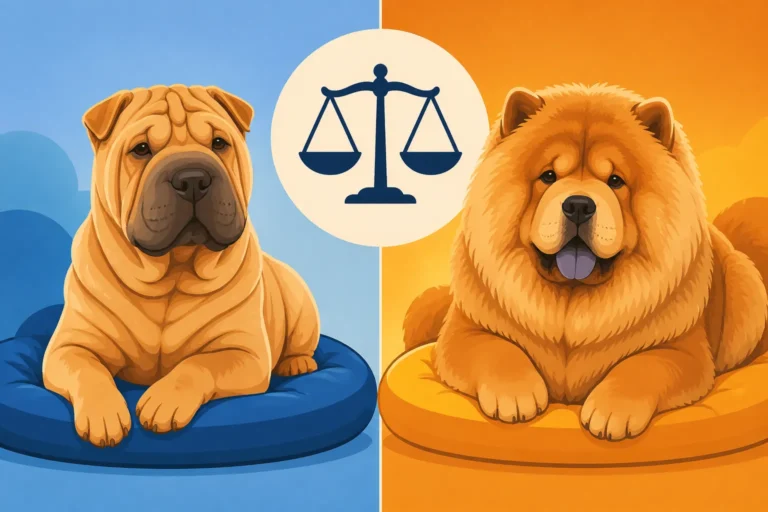
Whether Britain Reviewed the Shar Pei Standard
Britain has examined the Shar Pei’s breed standard, but that does not mean the breed has been redesigned or its health problems solved. The important distinction is between changing written expectations for appearance and changing what breeders select for in practice. This guide explains what the UK standard says about wrinkles, what review can accomplish, and what prospective owners should look for beyond a show-ring description.
What a review of the Shar Pei standard means in Britain
The Kennel Club standard is a description, not a health guarantee
In Britain, the national breed standard is maintained by The Kennel Club. It describes the appearance and characteristics expected of a Shar Pei in the show ring, including its proportions, coat, head, ears, tail and skin. Judges use it to assess dogs; breeders may also use it as a reference when planning litters.
A standard is not a law governing every dog, and it does not certify that an individual Shar Pei is healthy. A dog can fit the written description and still develop an eye problem, skin disease, ear trouble or a fever episode. Conversely, a dog that does not match every show-ring ideal may be a cherished, healthy companion. The standard is one influence on breeding decisions, not a substitute for veterinary care or health screening.
That difference matters when people hear that a standard has been “reviewed.” The phrase can sound like the breed has undergone a medical overhaul. Usually, it means the wording and expectations have received scrutiny, not that every health risk has been removed. For broader context on how breed history and breeding choices shaped modern Shar Pei, see What Being Saved Did to the Shar Pei's Health.
Britain has addressed excessive adult wrinkles in the written ideal
The British standard distinguishes between the loose, wrinkled skin seen in puppies and the appearance expected in mature dogs. Its wording makes excessive wrinkles on an adult dog undesirable, while allowing some moderate wrinkling in specified areas. In practical terms, the standard does not call for an adult Shar Pei to remain covered in deep folds across the body.
This distinction is significant because puppy Shar Pei often have much more loose skin than they retain as adults. As a dog grows, its body changes and many folds become less pronounced. A show prospect that is very wrinkled as a puppy may look quite different at maturity. The standard’s adult-dog language helps counter the idea that more folds must always mean a better example of the breed.
It is not, however, a simple instruction to breed all wrinkles away. Shar Pei skin and wrinkles are part of the breed’s recognizable appearance, and a standard still has to describe that appearance. For a closer look at how the breed’s appearance is defined, read Whether a Shar Pei's Wrinkles Are in the Standard and Whether an Adult Shar Pei Should Have Head Wrinkles Only.
| Question | What the British standard can do | What it cannot do |
|---|---|---|
| Should an adult Shar Pei have excessive body folds? | The standard discourages excessive adult wrinkling | It cannot ensure every breeder follows that preference |
| Are puppy wrinkles automatically a problem? | It recognizes that puppies can be much more wrinkled | It cannot predict every adult appearance or health outcome |
| Does meeting the standard mean a dog is healthy? | It gives judges a shared description of the breed | It cannot replace health testing or a veterinary examination |
| Does a wording change alter every breeding decision? | It can influence judges and breeders over time | It cannot instantly change the gene pool or market demand |
What breed-standard scrutiny can and cannot change
Wording can shift what judges reward
A breed standard influences the traits that are valued in the show ring. If judges are directed away from excessive adult skin, that can send a useful signal: extreme folds should not automatically be treated as desirable. Breeders who care about show success may respond to what judges reward, and that can gradually affect the appearance of dogs being bred.
But a written change is only part of the process. Judges need to apply the wording consistently, breeders need to make selection decisions that reflect it, and puppy buyers need to value soundness rather than an exaggerated look. If buyers continue to seek the most heavily wrinkled puppies, commercial demand can work against the intention of the standard.
This is one reason why a review should be understood as a tool, not a finish line. A change in language can clarify expectations; it cannot make a breeder use health-conscious selection or guarantee that a puppy will avoid inherited conditions. The longer history of changing preferences is explored in Whether Western Breeders Made the Shar Pei Wrinklier and Whether Breeders Are Reducing Shar Pei Wrinkles.
A standard does not directly rewrite inherited health risks
The Shar Pei’s distinctive skin traits are connected to its biology, and some health concerns are not solved simply by asking for fewer visible folds. Skin irritation can occur in folds, while eye and ear problems may involve anatomy that a general appearance description does not fully address. Familial Shar Pei fever and amyloidosis are separate concerns that require attention to health history and veterinary monitoring.
It is tempting to assume that a less wrinkled dog must be healthier in every way. That is too broad a conclusion. Less excessive skin may be a sensible welfare goal, but it does not establish that an individual dog is free of fever risk, eye disease, ear disease or other inherited problems. The relationship between appearance and risk is more complicated than counting folds. See Whether a Less Wrinkled Shar Pei Is Healthier and How the Wrinkle Gene Also Triggers Fever.
A standard can support a healthier direction when it discourages exaggeration and is applied thoughtfully. It cannot by itself remove a genetic risk from a population, nor can it ensure that a dog’s health is assessed beyond its outward appearance. That is why scrutiny of the breed standard and practical health work need to happen alongside each other.
How to assess what a review means for an individual dog
Look beyond the show description when choosing a puppy
If you are speaking with a breeder, ask about the health of the parents and close relatives, not just whether the puppies look correct for the standard. Ask what the breeder knows about recurring fever, kidney disease, eye problems, chronic ear infections and significant skin conditions in their lines. A responsible breeder should be willing to discuss the limits of what they know as well as any known concerns.
Pay attention to the adult dogs’ comfort and function. Do they move freely? Can they see without apparent discomfort? Is the skin clean and healthy, or are there persistent signs of irritation and infection? A puppy’s charming folds can make it easy to overlook these questions, especially when photos emphasize a particular look. For context on health concerns that may not be obvious from appearance, see Skin Is the Shar Pei's Largest Problem by Surface Area.
You can also ask which standard the breeder follows and how it informs their breeding choices. A good answer should not be only “we breed to the standard.” Ask what that means in practice: how they think about adult skin, what health information they track, and how they balance appearance with comfort and function. The standard can be part of the conversation, but it should not be the whole conversation.
Review health records and plan for ongoing care
When considering a puppy or adult dog, request available veterinary records and ask what examinations have been done. A routine examination is useful, but it cannot guarantee that a young dog will never develop a condition later. Make a plan with your veterinarian for ongoing care, including eye checks, skin and ear assessment, and any monitoring that is appropriate for the dog’s history.
Once a Shar Pei comes home, keep notes on recurring symptoms. For example, a short record of fever episodes, swelling, skin flare-ups or ear problems can help a veterinarian see patterns that are hard to recall from memory during an appointment. A written history can also be useful when a dog changes clinics or sees a specialist. For an overview of the breed’s inherited fever condition, read Familial Shar Pei Fever Is Not an Infection.
Routine supplies can make home care easier, but products are not a substitute for diagnosing a problem. If comparing basic grooming or cleaning items from retailers such as Chewy, check that a product is appropriate for your dog and follow your veterinarian’s directions when the skin or ears are already inflamed. Keep product details and any reactions in your care notes; switching products repeatedly can make it harder to work out what is helping or irritating the skin.
What the British review does not settle
It does not mean the breed standard should never change again
Breed standards can be revisited as understanding of welfare and breed health develops. A review is not a declaration that the current wording is perfect for all time. Nor does scrutiny prove that every issue has been addressed. The meaningful question is whether the written ideal and judging practice encourage dogs that can live comfortably, rather than rewarding an exaggerated appearance for its own sake.
There is also a difference between reviewing a standard and changing the full breeding population. A standard can be updated relatively directly; changing the prevalence of inherited traits takes sustained decisions across generations. Breeders, judges, breed clubs, veterinarians and puppy buyers all have different roles, and no single wording change can carry the whole burden.
For a wider discussion of whether breed guidance should evolve further, see Whether the Shar Pei Standard Should Change and Whether Kennel Clubs Have Acted on Shar Pei Health. Those questions are related, but they are not the same as asking whether Britain has reviewed the standard at all.
It does not mean every British Shar Pei has the same appearance
A breed standard describes an ideal, while real dogs vary. Shar Pei differ in coat, build, degree of wrinkling and individual health. Some may have a more moderate appearance than others, and a dog’s folds can change as it matures. These differences do not make a quick visual judgment a reliable health test.
If you are considering a Shar Pei, the most useful takeaway is to treat the standard as one piece of information. Britain’s written standard discourages excessive wrinkling in mature dogs, which is a meaningful statement about the desired adult appearance. But a responsible decision still depends on the particular dog’s health, the breeder’s openness, veterinary guidance and the care you can provide over the dog’s life.
Disclaimer
This article is for general informational purposes only and does not constitute professional advice. Laws, prices and regulations vary by location and change over time. Consult a qualified professional for guidance on your specific situation.