Whether a Male Shar Pei Is Much Larger Than a Female
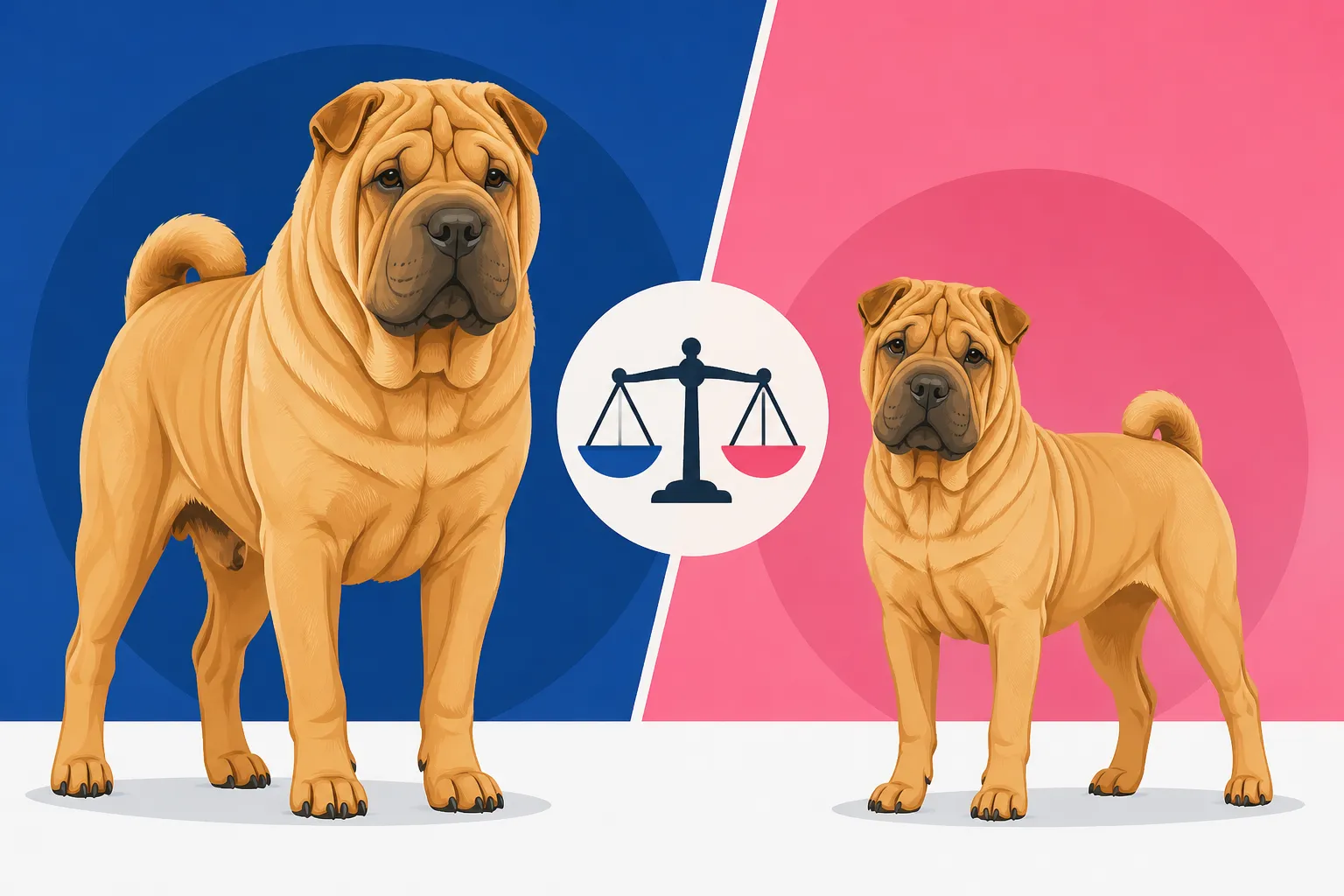
A male Shar Pei is often somewhat bigger or more substantial than a female, but the difference is rarely predictable enough to choose a puppy by sex alone. Adult males and females can overlap in height and weight, and family lines, frame, age, and body condition all matter. This guide explains what size differences to expect and how to judge an individual dog.
How much bigger is a male Shar Pei?
Height and weight ranges overlap
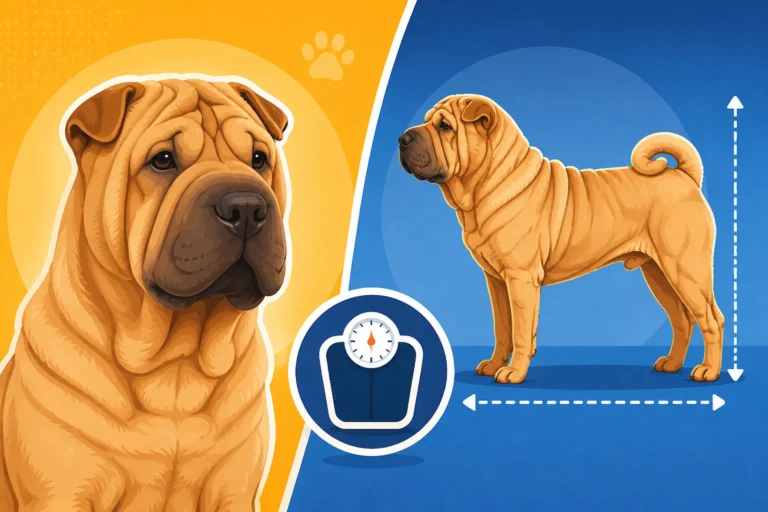
Adult males may be taller or heavier on average, but there is no reliable rule that every male will outweigh every female. Many breed descriptions give a shared adult range of roughly 18 to 20 inches at the shoulder and 45 to 60 pounds. Those figures are a broad guide, not a promise about an individual dog, and the ranges for the sexes overlap.
In everyday life, that overlap is easy to see. A smaller-framed male may weigh less than a broad, muscular female. Two littermates can also mature into noticeably different-sized adults despite having the same parents and upbringing. For a fuller view of the breed’s size range, see What a Shar Pei Weighs and How Tall It Stands, How Tall a Shar Pei Stands, and How Much a Shar Pei Weighs.
| What you are comparing | What to expect |
|---|---|
| Adult height | Males may be a little taller, but many males and females fall within the same general range |
| Adult weight | Males may be heavier on average, but body frame and condition create substantial overlap |
| Overall build | Some males look broader or more substantial; some females have a sturdy, solid build too |
| Puppy size | A puppy’s current size is not a dependable prediction of its adult size |
| Individual dog | Parents, relatives, growth, and body condition are more useful than sex alone |
When someone says a male is “much larger,” they may be comparing a particularly big male with a small female, rather than describing a consistent breed-wide gap. If you are choosing between two adult dogs, compare their actual measurements and builds. If you are choosing a puppy, ask about the parents and mature relatives on both sides of the pedigree rather than relying on the puppy’s sex as a shortcut.
Build can look different even when measurements are close
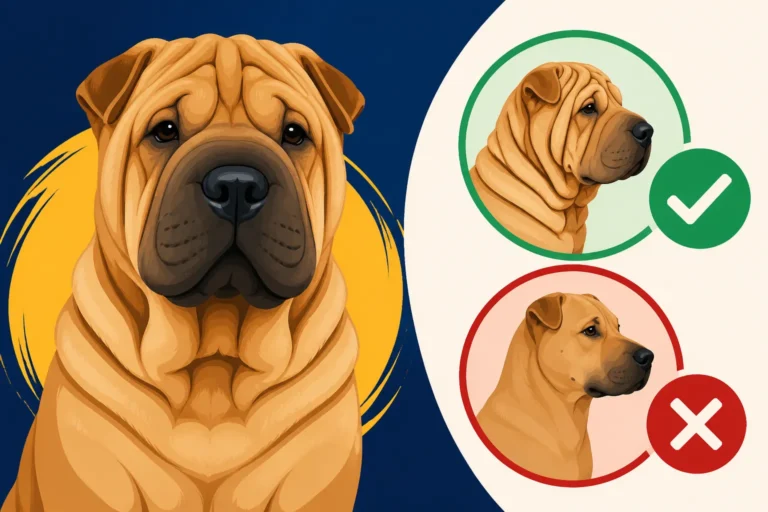
A difference of an inch or a few pounds may not sound dramatic, but a dog can still look more imposing because of its proportions. A wider chest, thicker neck, heavier bone, or broader head can make one Shar Pei seem larger than another of similar height. Wrinkles and loose skin can also affect the impression you get, though they do not tell you how much the dog weighs.
The reverse can happen too: a taller, leaner dog may look less bulky than a shorter dog with a broad frame. For that reason, avoid judging size from photographs alone. Camera angle, posture, coat and skin folds, and the dog’s position beside a person or object can distort scale. If you need a practical estimate, measure the dog and ask a vet to assess body condition.
What determines adult size besides sex?
Parents and family lines offer useful clues
If you are considering a puppy, the size of both parents is a better clue than whether the puppy is male or female. Ask the breeder for each parent’s height and healthy adult weight, and ask what size adult dogs from previous litters have reached. Close relatives can be helpful context, especially when one parent is unavailable to meet.
Even good family information is not a guarantee. Puppies inherit a mix of traits, and a litter can include dogs with different frames and growth patterns. A breeder should be willing to discuss the range they have seen rather than confidently promise that a particular puppy will stay small or grow into a very large adult. For more on how size develops over time, see The Age a Shar Pei Stops Growing and Whether a Shar Pei Puppy Grows Into Its Skin.
Age, nutrition, and body condition matter
A puppy’s height and weight change quickly, so comparing a young male with a mature female tells you little about how large either dog will be as an adult. Shar Pei puppies may look especially compact or wrinkly at one stage, then change in proportion as they grow. Growth tends to slow as a dog approaches adulthood, but the exact pace varies.
Food can affect weight, but feeding extra will not safely make a dog taller or improve its frame. Overfeeding can instead add fat, putting extra strain on joints and making it harder to assess the dog’s natural build. If you are unsure whether a growing puppy is on track, ask your vet to review its growth and body condition. A useful discussion is not just “Is this puppy big enough?” but also “Is this puppy growing at a healthy pace?”
A healthy adult’s size is not determined by the number on the scale alone. A vet can assess whether the dog’s weight suits its frame and whether its body condition is appropriate. If a dog’s weight changes unexpectedly, or it seems to be gaining or losing weight despite a consistent routine, check in with the vet instead of assuming the difference is simply because it is male or female.
How to compare a male and female fairly
Measure the dogs rather than guessing from appearance
To compare height, measure from the floor to the top of the shoulder while the dog is standing naturally on a level surface. The top of the head is not the standard reference point. For weight, use a reliable scale and note the dog’s age and body condition alongside the number. A single measurement is less informative than a series of measurements taken as the dog matures.
If you are meeting puppies, compare them at the same age and under similar conditions. A puppy that has just eaten, is standing on tiptoe, or is crouching beside a sibling can look different from what it measures. Ask whether the parents’ figures are based on healthy adult weights, and whether the breeder has records for mature puppies from earlier litters. These details help you compare likely size without treating an estimate as a guarantee.
For an adult dog, look at the whole picture: height, weight, body condition, and build. A male who is a little heavier may not require a different household setup from a female, while a broad-chested individual of either sex might need a different harness size than you expected. The dog in front of you matters more than a generalized claim about males.
Choose equipment for the individual dog
Avoid buying a collar, harness, bed, or crate based only on sex. Measure the dog and follow the product’s sizing instructions. For a harness, take the measurements the maker asks for—often around the chest and neck—and check that the fit allows comfortable movement without rubbing the folds. A growing puppy may need its fit checked regularly. These guides can help with common equipment questions: Whether a Shar Pei's Collar Rubs Its Folds and Whether a Harness Suits a Shar Pei Better.
When shopping online, use the specific item’s measurement chart rather than relying on a generic “male dog” or “medium dog” label. Chewy product listings, for example, may offer sizing guidance, but compare that guidance with the dog’s actual measurements and the manufacturer’s instructions. If you are between sizes, check the maker’s fit advice and consider whether the item is adjustable.
For crates and beds, think about the dog’s adult length and sleeping position, not just its weight. A dog should have room to stand, turn, and lie comfortably, but an oversized crate may not be the right choice for a puppy during early house training. Chewy’s product descriptions can help you check dimensions while you shop; measuring the dog and checking the item’s specifications are still the useful steps. If possible, keep the receipt and review the seller’s return policy before ordering equipment for a fast-growing puppy.
Does choosing a male mean choosing a harder-to-manage dog?
Size alone does not decide how a dog fits your home
A male may be a little heavier or stronger than a female, but that does not automatically make him more difficult to walk, handle, or live with. Temperament, training, health, and the individual dog’s habits matter at least as much as a modest size difference. A calm, well-trained larger dog may be easier to manage than a smaller dog that pulls or is uncomfortable with handling.
For a home with narrow hallways, a small car, or limited storage, measure the spaces and equipment you will actually use. Consider whether you can lift the dog if it is ill or injured, and whether every person who will handle it can manage the dog safely on leash. Those practical questions are more useful than assuming that one sex will suit your household better. If home size is part of your decision, see Whether a Shar Pei Suits an Apartment Dweller.
Make the decision around the dog, not a size stereotype
If you have a specific adult dog in mind, meet it and ask about its current weight, health, behavior, and daily needs. If you are choosing a puppy, talk with the breeder about the parents, past litters, and how they match puppies to homes. A thoughtful match should consider your experience and routine—not just whether you have requested a male or a female.
In short, expect males to be somewhat larger on average, but do not count on a large or consistent gap. Many males and females are close in size, and individual variation can outweigh the average sex difference. Measure the dog, ask about its family, and plan for the adult in front of you rather than relying on a label.
Disclaimer
This article is for general informational purposes only and does not constitute professional advice. Laws, prices and regulations vary by location and change over time. Consult a qualified professional for guidance on your specific situation.