Whether a Shar Pei’s Collar Rubs Its Folds
Oh, the collar dilemma for our beloved Shar Pei! It’s a real head-scratcher, isn't it? Many of us fall in love with those magnificent wrinkles, but then quickly realize that those very folds, while adorable, can become a source of irritation and discomfort for our dogs, especially around the neck where a collar typically sits. It’s a common frustration for Shar Pei owners to discover that a standard collar, which works perfectly fine for most breeds, can actually rub, chafe, and even cause painful skin issues for our wrinkly companions. This guide is here to walk you through why traditional collars can be a problem and, more importantly, what practical, empathetic solutions exist to keep your Shar Pei comfortable and their beautiful skin healthy.
The Unique Anatomy of a Shar Pei's Neck: A Wrinkly Challenge
Let's face it, a Shar Pei isn't built like your average Labrador or Poodle. Their defining feature, those incredible wrinkles, aren't just for show – they're a fundamental part of their physical makeup, and they require a different approach to everyday care, including how we choose their neckwear. Understanding this unique anatomy is the first step to ensuring your Shar Pei's comfort and health.
Understanding the Wrinkles and Skin Sensitivity
A Shar Pei's skin is truly one of a kind. Unlike breeds with taut, smooth skin, a Shar Pei possesses an abundance of loose skin, particularly around the head, neck, and shoulders. These deep folds, while endearing, create a unique microclimate beneath them. Imagine multiple layers of skin pressed against each other, trapping warmth and moisture. This environment is already prone to issues, even without external factors rubbing against it.
Our Shar Pei's skin itself can be incredibly sensitive. Not only do they have the folds, but some, especially those with the "horse coat" variety, have a coat that feels like coarse sandpaper. This distinctive texture, while effective for its original purpose (and quite unique to the touch!), can unfortunately exacerbate friction. When a traditional collar is placed around a Shar Pei's neck, it sits directly against these sensitive, folded areas. Every movement, every turn of the head, every time your dog pulls on the leash, that collar fabric is rubbing, sawing, and pressing into delicate skin. It’s not just a minor annoyance; for a Shar Pei, it can be a constant source of irritation that quickly escalates. We know that Skin Is the Shar Pei's Largest Problem by Surface Area, and the neck is no exception to this rule. It’s crucial to consider how even the material of the collar interacts with their coat. A rough nylon collar might feel fine on a smooth-coated dog, but on a Shar Pei with a horse coat, it can feel like a perpetual exfoliation gone wrong. Different coat types also shed differently, and trapped hair can add to the friction. You might want to learn more about Horse Coat or Brush Coat Changes How You Care for a Shar Pei to understand your dog's specific needs.
The Risk of Skin Fold Dermatitis
When those folds get rubbed, especially if moisture or heat is trapped, you're setting the stage for one of a Shar Pei's most common skin woes: skin fold dermatitis. This isn't just a bit of redness; it's a painful inflammation that can quickly lead to infection. The constant friction from a collar breaks down the skin's natural barrier, creating tiny abrasions. These tiny breaks, combined with the warm, moist environment of the folds, become a perfect breeding ground for bacteria and yeast.
You might start to notice redness, a damp feeling in the folds, hair loss around the collar area, or even a distinct, unpleasant odor. Your dog might scratch at their neck excessively, rub against furniture, or seem generally uncomfortable. If left unaddressed, these infections can become severe, requiring veterinary intervention with antibiotics or antifungal medications. It’s a cycle many Shar Pei owners know all too well: irritation leads to infection, which leads to discomfort, and then more rubbing, worsening the issue. We often see that Every Fold on a Shar Pei Is a Place Something Grows, and the neck folds are particularly vulnerable given their contact with a collar. Recognising the early signs of Skin Fold Dermatitis on a Shar Pei is key to preventing a minor irritation from becoming a full-blown medical problem. Preventing this starts with thoughtful choices about what goes around your Shar Pei's neck.
Why Traditional Collars Often Fall Short for Shar Pei
It's not that traditional collars are inherently bad; they just weren't designed with a Shar Pei's unique anatomy in mind. Most dog collars are a one-size-fits-all concept for a multitude of breeds, and for our wrinkled friends, that simply doesn't cut it. The design, material, and even the basic function of a collar can pose significant challenges.
The Collar-Fold Conundrum
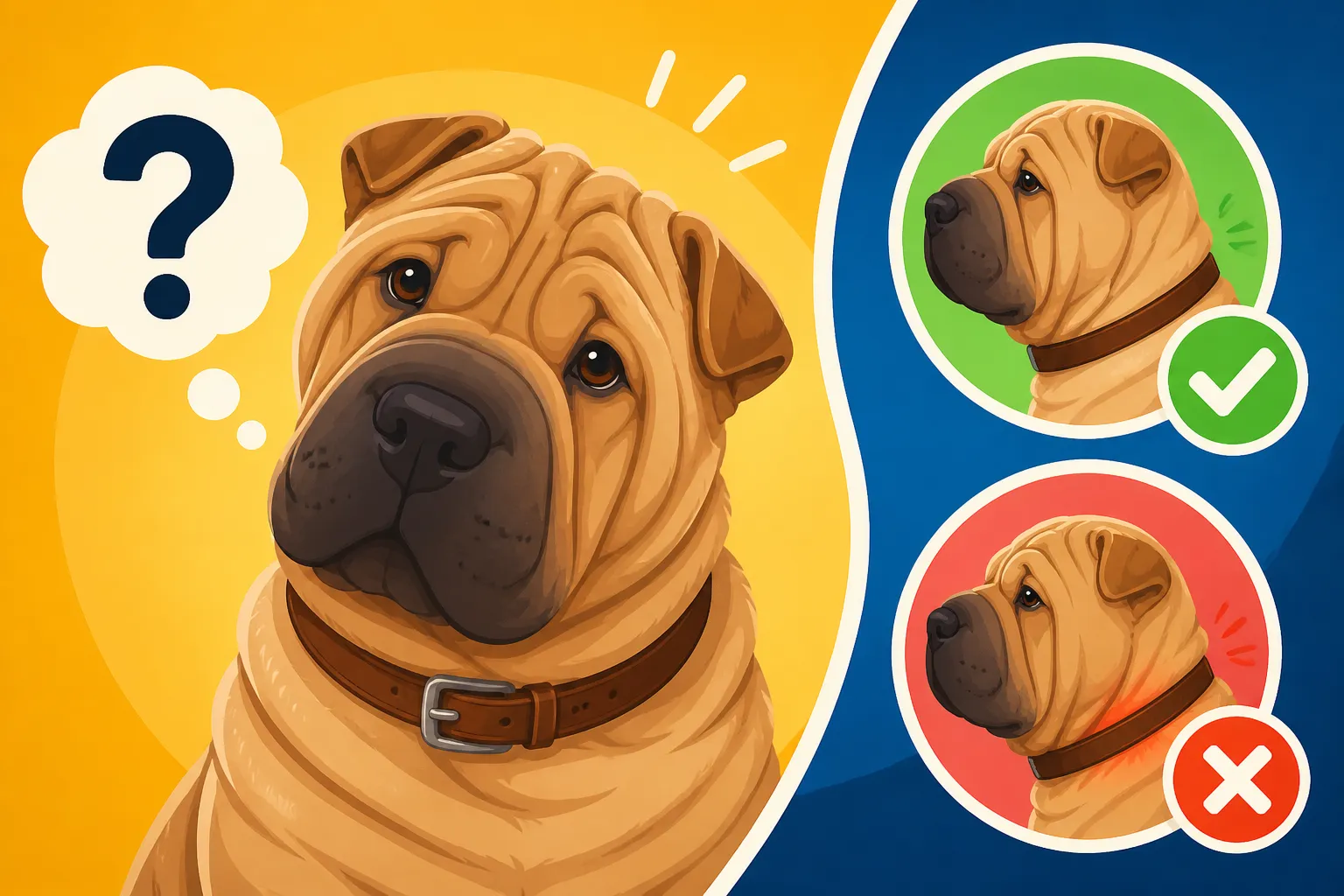
Think about how a typical flat collar sits on a dog's neck. It encircles the narrowest part of the neck, and for most dogs, this is a smooth, relatively non-problematic area. For a Shar Pei, however, this exact region is often home to multiple, deep skin folds. The collar doesn't just rest on top; it often pushes into these folds, creating constant pressure and friction.
Consider a simple walk. Every time your Shar Pei pulls, even slightly, the collar tightens, digging into their neck. If they shake their head, the collar shifts, rubbing against the delicate skin. This constant mechanical action, day in and day out, is precisely what causes irritation. The issue isn't just about the tightness, but the presence of the collar in an area where skin is already prone to friction. Even a loosely fitting collar can chafe as it moves, especially if your Shar Pei has a lot of loose skin around their jowls and neck. Different collar materials also play a significant role. A stiff nylon collar, while durable, offers little give and can be quite abrasive. Leather collars, while often softer, can still rub, especially if they are new and not yet "broken in." Even a soft, fabric collar can become saturated with moisture (from drinking, drooling, or damp weather) and then become a damp, irritating band against the skin.
Beyond Just Rubbing: Other Collar-Related Issues
The problems with traditional collars extend beyond mere rubbing. There are other considerations that impact a Shar Pei's overall well-being. Pressure points are a real concern. If a collar constantly presses on a specific fold or bone, it can cause discomfort, bruising, and even inhibit blood flow over time. Imagine having a tight band constantly pushing into a sensitive area of your skin – it's not pleasant.
Another overlooked issue is hair loss. Constant friction can lead to breakage and thinning of the fur around the collar area, creating bald patches that expose even more delicate skin to potential damage. This isn't just cosmetic; it's a visible sign of ongoing irritation. Furthermore, consider the behavioral aspect. A dog in constant discomfort is often an unhappy dog. They might scratch, rub, or fidget more, inadvertently worsening the problem. They might even become reluctant to have their collar put on, or to go for walks, associating the collar with pain. While collars are often used for identification tags, the constant jingling of tags against their sensitive skin and neck folds can also be an irritant, particularly if they are trying to rest. It's not just about the fit and material; it's about the entire experience for your Shar Pei, whose facial structure already means Why a Shar Pei Cannot See to the Side, leading to a greater reliance on other senses and physical comfort.
Harnesses as the Shar Pei's Best Friend
Given the challenges traditional collars present, many Shar Pei owners, myself included, have found that a well-fitting harness is not just an alternative, but often the superior choice for comfort, safety, and skin health. Harnesses work by distributing pressure across a wider, more robust area of your dog's body, completely bypassing those sensitive neck folds.
The Advantages of a Well-Fitting Harness
The primary benefit of a harness is that it completely removes pressure from your Shar Pei's neck. Instead, the force is distributed across their chest, shoulders, and back. These areas are typically much less prone to skin fold issues and are better equipped to handle the pressure of leash attachment. This means no more rubbing, no more chafing, and significantly less risk of skin fold dermatitis around the neck.
There are various types of harnesses, and understanding them can help you pick the perfect one. An "H-harness" or "Y-front harness" (which looks like a 'Y' over the chest) is often recommended because it allows for full shoulder movement and keeps straps away from the armpits and throat. Back-clip harnesses are excellent for dogs who don't pull much, providing comfortable control. Front-clip harnesses, which have the leash attachment point on the chest, are fantastic for gentle leash training as they redirect your dog's forward momentum. No matter the style, the key is proper fit: the harness should be snug enough not to chafe or allow your dog to slip out, but loose enough that it doesn't restrict movement or dig into their skin, particularly in the armpit area. You should be able to comfortably slide two fingers under any strap. Whether a Harness Suits a Shar Pei Better is a question many owners ask, and for most Shar Pei, the answer is a resounding yes. It provides superior comfort and control, especially for a breed that can be quite powerful on a leash.
Choosing the Right Harness Material and Design
Beyond the style, the material and design details of a harness are paramount for a Shar Pei. Look for harnesses made from soft, breathable, and ideally, quick-drying materials. Neoprene padding, soft mesh fabrics, or even fleece-lined straps can make a huge difference in preventing friction and allowing air circulation, which is vital for keeping skin folds healthy. Avoid thin, stiff nylon straps that can dig in or cause irritation, especially in the armpit region.
Adjustability is another critical feature. Shar Pei can have unique proportions, so a harness with multiple adjustment points (around the neck, chest, and girth) will allow for a truly custom and comfortable fit. Some excellent harness brands focus on comfort and ergonomic design. You can often find a wide selection of these harnesses on online retailers like Chewy or Amazon, where you can read reviews from other dog owners. When selecting, consider your climate as well. In warmer areas, a lighter, more breathable mesh harness might be preferable, while in cooler weather, a slightly more robust, padded option could be suitable. Just remember to regularly check the fit, especially for growing puppies or if your dog's weight changes, and always ensure no straps are digging into sensitive areas. Investing a little more in a good quality, well-designed harness will pay dividends in your Shar Pei's comfort and reduce veterinary bills from skin issues. For general care, remember Drying Is More Important Than Washing on a Shar Pei, and the same principle applies to keeping a harness clean and dry to prevent issues.
| Harness Type | Pros for Shar Pei | Cons for Shar Pei | Ideal Use Case |
|---|---|---|---|
| Y-Front/H-Harness | Distributes pressure widely; avoids throat; good for shoulder movement. | Can be bulky; requires careful fitting to avoid armpit rub. | Everyday walks; dogs prone to tracheal issues; pullers. |
| Back-Clip Harness | Comfortable for dogs that don't pull; simple design; keeps leash away from legs. | Less control for strong pullers; can encourage pulling. | Casual strolls; well-behaved dogs; identification only. |
| Front-Clip Harness | Excellent for leash training and redirecting pulling; no neck pressure. | Can twist if dog pulls hard; leash can get tangled in legs. | Training; dogs that pull; when maximum control is needed. |
| Padded/Mesh Harness | Soft materials reduce friction; breathable; comfortable for sensitive skin. | Can absorb moisture if not quick-drying; may be harder to clean. | Any use, especially for dogs with very sensitive skin or dermatitis history. |
When a Collar Is Necessary: Minimizing Risk
While harnesses are often the primary choice for Shar Pei walks, there are situations where a collar might still be needed, such as for holding identification tags. The goal here is to minimize any potential irritation if a collar must be worn.
Best Practices for Collar Use
If you choose to use a collar on your Shar Pei, treat it primarily as a holder for identification tags and never as the sole attachment point for a leash, especially for walking. Opt for collars made from very soft, smooth, and preferably wider materials. A wider collar distributes pressure over a larger surface area, reducing the likelihood of a thin strap digging into a fold. Leather, if it's very soft and supple, or padded fabric collars can be good choices. Avoid stiff nylon, chain collars, or choke/prong collars at all costs, as these will inevitably cause severe irritation and potential injury to a Shar Pei's delicate neck.
Regularly check the fit of the collar. It should be loose enough to slide two fingers comfortably underneath, but not so loose that it can slip off over their head or get snagged on something. Be vigilant about checking the skin underneath daily for any signs of redness, dampness, or irritation. If you see any, remove the collar immediately and consider alternatives. It's also a good idea to remove the collar when your Shar Pei is unsupervised at home, especially if they are playful or tend to scratch. Look for "breakaway" collars as an added safety measure, as these are designed to unclip if they get caught on something, preventing choking. Remember that What a Shar Pei Owner Should Have at Home includes a good first aid kit for minor skin irritations.
Alternative Identification and Monitoring
Considering the potential for collar-related issues, it's wise to explore alternative methods for identification and even monitoring. A microchip is, without a doubt, the most reliable form of permanent identification for any dog, including a Shar Pei. It's implanted once and provides lifelong security, independent of any external collar.
For day-to-day visible identification, you have options beyond traditional dangling tags. Many harnesses offer loops or designated areas to attach ID tags, keeping them away from the neck folds. You can also find collars that have your dog's name and your phone number embroidered directly onto the fabric, eliminating the need for jingling metal tags that can rub and annoy. Tag silencers or rubber tags can also reduce noise and prevent metal-on-metal friction. For those interested in advanced monitoring, there are smart collars or GPS trackers available. These often come in lightweight, ergonomic designs that can sometimes be attached to a harness or a soft, well-fitting collar, allowing you to track your dog's location or activity levels without compromising their comfort. Many such devices can be found and reviewed on platforms like Amazon, offering a broad range of choices for every need and budget. While we focus on neck care, don't forget the importance of overall hygiene; knowing How Often a Shar Pei's Folds Need Cleaning for other body areas is just as vital.
The decision of what goes around your Shar Pei's neck is more than just a style choice; it's a critical aspect of their health and comfort. By understanding their unique needs and choosing appropriate, well-fitting gear, you can help your wrinkly companion live a happier, irritation-free life.
Disclaimer
This article is for general informational purposes only and does not constitute professional advice. Laws, prices and regulations vary by location and change over time. Consult a qualified professional for guidance on your specific situation.