Whether a Shar Pei Puppy’s Color Changes
A Shar Pei puppy can look noticeably different as its coat grows in, which can leave owners wondering whether the color is changing or whether they were told the wrong color in the first place. In most cases, the shift is part of normal development: puppy fur is replaced, its texture changes, and lighting makes shades look different. Here’s what to expect and when a change deserves a closer look.
Why a Shar Pei puppy’s coat may look different as it grows
Puppy fur and adult fur do not always look alike
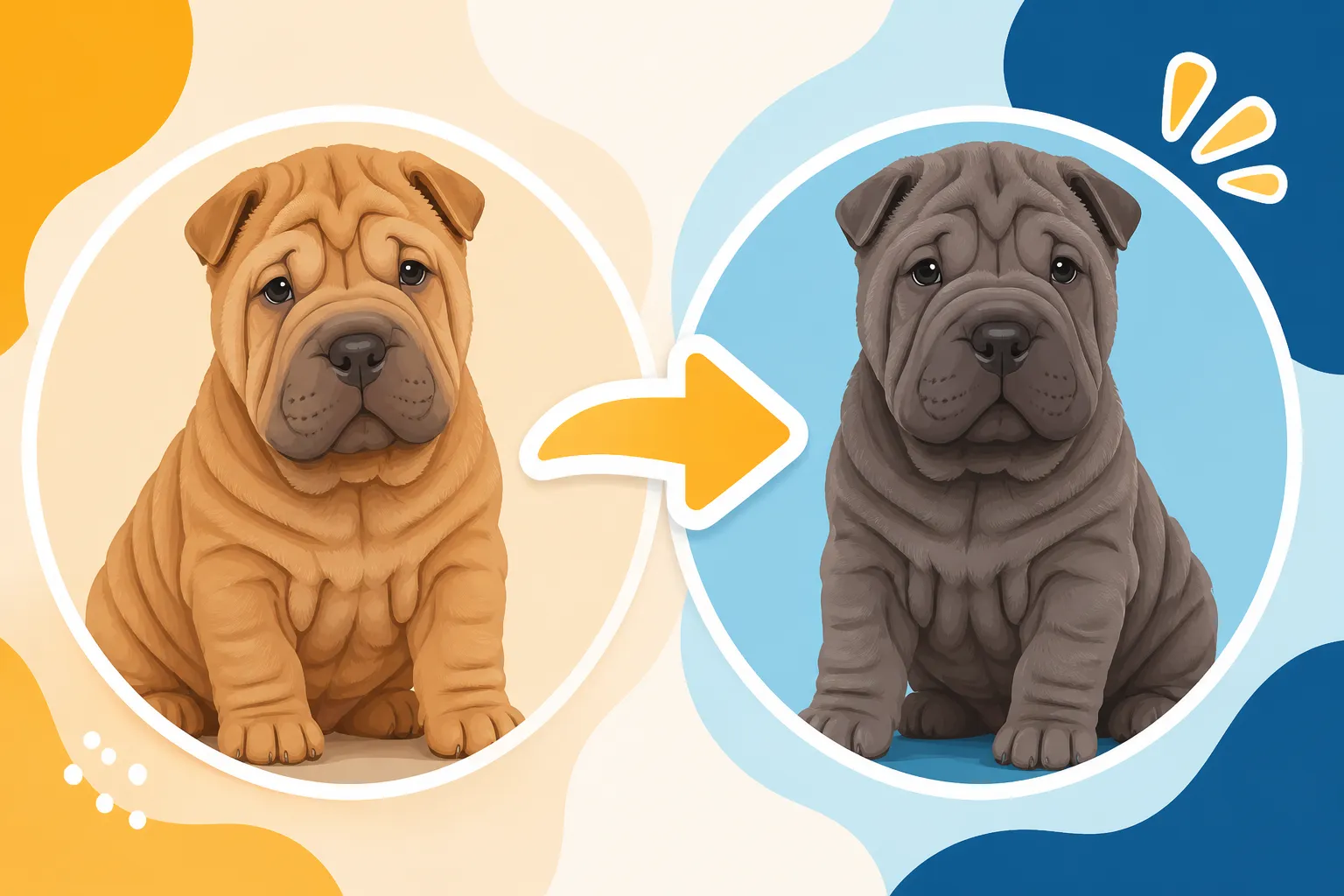
A young Shar Pei’s coat can be soft, short, and uneven in appearance. As the puppy grows, that coat is gradually replaced by adult hair. The new coat may seem darker, lighter, warmer, or cooler in tone, even though the dog’s underlying color has not changed in the way people often imagine.
This transition can be especially noticeable when the puppy’s fur is very short. A small change in hair length or density can alter how much light reaches the coat and how strongly its color appears. For example, a pale fawn puppy may look richer in color once its adult coat fills in. A dark puppy may seem less uniformly dark when new hairs come through at a slightly different shade.
The change is not always dramatic or easy to predict. Two puppies from the same litter can develop coats that look quite different from one another, and photos taken weeks apart can exaggerate the contrast. If you are comparing your puppy with breeder photos, try to compare pictures taken in similar lighting rather than relying on a phone image under indoor lamps.
Lighting, grooming, and the coat’s texture affect what you see
Natural light, indoor bulbs, camera settings, and even the background can change how a coat reads to the eye. A cream coat may look almost white in bright sunlight and more golden indoors. A red or fawn coat may seem deeper in warm light. Wet fur usually looks darker than dry fur, while dust or a recently brushed coat can change the way light reflects off the hair.
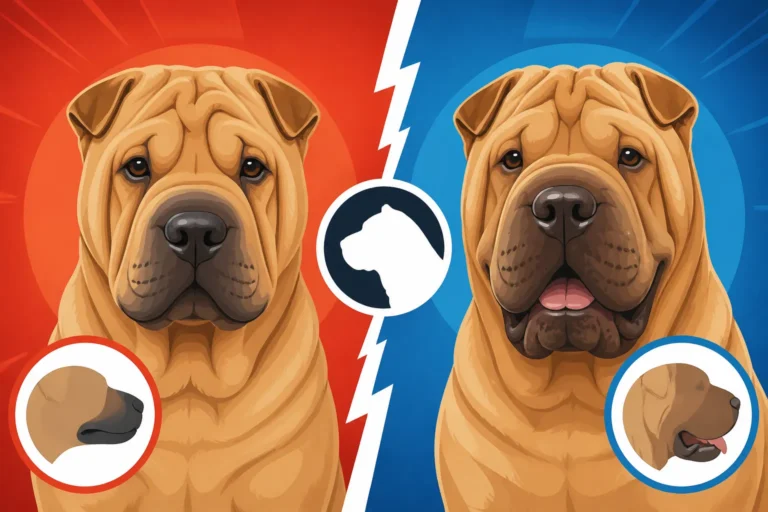
Shar Pei coat texture matters too. Horse coats are very short and bristly, while brush coats are longer. That difference can affect how the coat catches light and how clearly you see its shade. If you are unsure which coat type your dog has, How a Horse Coat Shar Pei Differs From a Brush Coat explains the distinction.
A gentle grooming routine helps you see the coat clearly without irritating the skin. A soft brush may be enough for routine care, but avoid scrubbing or brushing hard to try to change the coat’s appearance. If you’re shopping for basic grooming supplies, Chewy is one place owners may look for brushes and dog shampoo; choose products suited to your dog and ask your veterinarian before using medicated or specialty products.
A changing coat does not mean the dog’s color is being “replaced”
It is useful to distinguish a changing appearance from a true change in the dog’s inherited coat color. A puppy does not normally grow into an entirely unrelated color, such as turning from black to cream. What owners usually notice is a shift in depth, warmth, or evenness as the coat matures.
The breed includes a range of recognized colors, and some shades can be difficult to label when a puppy is very young. If you want a general overview of the color terms, see Which Colors a Shar Pei Comes In. A breeder may describe a puppy’s color based on its appearance at the time, while the mature coat may make that label seem less obvious later.
Color names can also be used differently in casual conversation. Two people may describe the same coat as tan, fawn, or red without either person noticing a meaningful difference. The exact label matters less for everyday care than whether the skin and coat are comfortable and healthy.
What can change color and what usually stays the same
Coat shade can shift gradually during puppyhood
As the puppy coat gives way to adult hair, the coat may look more even or reveal subtle shading that was hard to see earlier. Some Shar Pei develop darker areas along the back or a lighter tone on the chest, underside, or legs. These variations can become more visible with age, even when the puppy’s overall color category remains similar.
Rather than expecting one fixed moment when the coat “finishes,” watch for gradual changes over time. Taking a photo every few weeks in the same spot and natural light can help you see whether the shade is truly changing or whether your memory is being influenced by different lighting and camera settings.
The skin and the hair are not the same thing, and their colors need not match exactly. A dark coat does not mean every area of skin is equally dark, and a lighter coat does not mean the skin beneath it is pale. Breed color descriptions focus on the visible coat, while a veterinarian considers skin appearance alongside other signs such as redness, irritation, or hair loss.
Dilute colors have their own appearance
Some Shar Pei have dilute colors, which can make the coat look softened or muted compared with a more saturated shade. Dilute coloring is a genetic coat trait, not a coat problem by itself. The term may be unfamiliar if you have only seen common color names, so What a Dilute Shar Pei Is offers more background.
A dilute coat can still appear to change as the puppy grows, just like other coats. The difference may be subtle: the shade can seem cooler, dustier, or less intense as the adult hair comes in. That does not necessarily mean the dog is becoming a different color.
Owners sometimes hear claims that a particular coat shade automatically predicts skin trouble. Color alone cannot tell you whether an individual dog will develop a skin condition. If you are concerned about a dilute dog’s skin, Whether a Dilute Shar Pei Has More Skin Problems discusses why it is better to judge the dog’s actual skin and symptoms rather than rely on coat color alone.
A color change in the tongue or skin is a separate question
A Shar Pei’s coat color is not the same as the color of its tongue, gums, nose, or skin. These areas have their own pigmentation, and they may look different from the fur. If you are noticing a sudden change in the mouth or another area, do not assume that it is simply a coat-color transition.
For instance, changes in tongue appearance should be considered separately from the fur’s development. Whether a Shar Pei's Tongue Color Changes addresses that question specifically. If a color change comes with swelling, sores, pain, bleeding, or a sudden change in eating or behavior, contact a veterinarian rather than trying to identify the cause from coat-color descriptions.
How to tell a normal coat change from a skin problem
Look for changes in the skin, not just the shade of the fur
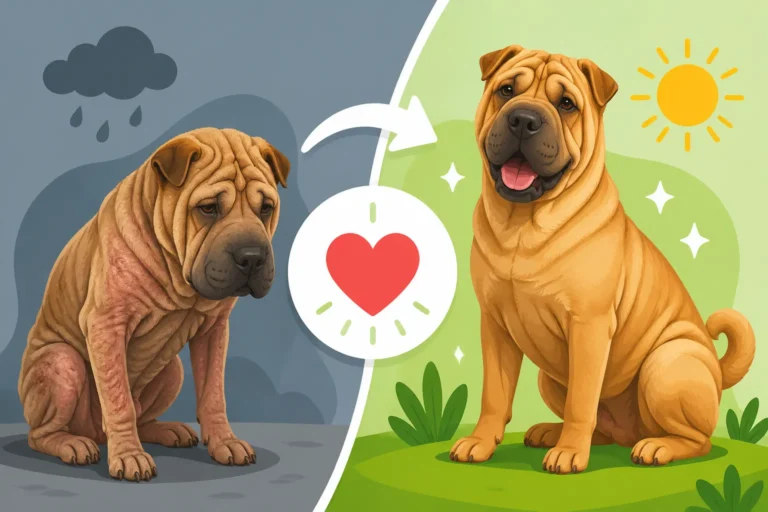
A gradual shift in coat tone, without discomfort or visible skin changes, is often just part of growing up. It is more concerning when the color change appears alongside itching, repeated licking, bald patches, scabs, redness, a strong odor, or damp and irritated skin folds.
Shar Pei folds deserve particular attention because moisture and friction can irritate the skin. If the fur is changing color because an area is stained by discharge, saliva, or persistent dampness, the underlying issue may be irritation rather than normal coat development. Skin Fold Dermatitis on a Shar Pei explains the kind of fold-related problem owners should watch for.
Avoid putting human creams, hair dyes, whitening products, or household remedies on your puppy to alter or “correct” the coat. These can irritate the skin or be unsafe if licked. If you notice a new mark or patch, take a clear photo and note when it appeared. That gives your veterinarian a useful comparison if the area changes.
Notice whether the change is localized or widespread
A coat that gradually looks a little different across the body is not the same as a sudden, sharply defined patch of hair loss or discoloration. A localized change can result from rubbing, a skin infection, injury, staining, or another cause that needs assessment. It is especially worth checking if the area is warm, sore, scaly, or spreading.
Try not to repeatedly wash or scrub a patch while you are investigating it. Excessive bathing can dry or irritate the skin, and a wet coat may make the color look darker than it really is. If bathing is needed, use a dog-safe product and dry the dog thoroughly, paying attention to folds and areas that stay damp. Chewy may carry everyday grooming items such as towels and dog shampoos, but a veterinarian should guide the choice of treatment products when skin symptoms are present.
A simple record can make the situation easier to explain: note the date, the location of the change, whether the puppy is scratching, and whether the patch is growing. If your puppy seems unwell or the skin looks painful, contact your veterinary clinic rather than waiting for the adult coat to come in.
Coat changes and coat care are connected
Regularly checking the coat gives you a chance to notice small changes before they become harder to interpret. Run your hands gently over the dog and part the hair in a few places, especially around the neck, legs, belly, and tail area. Look for irritation without pulling at the skin or trying to force open sensitive folds.
A short-haired Shar Pei may not need elaborate grooming, but its coat and skin still benefit from gentle, consistent care. For more on the coat and skin relationship, see Whether a Shar Pei Puppy's Skin Predicts the Adult. If you are unsure how much brushing is appropriate, How Often a Shar Pei Needs Brushing can help you establish a practical routine.
If a coat product seems to make the skin itchy or red, stop using it and ask your veterinarian what to do next. Chewy can be useful for replacing routine supplies once you know what suits your dog, but choosing a product for a suspected allergy or infection is a different matter from buying an ordinary brush or towel.
How to track your puppy’s color as it matures
Take consistent photos rather than relying on memory
It is surprisingly easy to misremember a puppy’s original shade, particularly when the coat changes slowly. Take a photo every few weeks using natural daylight, a neutral background, and roughly the same angle. Avoid filters, flash, and strong colored lighting, which can make one coat look several shades different.
You do not need to photograph every part of the dog every day. A few clear views of the back, sides, face, and legs will give you a useful record. If you are asking the breeder or veterinarian about a color change, these comparisons can make the conversation more precise than saying, “He looks much lighter now.”
Photos are also helpful if the concern is a skin patch rather than a general shift in shade. Include one close-up and one wider image showing where the patch is on the body. If the area is changing rapidly or looks painful, do not delay veterinary care just to collect more pictures.
Ask the breeder what they observed in related puppies
A responsible breeder may be able to tell you how the parents’ coats changed as they matured and whether previous puppies from the same lines showed similar shifts. Their observations can offer context, but they cannot guarantee the exact appearance of your puppy’s adult coat.
If the puppy came with registration or purchase paperwork listing a color, treat that as a description rather than a promise that the coat will look identical at every age. Color terminology can be broad, and coat development can make a shade more or less apparent. If you are comparing coat styles as well as color, How to Tell a Horse Coat Shar Pei From a Brush Coat can help you separate texture from shade.
You can also ask the breeder whether the puppy’s current color is expected to change in intensity as the adult coat develops. A clear answer should describe what they have seen, not guarantee a precise future shade or suggest that a particular color automatically means better health.
Use health signs, not appearance alone, to decide when to call
A puppy whose coat gradually changes shade but has comfortable, healthy-looking skin is usually not facing an emergency just because the color looks different. A puppy with persistent itching, painful folds, bald areas, a spreading rash, or a sudden change in general condition needs a veterinary assessment.
If you are uncertain, it is reasonable to call your clinic and describe what you see. Mention when the change began, whether it is spreading, and whether your puppy is scratching or acting differently. You can share photos if the clinic requests them. That gives the veterinary team a clearer picture than trying to diagnose the issue from color alone.
The practical takeaway is simple: expect some variation as puppy fur grows into an adult coat, but do not dismiss visible skin symptoms as “just changing color.” Observe the pattern, keep a few consistent photos, and ask a veterinarian about changes that are sudden, localized, uncomfortable, or accompanied by other signs.
Disclaimer
This article is for general informational purposes only and does not constitute professional advice. Laws, prices and regulations vary by location and change over time. Consult a qualified professional for guidance on your specific situation.