Whether a Meat Mouth Shar Pei Has a Padded Muzzle
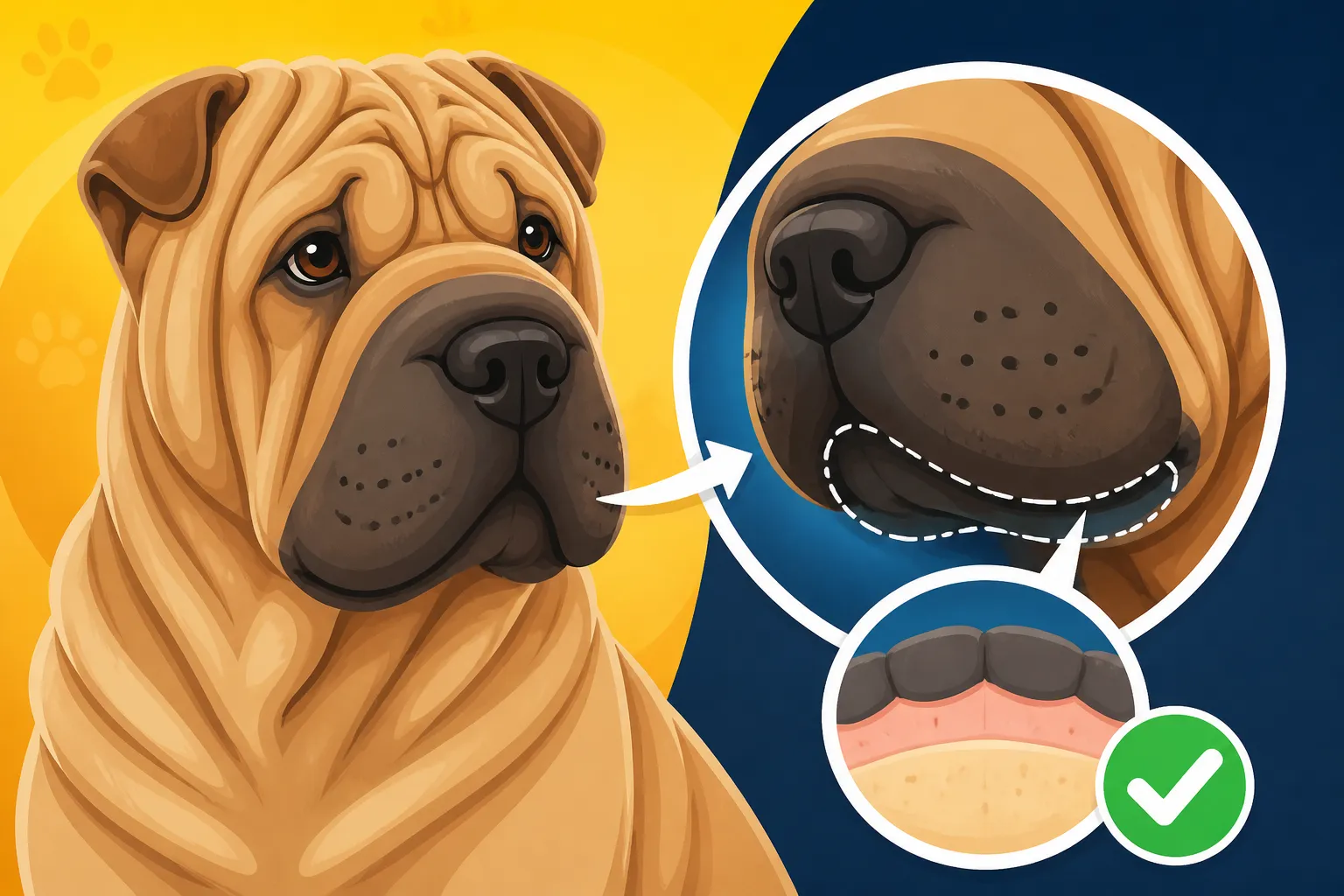
A meat mouth Shar Pei typically has a broad, fleshy muzzle with extra padding around the lips and nose, giving the face its familiar full, sometimes “hippopotamus-like” look. That padding is a description of appearance, not a guarantee of health or breathing ability. This guide explains what the term means, how it differs from bone mouth, and what owners should watch for.
What “meat mouth” means on a Shar Pei
The padded muzzle, explained
“Meat mouth” is an informal label for a Shar Pei with a fuller, more padded muzzle. The muzzle is the area from the eyes to the nose, including the upper and lower lips. In this type, the lips and surrounding tissues look substantial, so the front of the face may seem broad, rounded, and soft-edged rather than narrow or sharply tapered.
People often use the term “hippo muzzle” to describe this look. It refers to the shape, not to a separate breed or a medical diagnosis. A meat mouth Shar Pei is still a Shar Pei; the label is simply a way owners and breeders distinguish one general muzzle type from another.
The amount of padding varies from dog to dog. One Shar Pei may have prominent, loose-looking lips, while another has a broad muzzle that looks less exaggerated. Photos can also make the difference seem larger than it is: camera angle, a puppy’s age, and the dog’s expression all affect how full the muzzle appears.
Is meat mouth an official breed category
Meat mouth and bone mouth are commonly used descriptive terms, not separate official Shar Pei varieties. They do not identify two different breeds, and a label by itself does not tell you everything about a dog’s ancestry, health, temperament, or suitability as a companion.
The distinction is still useful when people are comparing appearances. A meat mouth is generally broader and more padded around the lips; a bone mouth tends to look more restrained and less fleshy in the muzzle. For more background on the terminology, see What a Meat Mouth Shar Pei Is and What a Bone Mouth Shar Pei Is. The broader comparison is covered in Meat Mouth and Bone Mouth Are Two Different Shar Pei.
Breed standards describe the desired overall head and muzzle shape, but they are not a simple checklist for diagnosing health. A dog’s individual face may not fit neatly into one informal label, and different breeders may use the terms somewhat differently. When evaluating a puppy, look beyond the name and consider the dog’s breathing, eyes, skin, movement, and veterinary history.
Meat mouth and bone mouth compared
What you may notice in the face
The clearest difference is usually the amount of soft tissue around the muzzle. A meat mouth Shar Pei often has a fuller look through the lips and muzzle, sometimes with visible folds or a rounded profile. A bone mouth tends to have less padding and may look more defined through the jaw and muzzle.
| Feature | Meat mouth appearance | Bone mouth appearance |
|---|---|---|
| Muzzle profile | Broad and visibly padded | Usually less padded and more defined |
| Lips | Often look fuller or looser | Often appear less prominent |
| Overall impression | Rounded, substantial front of the face | More restrained muzzle shape |
| What the label tells you | A general description of appearance | A general description of appearance |
| What the label does not tell you | Whether the dog is healthy or breathes normally | Whether the dog is healthier or has fewer inherited risks |
These are tendencies, not strict rules. A dog can have a broad muzzle without especially heavy lips, or a less padded muzzle with other features people associate with a meat mouth. Because the terms are informal, it is better to assess the actual dog than to rely on a breeder’s label alone.
Does the padding affect breathing
A padded muzzle does not automatically mean that a Shar Pei has breathing trouble. Nor does a less padded muzzle guarantee easy breathing. Facial shape can influence airflow, but the appearance of the lips alone cannot tell you whether the nostrils, airway, or other structures are working well.
Pay attention to what the dog does in ordinary situations. Noisy or strained breathing while resting, repeated gagging, fainting, poor tolerance for mild activity, or difficulty recovering after exercise deserve veterinary attention. Heat can make breathing problems more dangerous, so a dog that is panting heavily or struggling to cool down should be moved to a cooler area and assessed promptly. For a closer look at the relationship between facial shape and airflow, read Whether a Shar Pei's Muzzle Affects Its Breathing and Whether a Shar Pei Is a Brachycephalic Breed.
A veterinary examination is more useful than judging a face from photographs. If you are choosing a puppy, ask to see it when calm and moving around, and ask the breeder what health concerns have occurred in its family. A healthy-looking muzzle is not a substitute for a thoughtful health history.
Caring for a Shar Pei with a padded muzzle
Keep the skin clean and dry without over-cleaning
Full lips and facial folds can collect food, water, or moisture. After a meal or a drink, check whether anything is caught around the mouth and gently wipe the area if needed. Use a clean, soft cloth and dry the skin carefully. The goal is to remove residue and moisture, not to scrub the folds or repeatedly wash healthy skin.
If you are considering wipes or other grooming supplies, choose products made for dogs and check with your veterinarian before using anything on irritated, broken, or persistently damp skin. Chewy and other pet retailers may offer a range of grooming items, but a product’s availability does not mean it is right for every dog. Read the label, avoid getting products into the eyes or mouth, and stop if the skin becomes red or uncomfortable.
Routine care should stay simple unless your veterinarian recommends something different. A persistent odor, redness, swelling, discharge, tenderness, or repeated rubbing is not just a grooming inconvenience. Those signs may point to infection or another skin problem that needs an examination rather than more cleaning. The broader importance of skin care is explored in Every Fold on a Shar Pei Is a Place Something Grows.
Make meals and handling comfortable
Some dogs with fuller lips may leave food or water around the mouth after eating. You can make cleanup easier by offering meals in a stable bowl that is easy to wash, then checking the muzzle afterward. If food seems to lodge repeatedly in the same place, or the dog has trouble chewing or swallowing, ask your veterinarian whether the mouth and teeth should be examined.
Introduce face handling gradually, especially with a puppy. Briefly touch the side of the muzzle, reward calm behavior, and stop before the dog becomes worried. Over time, this can make a quick post-meal check or veterinary examination less stressful. Do not force the mouth open or pull on the lips to inspect a fold if the dog resists.
For everyday care, Chewy or a neighborhood pet shop can be a place to compare washable bowls, soft cloths, and dog-safe grooming supplies. Choose based on ease of cleaning and the dog’s comfort rather than on claims that a particular accessory will prevent disease. If you are unsure whether a product is suitable for sensitive facial skin, ask your vet before applying it.
Choosing and assessing a meat mouth Shar Pei
Questions to ask a breeder or rescue
If you are considering a puppy, ask what the breeder means by “meat mouth” and how they describe the puppy’s parents. Request a chance to meet the puppy and, when possible, its mother. Seeing the dog in person helps you judge whether the muzzle is simply full-looking or whether there are practical concerns such as noisy breathing, eye irritation, or difficulty eating.
Ask about health screening and the family’s history of recurring skin, eye, ear, or breathing problems. A responsible conversation should include more than the puppy’s appearance. It should also cover veterinary care, the parents’ health, and what support is available if a health concern appears after the puppy comes home. For more on the difference between facial types and the health assumptions people attach to them, see Whether a Bone Mouth Shar Pei Is Healthier.
If adopting an adult dog, ask for medical records and observe the dog at rest and during a short, comfortable walk. Notice whether it breathes easily, eats without apparent difficulty, and tolerates gentle handling around the face. A rescue may not know the dog’s full history, so a veterinary check soon after adoption can help establish a baseline.
Look at the whole dog, not one feature
A padded muzzle can be attractive to people who love the classic Shar Pei expression, but the look should not be the only factor in choosing a dog. Pay attention to the eyes, skin, ears, posture, movement, and general energy. A puppy that appears especially wrinkled or full-faced is not automatically healthier, less healthy, or more predictable as an adult.
Ask a veterinarian to assess concerns that are difficult to judge yourself. This is especially important if the dog has noisy breathing, frequent skin irritation, difficulty eating, or signs of pain. Breed appearance can help explain what you are seeing, but it cannot replace an examination. Whether a Shar Pei's Wrinkles Are in the Standard offers additional context on appearance and breed expectations.
If you are comparing puppies, keep notes on each one rather than relying on a quick impression. Write down what the breeder says about health history, what you observe when the puppy is resting and moving, and any questions you want to raise with your vet. That practical record is more valuable than treating “meat mouth” as a promise of a particular temperament or level of health.
Disclaimer
This article is for general informational purposes only and does not constitute professional advice. Laws, prices and regulations vary by location and change over time. Consult a qualified professional for guidance on your specific situation.