Whether a Bone Mouth Shar Pei Is Healthier
A bone mouth Shar Pei can look less exaggerated than a heavily wrinkled, padded-muzzle dog, which naturally raises the question: does that traditional look mean better health? It may come with some practical advantages, but appearance alone cannot predict fever risk, eye problems, skin disease, or the health of an individual dog. This guide explains what the label does—and does not—tell you.
What “bone mouth” means
How a bone mouth Shar Pei looks
“Bone mouth” is a common name for a Shar Pei with a more moderate muzzle and less fleshy padding around the lips and face. The head may look less heavy than the broad, padded muzzle often described as a “meat mouth.” Bone mouth dogs may also have a less exaggerated overall appearance, though individual dogs vary.
The label is useful for describing type, not for diagnosing health. Two dogs called bone mouth can still differ in their wrinkles, eye shape, ear canals, skin, and inherited health risks. A less padded face does not automatically mean a dog has wide-open nostrils, comfortable eyelids, healthy ears, or fewer underlying genetic risk factors.
The terms also get used inconsistently. A breeder, owner, or rescue may describe a dog as bone mouth based on its appearance, but that description is not a standardized health certification. If you are evaluating a particular puppy or adult, look at the dog itself and its health records rather than relying on the label.
For more context on the distinction, see What a Bone Mouth Shar Pei Is. The background also matters: the modern breed’s history and limited genetic diversity can affect how confidently anyone can make broad claims about health based on type. Whether the Shar Pei's Bottleneck Explains Its Health explains why breed history is part of the discussion.
How bone mouth differs from meat mouth
The most noticeable difference is usually the muzzle. A meat mouth has more padding and fullness around the lips, while a bone mouth tends to have a more defined, less fleshy muzzle. The amount of facial wrinkling can differ too, but it is not a simple rule that every bone mouth has few wrinkles or every meat mouth has many.
People sometimes assume the bone mouth is closer to an older or more traditional Shar Pei. That idea is part of the breed conversation, but historical appearance alone cannot establish that a particular dog is healthier. To explore the history separately, read Whether the Bone Mouth Is the Original Shar Pei.
What matters day to day is how the dog functions. Can it see comfortably? Does it breathe easily at rest and during ordinary activity? Are its eyelids sitting properly against the eyes? Are its skin and ears comfortable? These observations are more meaningful than a type name.
Is a bone mouth Shar Pei healthier
The short answer: not automatically
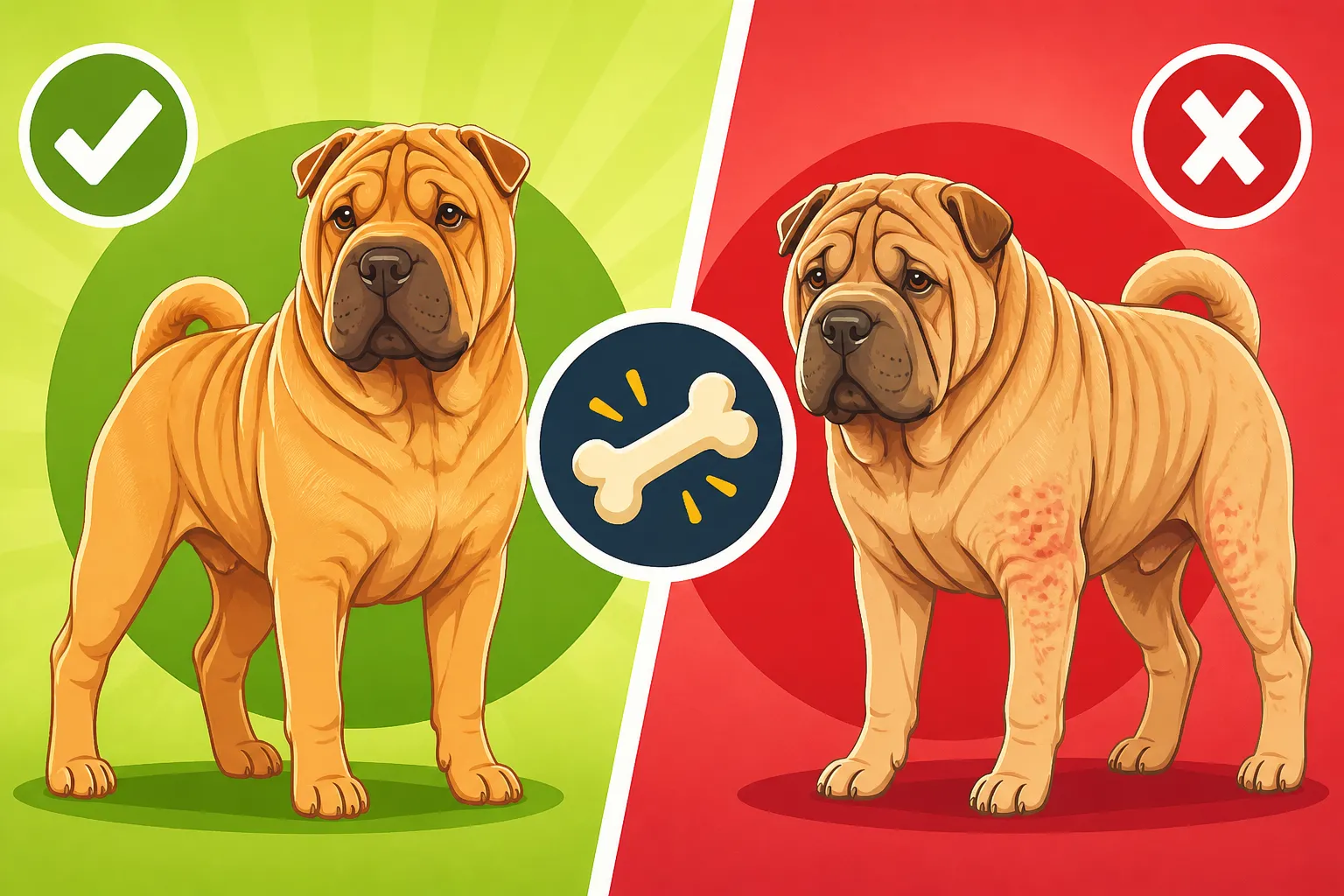
A bone mouth Shar Pei may have less facial padding and, in some dogs, fewer deep facial folds. Those features could make certain care tasks easier or reduce particular sources of irritation. But there is no reliable shortcut from “bone mouth” to “healthy dog.” The label does not prove that an individual is free from Shar Pei fever, kidney complications, entropion, ear disease, allergies, or other inherited problems.
Shar Pei health concerns have more than one cause. Some are influenced by anatomy, some by inherited factors, and others by the dog’s age, environment, or medical history. A less wrinkled dog can still have narrow ear canals, painful eyelids, or a history of fever. A heavily wrinkled dog may have healthy eyes and skin, though it may need more attentive fold care.
The breed’s history is relevant but not destiny for any one puppy. What Being Saved Did to the Shar Pei's Health discusses the breed-level pressures that shape health conversations. They help explain why it is sensible to ask careful questions, but they cannot tell you what will happen to an individual dog.
| Feature or concern | What bone mouth appearance may suggest | What it cannot tell you |
|---|---|---|
| Facial padding | The muzzle may look less fleshy | Whether breathing, chewing, or eye comfort is normal |
| Facial folds | There may be fewer or shallower folds in some dogs | Whether the dog will develop skin irritation elsewhere |
| Eye shape | The face may look less crowded | Whether the eyelids are healthy or the cornea is protected |
| Fever and amyloidosis risk | Appearance may invite questions about inherited risk | Whether the dog carries relevant risk factors or will become ill |
| Overall health | A moderate appearance can be one positive observation | Whether the dog has been examined, screened, or has a healthy family history |
A useful way to think about it is that appearance can help you decide what to inspect, but it cannot replace an exam or a conversation about family health. The question is not simply “Is this dog bone mouth?” It is “What health problems have appeared in this dog’s close relatives, and what has a veterinarian found in this dog?”
What the label can and cannot say about fever risk
Shar Pei fever, also called familial Shar Pei fever, is an inherited inflammatory condition associated with the breed. Repeated inflammatory episodes can be linked to amyloidosis, which may damage organs, especially the kidneys. The precise risk for an individual cannot be read from muzzle shape alone. Familial Shar Pei Fever Is Not an Infection explains the condition and why a fever episode should not be treated as an ordinary infection without veterinary assessment.
Research into Shar Pei genetics has connected the breed’s characteristic traits and fever risk in complex ways. A visible trait, such as fewer wrinkles or a less padded muzzle, does not work as a dependable home test for genetic risk. Even when a dog appears less exaggerated, that does not establish that it has a lower risk of fever or related complications.
Ask breeders or rescue organizations about known fever episodes and kidney disease in close relatives, and ask what records are available. A direct, thoughtful answer is more useful than a blanket promise that a certain type is “safe.” If a dog has a fever, swollen hocks, unusual lethargy, or other concerning signs, contact a veterinarian rather than trying to infer the cause from its appearance.
Health issues to assess in any Shar Pei
Eyes, skin, and ears deserve individual attention
A moderate muzzle does not rule out entropion, a condition in which an eyelid turns inward and rubs against the eye. This can cause pain and corneal damage, particularly in puppies. Redness, squinting, watery discharge, holding an eye closed, or rubbing the face are reasons to seek prompt veterinary care. Entropion in a Shar Pei Puppy Is an Emergency, Not a Cosmetic Issue explains why this should not be dismissed as a simple appearance issue.
Skin care also depends on the individual dog, not just its face. Folds can trap moisture and debris, but skin problems may occur between toes, around the tail, or in other areas too. Persistent odor, redness, greasy skin, recurring sores, or frequent scratching deserve attention. The broader guide Skin Is the Shar Pei's Largest Problem by Surface Area covers how skin concerns can extend well beyond the obvious wrinkles.
Ears are another place where a dog’s appearance may give little warning. Shar Peis can have narrow ear canals, making examination and treatment more challenging. Head shaking, repeated scratching, discharge, or a strong odor should prompt a veterinary check. Avoid putting cotton swabs or unprescribed products into a dog’s ears; a veterinarian can advise on safe cleaning and whether an examination or testing is needed.
A practical comparison when meeting a dog
Whether you are considering a puppy, adopting an adult, or simply trying to understand your own dog, observe comfort and function. Look for relaxed breathing when the dog is calm, clear eyes that are not being rubbed or held shut, and skin without persistent redness or discharge. Notice whether the dog moves comfortably and responds normally to its surroundings.
A short visit cannot reveal everything. Some inherited or chronic conditions may not be obvious in a young puppy, and a dog can look well between episodes of illness. Ask for veterinary records, details of any past diagnoses, and information about the health of parents or close relatives. If you are choosing a puppy, ask whether the breeder has documented health concerns in the family and how they respond when a puppy needs veterinary care.
If you need help reviewing what you have been told, bring the records to your own veterinarian. A clinic can help distinguish routine monitoring from signs that need investigation. This is also a good time to ask what checks make sense for the dog’s age and history, rather than assuming that every Shar Pei needs the same schedule.
How to judge health more reliably than by type
Questions to ask a breeder or rescue
Ask specific questions, and listen for specific answers. “Are the parents healthy?” is a start, but follow up by asking whether either parent or close relative has experienced fever episodes, kidney disease, eye problems, chronic ear infections, or recurring skin trouble. Ask what veterinary care has been provided to the puppy and whether you can review the records.
It is reasonable to ask what the seller means by “bone mouth.” Do they mean a less padded muzzle, fewer visible folds, or something else? Ask them to explain the term rather than treating it as a medical classification. If a breeder claims that bone mouth dogs cannot develop Shar Pei fever or other breed-related conditions, treat that as a warning sign: a physical label cannot guarantee that.
For a rescue dog, the history may be incomplete. That does not make the dog a poor choice, but it means you may need to plan for a veterinary assessment and ask what the rescue knows about past symptoms and treatment. A candid “we don’t know” is more useful than certainty without supporting records.
Build a care plan around the dog in front of you
Once a dog is home, keep a simple record of veterinary visits, medications, unusual symptoms, and any fever episodes. A log can help you notice patterns and give your veterinarian clearer information than memory alone. If a veterinarian recommends a particular diet or product, check that the item you buy matches the recommendation; if ordering through Chewy or another retailer, confirm the exact product and instructions with the clinic.
Daily care should be tailored to what the dog actually needs. One Shar Pei may need careful drying after a bath because moisture lingers in folds; another may need a plan for recurring ear trouble or skin irritation. Do not over-clean healthy skin or apply powders, wipes, or medications just because a dog has wrinkles. Ask your veterinarian what is appropriate for your dog’s skin and whether any product could worsen irritation. If you purchase veterinarian-approved supplies through Chewy, keep the packaging and instructions so you can check ingredients and use them as directed.
Medication decisions should stay with the veterinarian, especially if a dog has fever, kidney concerns, or a chronic skin condition. Do not give human fever reducers or leftover medication without veterinary direction. When filling a prescribed product through Chewy, verify the prescription details and ask the clinic how to use it, what changes to watch for, and when to follow up.
The fairest conclusion is a measured one: a bone mouth Shar Pei may have a less exaggerated look, and that can be appealing for practical as well as aesthetic reasons. But the type name does not establish superior health. A dog’s actual examination, family history, symptoms, and ongoing care tell you much more than its muzzle label does.
Disclaimer
This article is for general informational purposes only and does not constitute professional advice. Laws, prices and regulations vary by location and change over time. Consult a qualified professional for guidance on your specific situation.