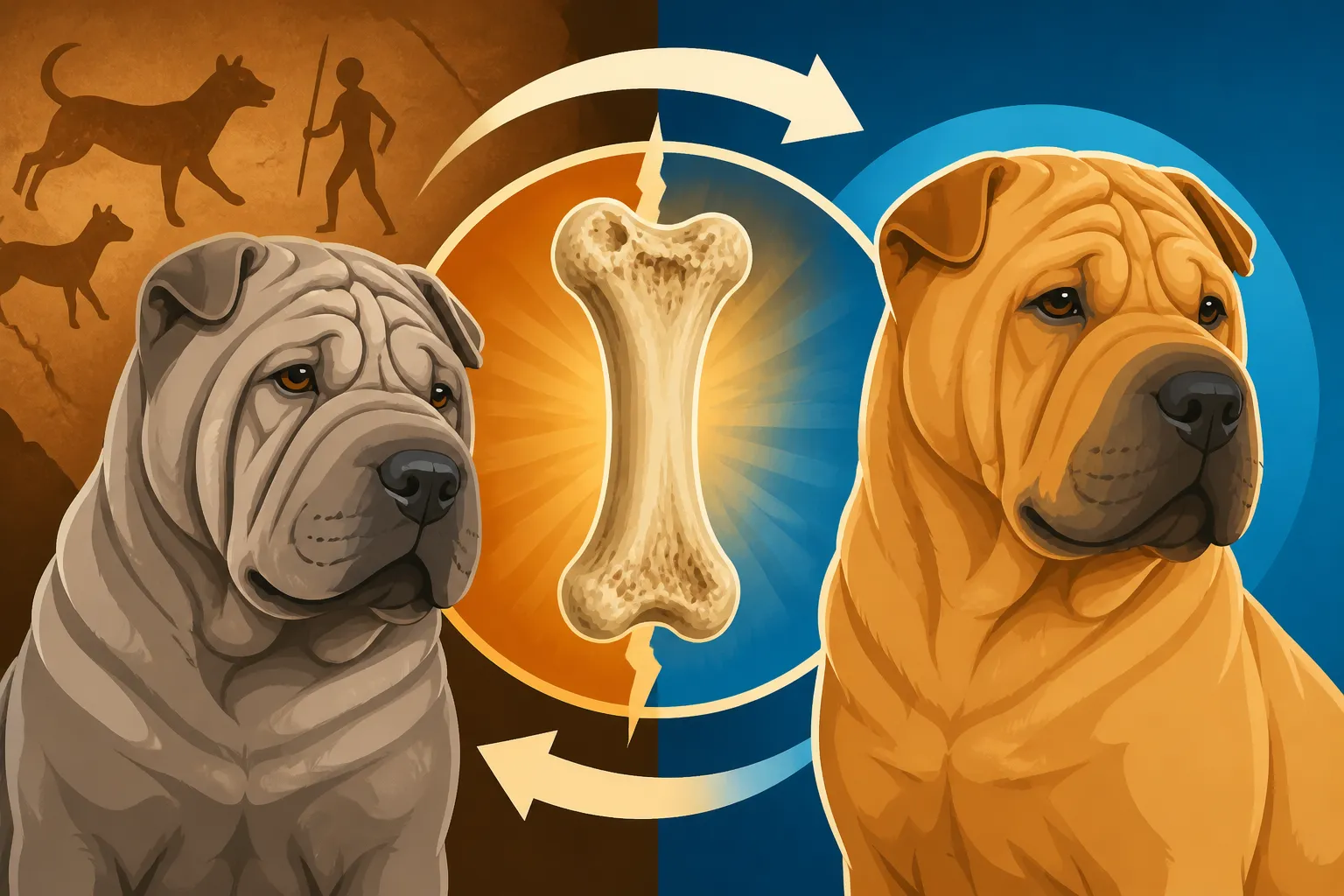
Whether the Bone Mouth Is the Original Shar Pei
Many Shar Pei owners, and those just beginning to fall in love with this truly unique breed, often find themselves deeply confused by terms like "Bone Mouth" and "Meat Mouth." This isn't just a quirky bit of breed lingo; it points to a significant debate about the very essence and history of the Shar Pei. This guide aims to cut through the confusion, exploring the distinct characteristics of each type, delving into the breed's past, and ultimately addressing the question of which, if either, is the original Shar Pei.
Understanding the Historical Roots of the Shar Pei
To truly understand the differences between the "Bone Mouth" and "Meat Mouth" Shar Pei, we have to journey back in time, tracing the breed's origins far beyond its sudden surge in Western popularity. The Shar Pei, unlike many breeds developed solely for companionship or show, has a deeply ingrained working history that shaped its very form and function for centuries. This historical context is vital to appreciating the nuances of its modern-day appearance.
The Ancient Origins of the Breed in China
Imagine rural southern China, hundreds, even thousands of years ago. Here, the Shar Pei wasn't a pampered pet with a plush bed; it was an indispensable part of daily life. These dogs served multiple roles: they were vigilant guardians of homes and livestock, tenacious hunters in challenging terrain, and loyal companions to peasant families. Their existence was rugged, demanding resilience, keen senses, and a physical build that could withstand the rigors of farm life and protection duties.
Archaeological evidence, including ancient pottery and statues from the Han Dynasty (dating back to 206 BC – 220 AD), depicts dogs that bear striking resemblances to the modern Shar Pei, particularly the leaner, more athletic form. These depictions consistently show dogs with compact bodies, distinctive wrinkled heads, and tails curled over their backs – but notably, without the excessive folds and heavy padding we often associate with the breed today. This suggests that the early Shar Pei was bred for utility and survival, where exaggerated features would have been a hindrance rather than an asset. A working dog needs to see clearly, move freely, and maintain good health without being weighed down by superfluous skin. Indeed, you could say Whether the Shar Pei Was a Peasant's Dog is more than just a historical fact; it's a foundational truth for understanding the breed.
These ancient Shar Pei were built for purpose. Their loose skin was thought to be a defense mechanism, allowing them to twist and turn if grabbed by an aggressor, be it a wild animal or a human intruder. However, this loose skin was functional, not cumbersome. They needed good peripheral vision to guard effectively and strong, clear airways for endurance. Their sparse, "sandpaper" coat was practical for their climate, resisting dirt and parasites. Every feature served a real-world need in a time and place where dogs earned their keep.
The Near Extinction and the Breed's Revival
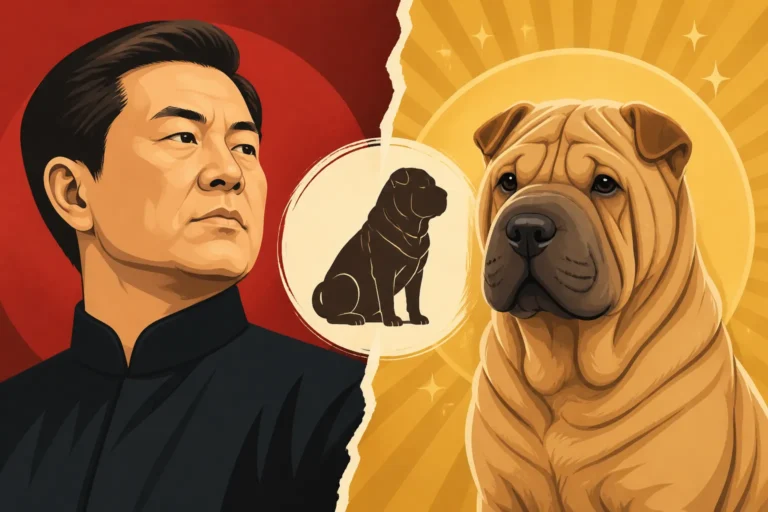
Fast forward to the 20th century, and the Shar Pei faced an existential crisis. The rise of communism in China in the mid-20th century brought with it harsh taxes on dog ownership and, tragically, widespread culling of dogs, seen as unnecessary luxury or a drain on resources. This period decimated the indigenous dog population, pushing many ancient breeds, including the Shar Pei, to the brink of extinction. It's a somber chapter in canine history, and for the Shar Pei, it meant their numbers dwindled to perilously low levels. You can truly appreciate Why the Shar Pei Nearly Died Out in China when you consider the sheer scale of the dog culling efforts.
By the early 1970s, the breed was considered one of the rarest on Earth. It was only thanks to the determined efforts of a Hong Kong breeder named Matgo Law, who desperately appealed to the Western world for help, that the Shar Pei was saved from disappearing entirely. He wrote an article in an American dog magazine, pleading for people to help preserve what few Shar Pei remained. The response was overwhelming, but the handful of dogs that formed the foundation of the modern Western Shar Pei population represented an incredibly narrow gene pool. This bottleneck had profound implications, not just for genetic diversity, but for the selective pressures that would soon redefine the breed's appearance. Think about How Many Shar Pei Were Left in the 1970s – it really puts into perspective how close they came to vanishing.
Distinguishing Between Bone Mouth and Meat Mouth Shar Pei
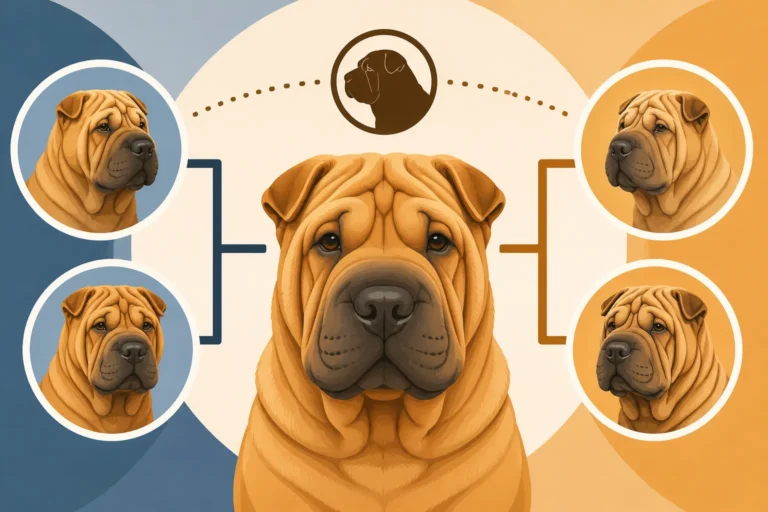
The distinction between "Bone Mouth" and "Meat Mouth" Shar Pei lies primarily in their physical appearance, particularly around the muzzle and the degree of wrinkling. While both are undeniably Shar Pei, their divergence tells a story of selective breeding, historical influences, and the ongoing debate about what constitutes the "true" breed standard.
Characteristics of the Bone Mouth Shar Pei
The "Bone Mouth" Shar Pei is often considered to represent the more traditional, ancient type of the breed, a direct link to those hard-working farm dogs of old China. Their most defining characteristic is a muzzle that is leaner and less padded, giving the impression of bone structure being more prominent beneath the skin. Think of it as a more refined, less "fleshy" snout.
These dogs generally possess a more athletic, less bulky physique. Their wrinkles, while still present and distinctive, are significantly less exaggerated than their "Meat Mouth" counterparts. You'll typically see wrinkles primarily concentrated on the head and neck, perhaps extending minimally onto the shoulders, but rarely across the entire body. The skin is tighter overall, not prone to pooling or excessive folds that could impede movement or vision. This leaner build allows for greater agility and stamina, traits crucial for a dog bred for hunting and guarding. When you see How a Bone Mouth Shar Pei Looks Different, it's clear they carry less "stuff" in their face and body. Their eyes are usually clearer, less prone to being obscured by heavy brow wrinkles, which means better peripheral vision – essential for a watchful guard dog. Their ears are small and lie flat, and their tails curl tightly over their back. This type of Shar Pei embodies functionality and resilience, showcasing a form that was perfectly adapted to its original working roles without the added burdens of overly loose skin or restricted vision.
Characteristics of the Meat Mouth Shar Pei
In stark contrast, the "Meat Mouth" Shar Pei is the type that became widely recognized and popularized in the Western world, particularly after the breed's rescue in the 1970s. This variant is characterized by a significantly more padded, "fleshy" muzzle, often appearing broader and fuller. This "meatier" appearance extends beyond the muzzle, manifesting as abundant and often exaggerated wrinkles across the head, neck, and sometimes even the entire body.
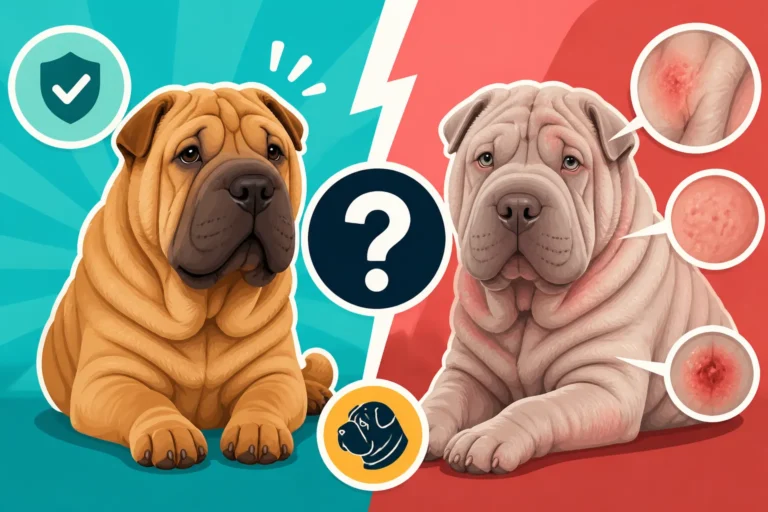
The "Meat Mouth" Shar Pei typically has a heavier build, with a thicker bone structure and a somewhat more compact appearance compared to the lither Bone Mouth. The extensive folds of skin, while undeniably charming and unique to many, also come with a set of potential challenges. These deeper, more numerous wrinkles can create a fertile breeding ground for skin fold dermatitis and other dermatological issues. Furthermore, the heavily wrinkled brow can sometimes impinge upon the eyes, increasing the risk of conditions like entropion, where the eyelids roll inward, causing eyelashes to rub against the cornea. This more extreme appearance was largely a result of Western breeders selectively favoring and intensifying traits that they found aesthetically appealing, often inadvertently creating health predispositions in the process. What a Meat Mouth Shar Pei Is became the defining image of the breed for many newcomers, shaping perceptions and breeding trends for decades. It's a testament to how quickly human preference can alter a breed's physical characteristics, and it definitely highlights Whether Western Breeders Made the Shar Pei Wrinklier.
| Feature | Bone Mouth Shar Pei | Meat Mouth Shar Pei |
|---|---|---|
| Muzzle | Leaner, less padded, bone structure more apparent | Fuller, more padded, "fleshy" appearance |
| Wrinkles | Primarily on head/neck, less exaggerated, tighter skin | Abundant, often extreme on head, neck, and body |
| Body Build | More athletic, lither, functional | Heavier, stockier, sometimes more compact |
| Eye Visibility | Generally clearer, less obstructed by folds | Can be partially obscured by heavy brow wrinkles |
| Historical Link | Closer to ancient working type | Product of Western selective breeding for aesthetics |
| Health Risks (Wrinkles) | Lower risk of skin fold issues, entropion | Higher risk of skin fold dermatitis, entropion, ear issues |
The Debate Over Authenticity and "Originality"
The discussion surrounding "Bone Mouth" versus "Meat Mouth" isn't merely about visual differences; it delves into a more profound philosophical question about breed authenticity and what it means to be the "original" Shar Pei. For many purists and enthusiasts, this debate is central to preserving the breed's historical integrity and ensuring its long-term health.
Arguments for the Bone Mouth as the Original
Proponents of the "Bone Mouth" as the original Shar Pei lean heavily on historical and functional arguments. They point to the ancient artifacts and artwork from China, which consistently depict Shar Pei-like dogs with leaner muzzles and far fewer wrinkles than the modern "Meat Mouth" variety. These images suggest a dog built for purpose, for life as a working animal, not for an aesthetic exaggeration. A dog that guards a farm, hunts game, or protects its family needs to be robust, agile, and free from physical impediments.
Consider the practicalities: excessive wrinkles can trap moisture, dirt, and bacteria, leading to persistent skin infections. Deep folds around the eyes can obstruct vision, making a guard dog less effective and more prone to startling. A heavily padded muzzle might look distinctive, but it doesn't offer any functional advantage in the field. The leaner, more moderately wrinkled "Bone Mouth" aligns perfectly with the characteristics one would expect in a resilient, self-sufficient working breed. They were dogs that had to survive and thrive without constant veterinary intervention. This functional aspect strongly suggests that the more moderate appearance of the Bone Mouth is closer to the original Shar Pei, a dog whose form was dictated by its demanding environment and roles, rather than human whim. For these reasons, many assert that Whether the Bone Mouth Is the Original Shar Pei is not really a question, but a settled fact based on historical records.
The Influence of Western Breeding and Standards
When the Shar Pei arrived in the West in the 1970s, it captivated dog lovers with its unique appearance. However, the initial breeding stock was extremely limited, creating a genetic bottleneck. In the scramble to save and propagate the breed, Western breeders began to select for traits that they found visually striking. The more wrinkles, the more "exotic" and desirable the dog seemed to become. This led to a rapid shift in the breed's appearance, moving away from the functional "Bone Mouth" toward the heavily wrinkled "Meat Mouth" that became the iconic image of the Shar Pei.
This change wasn't necessarily malicious; it was a consequence of intense popular demand and a different breeding philosophy. In China, dogs were primarily bred for utility; in the West, aesthetics and conformation show standards often took precedence. The American Kennel Club (AKC) standard, for instance, described certain wrinkles and a fuller muzzle as desirable, which inadvertently encouraged the breeding of "Meat Mouth" types. While the standard doesn't explicitly demand extreme wrinkles, the interpretation and competitive nature of dog shows often pushed breeders towards more exaggerated features to stand out. This is a crucial aspect of Whether the Shar Pei Standard Should Change, as the emphasis on aesthetics over health can have lasting consequences. The breed experienced a massive boom in popularity during the 1980s and 90s, which further accelerated the trend toward the "Meat Mouth" as breeders tried to meet demand, sometimes without sufficient attention to the functional health of the dogs. It really makes you think about Whether the Shar Pei Was Bred for Wrinkles After 1980 and the impact that rapid popularization can have on a breed.
Health Implications and Breeding Considerations
Beyond the historical and aesthetic debates, the physical differences between the Bone Mouth and Meat Mouth Shar Pei have significant implications for their health. Understanding these implications is crucial for anyone considering bringing a Shar Pei into their home, and especially for responsible breeders.
Health Differences Between Types
The most immediate health concerns arising from the "Meat Mouth" type's exaggerated features are often related to the skin and eyes. The extensive, deep folds and rolls of skin, while visually striking, create warm, moist environments where bacteria and yeast can flourish, leading to chronic skin fold dermatitis. This condition can be incredibly uncomfortable for the dog, requiring frequent cleaning, medicated shampoos (which you can often find on sites like Chewy), and sometimes veterinary intervention with antibiotics or antifungals. Owners often find themselves constantly managing these issues, feeling like they're in a never-ending battle against irritation and infection.
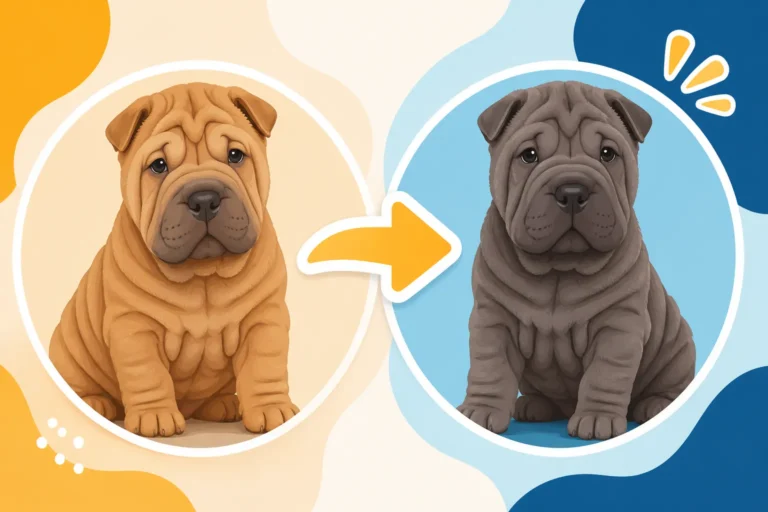
Furthermore, the heavy wrinkles around the head and eyes can cause severe eye problems, particularly entropion, where the eyelid margins roll inward, causing hair to rub painfully against the cornea. This can lead to corneal ulcers, scarring, and even blindness if left untreated. Shar Pei puppies often need temporary "tacking" sutures to roll the eyelids out, and many adult "Meat Mouth" Shar Pei require permanent corrective surgery to alleviate this painful condition. The leaner, less wrinkled face of the "Bone Mouth" Shar Pei, by contrast, generally presents a lower risk for these types of issues. Their clearer eyes and fewer skin folds translate to a more comfortable life, reducing the need for constant medical management. It stands to reason that Whether a Bone Mouth Shar Pei Is Healthier is often affirmed by those who live with the breed and deal with these challenges. Indeed, Skin Is the Shar Pei's Largest Problem by Surface Area for many Shar Pei, and the extent of wrinkling directly correlates with the severity of this issue.
Another less direct but equally important point relates to heat tolerance. The "Meat Mouth" often has a more compact body and heavier coat, combined with potential airway compromises due to the facial structure, making them more susceptible to overheating. While all Shar Pei need careful heat management, the exaggerated features can make it a more pronounced concern for the "Meat Mouth" type.
The Importance of Responsible Breeding
Given the distinct health predispositions associated with the different physical types, the emphasis on responsible breeding becomes paramount. For prospective Shar Pei owners, simply choosing a puppy based on its "cuteness" or the degree of its wrinkles without understanding the potential long-term health implications is a risky endeavor. Responsible breeders, regardless of whether they breed for a more "Bone Mouth" or "Meat Mouth" look, prioritize health, temperament, and genetic diversity.
They conduct thorough health testing for conditions common in the breed, such as familial Shar Pei fever (FSF), kidney issues, and thyroid problems, in addition to addressing structural concerns like entropion. They are transparent about the health history of their lines and provide comprehensive health guarantees. When considering a Shar Pei, it's crucial to seek out breeders who are actively working to improve the breed's health, even if it means moving away from some of the more extreme physical traits that gained popularity. This is where the discussion around Whether Breeding for Fewer Wrinkles Would Help truly comes to the forefront. These breeders understand that a healthy dog is a happy dog, and that functional anatomy should take precedence over exaggerated aesthetics. They may even guide you toward resources for canine nutrition and care, perhaps suggesting brands like Chewy for specialized diets or supplements. When engaging with a breeder, asking about their breeding philosophy and What a Shar Pei Breeder's Contract Should Cover in terms of health guarantees is essential. Ultimately, the goal is to choose a Shar Pei whose genetic heritage points toward a long, comfortable life, minimizing the need for extensive medical interventions down the line.
Disclaimer
This article is for general informational purposes only and does not constitute professional advice. Laws, prices and regulations vary by location and change over time. Consult a qualified professional for guidance on your specific situation.