Whether a Shar Pei’s Tongue Color Changes
A Shar Pei’s tongue can look different as a puppy grows, and lighting can make dark pigment appear to shift in shade. But a sudden change in the tongue’s overall color can also point to a medical problem. This guide explains what color variation can be normal, what changes deserve a closer look, and when it is safest to contact a veterinarian.
What tongue color is normal for a Shar Pei
Shar Pei are known for blue-black tongues, but “blue-black” does not mean every dog has exactly the same shade or an entirely solid-colored tongue. A puppy’s pigmentation may develop over time, and an adult may have a small amount of pink. The key is to learn what is usual for your dog and notice changes in context.
Blue-black pigment and normal variation
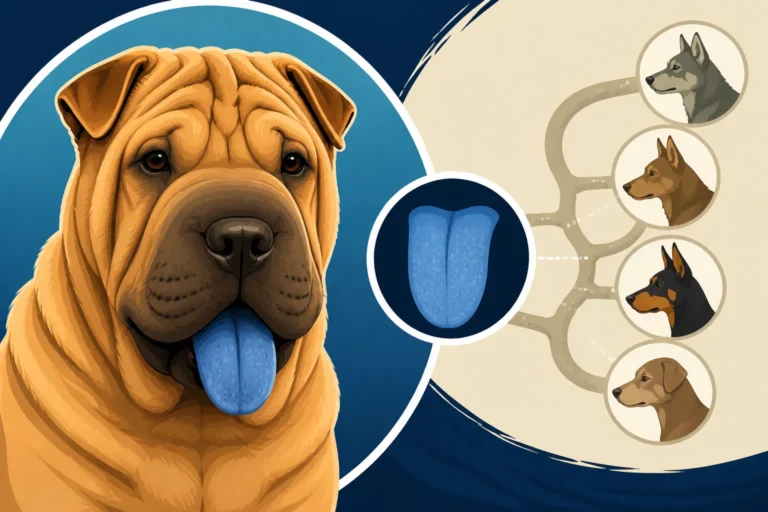
The blue-black appearance is usually caused by pigment in the tongue, rather than by a problem with the dog’s breathing or circulation. Shade can vary from dark blue or purple to nearly black. Depending on the dog’s coat color and pigmentation, some Shar Pei have a solid lavender tongue instead. For more on the breed trait itself, see Why a Shar Pei's Tongue Is Blue Black.
Some dogs also have small areas of pink, especially if the tongue is not uniformly pigmented. A pink spot that has been there for as long as you can remember, stays the same size and shape, and does not seem sore is different from a new mark that is growing, raised, bleeding, or ulcerated. A spot alone does not tell you whether there is a health problem; its history and appearance matter.
Tongue color is only one part of a dog’s appearance, and it should not be treated as a health score. A dark tongue does not confirm that a Shar Pei is healthy, and a stable pink area does not automatically mean something is wrong. If you are unsure whether a marking is ordinary pigmentation, take a clear photo and ask your veterinarian to compare it with the dog’s mouth during an examination.
What can change as a Shar Pei puppy grows
A puppy’s tongue may not be fully pigmented at birth. Dark pigment can become more noticeable during early growth, but the pattern and timing vary between individual dogs. A young Shar Pei with areas of pink may develop more pigment, or may retain some pink areas as an adult. There is no reliable way to judge an individual dog’s future tongue color from one early photo alone.
It helps to consider the puppy’s age and the direction of change. Gradual darkening over the early weeks of life, without swelling, pain, sores, or illness, can be part of normal pigmentation. A tongue that suddenly becomes pale, bluish in previously pink areas, or unusually dark in a new patch needs a different kind of attention, particularly if the puppy seems unwell.
A breeder may describe the puppy’s tongue as blue-black or spotted, but those descriptions do not replace a health check. If you are trying to understand how much pink is considered a variation in appearance, Whether a Pink Spotted Tongue Is a Fault in a Shar Pei is a related topic. For the question of what a very young puppy’s tongue may look like, see Whether a Shar Pei Puppy's Tongue Is Blue at Birth.
| What you notice | Possible explanation | What to do |
|---|---|---|
| A long-standing blue-black or lavender tongue | Normal pigment variation | Make a note of your dog’s usual appearance |
| Small, stable pink areas | Uneven pigmentation | Mention them at a routine veterinary visit if you have questions |
| Gradual darkening in a young puppy | Pigment developing with age | Watch for other changes, but do not judge health by color alone |
| A sudden blue or purple change, especially with breathing trouble | Possible oxygen or circulation problem | Seek urgent veterinary care |
| A new raised, bleeding, painful, or ulcerated spot | Injury or another oral condition may be possible | Contact your veterinarian promptly |
Why a Shar Pei’s tongue may seem to change color
Sometimes the tongue has not changed at all; the lighting, the dog’s posture, or the amount of visible tongue has changed. Other times, a color difference is real but relates to pigment or a local mark rather than a whole-body emergency. Looking closely at the pattern, speed, and accompanying signs can help you describe what you see.
Lighting, panting, and the difference between pigment and circulation
A tongue can look almost black in a dim room and lighter blue or purple in bright daylight. A phone camera can exaggerate the effect by changing exposure, particularly when the tongue is wet or partly in shadow. If a photo looks alarming but your dog is behaving normally, check the color in good natural light without delaying care if there are signs of distress.
Panting can also make the tongue look different. When a dog pants, the tongue may be stretched, wet, and exposed to different light than when the mouth is closed. The visible surface can seem pinker or redder, while the darker areas remain obvious along the edges or tip. That shift in appearance is not, by itself, proof of an oxygen problem.
The more concerning pattern is a sudden change from your dog’s normal color alongside weakness, collapse, labored breathing, or unusual confusion. In an emergency, do not spend time trying to photograph the tongue or decide whether a dark shade is “just the breed.” A Shar Pei’s natural pigmentation can make color harder to interpret, so behavior and breathing matter as much as the mouth’s appearance.
Spots, stains, irritation, and mouth injury
A single new mark may be caused by something different from a general change in tongue color. Dogs can injure the mouth by chewing on hard objects, and food or material from a chew may temporarily stain the tongue. Irritation, swelling, or a sore may also alter how a small area looks. Avoid scraping, rubbing, or applying household products to investigate a mark; that can make an irritated area worse.
Watch for changes that persist or progress. A mark that grows, changes shape, feels raised, bleeds, smells unpleasant, or appears painful should be checked by a veterinarian. The same applies if your dog starts drooling more than usual, avoids food, drops kibble, paws at the mouth, or resists having the face touched. Those signs do not identify a cause, but they are useful reasons to arrange an examination.
Routine mouth care can make it easier to notice changes. If you buy a toothbrush or toothpaste through Chewy or another pet-supply retailer, choose products made for dogs; human toothpaste is not a suitable substitute. Introduce brushing gently and do not force your dog’s mouth open to inspect the tongue. If the area is sore or your Shar Pei resists handling, let a veterinary team examine it instead.
The blue-black tongue is a familiar Shar Pei feature, and it is also seen in the Chow Chow. That resemblance does not prove a direct shared ancestry. If you are curious about the comparison, read Which Other Breed Has a Blue Black Tongue and Whether the Blue Tongue Proves a Shared Ancestor.
When a tongue color change needs veterinary attention
A new color change is not always an emergency, but certain combinations of signs should be treated seriously. Because dark pigment can make the tongue difficult to assess, focus on sudden changes, visible areas that are normally pink, and how your dog is acting.
Sudden blue, purple, pale, or yellow color
A sudden blue or purple appearance in areas that are usually pink can be a warning sign, especially if your dog is struggling to breathe, breathing unusually fast, weak, or collapsing. Call an emergency veterinary clinic and follow its instructions. Do not wait to see whether the color returns to normal if your dog is in distress.
Pale or white-looking gums, marked weakness, or collapse also warrant urgent attention. Yellowing in the mouth or eyes is another change to report promptly. These signs can have different causes, and it is not possible to diagnose the cause by looking at tongue color at home. If your dog seems seriously ill, a photo or an online search should not delay a veterinary assessment.
Shar Pei have features that can affect how comfortably they breathe, so breathing signs deserve care regardless of tongue pigmentation. If you have questions about how the breed’s muzzle may relate to breathing, see Whether a Shar Pei's Muzzle Affects Its Breathing and Whether a Shar Pei Is a Brachycephalic Breed. Those breed discussions are not a substitute for urgent care when breathing is difficult.
New sores, swelling, bleeding, or pain
A new tongue spot that is raised, rapidly changing, bleeding, or open should be assessed by a veterinarian. Contact the clinic promptly if the tongue or mouth appears swollen, your dog cannot eat or drink normally, or there is ongoing bleeding. If your dog seems very distressed or the swelling is affecting breathing or swallowing, treat the situation as urgent.
Try not to force an inspection. A dog with mouth pain may react defensively even if they are usually gentle, and pressing on a sore can cause additional discomfort. A quick look from a safe distance may help you describe the concern, but do not put your fingers into the mouth if your dog resists.
For a veterinary visit, make a short note of when you first saw the change, whether it is spreading, and any related symptoms such as drooling or reduced appetite. A clear photo can help show how the mark has changed between observations. If you keep travel supplies through Chewy or another retailer, a leash, carrier, and basic cleanup items can make an unplanned clinic trip easier—but they should not delay calling ahead when the situation is urgent.
How to monitor your Shar Pei’s tongue
You do not need to inspect your dog’s mouth constantly. A calm, occasional look during normal care is usually more useful than repeated checks that worry you or make your dog uncomfortable. The aim is to know your Shar Pei’s baseline and recognize a meaningful change.
Record what is normal for your dog
Take a well-lit photo when your dog is relaxed and the tongue is visible naturally. Include the date and note whether your Shar Pei was panting, had just eaten, or had been chewing a toy. A few reference photos taken at different times can help distinguish a stable pink marking from a new one.
If you notice a change, record what is different: the color, location, size, and whether the area is flat or raised. Also note changes in breathing, energy, appetite, drooling, or willingness to chew. This kind of detail can make a veterinary conversation more useful, especially if the appearance comes and goes.
Do not try to measure or diagnose a mark using internet photos of other dogs. Pigment patterns vary, and camera settings can make two similar tongues look very different. If you are uncertain, ask your veterinarian to examine the mouth and compare the finding with your dog’s normal appearance.
What to tell your veterinarian
When you call the clinic, describe the change plainly: “The tongue has a new purple area,” “a pink spot has grown,” or “the mouth looks pale and my dog is weak.” Mention when it began and whether the change is spreading. If breathing is difficult, your dog has collapsed, or they are severely weak, say so immediately and ask whether to come in for emergency care.
For a non-urgent spot, bring your photos and explain whether it has changed over days or weeks. Your veterinarian may examine the tongue, gums, teeth, and other parts of the mouth, and decide whether any further assessment is needed. The right next step depends on the dog’s overall condition and what the examination shows, not just on whether the tongue is blue-black.
If your Shar Pei has a stable dark tongue and acts normally, that color is often simply part of the breed’s appearance. If the color changes suddenly, a new lesion appears, or your dog seems unwell, contact a veterinarian rather than assuming the change is harmless. A familiar baseline makes it easier to notice what is genuinely new.
Disclaimer
This article is for general informational purposes only and does not constitute professional advice. Laws, prices and regulations vary by location and change over time. Consult a qualified professional for guidance on your specific situation.