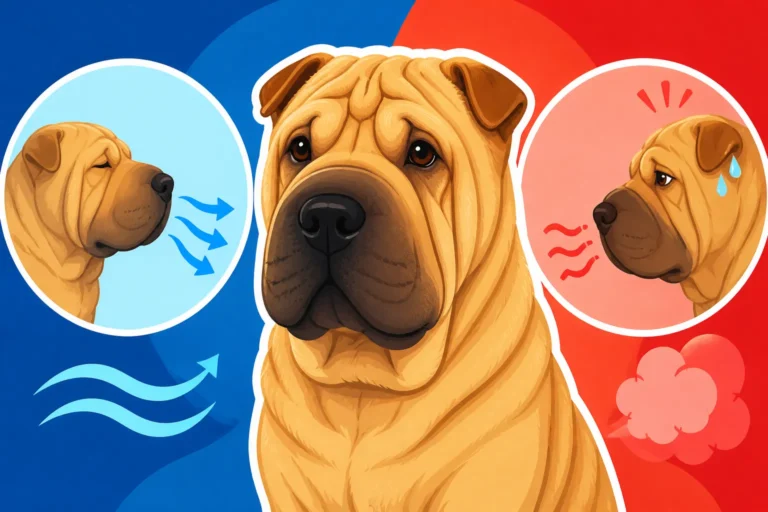
Which Type the AKC Standard Describes
When you delve into the world of Shar Pei, you quickly discover there's a lot more to these wonderfully unique dogs than meets the eye. Many prospective owners get a little lost in the terminology, especially when they hear about "Meat Mouth" versus "Bone Mouth" Shar Pei, and then wonder which one is the "real" Shar Pei, or more importantly, which one the American Kennel Club (AKC) officially recognizes. This guide is here to untangle that confusion, explaining the distinct types and clarifying exactly what the AKC breed standard describes, so you can understand the lineage and characteristics of your beloved wrinkly companion.
The Tale of Two Types: Meat Mouth and Bone Mouth Shar Pei
It might sound a bit like a culinary term, but "Meat Mouth" and "Bone Mouth" actually refer to distinct head and muzzle types within the Shar Pei breed. Understanding these differences is key to appreciating the breed's history and how it evolved, especially after its dramatic rescue from near extinction. These aren't just arbitrary terms; they represent significant divergences in the breed's development and appearance.
Distinguishing Features of the Meat Mouth Shar Pei
The "Meat Mouth" Shar Pei is likely the image that first comes to mind for most people when they think of the breed. This type is characterized by a broader, more padded muzzle, often described as looking like a "hippopotamus mouth." They tend to have more extensive wrinkling, particularly around the head, face, and sometimes even across the body. The folds are often deeper and more abundant, giving them that famously "pudgy" or exaggeratedly wrinkled appearance that became popular in the Western world.
This look became prominent after the breed was rescued from near disappearance in the 1970s. As the Shar Pei population expanded in the West, there was a clear preference for these more heavily wrinkled dogs, which were seen as more exotic and distinctive. Breeders often selected for these traits, leading to the proliferation of the Meat Mouth type. While undeniably striking, these exaggerated features often come with their own set of challenges, from skin fold dermatitis to eye issues. The sheer volume of skin on the face, in particular, can be a major factor in health considerations, something every owner needs to be aware of from the start.
The Leaner Lines of the Bone Mouth Shar Pei
In stark contrast to the Meat Mouth, the "Bone Mouth" Shar Pei embodies the breed's more traditional, original appearance. These dogs possess a leaner, less padded muzzle, with a more defined jawline, giving them a sharper, almost fox-like facial structure. The wrinkling on a Bone Mouth Shar Pei is significantly less pronounced, typically confined to the head and neck, with a much smoother body coat. They have a more athletic, angular build, often looking less heavy-set than their Meat Mouth counterparts.
The Bone Mouth type represents the working Shar Pei of ancient China, bred for hunting, guarding, and fighting. Their minimal wrinkles and tighter skin were functional, preventing opponents from grabbing onto loose skin in a fight and offering fewer places for dirt and moisture to accumulate, thus reducing skin issues. While incredibly rare now, these dogs offer a glimpse into the breed's heritage, before it captured the hearts and imaginations of Western enthusiasts who then sculpted its appearance towards more dramatic folds. Many believe the Bone Mouth type is genetically closer to the original Shar Pei that worked in rural China, a dog built for practicality rather than plushness.
The Journey to AKC Recognition and Standardization
The Shar Pei's history is a true rags-to-riches story, moving from the brink of extinction to becoming a recognized and beloved breed worldwide. This journey profoundly influenced its physical characteristics and, ultimately, the breed standard that guides breeders and judges today.
The Early Days: Saving the Breed and Establishing a Standard
The Shar Pei faced an incredibly grim outlook in the mid-20th century. Due to political and economic shifts in China, dog ownership became a luxury, and many breeds, including the Shar Pei, were decimated. It's almost unbelievable to think that at one point, perhaps Sixty Shar Pei Were Left in 1978 worldwide. The breed was practically vanishing. Then, a heroic effort, spearheaded by a Hong Kong breeder named Matgo Law, initiated a plea to save the breed. It was literally One Letter to a Dog Magazine Saved the Shar Pei, published in LIFE magazine in 1978, that brought the Shar Pei to international attention. This plea resonated with dog lovers in the West, particularly in the United States, who eagerly sought out these rare and exotic animals.
As these few precious Shar Pei made their way to America, the groundwork for formal recognition began. Enthusiasts formed clubs, started breeding programs, and, crucially, began the process of defining what a Shar Pei should look like. This was a critical juncture, as the founding stock was limited, and the breed's appearance was somewhat fluid. The earliest standards aimed to capture the essence of this ancient breed while also reflecting the specific traits present in the surviving dogs and the emerging preferences of Western breeders. It was a foundation laid out of necessity and passion, setting the stage for the Shar Pei we know today.
Why the Meat Mouth Became the Dominant Type
The rapid rise in the Shar Pei's popularity in the West coincided with a growing appreciation for its distinctive, heavily wrinkled appearance. The "Meat Mouth" type, with its more exaggerated folds and padded muzzle, quickly became the preferred aesthetic. This wasn't necessarily a conscious decision to deviate from the original working dog but rather a natural evolution driven by market demand and breeding choices. People were fascinated by the unique look, and breeders responded by selecting for dogs that displayed these prominent features.
This preference for the Meat Mouth type, with its abundant wrinkles and full muzzle, gradually shaped the breed standard. As the AKC and other kennel clubs worked to formalize the breed's characteristics, the dogs with the more pronounced features were often seen as embodying the "ideal." This meant that while the Bone Mouth type might have represented the Shar Pei's historical form, it was the Meat Mouth that captured the public imagination and, consequently, became the blueprint for the modern show dog. The influence of American and Western breeders in developing and solidifying the standard cannot be overstated, effectively making the Meat Mouth the universally recognized face of the Shar Pei breed. This also meant that over time, the health implications of these exaggerated features became a more pressing concern for owners and veterinarians alike.
Decoding the AKC Breed Standard for the Shar Pei
Understanding the AKC breed standard isn't just for show enthusiasts; it offers vital insights into what constitutes a "typical" Shar Pei and helps owners recognize traits that might lead to specific health considerations. The standard is essentially the rulebook for the breed's appearance.
What the AKC Standard Explicitly States About Appearance
When you dive into the official AKC breed standard for the Shar Pei, you'll find language that clearly describes what is expected in terms of conformation. While it doesn't explicitly use the terms "Meat Mouth" or "Bone Mouth," the descriptors strongly align with the Meat Mouth characteristics that became prevalent in the West. The standard calls for a "large, broad head" and a "medium-sized muzzle, broad and full with no suggestion of snipiness." This emphasis on fullness and breadth in the muzzle directly points towards the padded appearance of the Meat Mouth.
Regarding wrinkles, the standard states that "wrinkles on the forehead and the cheeks continuing to form a dewlap" are desirable. It also specifies that "moderate wrinkles on the body, particularly over the withers and at the base of the tail, are acceptable in puppies" but that "in adult dogs, excessive skin on the body is undesirable." This is a crucial distinction. While puppies are expected to be quite wrinkly, adults should ideally grow into much of their skin, retaining only a moderate amount of wrinkling on the head and withers. So, for adults, the image of a body covered in deep folds is actually considered a fault, suggesting that while the Meat Mouth head is favored, an overly wrinkled body is not. For more on this, you might look into How Many Wrinkles an Adult Shar Pei Should Have. This nuanced description aims to strike a balance, but the foundational preference for the Meat Mouth head shape remains clear.
Interpreting "Moderation" and Its Impact on Wrinkles
The word "moderation" is a key term within many breed standards, and it's particularly important for the Shar Pei. While the AKC standard favors the broad, padded muzzle of the Meat Mouth type, it also repeatedly emphasizes that exaggeration in any feature is to be avoided. For instance, while wrinkles are a hallmark of the breed, "excessive skin on the body is undesirable in adult dogs," as mentioned. This often leads to a tricky tightrope walk for breeders and judges: how much wrinkle is enough to be characteristic, but not so much that it becomes "excessive" or detrimental to the dog's health and function?
This push for moderation is an attempt to mitigate some of the health issues that can arise from extreme conformational traits. For example, excessive facial wrinkles can lead to problems like entropion, where the eyelids roll inward and irritate the eye. A Shar Pei's care often involves meticulous attention to these areas, and products from places like Chewy can be invaluable for keeping those folds clean and dry. Similarly, overly loose skin on the body can contribute to skin fold dermatitis. The interpretation of "moderation" has evolved over time, with many within the breed community advocating for a return to a slightly less exaggerated appearance for the sake of the dogs' well-being. It's a constant dialogue between maintaining the breed's iconic look and ensuring its long-term health.
The Health Implications of Conformation
It's impossible to discuss the Shar Pei's appearance, especially as dictated by breed standards, without also addressing the health implications that come with certain conformational traits. The very features that make a Shar Pei so distinctive can also be sources of significant health challenges.
Conformation and Common Shar Pei Health Issues
The defining characteristics of the Shar Pei, particularly the dense wrinkles and the shape of its head and muzzle, are directly linked to several prevalent health issues. Perhaps the most well-known is entropion, a condition where the eyelid rolls inward, causing the eyelashes to rub against the cornea. This is especially common in puppies with abundant facial wrinkles, and if left untreated, it can cause pain, corneal ulcers, and even blindness. Often, Entropion in a Shar Pei Puppy Is an Emergency, Not a Cosmetic Issue requiring immediate veterinary attention, sometimes with temporary "tacking" procedures.
Beyond the eyes, the numerous skin folds, which are more pronounced in the Meat Mouth type, create warm, moist environments perfect for bacterial and yeast infections. This leads to skin fold dermatitis, a persistent and uncomfortable condition for many Shar Pei. It's no exaggeration to say that Skin Is the Shar Pei's Largest Problem by Surface Area. These deep folds, especially around the face, neck, and tail, require diligent daily cleaning and maintenance to prevent infections. Even the narrow ear canals, a characteristic of the breed, can be exacerbated by the heavy folds around the head, making them more prone to chronic ear infections. These issues highlight the direct link between the breed's conformation and its susceptibility to specific health challenges.
Advocate for Health-Conscious Breeding
Given the known health challenges tied to the Shar Pei's unique conformation, there's a growing movement towards more health-conscious breeding practices. Many dedicated breeders are striving to produce dogs that still embody the Shar Pei's essential characteristics but with a greater emphasis on functionality and health over extreme exaggeration. This often means subtly breeding for fewer wrinkles, especially in areas that cause problems like around the eyes and on the body. The question of Whether Breeding for Fewer Wrinkles Would Help is a critical one, and for many, the answer is a resounding yes.
Responsible breeders are transparent about their dogs' health histories and actively screen for genetic conditions common in the breed. They prioritize temperament, soundness, and longevity, often producing dogs that might have a slightly less "wrinkled" look than the most extreme examples but are far healthier and more comfortable in their own skin. This advocacy for health isn't about changing the breed into something it's not but rather about ensuring its future by minimizing preventable suffering. As potential owners, supporting these breeders is crucial, as it reinforces the demand for healthier Shar Pei.
Living with an AKC Standard Shar Pei
Bringing a Shar Pei into your life means embracing a dog with unique needs, many of which stem directly from the characteristics described in the AKC standard. It’s a commitment to understanding and addressing these specific requirements to ensure your wrinkly friend lives a happy, healthy life.
Understanding Care Needs Based on Conformation
If you have an AKC standard Shar Pei, which means your dog likely exhibits the fuller muzzle and more pronounced facial wrinkles of the Meat Mouth type, you'll quickly learn that routine care is paramount. Those adorable wrinkles aren't just for show; they're tiny pockets where moisture, dirt, and bacteria can hide, leading to skin infections. Daily cleaning of facial folds with a soft cloth or medicated wipe is often necessary, especially after meals or if your dog has been playing outside. You can find excellent medicated wipes and cleaning solutions on Chewy, which can make this daily routine much easier.
Beyond the wrinkles, attention to the eyes is critical. Shar Pei are prone to entropion, as we've discussed, and even if they don't require surgery, their eyes may need regular cleaning to remove discharge, which again can be easily sourced from pet supply retailers. Their deeply set eyes and sometimes excessive skin around them can also limit their peripheral vision, so always approach your Shar Pei gently, making sure they see you coming to avoid startling them. These are not simply aesthetic considerations but fundamental aspects of keeping your Shar Pei comfortable and preventing common ailments.
Navigating the Show Ring and Beyond
For those interested in showing their Shar Pei, the AKC standard is your bible. It dictates everything from head shape and ear set to tail carriage and coat texture. Judges are looking for dogs that conform as closely as possible to this ideal, which, as established, leans towards the Meat Mouth type with an emphasis on moderation in body wrinkles. Understanding the nuances of the standard, attending breed-specific seminars, and working with experienced mentors are all essential steps for success in the show ring. However, it's a tight balance; you're looking for the ideal interpretation of the standard, not an exaggeration.
Even if you have no intention of showing your Shar Pei, the standard helps you understand the historical and genetic blueprint of your pet. It explains why your dog looks the way it does and why certain care routines are so important. The breed's unique visual appeal is a direct result of these established standards. While showing requires strict adherence, everyday life with a Shar Pei means adapting their care to their individual needs, which may still include regular ear cleaning due to their narrow canals or a specialized diet to manage skin sensitivities. For example, if your vet recommends a specific food for allergies, you'll want to check Chewy for options.
The Future of the Shar Pei Standard
The conversation around breed standards is a dynamic one, especially for breeds with known health predispositions linked to their appearance. The Shar Pei is no exception, and discussions about its future often revolve around the delicate balance between tradition and animal welfare.
Debates and Discussions Around Breed Standards
Within the Shar Pei community, and indeed across the wider purebred dog world, there are ongoing debates about breed standards. Some argue fiercely for the preservation of historical aesthetics, believing that any deviation dilutes the breed's identity. Others, particularly veterinarians and welfare advocates, push for revisions that prioritize health and functional soundness above all else. For the Shar Pei, this often translates to discussions about whether the standard's allowances for wrinkles and muzzle conformation should be tightened to discourage extreme breeding.
Questions like Whether the Shar Pei Standard Should Change are not easily answered. Any proposed change requires careful consideration, extensive discussion among breed clubs, and approval from governing bodies like the AKC. It's a slow process, but momentum is building for more health-focused standards across many breeds. The aim isn't to fundamentally alter the Shar Pei but to ensure that the traits deemed desirable don't inadvertently lead to suffering. These conversations highlight a collective desire to safeguard the breed's future, ensuring that the next generation of Shar Pei are as healthy as they are unique.
Balancing Tradition with Welfare
Ultimately, the challenge for the Shar Pei breed and its standard lies in striking a harmonious balance between preserving its rich tradition and ensuring the welfare of individual dogs. The breed's distinctive appearance, particularly the wrinkles and the "Meat Mouth" head, is a huge part of its appeal and historical identity. To completely eliminate these features would, for many, be to lose the essence of the Shar Pei. However, to ignore the health consequences of exaggerating these features would be irresponsible.
The ideal future for the Shar Pei might involve a breed standard that continues to recognize its unique characteristics but explicitly emphasizes moderation and condemns extremes. This means valuing a dog that is clearly a Shar Pei, with its characteristic loose skin, broad head, and scowling expression, but without the overabundance of wrinkles that might compromise its vision, skin health, or ability to breathe comfortably. It's about breeding for a healthy, functional Shar Pei that can live a full and comfortable life, while still being instantly recognizable as the magnificent, ancient breed that so many have come to love. This path requires thoughtful breeding, informed ownership, and a continued commitment to the well-being of these incredible dogs.
| Feature | Meat Mouth Shar Pei | Bone Mouth Shar Pei | AKC Standard Alignment (Adult) |
|---|---|---|---|
| Muzzle | Broad, full, padded, often described as "hippopotamus" | Leaner, less padded, more defined jawline, fox-like | Broad and full with no suggestion of snipiness |
| Facial Wrinkles | Extensive, deep, abundant on head and face | Significantly less pronounced, mainly on forehead | Desirable on forehead, cheeks, and dewlap |
| Body Wrinkles | Often more extensive, especially in puppies | Minimal, smoother body coat | Moderate in puppies; excessive is undesirable |
| Overall Build | More robust, heavier set | More athletic, angular, lighter | Robust, powerful, compact body |
| Historical Role | Popularized in the West for unique look | Original working dog (hunting, guarding, fighting) | Represents the Western-developed ideal |
| Health Risks | Higher risk of entropion, skin fold dermatitis | Generally fewer conformation-related risks | Moderation sought to mitigate risks |
Disclaimer
This article is for general informational purposes only and does not constitute professional advice. Laws, prices and regulations vary by location and change over time. Consult a qualified professional for guidance on your specific situation.