Whether Body Wrinkles Are a Fault in an Adult Shar Pei
An adult Shar Pei may have a few folds around the head and neck, but heavy wrinkles running across the body or down the legs are generally considered undesirable under breed standards. That does not automatically mean the dog is unhealthy or cannot be a wonderful companion. This guide explains what standards mean, how to tell normal skin from a possible problem, and when wrinkles deserve a vet’s attention.
What breed standards say about an adult Shar Pei’s body wrinkles
Head and neck folds are different from body wrinkles
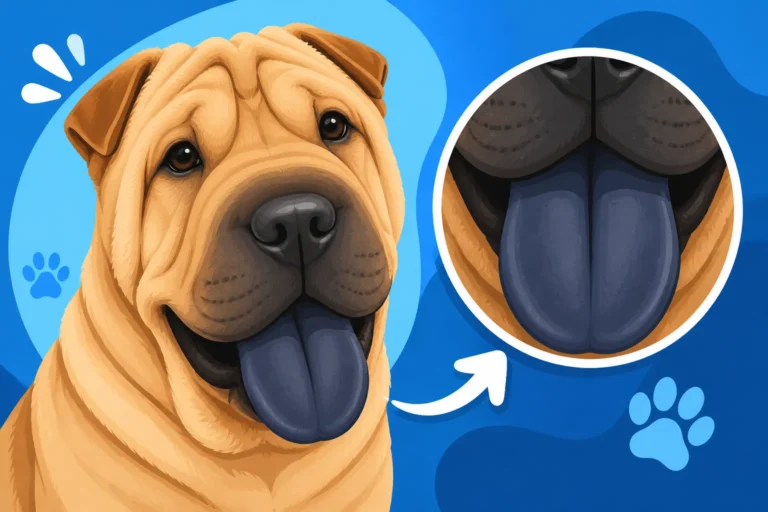
The Shar Pei’s loose skin is part of its distinctive appearance, but breed standards do not necessarily treat every wrinkle as equally desirable. In many standards, moderate folds around the forehead and withers—the area over the shoulders—are acceptable. Wrinkles that continue across an adult dog’s back, sides, or limbs are more likely to be described as undesirable.
The distinction can surprise people who have mostly seen puppy photographs. Young Shar Pei often have loose skin over much of the body, and some of that appearance changes as they grow. An adult dog is not expected to look like a tiny puppy with folds everywhere. For a closer look at that change, see Whether an Adult Shar Pei Should Have Head Wrinkles and Whether an Adult Shar Pei Keeps All Its Puppy Folds.
Standards also vary somewhat between kennel clubs and countries. Wording may differ, and the precise areas where folds are acceptable may be described differently. If you are considering showing a dog, check the standard used by the organization and country where you plan to compete rather than assuming one description applies everywhere.
“Undesirable” is not the same as an automatic disqualification
When a breed standard calls a feature undesirable, it is describing a preference for judging and breeding—not declaring that every dog with that feature is defective or unhealthy. A judge may consider extensive adult body wrinkles when assessing how closely a dog fits the standard, but the wording does not automatically make the dog ineligible to be a pet or mean that it has a medical disorder.
A show evaluation also considers the dog as a whole. A judge is not simply counting folds and deciding that a dog with more wrinkles must be better or worse. Body structure, movement, coat, temperament, and other breed characteristics matter too. Most importantly for owners, a show ring assessment is not a substitute for a veterinary examination.
This is why it helps to separate three questions: Is the dog’s appearance preferred by a particular standard? Is the dog comfortable and moving normally? Is the skin healthy? Those questions may have different answers. A dog can have more body wrinkles than a show standard prefers and still feel well, while a dog with fewer folds can still develop an itchy or infected patch.
There is no universal wrinkle count
People sometimes ask how many wrinkles an adult Shar Pei should have, as if there were a fixed number that divides a correct dog from an incorrect one. In practice, the standard focuses more on the location and degree of excess skin than on a numerical count. Individual dogs differ in skin looseness, body shape, age, and how their coat and skin sit when they are standing or moving.
Photographs can also be misleading. A dog curled up, sitting, or leaning into a turn may appear to have more folds than it does while standing naturally. Camera angle, coat condition, and loose skin bunching during movement can exaggerate the appearance. If you are comparing dogs, look at them in a relaxed standing posture and consider their overall build rather than judging a single close-up.
For further context, How Many Wrinkles an Adult Shar Pei Should Have explores why a simple count is not a useful standard. It is also worth remembering that Whether Breeders Are Reducing Shar Pei Wrinkles is a separate question from whether one particular adult dog’s folds are healthy or comfortable.
| Feature | Common standard preference | What it means for an owner |
|---|---|---|
| Moderate forehead folds | Often acceptable | Usually a breed appearance issue, not a concern by itself |
| Folds around the withers | Often acceptable | Judge the dog’s overall skin and comfort |
| Extensive folds across the adult body | Often described as undesirable | May affect show evaluation; does not alone diagnose illness |
| Folds down the legs | Often described as undesirable in mature dogs | Check for rubbing, trapped moisture, or irritation |
| Red, sore, smelly, or painful folds | Not simply a matter of breed type | Contact a veterinarian for assessment |
Why puppy wrinkles can look so different from adult wrinkles
Growth changes the way loose skin sits
Shar Pei puppies are famous for appearing as though they have been given more skin than they need. As the body grows, that skin can sit differently, and many dogs become less deeply folded over the trunk. Some adult dogs retain noticeable folds, while others have a smoother body and keep most of their wrinkles around the head and neck.
The change is gradual, so it can be hard to judge the final appearance from a very young puppy. A puppy may look dramatically wrinkled at one stage and less so later, but no one can promise exactly how its adult skin will look based on a photograph. Genetics, growth, body condition, and individual development all contribute.
This is one reason not to choose a puppy solely for the number or depth of its wrinkles. A strikingly wrinkled puppy is not necessarily a better example of the breed, and a less wrinkled puppy is not automatically healthier. The broader question of appearance and health is covered in Whether a Less Wrinkled Shar Pei Is Healthier.
Adult age and body condition affect appearance
A dog’s outline can change as it matures, gains muscle, or puts on excess weight. Extra body fat may make skin folds look deeper or more crowded, while weight loss can alter how loose skin drapes. These changes do not mean that an owner should try to make a dog unusually thin to reduce wrinkles. A healthy body condition should be assessed through the dog’s overall shape and veterinary guidance, not by trying to achieve a particular look.
It is also normal for the skin to bunch temporarily when a dog turns, bends, or lies down. That is different from a persistent pattern of deep folds across the body when the dog stands comfortably. If you are unsure whether your dog’s appearance has changed, take clear photographs from the same angles over time and discuss them at a routine veterinary visit.
Appearance alone cannot predict health
It is tempting to assume that fewer wrinkles must mean fewer skin problems. That is too simple. Skin health depends on multiple factors, including inherited tendencies, allergies, irritation, moisture, parasites, and infections. The presence of folds may make some areas harder to keep clean and dry, but an individual dog’s symptoms and examination matter more than its appearance in a photograph.
Likewise, a heavily folded dog should not be presumed ill just because its skin looks different from a show-ring ideal. Pay attention to the dog’s comfort: persistent scratching, licking, redness, dampness, odor, tenderness, or hair loss are more useful warning signs than the number of folds. For the broader relationship between breed traits and health, see What Being Saved Did to the Shar Pei's Health.
When body wrinkles are a skin-care concern
Check for irritation rather than judging the fold itself
A healthy fold should not be assumed to need aggressive cleaning simply because it exists. Look for changes such as redness, greasy or damp skin, scabs, swelling, discharge, a persistent unpleasant smell, or signs that your dog resists being touched. A dog that repeatedly scratches or licks one area may be uncomfortable even if the skin looks only mildly irritated.
A new or recurring problem deserves attention. Skin disease can have several causes, and the right treatment depends on what is happening—not just on the breed or the presence of wrinkles. A veterinarian can examine the skin and decide whether tests or specific treatment are needed. Avoid applying human creams, medicated products, powders, or essential oils unless your veterinarian has advised you to do so.
A helpful overview of the breed’s wider skin challenges is Skin Is the Shar Pei's Largest Problem by Surface Area. For practical fold-care basics, Every Fold on a Shar Pei Is a Place Something Grows explains why checking the skin is more useful than relying on appearance alone.
Keep cleaning gentle and dry the skin well
If your veterinarian recommends routine cleaning, use a method and product suitable for your dog’s skin. A soft cloth may be enough for simple surface dirt, while persistent problems may call for a veterinary-directed cleanser. Avoid scrubbing, and do not force a dog through handling that causes pain or fear. If the skin is already sore, ask for advice before cleaning it.
Drying matters. Moisture trapped in a fold can contribute to irritation, so gently pat the area dry after bathing or cleaning. Do not leave damp skin hidden under a collar, harness, or overlapping fold. If your dog’s wrinkles make it difficult to see or reach an area, ask your veterinary team to demonstrate safe handling rather than poking tools or swabs into the skin.
When comparing basic care supplies at a local shop or on Chewy, read the ingredient label and choose only a product your veterinarian considers appropriate for your dog. A product marketed for general pet use is not automatically suitable for irritated skin. If a recommended item is difficult to find, ask the clinic what alternatives are acceptable before substituting.
Make fold checks calm and routine
A short, calm skin check is often easier than waiting until a dog has a problem and then trying to inspect a sore area. Choose a time when your Shar Pei is relaxed. Lift or part the skin gently, look for redness or moisture, and stop if the dog becomes uncomfortable. Pairing brief handling with praise can help a puppy or newly adopted adult become more accepting over time.
You do not need to turn every grooming session into a long inspection. A quick visual check during ordinary care can help you notice a new smell, a damp patch, or tenderness before it becomes a bigger concern. If the dog has a history of recurring skin trouble, ask the veterinarian how often to check and whether a written care routine would help.
If you use Chewy or another retailer to restock supplies, treat the product description as a starting point, not a diagnosis or treatment plan. Keep a note of what you use and whether your dog’s skin improves or worsens, and share that information with the vet. Changing several products at once makes it harder to tell what is helping.
How to assess an adult Shar Pei without getting stuck on the wrinkles
For a pet owner, comfort comes first
If your adult Shar Pei has body folds but moves freely, seems comfortable, and has healthy-looking skin, the folds alone may not require treatment. Keep an eye on them as part of normal grooming, and raise any change with your veterinarian. The goal is not to make your dog look like a show standard illustration; it is to keep the dog comfortable and catch problems early.
If you are choosing between adoption and buying from a breeder, ask about the dog’s skin history as well as its appearance. Find out whether it has had recurring irritation, ear or skin infections, or ongoing treatment. A breeder or rescue organization should be able to discuss the individual dog, but an attractive coat or smooth-looking body is not a guarantee of future health.
For a new puppy, ask how the breeder assesses health and temperament, and whether they can describe how the parents’ skin is managed. Do not treat a promise that a puppy will “grow out of” every skin issue as a substitute for veterinary care. The appearance may change with age, but symptoms still need attention when they occur.
For a show prospect, use the relevant standard and expert feedback
If you plan to show your dog, read the exact breed standard used by the relevant kennel club and ask an experienced, reputable Shar Pei breeder or judge to explain how it is interpreted. A standard’s wording can be subtle: it may permit folds in certain places while discouraging excessive folds elsewhere. A general online description may not capture the details that matter in the ring.
It is also sensible to distinguish an experienced opinion about conformation from veterinary advice about health. A breeder may help you understand the dog’s type and likely show prospects, while a veterinarian is the right person to assess skin disease, discomfort, or changes in health. Neither should be expected to answer every question outside their area.
If your dog’s body wrinkles are not preferred in the show ring, that does not reduce its value as a companion. Breed standards are tools for evaluating conformation, not a ranking of how lovable, trainable, or worthy of care a dog is. A Shar Pei with more visible body folds can still be a cherished family member whose needs are met thoughtfully.
Keep records if the folds or skin change
When you notice a new fold becoming red, an odor appearing, or irritation returning in the same place, write down when it started and what else changed. Note recent bathing, grooming products, diet changes, weather, or new scratching. A few dated photographs can help your veterinarian see whether the problem is stable, improving, or spreading.
For recurring irritation, avoid repeatedly trying new products without guidance. A cleanser or wipe that seemed helpful once may not address the underlying cause, and repeated product changes can make it harder to identify a trigger. When comparing supplies through Chewy or another store, use the veterinarian’s recommendation as your filter and avoid treating customer reviews as medical advice.
Most importantly, contact a veterinarian if a fold becomes painful, markedly swollen, wet, ulcerated, or persistently foul-smelling, or if your dog seems unwell. Those signs call for an assessment of the skin and the dog—not a debate about whether the wrinkles are fashionable or correct. A useful rule is simple: standards guide appearance; symptoms guide care.
Disclaimer
This article is for general informational purposes only and does not constitute professional advice. Laws, prices and regulations vary by location and change over time. Consult a qualified professional for guidance on your specific situation.