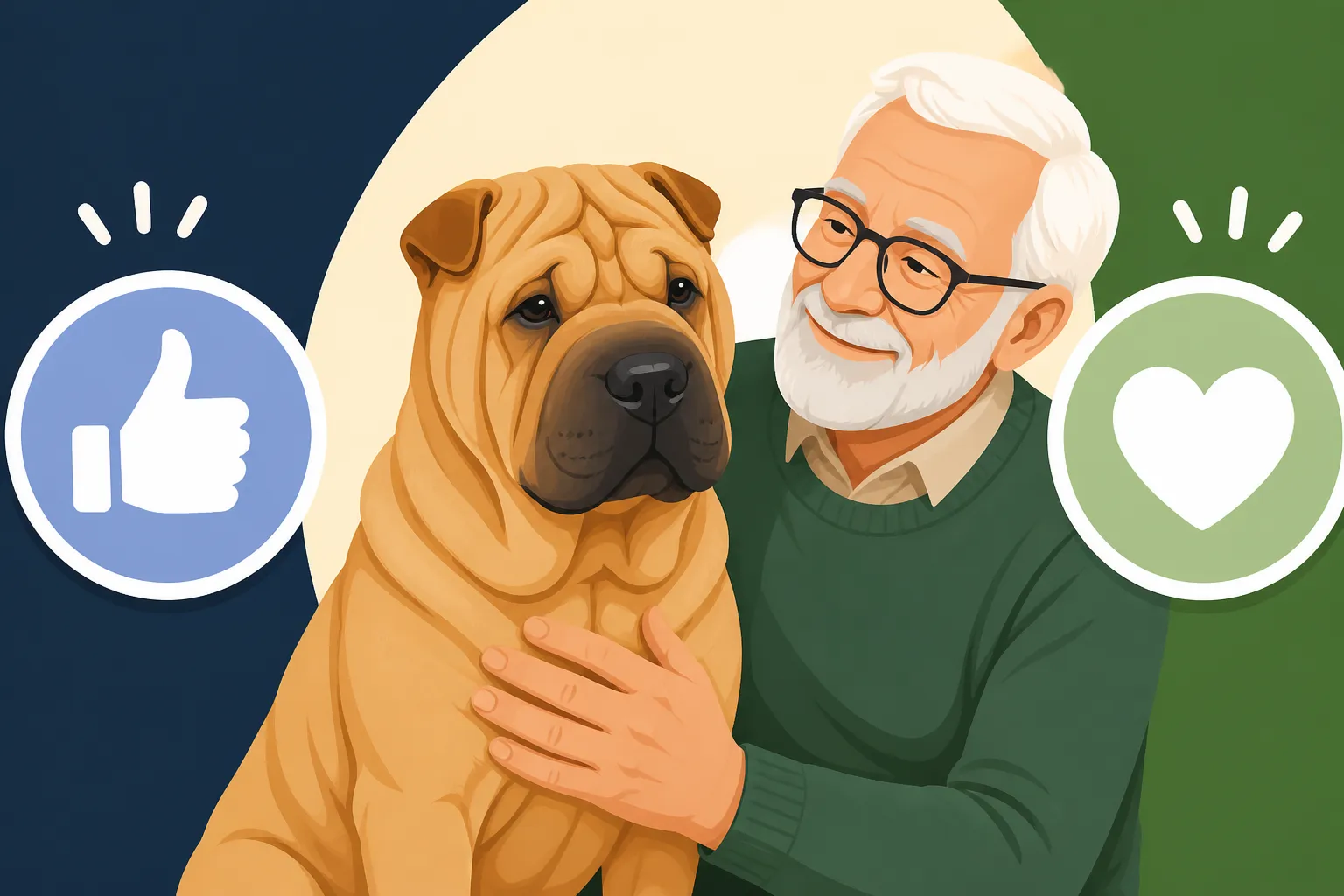
Whether a Shar Pei Suits an Older Owner
An older owner can absolutely share a happy home with a Shar Pei, but age alone is not the deciding factor. The practical questions are whether you can manage a strong, independent dog, keep up with its health and grooming needs, and arrange reliable help for illness or mobility changes. This guide helps you weigh those everyday realities before bringing one home.
Is a Shar Pei a good fit for an older owner
Age matters less than routine and physical capacity
A Shar Pei may suit an older adult who enjoys a steady routine, can provide daily walks and training, and has support available if circumstances change. Many are content to relax indoors after exercise, so they do not necessarily need an owner who runs for miles. But they are sturdy, muscular dogs, and even a calm one can pull hard if startled or excited. The key question is not simply, “Am I active enough?” It is, “Can I safely handle this particular dog in ordinary, unpredictable moments?”
Think about the less glamorous parts of dog ownership. Can you lift or guide the dog into a car if it is injured? Can you bend down to clean up after it, check its skin, and trim its nails—or pay someone dependable to help? If you have arthritis, balance concerns, or limited hand strength, tasks such as holding a leash during a sudden lunge may matter more than the length of a normal walk.
It is also worth separating “older owner” from “first-time owner.” A person who has lived with dogs for decades may be very comfortable setting calm boundaries, reading canine body language, and arranging veterinary care. A first-time owner of any age may find the Shar Pei’s independence and reserved nature more challenging. For a closer look at those traits, read Whether a Shar Pei Suits a First Time Owner and The Headstrong Streak Nobody Trains Out of a Shar Pei.
Consider the dog’s temperament, not just the breed description
Shar Pei personalities vary. Some are affectionate with their household and relaxed at home; others are more watchful, reserved with visitors, or uncomfortable around unfamiliar dogs. A quiet dog can be an excellent companion, but “quiet” does not automatically mean easy to manage. A Shar Pei that dislikes being approached by strangers may need thoughtful introductions when a home-care worker, neighbor, or visiting family member comes through the door.
For an older adult who lives alone, the dog’s response to visitors is especially relevant. Picture a delivery person knocking while you are carrying groceries, or a caregiver entering while you are resting. It helps to have a practiced routine: the dog goes behind a gate or into a comfortable room, visitors do not reach over it, and you are not expected to physically restrain the dog in a narrow doorway. The breed’s guarding tendencies and cautious approach to strangers are worth understanding before choosing a puppy or adult dog. See A Shar Pei Was Bred to Guard, Not to Greet and How to Approach a Shar Pei Safely.
An adult dog with a known temperament can sometimes be a more predictable choice than a puppy. A reputable rescue or breeder may be able to describe how the dog handles visitors, walks, grooming, and time alone. Ask for specific examples rather than broad assurances such as “good with everyone.” If the dog has lived with older adults before, find out what daily care looked like and whether any handling issues arose.
The daily care an older owner should plan for
Exercise and leash handling
Most Shar Pei need regular walks and activity, but a manageable routine often means a couple of shorter outings rather than one long, demanding trek. The dog still needs time to sniff, explore, and practice good leash manners. If walking is difficult on some days, consider whether another household member, dog walker, or trusted neighbor can reliably step in. A plan that depends on you feeling well every single day is fragile.
Leash safety deserves special attention. A young or undertrained Shar Pei may pull, lunge at another dog, or react to something it did not see approaching. A securely fitted harness can help make handling more comfortable, but equipment does not replace training or physical control. Practice walking in quiet places before tackling crowded sidewalks. If your balance is uncertain, avoid attaching the leash to your body; a sudden pull could cause a fall.
Heat can also limit comfortable activity. Shar Pei can struggle in hot weather, so walks may need to happen during cooler parts of the day, with shade and water available. Be ready to shorten an outing if the dog is panting heavily, slowing down, or seeking shade. For practical planning, see An Hour a Day Suits a Shar Pei, and Heat Cuts It Short, Why Heat Limits a Shar Pei's Walk, and Heat Management Is Daily Work With a Shar Pei.
Grooming and health checks are part of the routine
A Shar Pei’s coat is generally short, but the dog still needs regular care. Owners should watch for irritation, odor, redness, or dampness in skin folds and dry the dog carefully after bathing or getting wet. This can involve bending, lifting ears or skin gently, and checking areas that are easy to miss. If reaching those areas is uncomfortable, arrange help rather than letting care slide.
Health monitoring can take more time than a breed’s low-maintenance appearance suggests. Shar Pei are associated with several health concerns, including skin, eye, ear, and fever-related problems. Not every dog will develop them, but an owner should be prepared to notice changes and follow through with veterinary visits. A dog that is squinting, rubbing its face, shaking its head, limping, unusually quiet, or suddenly refusing food should not be dismissed as “just getting older.”
A vet who is familiar with the breed can help you build a sensible preventive-care plan. Ask which signs deserve a call, how to make routine examinations easier for the dog, and what monitoring is appropriate for its age and history. These guides offer useful background: Skin Is the Shar Pei's Largest Problem by Surface Area, A Shar Pei Has the Narrowest Ear Canals of Any Breed, and Entropion in a Shar Pei Puppy Is an Emergency, Not a Cosmetic Issue.
Compare the practical demands before deciding
The table below can help turn a general feeling of “I think I could manage” into a more realistic conversation with yourself or your household.
| Area to consider | What living with a Shar Pei may involve | A workable support plan |
|---|---|---|
| Walking | Daily outings, leash handling, and adjustments for heat or weather | A walker or family member for difficult days |
| Training | Patient, consistent practice and clear household rules | A trainer who uses reward-based methods |
| Grooming | Regular coat care and checks of skin, ears, eyes, and nails | A groomer or helper for tasks that are hard to reach |
| Veterinary care | Prompt attention to unusual symptoms and routine follow-up | A clinic you can reach and a transport plan |
| Emergencies | Sudden illness or injury may require quick travel and handling | A named person who can drive or assist |
| Long-term planning | Your health, housing, or mobility may change during the dog’s life | A trusted backup caregiver and written care details |
Be honest about strength, balance, and backup
It can feel uncomfortable to plan around future limitations, especially when you are excited about a dog. But planning is an act of care, not a reason to rule yourself out. Consider what would happen if you sprained an ankle, had a short hospital stay, or could not drive for a few weeks. Who would feed the dog, walk it, and take it to the vet? Would that person be comfortable handling a dog that is wary of strangers?
A backup plan should be specific. Identify one or more people who have agreed to help, show them the dog’s routine, and keep veterinary and medication information accessible. If you use delivery for food or regular supplies, a service such as Chewy may help reduce errands and make it easier to keep essentials on hand. Set up the household so supplies are easy to reach and heavy bags do not need to be carried far.
If you already have mobility challenges, talk them through with the people who know your daily life. A physical therapist or healthcare professional can help you think about fall risks in general, while a qualified dog trainer can assess leash handling and suggest safer routines. The goal is not to prove that you can do everything alone. It is to build a setup that is safe for both you and the dog.
Budget for care and convenience
A Shar Pei’s routine expenses include food, preventive care, grooming supplies, and veterinary visits. Some dogs also need more involved care for recurring skin, eye, ear, or other health problems. A realistic budget should include room for veterinary assessment and unexpected needs, not just the adoption or purchase cost. Ask a clinic what types of care may be relevant to the individual dog, and review any insurance terms carefully before relying on coverage.
Convenience expenses can be part of responsible ownership. A dog walker, ride to an appointment, grooming help, or delivery service may be what makes the arrangement sustainable. For example, Chewy can be useful for arranging delivery of ordinary pet supplies when carrying them home is inconvenient. It does not replace veterinary advice, and medication or diet decisions should be made with your vet, but reducing routine errands may free up energy for walks and companionship.
If you are considering an older rescue, ask for medical records and details about current behavior and care. Do not assume that an adult dog will be problem-free, but do ask what the rescue has observed. You may also want to read Why Shar Pei Fill Rescues and What Adopting One Involves and Whether a Rescue Shar Pei Comes With Medical Records before making a decision.
Choosing a Shar Pei and preparing for the future
A puppy, an adult dog, or a different breed
A puppy brings the joys of watching a dog grow, but also months of house training, socialization, supervision, and careful handling. Puppies can be boisterous and physically demanding; they may nip, pull, chew, and need frequent bathroom trips. A senior owner who has the time and energy for that stage may do very well, but it is wise to consider whether the puppy’s needs fit the household’s daily rhythm.
An adult Shar Pei may offer a clearer picture of size and temperament. Meet the dog more than once if possible, observe it on a walk, and ask how it responds to ordinary handling, visitors, and other dogs. If you are adopting, ask whether the dog has been evaluated in a home setting and what support the organization offers after adoption. Take care not to choose based solely on a dog being calm during a brief meeting; stress can make behavior look different.
It is also reasonable to conclude that another breed or a different individual dog is a better fit. Wanting a companion does not obligate you to choose a Shar Pei. A dog with a known history, moderate exercise needs, and an easy-to-manage size may better match your circumstances. For a broader perspective on household fit, see The Household a Shar Pei Was Built For.
Make a practical trial plan
Before committing, write down an ordinary week. Include feeding, walks, grooming, medication if needed, cleaning, and vet transportation. Then ask a friend or family member to review the plan with you. The exercise can reveal small but important gaps: the dog needs a walk at the same time as an appointment, the food container is too heavy to lift, or there is no easy way to separate the dog from a visitor.
If possible, spend time with the specific Shar Pei you are considering. Walk together with the current caregiver, practice approaching the dog calmly, and observe whether it can settle indoors. Ask what happens when it meets another dog, hears a knock, or needs its paws and ears handled. These details will tell you more than a general statement that the breed is “good for seniors.”
A Shar Pei can be a deeply rewarding companion for an older owner who understands the breed and has a realistic support network. The best match is not the person who promises to manage every challenge alone. It is the person who chooses thoughtfully, prepares for ordinary care and unexpected changes, and makes the dog’s well-being part of the plan.
Disclaimer
This article is for general informational purposes only and does not constitute professional advice. Laws, prices and regulations vary by location and change over time. Consult a qualified professional for guidance on your specific situation.