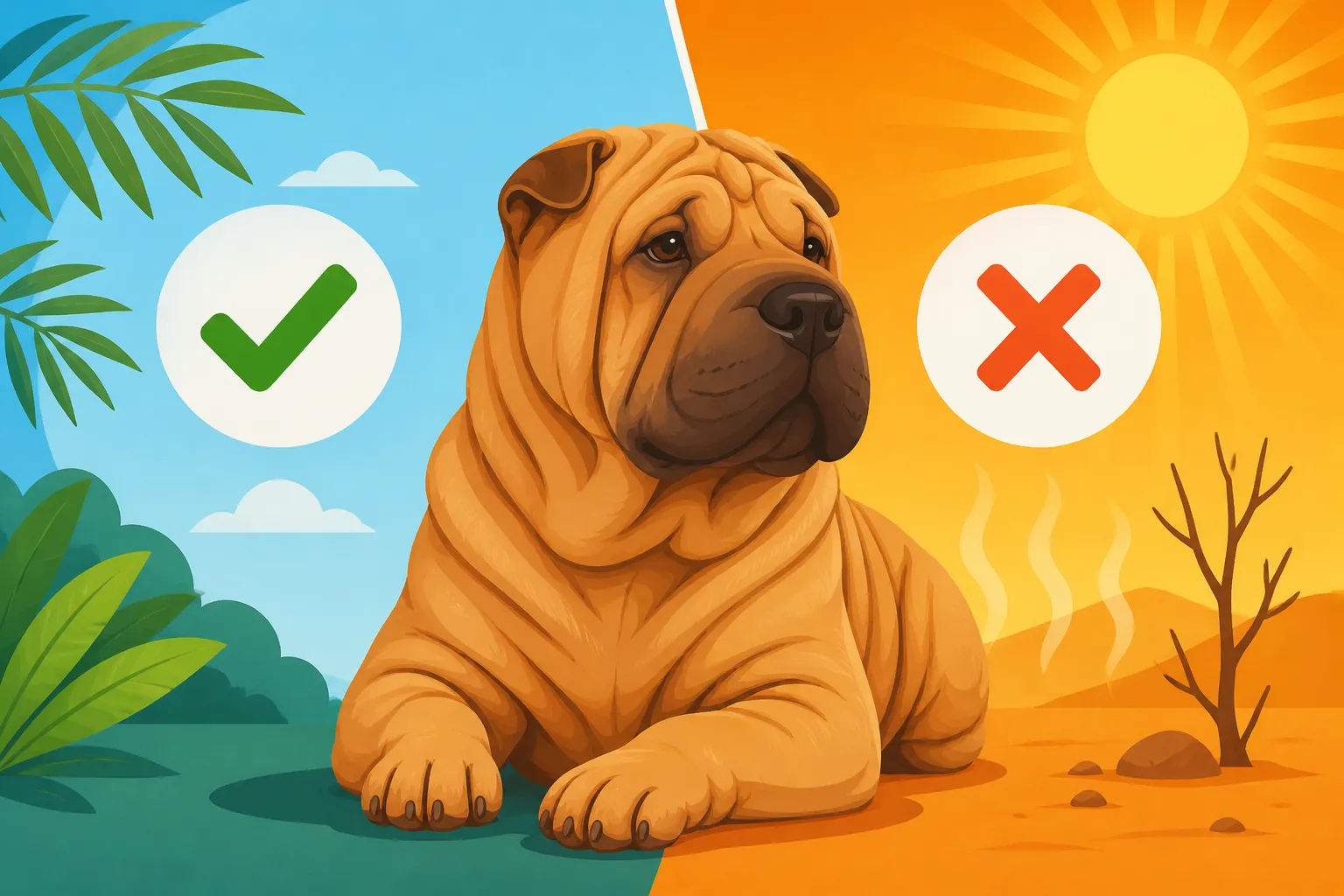
Whether a Shar Pei Suits a Hot Climate
A Shar Pei can live in a hot climate, but the heat changes what everyday care looks like. Long sunny walks, humid afternoons, and a warm car can turn an ordinary day into a safety concern, especially for a dog that already pants heavily or has skin problems. This guide explains how to judge the fit, reduce heat risk, and recognize when your dog needs help.
Can a Shar Pei handle a hot climate
The climate matters, but so does the individual dog
A Shar Pei may do well in a warm region if it spends much of the day in a cool, comfortable home and gets exercise during cooler hours. Living in Phoenix, Houston, Miami, or another hot-weather city does not automatically rule out the breed. It does mean planning around the weather instead of expecting your dog to adapt to midday heat.
There is no single temperature that is safe for every Shar Pei. Humidity, direct sun, shade, wind, activity, and the dog’s health all affect how quickly it becomes overheated. A short walk on a breezy morning can feel very different from the same route on a humid afternoon. A dog’s age, fitness, weight, and history of breathing or skin problems matter too.
Some Shar Pei are comfortable in warm weather with sensible precautions. Others struggle quickly, even when the day does not feel extreme to their people. If your dog pants hard after brief activity, slows down, seeks cool floors, or seems reluctant to go outside, take that response seriously. Breed suitability is not just a question of whether a dog can technically live somewhere; it is whether you can make its daily routine safe and comfortable there.
Why heat can be a special concern for Shar Pei
Dogs mainly cool themselves by panting. When the air is humid, panting is less effective because moisture evaporates less readily. That can make a humid summer day in Houston or Miami feel harder on a dog than a dry day at a similar temperature. Shade and water help, but they do not cancel out the effects of prolonged heat or exertion.
Shar Pei have a distinctive build and thick, folded skin, but wrinkles are not a reliable heat shield. Folds can hold moisture and may become irritated if they stay damp, especially in hot, humid weather. This is one reason careful drying after rain, bathing, or a swim matters. For more on everyday skin care, see Every Fold on a Shar Pei Is a Place Something Grows and Whether a Shar Pei's Skin Gets Worse in Humidity.
A Shar Pei’s muzzle and breathing also deserve attention. Individual dogs vary, and not every Shar Pei has the same degree of airway difficulty. Still, noisy breathing, a history of struggling during exercise, or unusually heavy panting should make you more cautious in warm weather. If your dog’s breathing seems strained or suddenly worsens, contact a veterinarian rather than assuming it is ordinary summer panting.
How to make warm-weather life safer
Move walks and play to cooler hours
In a hot climate, the clock matters. Walk early in the morning or later in the evening, when the sun and pavement are cooler. Keep outings shorter during heat waves, and choose shaded routes where possible. In a place like Las Vegas or Austin, the pavement may remain hot after sunset, so check the walking surface before setting off.
Let your dog set the pace. A Shar Pei that stops, lags behind, searches for shade, or turns toward home is giving you useful information. Avoid making it finish a planned route just because the distance seems modest. On especially hot days, a brief toilet break may be safer than a proper walk; indoor play, sniffing games, and simple training can provide activity without prolonged exposure.
Pavement can burn paws even when the air seems manageable. Test the surface with the back of your hand, and choose grass or shaded paths when available. Be careful with strenuous games such as repeated ball chasing: excitement can keep a dog running after it should have rested. For more on adjusting outings, read Why a Shar Pei Should Not Be Walked at Midday and How to Cool a Shar Pei Down.
Set up a cool place indoors and outdoors
Your dog should have access to shade and fresh water whenever it is outside, but in hot weather, outdoor shade alone may not be enough. Make sure the dog can come indoors to a cool space. Air conditioning can be especially useful during stretches of hot, humid weather, and a fan may improve comfort, though it should not be treated as a substitute for a cool environment if the dog is overheating.
A cooling mat may give a dog a comfortable place to rest, but it is only one part of the setup. Keep water available, supervise outdoor time, and give your dog the option to move away from any cooling product. Some dogs ignore mats; others like them. If you are comparing practical supplies, retailers such as Chewy may carry cooling mats, water bowls, and other pet-care items. Choose based on your dog’s habits and the product’s instructions rather than assuming one accessory makes hot weather safe.
Never leave a Shar Pei unattended in a parked car, even for a quick errand. A car can heat up rapidly, and cracking the windows does not make it a safe place to wait. If you are travelling, plan stops where the dog can stay in a cool, secure environment. A warm car ride with poor airflow can also become uncomfortable, so keep an eye on panting and restlessness while travelling.
Recognize heat stress and respond promptly
Know the signs that a dog is struggling
Heavy panting can happen after activity, but watch for panting that is intense, persistent, or out of proportion to the effort. Other warning signs can include excessive drooling, restlessness, weakness, unsteadiness, vomiting, confusion, or collapse. A dog may also become unusually quiet or stop responding normally. Do not wait for every sign to appear before taking action.
If you think your Shar Pei is overheating, stop the activity and move it to a cooler, shaded or air-conditioned place. Offer small amounts of cool water if the dog is alert and able to drink. You can begin cooling with cool—not icy—water or damp cloths, while contacting a veterinarian for instructions. Avoid forcing water into the dog’s mouth, wrapping it tightly in wet towels, or using ice baths unless a veterinarian specifically directs you to do so.
Heatstroke is an emergency. If your dog is weak, disoriented, vomiting, collapsing, or having trouble breathing, seek urgent veterinary care. Call the clinic while you are on your way so staff can prepare. Even if your dog seems to recover after cooling, it may still need veterinary assessment because heat injury can affect the body beyond the initial symptoms.
Keep a heat-risk routine rather than relying on guesswork
A simple routine can prevent many avoidable problems. Before going out, check the weather and humidity, consider the route’s shade and pavement, and decide whether the outing should be shortened or skipped. Bring water when appropriate, but remember that water does not make prolonged exercise safe in heat. Afterward, allow your dog to rest in a cool place and check that its breathing returns to normal.
Pay attention to patterns. If the dog struggles on a particular route, during a certain part of the day, or after a specific activity, adjust the routine rather than repeatedly testing its limits. Keep notes about when symptoms occur and how long recovery takes. If the dog has a known breathing, heart, or skin condition, ask its veterinarian for individualized guidance before summer activity increases.
For household planning, set up a reliable indoor cooling area before the hottest stretch arrives. If you are gathering supplies, Chewy can be one place to compare options such as portable water containers or cooling mats, but the essentials are access to a cool indoor space, fresh water, and a willingness to cancel an outing. The same preparation helps if your dog is staying with a sitter: explain its heat limits, usual signs of discomfort, and the clinic to call.
Decide whether the breed fits your household
Think about the daily routine you can realistically provide
A Shar Pei may suit a hot-climate home if you can keep it indoors during the hottest part of the day, schedule walks around the weather, and avoid leaving it outside for extended periods. A fenced yard is not a substitute for supervision, shade, water, and access to a cool indoor space. In a very hot region, a dog that spends long workdays alone outdoors would be a poor fit.
Also consider the home’s cooling arrangements. If your household cannot keep a comfortable indoor space during heat waves, or if the dog would need to exercise in full sun because of work schedules, think carefully before choosing this breed. You may need help from a dog walker who can visit during cooler hours, or you may need to change the usual routine in summer.
It is worth considering the breed’s other care needs alongside heat. Shar Pei can be prone to skin and ear issues, and damp, warm conditions may make careful grooming and drying more important. See Drying Is More Important Than Washing on a Shar Pei and The Shar Pei Ear You Cannot Reach Into for related care considerations. A hot climate may be manageable, but it should not be the only part of the care plan you evaluate.
Questions to ask before bringing a Shar Pei home
If you are choosing a puppy or adult dog, ask about its breathing, exercise tolerance, skin history, and any prior heat-related problems. Watch how it breathes while resting and after gentle activity, and ask the breeder, rescue, or current caregiver what conditions it has lived in. A dog that has been comfortable in one climate may still need a careful adjustment to a different home and routine.
Be realistic about your own habits. If you enjoy long midday hikes, outdoor events, or days at the beach, you may need to leave the dog at home or choose a cooler, shorter activity. A Shar Pei may enjoy being part of family life without being able to join every summer outing. Planning for that is part of responsible ownership, not a failure to provide enough exercise.
A hot climate does not automatically make a Shar Pei unsuitable. The better question is whether you can consistently provide cool indoor rest, cautious exercise, attentive skin care, and prompt action if your dog shows heat stress. If you can build those habits into ordinary life—not just remember them during a heat wave—the breed may be a reasonable fit. For broader context on the breed’s needs, see The Household a Shar Pei Was Built For and Whether a Shar Pei Suits an Apartment Dweller.
Disclaimer
This article is for general informational purposes only and does not constitute professional advice. Laws, prices and regulations vary by location and change over time. Consult a qualified professional for guidance on your specific situation.