Whether a Shar Pei Puppy Grows Into Its Skin
A Shar Pei puppy’s skin often looks far too roomy for its body, especially around the head, neck, and shoulders. As the puppy grows, many body folds become less pronounced, but the skin does not always tighten completely, and adult Shar Pei still have characteristic wrinkles. This guide explains what usually changes, what may remain, and when skin or eye problems deserve veterinary attention.
How a Shar Pei puppy’s skin changes as it grows
Why puppies look more wrinkled than adults
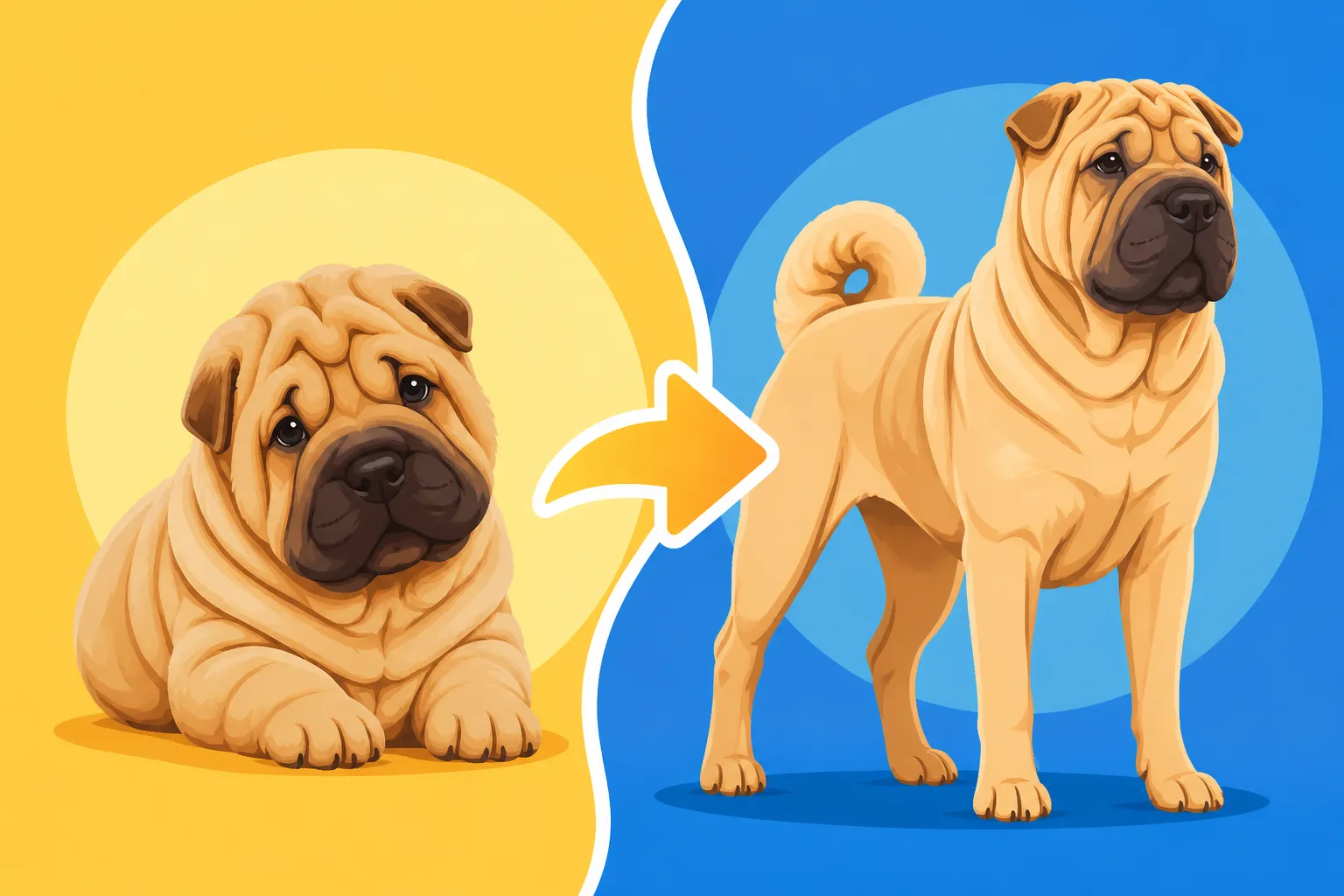
Shar Pei puppies are famous for their deep folds, but those folds can make a small puppy look almost as if it is wearing a skin suit several sizes too large. The appearance is especially noticeable around the face and neck. As the puppy gains height and body mass, the skin and underlying tissues change in proportion to the growing frame, so some folds become shallower or disappear.
Growth does not happen evenly. A puppy may have a sudden leggy phase, then fill out across the chest and shoulders, then look different again a few months later. During those changes, the skin can seem looser or tighter from one stage to the next. That does not necessarily mean anything is wrong; a photograph taken a few weeks apart can make the difference surprisingly obvious.
The amount of wrinkling varies from dog to dog. Genetics, body shape, and the puppy’s development all influence the adult appearance. Two littermates may grow into very different-looking adults, even when they have the same parents. For more on the typical change from puppyhood to adulthood, see Why a Shar Pei Puppy Has More Wrinkles Than an Adult.
What “growing into the skin” really means
People often ask whether a Shar Pei literally grows into its skin. The practical answer is: partly, in appearance, but not as a guaranteed transformation. As the body grows, folds on the trunk often become less prominent. The skin does not necessarily shrink or tighten to fit like a tailored garment; rather, the dog’s changing proportions can make its folds look less excessive.
Some puppies retain noticeable loose skin as adults, while others become much smoother across the body. A breeder may offer an informed impression based on the puppy’s parents and relatives, but nobody can reliably promise exactly how a young dog’s folds will look later. Whether a Shar Pei Puppy's Skin Predicts the Adult looks at why puppy appearance is only one part of the picture.
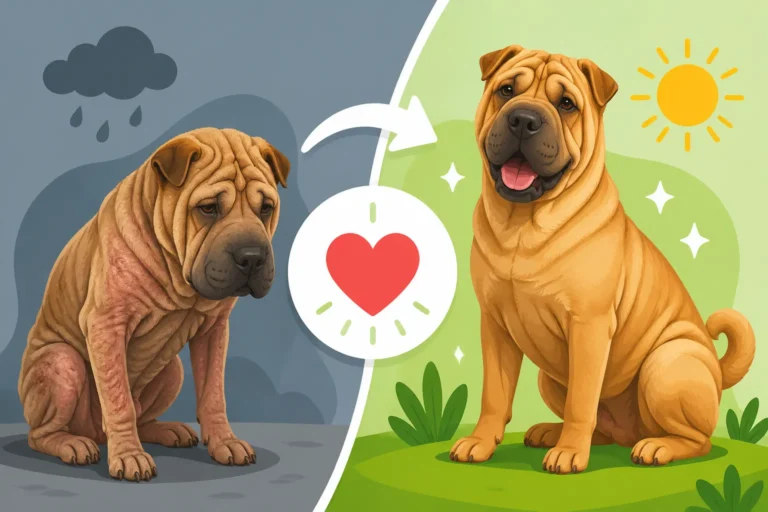
It is also helpful to separate normal loose skin from a skin problem. Wrinkles alone do not prove that a puppy is unhealthy. Persistent redness, soreness, a strong unpleasant smell, discharge, or repeated scratching are different matters and should not be dismissed as “just the folds.” Skin trouble can occur in Shar Pei of many shapes and coat types, so pay attention to the condition of the skin, not just how wrinkled the dog looks.
Which wrinkles tend to remain in an adult Shar Pei
Face, neck, and body folds do not all develop alike
Many adult Shar Pei retain wrinkles around the head and neck, though the depth and arrangement vary. Body folds are more likely to become less marked as the dog matures. Some adults have a relatively smooth back and sides, while others keep visible folds across parts of the body. There is no single puppy-to-adult pattern that applies to every dog.
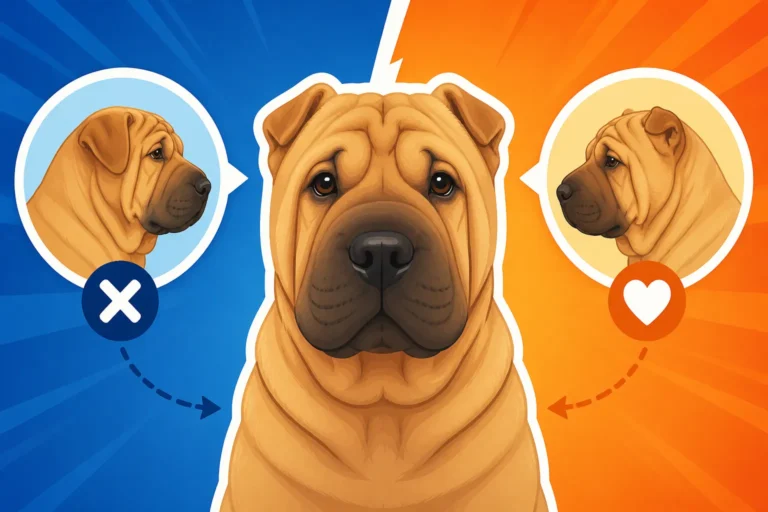
If you are comparing your puppy with breed photos, remember that images can be misleading. A dog’s posture, camera angle, coat, age, and body condition all affect how prominent its wrinkles appear. A puppy sitting with its neck compressed may look much more folded than the same puppy standing naturally. A lean adult can also show different contours from a heavier dog.
Breed descriptions generally distinguish the adult’s characteristic wrinkles from the extensive folds seen in many puppies. For a closer look at that distinction, read Whether an Adult Shar Pei Should Have Head Wrinkles Only and Whether Body Wrinkles Are a Fault in an Adult Shar Pei. Those comparisons can help you understand typical appearance, but they are not a substitute for checking whether a particular dog’s skin is comfortable and healthy.
A more wrinkled dog is not automatically a healthier or less healthy dog
It is tempting to judge a Shar Pei by fold count: more wrinkles must mean more “authentic,” or fewer wrinkles must mean healthier. Neither conclusion is dependable on appearance alone. A less wrinkled dog may have fewer places where moisture can collect, but that does not guarantee freedom from skin disease, ear trouble, eye problems, or inherited health conditions.
Likewise, a very wrinkly puppy is not automatically destined for chronic skin infections. The important questions are whether the skin is irritated, whether folds can be kept clean and dry, and whether the dog has other signs of discomfort. If an adult’s folds are deep, they may need more attentive routine care, but the appearance itself does not diagnose a condition. Whether a Less Wrinkled Shar Pei Is Healthier explores why wrinkle level is only one part of the health picture.
| What you notice | What it may mean | A sensible next step |
|---|---|---|
| Puppy has deep folds, but skin looks comfortable | Often part of normal puppy appearance | Track changes as the puppy grows and keep folds dry |
| Body folds become less obvious over time | A common change as proportions mature | Continue ordinary grooming and skin checks |
| Folds stay visible but are not red, sore, or smelly | Individual adult variation | Ask your veterinarian about care at a routine visit |
| Redness, discharge, persistent odor, or repeated scratching | Possible irritation or infection | Arrange veterinary advice rather than relying on cleaning alone |
| Squinting, eye discharge, or rubbing at the face | Possible eye discomfort, including eyelid problems | Contact a veterinarian promptly |
How to care for a puppy while its body is changing
Keep skin clean and dry without over-cleaning
A simple routine is usually more useful than frequent scrubbing. Check the folds during ordinary handling, especially after the puppy has been drinking, eating, playing outside, or getting wet. If a fold is dirty, follow your veterinarian’s advice on how to clean it, then dry it gently. Moisture trapped against skin can encourage irritation, so drying matters as much as wiping.
Avoid assuming that every fold needs daily disinfecting or that scented household wipes are suitable for a dog. Harsh products, vigorous rubbing, or cleaning a healthy fold over and over can irritate delicate skin. If a veterinarian has recommended a specific cleanser for a diagnosed problem, use it as directed; otherwise, ask before adding medicated products to the routine. Every Fold on a Shar Pei Is a Place Something Grows offers more detail on why fold care is about careful observation, not aggressive cleaning.
When you need basic grooming supplies, keep the choice practical: soft cloths, suitable dog-care products, and items your puppy will tolerate calmly. Some owners compare availability through retailers such as Chewy, while others buy through their veterinary clinic or a local pet shop. Whatever the source, follow product directions and avoid putting anything into the eyes or ear canals unless your veterinarian has advised it.
Watch for signs that need more than routine grooming
A healthy fold should not be persistently raw, wet, tender, or foul-smelling. Contact your veterinarian if you notice worsening redness, sores, discharge, a strong odor that returns soon after cleaning, or itching that disrupts sleep and play. These signs can have several causes, and treatment depends on what is actually happening. Repeatedly wiping the area without finding the cause can delay relief.
Eyes deserve particular attention in Shar Pei puppies. If the eyelids turn inward or lashes rub the surface of the eye, a puppy may squint, blink repeatedly, tear excessively, or paw at its face. Those signs call for prompt veterinary assessment because ongoing rubbing can injure the cornea. Entropion in a Shar Pei Puppy Is an Emergency, Not a Cosmetic Issue explains why eye discomfort should not be treated as a normal part of growing up.
You may also want to keep a brief note of changes: when you first noticed a rash, whether it followed a bath or wet weather, and whether the puppy is scratching or licking. A few clear photos taken in good light can help you describe a changing problem at an appointment. They are especially useful when a symptom comes and goes, though they cannot replace an examination.
What to expect as your Shar Pei reaches adulthood
Focus on comfort and development, not a wrinkle deadline
There is no exact age when every Shar Pei suddenly “grows into” its skin. Puppies change through growth and adolescence, and their final appearance depends on the individual dog. Instead of waiting for a particular month when folds should vanish, look for steady growth, comfortable movement, healthy skin, and normal behavior. A veterinarian can assess whether the puppy’s body condition and development are appropriate.
Keep your puppy at a healthy body condition as it grows. Extra weight does not make loose skin disappear, and it can make some folds harder to inspect or keep dry. Ask your veterinarian to show you how to assess body condition, because thick skin and a plush puppy shape can make visual guessing difficult. Feeding portions should be adjusted as the dog grows and its activity changes, rather than being based only on how hungry it seems.
It can also help to keep expectations realistic when choosing a puppy. A breeder can discuss the appearance and health history of related dogs, but a puppy’s early folds cannot guarantee its adult look. Prioritize questions about health, temperament, veterinary records, and how the breeder responds to concerns—not just whether the puppy has the most dramatic wrinkles in the litter.
Build a calm care routine early
Short, gentle handling sessions help a puppy become comfortable with having its face, paws, and folds checked. Touch the area briefly, reward calm behavior, and stop before the puppy becomes frustrated. If the dog learns that inspection is predictable and gentle, routine care and veterinary examinations are often less stressful for everyone.
Keep the supplies you actually use in one place so a quick check does not turn into a frantic search. Some owners order basics such as grooming cloths or dog-safe skin-care supplies from Chewy; others prefer a neighborhood shop where they can ask staff about general product options. For anything medicated, or for a product intended for irritated skin, get veterinary guidance first rather than choosing based on a label alone.
Most importantly, let the puppy’s comfort guide you. A changing wrinkle pattern is usually less important than persistent itching, pain, odor, or eye symptoms. If a fold looks different but the skin is healthy and the puppy is acting normally, note it and bring it up at a routine visit. If the skin is sore or the puppy is squinting or rubbing its eyes, contact a veterinarian sooner.
A Shar Pei puppy may grow out of some of its dramatic body folds, but there is no promise that every fold will disappear. Expect variation, keep the skin dry and comfortable, and treat signs of irritation or eye pain as health concerns rather than unavoidable breed quirks. If you are shopping for ordinary care supplies, Chewy can be one place to compare options, but product choice should never take the place of veterinary advice when symptoms appear.
Disclaimer
This article is for general informational purposes only and does not constitute professional advice. Laws, prices and regulations vary by location and change over time. Consult a qualified professional for guidance on your specific situation.