Whether the Shar Pei Was Bred for Wrinkles After 1980
A Shar Pei’s wrinkles did not suddenly appear after 1980: the breed had loose, folded skin long before then. What changed around that period was the way the modern breed was revived, promoted, and selectively bred, especially outside China. This guide separates the Shar Pei’s older history from the later choices that helped make some dogs much more wrinkled.
Shar Pei wrinkles existed before 1980
Historical Shar Pei were not wrinkle-free
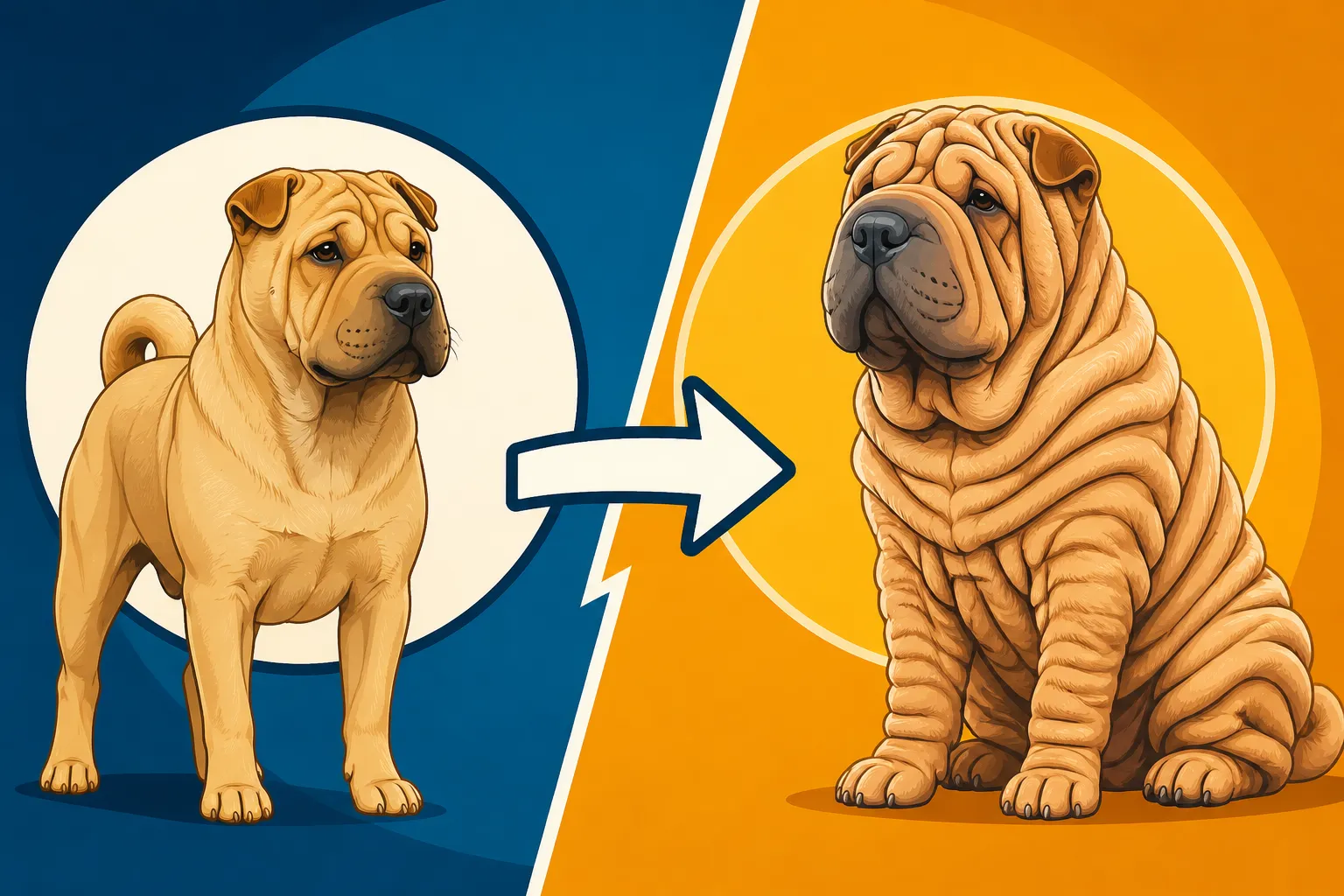
It is misleading to say that breeders invented Shar Pei wrinkles after 1980. Dogs identified as Shar Pei existed before then, and historical accounts and images show that the breed already had loose skin and folds. The question is not whether wrinkles were present, but how much skin and wrinkling different dogs had—and how those traits changed as breeding priorities shifted.
The word “Shar Pei” is often translated as “sand skin,” a reference to the breed’s coarse coat rather than a precise description of its wrinkles. That translation alone cannot tell us how a Shar Pei looked in every place or period. The breed’s history includes working dogs whose appearance likely varied, followed by a much smaller population from which modern dogs were developed.
Older photographs can help, but they are not a complete record. A photograph may show one dog, at one age, from one angle. Coat, lighting, posture, and image quality can also make skin folds look more or less pronounced. That is why broad statements such as “the original Shar Pei had no wrinkles” or “all old Shar Pei looked like today’s most wrinkled dogs” go beyond what a few images can establish. For more on what those images can and cannot tell us, see Whether Photos of Early Shar Pei Show Fewer Folds.
The breed’s history complicates a simple before-and-after story
The Shar Pei population went through a severe decline in China during the twentieth century. Dogs that survived and later contributed to the modern breed were not a large, representative sample of every Shar Pei that had existed. When a breed is rebuilt from a small number of animals, its later appearance can reflect the traits of that limited founding group as well as the preferences of the breeders who continue the line.
The dogs brought into wider breeding programs during the revival period became the starting point for many modern pedigrees. That history is relevant because it means a visible change in the breed does not necessarily point to a single year when somebody decided to add wrinkles. Instead, it may reflect repeated choices across generations: which dogs were bred, which puppies were kept, and which features were rewarded in the show ring or attracted buyers.
This broader context is explored in What Being Saved Did to the Shar Pei's Health and Whether the Shar Pei's Bottleneck Explains Its Health. The bottleneck does not prove that breeders deliberately intensified wrinkles, but it helps explain why the modern breed’s development cannot be reduced to a neat date on a timeline.
What changed during the breed’s revival
A small founding population shaped modern breeding
The modern Shar Pei was revived through a relatively narrow pool of dogs. That made careful breeding choices especially influential. When breeders selected dogs for particular traits—whether appearance, temperament, or soundness—those traits could become more common in descendants, particularly when the same lines were used repeatedly.
The revival also created a new audience for the breed. People outside the places where Shar Pei had traditionally been kept encountered the dogs as a distinctive, newly popular breed. Their unusual appearance helped attract attention. That attention could create demand for puppies with especially recognizable features, including a heavily folded face or abundant loose skin.
This does not mean every breeder had the same goal. Some may have prioritized a more traditional working appearance; others may have bred toward the type favored in their local show scene or market. Breeding is not a single coordinated project, and priorities can differ between countries, kennel clubs, and individual kennels. The history of the breed’s rescue is covered further in Sixty Shar Pei Were Left in 1978 and One Letter to a Dog Magazine Saved the Shar Pei.
Revival, popularity, and selection are different things
A common misunderstanding is to treat the breed’s revival and its later appearance as one event. They are connected, but they are not identical. The revival helped preserve the Shar Pei; breeding decisions made afterward influenced the type of dog that became familiar to many people.
Popularity can affect selection without every breeder deliberately pursuing exaggeration. If buyers consistently favor a certain look, breeders may be more likely to choose parents with that look. If show standards or judging preferences reward a particular feature, that can influence which dogs are shown and bred. Over several generations, modest preferences can add up.
The distinction matters when discussing whether wrinkles were “bred for” after 1980. It is reasonable to say that modern breeding and public demand helped shape the degree and distribution of wrinkling in some lines. It is much harder to identify one year, one breeder, or one policy as the exact starting point. Breed development is gradual, and the dogs people see today reflect decisions made over many generations.
Why some modern Shar Pei look more wrinkled
Selection can change how much of a trait appears
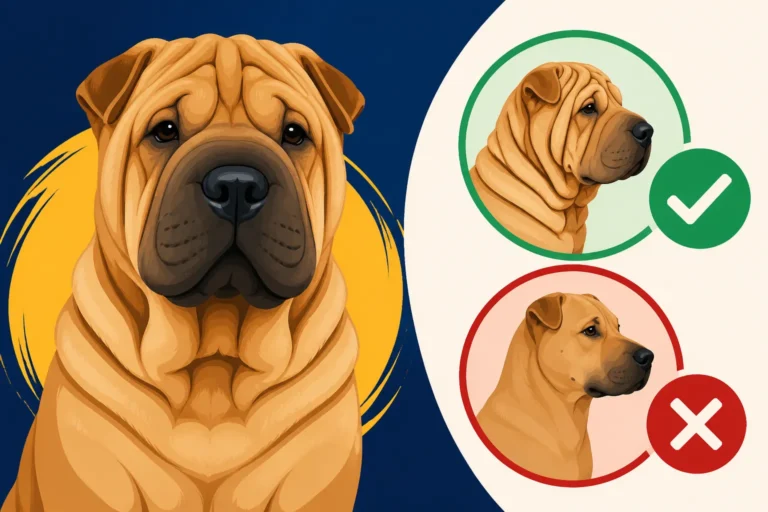
Wrinkles are part of the Shar Pei’s inherited appearance, but their extent varies. A dog’s skin, coat, age, body condition, and family line all affect what the folds look like. Puppies often have more folds over the body than adults, and many lose some of that loose-looking skin as they grow. So a wrinkly puppy is not necessarily a preview of an equally wrinkled adult.
Selective breeding can shift the range of a trait within a population. If breeders repeatedly choose dogs with more pronounced folds, those dogs may contribute more offspring to later generations. That does not mean every puppy will have the same look, or that one generation produces a sudden transformation. It means the population’s average appearance can change over time.
It is also important not to confuse a dramatic appearance with proof of deliberate intent. A particular dog may be very wrinkled because of its individual inheritance, while another dog from a similar period may have fewer folds. To understand how puppy growth affects the look, read Why a Shar Pei Puppy Has More Wrinkles Than an Adult. For a closer look at how the breed’s appearance is described, see Whether the Shar Pei's Wrinkles Are in the Standard.
Breed standards and public taste can influence appearance
A breed standard describes the desired features of a breed for a particular kennel organization. Standards can influence breeding indirectly: exhibitors and breeders may favor dogs they believe best fit the written description and the preferences of judges. Standards and interpretations can also vary between organizations and countries, so “the standard” is not always one universal set of expectations.
Public taste matters too. A person seeing a Shar Pei for the first time may recognize the breed primarily by its wrinkles. That memorable look can become a selling point in advertising, online posts, and puppy listings. A retailer such as Chewy might show present-day dogs in consumer-facing material, but a modern listing is not evidence of what the breed looked like decades earlier. Historical appearance requires historical evidence, not simply a current photo or a popular image.
| Factor | How it can affect appearance | What it does not prove |
|---|---|---|
| Small founding population | Makes the traits of a limited number of dogs influential in later lines | That one trait was intentionally exaggerated |
| Breeder selection | Can increase the frequency of preferred features over generations | That all breeders shared the same preference |
| Show and kennel preferences | Can shape which dogs are exhibited and bred | That every standard demands extreme wrinkling |
| Buyer demand | Can make a recognizable look commercially appealing | That the look began in a particular year |
| Age and development | Can make puppies appear more folded than adults | That a puppy will keep all its folds |
How to answer whether wrinkles were bred for after 1980
The clearest answer is more nuanced than yes or no
The most accurate answer is: Shar Pei wrinkles predate 1980, but breeding and market preferences after the breed’s revival helped shape the appearance of modern Shar Pei, including how pronounced wrinkles are in some dogs. There is no reliable basis for claiming that wrinkles first appeared after 1980 or that every modern Shar Pei was deliberately bred to have more folds than its predecessors.
A yes-or-no answer loses important distinctions. “Yes” can imply the breed was wrinkle-free beforehand, which is not accurate. “No” can imply that breeding choices never affected the amount or placement of wrinkles, which is also too simplistic. The more useful question is how the breed’s appearance changed across different populations and breeding goals.
When you come across a claim about the “original” Shar Pei, ask what evidence supports it. Is it based on a dated photograph, a written description, or a modern interpretation? Does it refer to dogs in China, dogs used in the revival, or dogs bred later in another country? Those details matter because they describe different populations and moments in the breed’s history.
Avoid treating every wrinkle as a health verdict
Wrinkle quantity alone cannot tell you whether an individual Shar Pei is healthy. Some skin folds can trap moisture and become irritated, and some breed-related health conditions need veterinary attention. But appearance by itself is not a diagnosis, and fewer visible wrinkles do not guarantee that a dog has no inherited health risks.
The welfare question is better framed around function and comfort. Can the dog see comfortably? Is its skin free from persistent irritation? Can it move and breathe normally? Are its eyes, ears, and skin receiving appropriate care? These are more useful questions than judging a dog’s health from a photograph or assuming that every wrinkle is harmful.
The breed’s distinctive look and its health deserve separate but related conversations. For background on how appearance and inherited traits can connect, see One Mutation Gave the Shar Pei Its Wrinkles and Its Fever and How Copy Number Changes a Shar Pei's Risk. Neither title should be treated as proof that a specific dog’s folds determine its individual health; a veterinarian can assess that dog’s needs.
A practical way to evaluate historical claims
When a breeder, seller, or online post says that Shar Pei were “bred for wrinkles after 1980,” use a few questions to clarify what is meant:
- Are they talking about the existence of wrinkles or their degree? The breed had wrinkles before 1980; the amount can vary.
- Which dogs and region are they describing? Traditional Chinese dogs, revival-era dogs, and later show lines may not have looked identical.
- What evidence supports the claim? Dated photographs and records are more useful than a modern breed stereotype.
- Are they describing a trend or a precise turning point? A gradual shift is more plausible than a sudden change tied to one year.
- Are appearance and health being conflated? A dog’s welfare cannot be judged from wrinkle count alone.
The Shar Pei’s modern appearance is the result of inherited variation, a narrow revival population, and generations of human choices. Wrinkles were not introduced after 1980, but the breed’s revival and later selection helped determine which versions of that wrinkled look became familiar.
Disclaimer
This article is for general informational purposes only and does not constitute professional advice. Laws, prices and regulations vary by location and change over time. Consult a qualified professional for guidance on your specific situation.