Whether a Shar Pei’s Wrinkles Are in the Standard
It’s a common sight to see a Shar Pei, whether in person or in pictures, and marvel at their incredibly wrinkled appearance. Many prospective owners and even seasoned enthusiasts often wonder if every single fold and crease is exactly what the breed standard calls for, or if some of the extreme wrinkling we see today is a more recent development. This guide is here to untangle the nuances of the Shar Pei breed standard concerning wrinkles, helping you understand what’s considered ideal versus what might actually be a health concern.
Understanding the Shar Pei Breed Standard on Wrinkles
When you dive into the world of purebred dogs, the breed standard acts as the blueprint, describing the ideal characteristics of that particular breed. For the Shar Pei, these standards are incredibly specific, outlining everything from their head shape to their tail set, and yes, their wrinkles. However, what people perceive as the ideal Shar Pei often differs from what the written standard actually dictates, especially when it comes to those iconic folds.
The Nuances of Official Descriptions
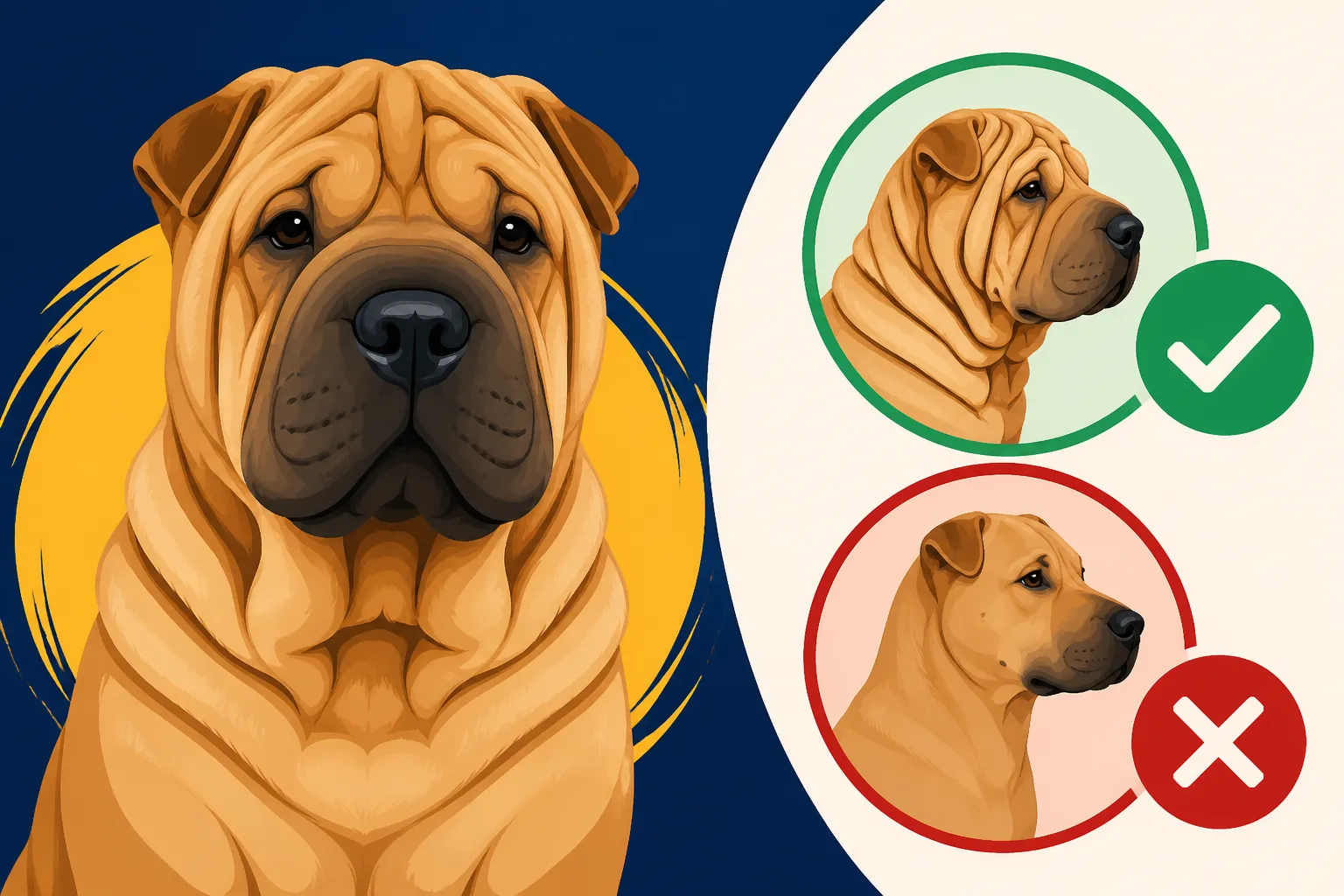
Most major kennel clubs around the world, like the American Kennel Club (AKC), have a breed standard for the Shar Pei that describes wrinkles with careful wording. Typically, they emphasize moderate wrinkling, particularly on the head and withers, with a preference for adult dogs to "grow into" their skin. This means that while puppies can be quite heavily wrinkled, an adult Shar Pei should exhibit fewer, more defined wrinkles, primarily concentrated around the face, neck, and the base of the tail. Excessively loose skin or heavy body wrinkles in an adult dog are often considered undesirable, or even a fault, depending on the specific standard.
For instance, the standard might mention a "frown" or "scowl" created by wrinkles on the forehead, contributing to their distinctive expression. It's about character and functionality, not just quantity. The goal is a dog that looks unique and true to its heritage, without hindrances. This is a crucial distinction, as a disconnect between what is aesthetically striking to the public and what is structurally sound according to the breed standard often exists.
Where the Wrinkles Should Be
The standard generally focuses on specific areas for desirable wrinkling. On the head, you'll hear terms like "moderate wrinkles on the forehead and cheeks," contributing to that signature serious, almost worried expression. The muzzle, often referred to as a "meat mouth," should have some padding, but not so much that it interferes with breathing or eating. Around the neck, a "moderate dewlap" or folds might be mentioned. For the body, especially in an adult Shar Pei, the expectation is usually for the skin to be relatively taut, perhaps with some wrinkles over the shoulders (the withers) and at the base of the tail. How Many Wrinkles an Adult Shar Pei Should Have delves deeper into these specifics.
It's important to differentiate this from the all-over, exaggerated wrinkling seen in some lines that are specifically bred for a "super-wrinkled" look. While these dogs are certainly eye-catching, they often deviate significantly from what the official standards consider correct for a mature Shar Pei. Many breeders striving for the true standard aim for a dog that, as it matures, retains enough skin to create the characteristic expression but doesn't have an excessive amount that hangs or impedes movement.
Historical Context: Wrinkles Then vs. Now
To truly understand the Shar Pei's wrinkles in the context of the breed standard, we need to take a step back in time. The Shar Pei we know today, particularly the heavily wrinkled version, is quite different from their ancestors in rural China. The breed underwent a dramatic transformation, largely driven by its near extinction and subsequent revival.
The Original Shar Pei's Appearance
The early Shar Pei, often referred to as the "Bone Mouth" type, was a much leaner, less wrinkled dog. These dogs were multi-purpose farm dogs, used for hunting, guarding, and herding. Their skin was tough and loose enough to protect them in skirmishes (a feature common in many guard breeds), but it wasn't to the extreme degree we often see now. Their wrinkles were functional, not decorative. Whether the Original Shar Pei Was Wrinkly at All explores this fascinating history in more detail.
Historical accounts and images suggest that the original Shar Pei had a more athletic build, with a single prominent wrinkle on the forehead and perhaps some loose skin around the neck. Their heads were often less padded, giving them a more "bone mouth" appearance. This functional musculature allowed them to move with agility and perform their duties effectively without their skin causing discomfort or impairing their senses.
The Influence of the Breed Revival and Western Standards
The drastic shift in the Shar Pei's appearance began in the 1970s when the breed faced near extinction and a plea from Matgo Law in Hong Kong sparked interest in saving them. When these few remaining dogs were brought to the West, there was a keen interest in their unique look. Some theories suggest that the exaggerated wrinkling became a desirable trait during this period, perhaps to make the breed even more distinctive and appealing to the public. Whether Western Breeders Made the Shar Pei Wrinklier is a great resource to learn more about how breeding practices evolved.
This period saw a rapid increase in the breed's popularity, and unfortunately, sometimes rapid popularity can lead to breeding for extreme features rather than adherence to traditional standards or health. The "meat mouth" style, with its heavily padded muzzle and forehead wrinkles, became increasingly prevalent and, for a time, was highly sought after, even influencing how breed standards were interpreted and applied. This shift, while making the Shar Pei instantly recognizable, also introduced certain health challenges that were less common in their less-wrinkled ancestors.
The Difference Between 'Desirable' and 'Excessive' Wrinkles
It’s one thing for a Shar Pei to have characteristic wrinkles; it’s another for those wrinkles to become so prolific that they start causing health issues. This is where the distinction between "desirable" and "excessive" wrinkling becomes critical, not just for aesthetics but for the dog's well-being.
When Wrinkles Are a Health Concern
Excessive wrinkling, particularly around the face and eyes, can lead to a host of problems. One of the most common is entropion, where the eyelids roll inward, causing the eyelashes to rub against the cornea. This is incredibly painful and can lead to ulcers, infections, and even blindness if left untreated. Shar Pei puppies are especially prone to this due to their abundant facial skin. Another issue is skin fold dermatitis, which occurs when moisture and bacteria get trapped in deep skin folds, leading to infections, irritation, and a strong odor. Skin Fold Dermatitis on a Shar Pei explains this condition in detail.
Beyond the eyes and skin, extreme wrinkles can also contribute to breathing difficulties, especially when paired with a "meat mouth" that is too padded and restricts airflow. While the Shar Pei is not a brachycephalic breed in the same way a Bulldog is, an overly thick muzzle combined with tight facial folds can still impact their ability to breathe freely, especially in warm weather or during exercise. These health problems often require ongoing veterinary care, medications, or even surgery, adding significant cost and stress for owners.
Breeding for Balance: Health vs. Appearance
Responsible breeders today are increasingly focused on finding a balance between maintaining the breed's distinctive appearance and prioritizing health. Many are working towards breeding dogs that fit the written standard – moderate wrinkling, especially in adulthood – rather than chasing the "super-wrinkled" look that has become popular in some circles. This means selecting breeding pairs that exhibit healthy skin, clear eyes, and good structure, even if it means their puppies might not be as overwhelmingly wrinkled at a young age.
A good breeder understands that the overall health and quality of life for a Shar Pei should never be sacrificed for an exaggerated aesthetic. They are often willing to discuss their breeding goals, the health testing they perform, and the lineage of their dogs to ensure they are producing sound, healthy puppies. If you're looking for a Shar Pei, asking about the health history related to skin and eye issues in the parents is absolutely essential. Whether a Less Wrinkled Shar Pei Is Healthier explores how breeding choices impact overall health.
Breeder Interpretations and the Show Ring
The interpretation of the breed standard, particularly regarding wrinkles, can vary significantly among breeders and even between judges in the show ring. This creates a complex landscape for anyone trying to understand the "ideal" Shar Pei.
Different Approaches to the Standard
Some breeders might lean towards a more "traditional" interpretation, aiming for a Shar Pei with moderate wrinkles that are primarily concentrated on the head and neck, with a relatively tighter body in adulthood. These breeders often emphasize health and functionality, understanding that too much skin can lead to medical complications. They meticulously study the wording of the standard, paying close attention to words like "moderate" and "ample" which suggest a middle ground, not an extreme.
On the other hand, some breeders, perhaps influenced by what they perceive as public demand or popular trends, might produce dogs with more extensive wrinkling, particularly as puppies. While these dogs can be adorable and draw a lot of attention, they might not align as closely with the nuanced descriptions of the breed standard for a mature animal. This divergence in interpretation can make it challenging for new owners to know what to expect and what questions to ask when looking for a puppy.
What Wins in the Show Ring
The show ring is where interpretations of the breed standard are put to the test. Ideally, judges are looking for dogs that conform as closely as possible to the written standard, including the specific allowances and limitations for wrinkling. A Shar Pei with excessive wrinkles that impede movement, sight, or general health would, in theory, be penalized. Dogs with clear, healthy eyes and skin, and a balanced amount of wrinkling on the head and neck are typically favored.
However, just like any subjective pursuit, judging can sometimes be influenced by trends or individual preferences. This means that sometimes, a more heavily wrinkled dog might still do well, especially if its other features are exceptional and the wrinkles don't present obvious functional problems at that moment. This can send mixed messages to breeders about what is truly considered "type." Nevertheless, the emphasis on overall health and correct structure is paramount, and knowledgeable judges will always prioritize a dog that embodies the standard in its entirety, not just one exaggerated feature. It’s why organizations consistently review and refine their standards, often encouraging judges to focus on functional health.
The Shar Pei's Coat Type and Wrinkles
It might seem counterintuitive, but the type of coat a Shar Pei has can actually influence how its wrinkles appear and, consequently, how they are managed. The breed famously comes in a few distinct coat types, and each presents a slightly different picture when it comes to those iconic folds.
Horse Coat vs. Brush Coat
The two primary coat types for a Shar Pei are the "Horse Coat" and the "Brush Coat." The Horse Coat is short, harsh, and bristles like straw. It's the original and often considered the more traditional coat type. A Shar Pei with a Horse Coat typically appears to have tighter skin and potentially fewer visible wrinkles, even if the underlying amount of skin is similar to a Brush Coat dog. The texture of the coat itself can make the folds seem less voluminous. These dogs can also feel a bit prickly to the touch! How a Horse Coat Shar Pei Differs From a Brush Coat sheds more light on this.
The Brush Coat, on the other hand, is slightly longer and softer, feeling more like velvet. Because of its greater length and softer texture, a Brush Coat Shar Pei might appear to have more pronounced or softer-looking wrinkles. The way the hair lies can give the impression of more depth in the folds. While the actual amount of skin might be similar, the coat's properties can certainly alter the visual impact of the wrinkles. It's often the Brush Coat Shar Peis that are associated with the extremely wrinkled look, simply because their softer fur allows the folds to stand out more.
Impact on Grooming and Fold Care
Regardless of coat type, all Shar Peis require diligent care for their wrinkles, though a Brush Coat might need a bit more attention in specific areas due to the longer hair potentially trapping more moisture. Regular cleaning of skin folds, particularly on the face, under the chin, and around the tail, is non-negotiable. This prevents moisture buildup, bacterial growth, and yeast infections. You can find excellent fold cleaning wipes and solutions on sites like Chewy that are specifically designed for sensitive skin.
For Horse Coat dogs, while the wrinkles might seem less pronounced, the harshness of the coat can sometimes contribute to irritation if not kept clean and dry. For Brush Coat dogs, the softer, denser hair in the folds might hold onto moisture for longer, requiring even more meticulous drying after baths or if they get wet. The goal is always to keep the skin dry and free from irritants, regardless of how many wrinkles your dog visibly displays. Good air circulation is key, so don't let those folds stay damp.
Managing Wrinkles in Your Shar Pei
Owning a Shar Pei means committing to proactive care, and a significant part of that involves managing their unique skin and wrinkles. This isn't just about keeping them looking good; it's about safeguarding their health and comfort.
Daily Fold Hygiene
For any Shar Pei, daily fold hygiene is paramount. Those adorable wrinkles, especially around the face and under the chin, can trap moisture, dirt, and food particles. If left uncleaned, these moist, warm environments become breeding grounds for bacteria and yeast, leading to uncomfortable and often smelly skin fold dermatitis. You'll need to gently wipe inside each fold with a soft cloth dampened with a mild, veterinarian-approved antiseptic solution, or specialized dog wipes. After cleaning, it's crucial to thoroughly dry the folds to prevent new moisture accumulation. Think of it like drying between your toes after a shower – you wouldn't want to leave them damp! Many owners find that a routine check-and-wipe during morning cuddles works perfectly, making it a positive bonding experience. Every Fold on a Shar Pei Is a Place Something Grows further details the importance of fold care.
Beyond the face, don't forget the other areas. The tail fold, especially if it's tight, can be a common spot for irritation, as can the folds around the neck or even between the toes in some heavily wrinkled dogs. A daily once-over will help you catch any redness or irritation early before it escalates into a full-blown infection. Stocking up on good quality wipes or solutions from a trusted supplier like Chewy can make this daily routine much easier.
Bathing and Drying Practices
Bathing a Shar Pei isn't just about getting them clean; it's a critical part of skin health. While it might seem counterintuitive, bathing too frequently with harsh shampoos can strip their skin of natural oils and exacerbate dryness or irritation. Your vet or dermatologist can recommend a specific bathing schedule and shampoo, often a medicated one if your Shar Pei is prone to skin issues. During the bath, ensure you gently but thoroughly clean within all the folds, using a soft sponge or your fingertips.
The most crucial step after bathing, however, is the drying process. A damp Shar Pei is an unhappy (and potentially itchy) Shar Pei. You absolutely must dry every single fold, crevice, and wrinkle completely. Towel drying is a good start, but many owners use a low-heat hairdryer (on a cool setting, held at a safe distance) to ensure all areas are bone dry. Pay extra attention to the facial folds, armpits, and groin area where moisture can linger. If you skimp on drying, you're practically inviting yeast and bacterial infections to set up shop. This meticulous drying is why Drying Is More Important Than Washing on a Shar Pei is such a vital principle for the breed.
The Future of Shar Pei Wrinkles
As our understanding of canine genetics and health improves, the conversation around Shar Pei wrinkles continues to evolve. There's a growing movement towards healthier breeding practices that respect the breed's unique appearance without compromising its well-being.
Genetic Understanding and Health Screening
We now have a much better understanding of the genetic mutation responsible for the Shar Pei's wrinkles, specifically the duplication of the HAS2 gene, which leads to an overproduction of hyaluronic acid. This same genetic factor is also linked to Familial Shar Pei Fever (FSF) and its potential progression to amyloidosis. This scientific knowledge empowers breeders to make more informed decisions, potentially even utilizing genetic testing to help guide breeding choices. One Mutation Gave the Shar Pei Its Wrinkles and Its Fever explains this genetic link.
Armed with this information, responsible breeders can work towards reducing the incidence of excessive wrinkling and, by extension, the associated health problems. This doesn't mean breeding away from all wrinkles, as that would fundamentally alter the breed. Instead, it means aiming for the moderate, functional wrinkling described in the true breed standard, prioritizing the overall health and longevity of the dogs. This focus on health and genetic understanding is a positive step for the breed's future.
Advocacy for Healthier Breed Standards
There's an ongoing dialogue within the Shar Pei community, veterinary circles, and kennel clubs about the importance of health over extreme aesthetics. Many advocates are pushing for stricter interpretations of breed standards that actively penalize features known to cause health problems, such as entropion-inducing wrinkles or excessively padded muzzles that impair breathing. This advocacy encourages breeders to prioritize the health and welfare of their dogs, shifting the focus away from superficial trends.
The goal is to ensure that the Shar Pei can continue to thrive as a beloved companion animal, maintaining its unique charm and character without being burdened by preventable health issues directly tied to its exaggerated features. This might involve a subtle re-education of judges, breeders, and the public about what truly constitutes an ideal and healthy Shar Pei. Ultimately, the future of the Shar Pei's wrinkles lies in a balanced approach: appreciating their distinct look while committing to breeding and caring for them in a way that promotes a long, comfortable, and joyful life.
| Feature | Desirable (Standard-Compliant) | Excessive (Potential Health Concern) |
|---|---|---|
| Head Wrinkles | Moderate wrinkles on forehead and cheeks, forming a "frown" or "scowl" | Deep, heavy folds that obstruct eyes, vision, or trap significant moisture |
| Muzzle | Full and padded ("meat mouth"), but clear and not obstructing nostrils | Overly padded, restricting breathing, interfering with eating or drinking |
| Neck Wrinkles | Moderate dewlap or skin folds | Very loose, heavy folds that hang excessively or interfere with movement |
| Body Wrinkles | Relatively tight skin in adulthood, perhaps some over withers or tail base | Abundant loose skin and folds over the entire body in an adult dog |
| Eye Function | Clear, open eyes with no inward-rolling eyelids | Entropion (eyelids rolled inward), causing irritation and potential vision loss |
| Skin Health | Dry, clean, healthy skin within folds | Redness, irritation, odor, or infection within deep folds |
Disclaimer
This article is for general informational purposes only and does not constitute professional advice. Laws, prices and regulations vary by location and change over time. Consult a qualified professional for guidance on your specific situation.