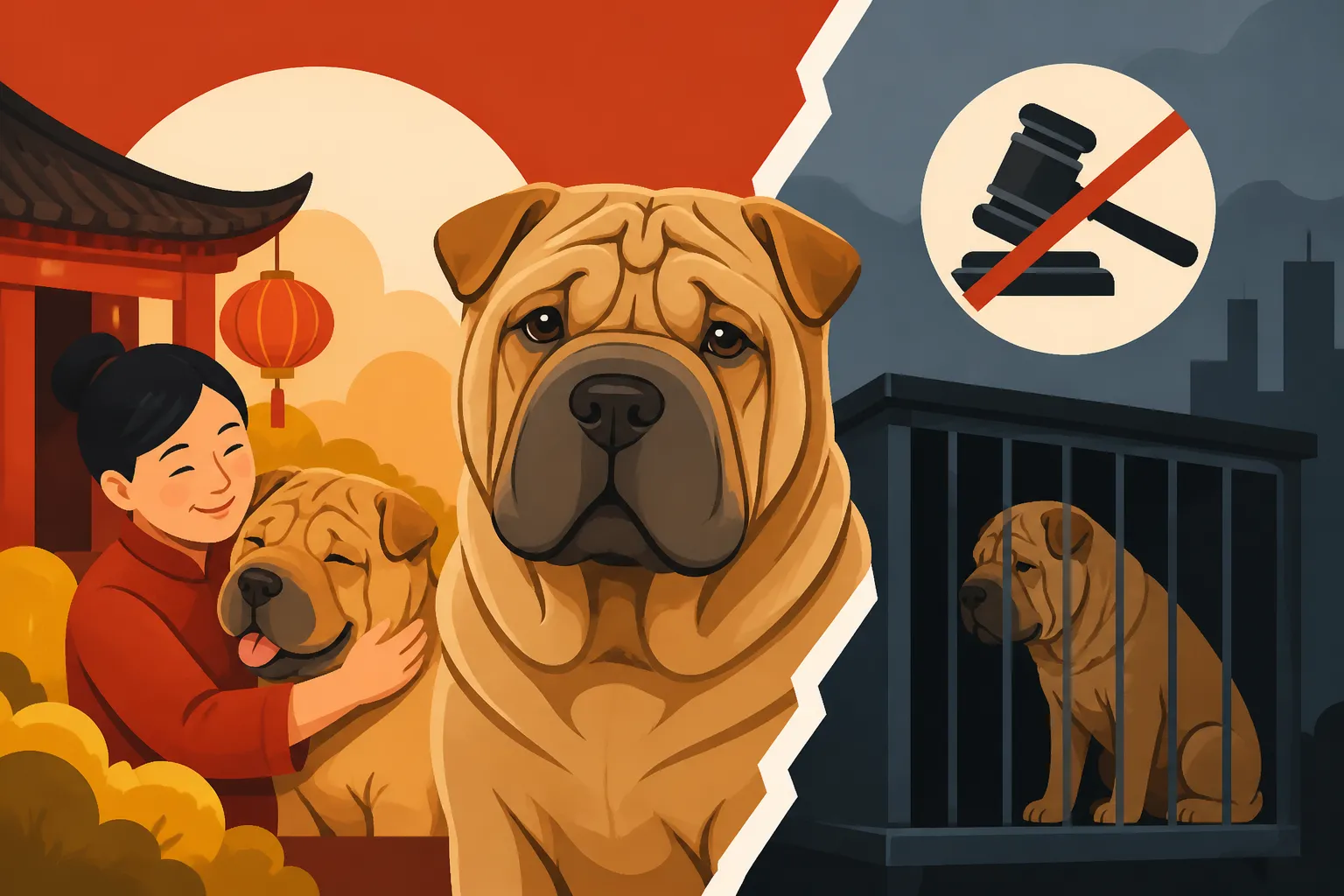
Whether Taxes Ended Chinese Dog Keeping
It’s a heartbreaking thought to imagine a world without our beloved Shar Pei, those wonderfully wrinkled, fiercely loyal companions we adore. Yet, many of us might not realize just how close this unique breed came to vanishing entirely from its homeland. The question often arises: did the government's approach to dog ownership, particularly through taxation, really drive dogs like the Shar Pei to the brink in China? The simple answer is that it's far more complex than just a single tax bill, encompassing a perfect storm of economic, political, and cultural shifts that made keeping a dog an immense challenge, forcing heartbreaking choices for countless families. This guide will explore the various pressures that led to the drastic decline in dog populations in China, focusing on how these historical changes impacted breeds like the Shar Pei, and whether taxation was indeed the final straw.
Dogs in Ancient China: More Than Just Companions
To understand the profound shift in dog ownership in China, we first have to look back at the long and storied history of canines within Chinese society. Dogs weren't just pets; they were integral to daily life, holding diverse and vital roles that made them indispensable members of households and communities.
Ancient Roles of Dogs in Chinese Society
For millennia, dogs in China served a multitude of purposes, far beyond the pampered companions many of us know today. They were guardians, protecting homes, livestock, and families from intruders, both human and animal. Imagine a Shar Pei, with its natural vigilance and deep suspicion of strangers, standing watch over a rural homestead – this was their heritage. They also played a crucial role in hunting, assisting their human counterparts in securing food. Beyond these practical functions, dogs often held symbolic and spiritual significance. They were seen as protectors, sometimes even believed to ward off evil spirits, and their presence was woven into the fabric of daily life and folklore. They were part of the family, contributing directly to the household's survival and security.
The Changing Landscape of Dog Ownership Over Centuries
Over time, as Chinese society evolved, so too did the relationship with dogs. While their utility remained important, their status could fluctuate based on economic conditions, social norms, and even imperial decrees. During periods of prosperity, dogs might have been kept more for companionship or sport. In times of hardship, their survival, like that of humans, would become precarious. However, the deep-seated cultural presence of dogs meant that, despite these fluctuations, they largely remained a common sight across the vast nation. The idea of dog ownership being heavily restricted or taxed out of existence would have been largely unthinkable for most of Chinese history, especially in rural areas where dogs continued to be working animals.
The Mid-20th Century Shift: When Dog Keeping Became a Burden
The mid-20th century marked a dramatic turning point in China, ushering in an era of profound change that reshaped society from the ground up. For dog owners, these decades brought unprecedented challenges, transforming what was once a common practice into an extraordinary burden, and for many, an impossibility.
Economic Hardship and Resource Scarcity
Following the tumult of war and civil unrest, China faced immense economic hardship. Resources like food and land were incredibly scarce, and the government's focus was overwhelmingly on feeding and housing its massive human population. In such a grim reality, keeping a dog, especially a larger breed, suddenly became a luxury that few could afford. Every bowl of rice, every scrap of meat given to a dog, was seen as a resource diverted from a human mouth. Families struggled simply to survive, and the heartbreaking decision to let go of beloved pets or to simply not acquire new ones became a brutal necessity. It wasn't just about money; it was about the fundamental struggle for existence, where every calorie counted. Even without specific taxes, the sheer economic pressure was a powerful force driving down dog ownership. This period was incredibly difficult for all, leaving little room for sentiment when basic survival was at stake.
Taxation and Government Policies on Dog Ownership
While economic hardship laid the groundwork, direct government policies, including heavy taxation, certainly acted as a significant accelerant in the decline of dog populations. During these times, dogs, particularly in urban areas, were often viewed as unhygienic, a drain on resources, and even a symbol of a bourgeois past that the new socialist society sought to eradicate. To discourage ownership, authorities began implementing steep taxes on dogs, sometimes making them so prohibitive that only the wealthiest could even consider keeping a pet.
Imagine a family with a loyal Shar Pei, perhaps one whose ancestors had guarded their home for generations. Suddenly, not only is food scarce, but a hefty yearly tax is imposed, designed to make dog ownership financially unfeasible for the average citizen. This wasn't a minor fee; it was often a substantial sum, compounded by other regulations such as mandatory licensing and restrictions on where dogs could be kept or walked. In some areas, campaigns actively encouraged the elimination of dogs, citing public health concerns or their perceived "non-productive" nature. These policies effectively squeezed dog owners from all sides, making it practically impossible to maintain a pet legally and affordably. It was a deliberate strategy to reduce the dog population, and it worked with devastating efficiency. These policies, coupled with the existing economic struggles, created an environment where dog keeping simply ceased to be a viable option for most. Whether Taxes Ended Chinese Dog Keeping explores this complex issue in detail.
The Shar Pei's Narrow Escape: A Breed on the Brink
The general decline in dog populations during this era hit all breeds hard, but for a unique breed like the Shar Pei, with its distinct characteristics and relatively smaller numbers even then, the impact was catastrophic. Its very existence hung by a thread, a testament to the severity of the pressures faced.
The Shar Pei's Unique Plight Amidst Broader Policies
The Shar Pei was not some ubiquitous village dog; it was a distinctive breed, historically associated with specific regions and purposes. When anti-dog sentiments and policies swept across China, breeds like the Shar Pei, which were perhaps less adaptable to hiding or surviving as strays, found themselves particularly vulnerable. Their unique appearance, which makes them so beloved today, might have even made them stand out more, attracting unwanted attention. The few remaining pockets of Shar Pei ownership dwindled rapidly.
It wasn't just the taxes or the lack of food; it was the outright devaluing of pet life in a society focused solely on human survival and political ideology. Breeders, if any could still operate, certainly couldn't do so openly. The careful lineage and specific traits that define a Shar Pei were almost lost entirely. Imagine trying to maintain a breed standard, let alone a viable breeding population, when keeping a dog was actively discouraged and heavily penalized. The Shar Pei's numbers plummeted so severely that by the 1970s, it was considered one of the rarest breeds on Earth. Guinness Once Called the Shar Pei the Rarest Dog on Earth for a good reason – its survival was truly a miracle.
The Role of Enthusiasts in Preserving the Breed
In the face of such overwhelming odds, the survival of the Shar Pei became entirely dependent on a handful of dedicated individuals, both inside and outside of mainland China. One name that comes to mind is Matgo Law, a Hong Kong businessman who saw the breed's impending extinction and took drastic action. He famously appealed to the international community, specifically through an article in LIFE magazine in 1978, describing the plight of the "last remaining Chinese fighting dogs." This heartfelt plea was instrumental in sparking interest and attracting help from Western enthusiasts.
These individuals, often working quietly and at great personal risk, managed to smuggle a small number of Shar Pei out of Hong Kong to various parts of the world, primarily the United States. This tiny genetic pool became the foundation for the modern Shar Pei population we know today. Without their foresight and courage, and the subsequent efforts of dedicated breeders and owners in other countries, the Shar Pei would almost certainly have vanished forever. It's a poignant reminder that while government policies and economic shifts can devastate populations, the passion of a few can sometimes turn the tide against extinction. One Letter to a Dog Magazine Saved the Shar Pei tells this incredible story in more detail.
Beyond the Tax Man: Other Forces Shaping Chinese Pet Culture
While taxation and resource scarcity played monumental roles in the decline of dog keeping, it's essential to recognize that other, equally powerful forces were at play, shaping Chinese pet culture in ways that continue to resonate today. These factors collectively contributed to the historical suppression of dog ownership and influenced its slow, gradual resurgence.
Cultural Shifts and Urbanization
Beyond the immediate economic and political pressures, broader cultural shifts and rapid urbanization also contributed to the changing landscape of dog ownership. As China modernized and its population increasingly moved from rural areas to burgeoning cities, the traditional utility roles of dogs diminished. A guard dog on a farm has a clear purpose; a dog in a small city apartment, however, was often seen as less necessary and more of a nuisance, contributing to noise, waste, and resource consumption in dense urban environments.
This societal evolution brought with it changing attitudes towards animals in general. The focus shifted from animals as workers or food sources to, eventually, animals as companions, but this transition was slow and arduous. In the interim, the perception of dogs, particularly stray dogs, could be quite negative, sometimes leading to culling efforts driven by public health concerns or simply a desire for order in rapidly growing cities. These cultural transformations meant that even if the taxes had been lifted, the ingrained habits and perceptions about dogs had changed, requiring a new kind of advocacy and education to foster a pet-friendly environment. Modern pet owners often rely on places like Chewy for all their companion animals' needs, but such widespread acceptance and infrastructure for pets were unimaginable during those times.
Modern Pet Ownership in China Today
Fast forward to today, and the picture of pet ownership in China is dramatically different. While remnants of past policies and cultural perspectives still exist, there has been a remarkable resurgence of interest in companion animals, including the Shar Pei. As the economy has boomed and disposable income has increased, more and more Chinese citizens are embracing pets as family members. Major cities now see pet stores, veterinary clinics, and even dog parks, reflecting a growing pet industry.
However, the legacy of the past means that regulations regarding dog ownership can still vary widely by city and region, and some areas continue to have restrictions on breed size, number of pets per household, and licensing requirements. Yet, the overall trend is toward greater acceptance and even enthusiasm for dogs. The Shar Pei, once almost lost, is now a recognized and cherished breed, a symbol of resilience. Owners now have access to a vast array of products, from specialized food to enrichment toys, available from retailers like Chewy, making it easier than ever to care for their furry friends. It's a fascinating evolution from a time when taxes and societal pressures made dog ownership nearly impossible, highlighting the profound shifts that have occurred over just a few decades. How Many Shar Pei Are Registered a Year in America gives some context on the breed's global presence.
The Financial Impact of Historical Dog-Keeping Policies
The cumulative effect of these historical policies, particularly taxation and resource allocation, wasn't just about reducing dog numbers; it fundamentally altered the financial landscape of pet ownership in China for decades.
How Taxation Drove Up the "Cost" of a Dog
Imagine a time when merely owning a dog carried an implicit, and often explicit, financial penalty. The direct cost of dog taxes was often only the tip of the iceberg. Beyond the annual registration fees, there might have been fines for non-compliance, costs associated with mandatory vaccinations or inspections, and the ever-present strain of sourcing food for an animal when human stomachs were barely full. This meant that the "cost" of a dog wasn't just its purchase price or upkeep; it included the social and financial risk of being a dog owner in an era that largely disapproved of it.
For those few who managed to keep dogs, it often meant making significant sacrifices. Perhaps foregoing other necessities, or operating under the radar. This made dog ownership an act of considerable dedication, but it also made it inaccessible to the vast majority. When comparing to today's pet ownership, where you can easily order a month's supply of food and treats from Chewy, it truly underscores the monumental hurdles faced by past generations. The simple act of keeping a dog morphed from a given part of life into a financial and social liability, drastically altering who could and would take on such a commitment.
The Long-Term Economic Legacy on Breed Preservation
The financial disincentives, whether direct taxes or indirect resource scarcity, had a profound long-term impact on breed preservation, particularly for native Chinese breeds like the Shar Pei. When keeping dogs became prohibitively expensive and socially undesirable, the incentive to maintain specific breeds, with their unique traits and lines, vanished. Breed-specific breeding programs, health testing, and careful lineage tracking — all common practices in modern responsible breeding — simply couldn't exist.
This meant that genetic diversity was lost, and many breeds either intermingled indiscriminately or simply died out. The Shar Pei's survival was a statistical anomaly, only possible due to intervention from outside the mainland. The financial and societal pressures created a genetic bottleneck, where only a tiny fraction of the original population survived. Even today, responsible Shar Pei breeders face challenges ensuring genetic health, partly due to this historical bottleneck. The financial suppression of dog keeping effectively halted centuries of natural and selective breeding, leaving a void that would take decades, if not longer, to truly begin to fill. This history underscores why the Cost of Watching a Shar Pei's Kidneys for Its Whole Life or What One Shar Pei Fever Episode Costs are modern considerations, utterly dwarfed by the existential threats of the past.
| Factor | Pre-Mid-20th Century Dog Keeping | Mid-20th Century Dog Keeping | Modern Dog Keeping in China |
|---|---|---|---|
| Primary Role | Guardian, hunter, companion | Burden, non-essential | Companion, family member |
| Economic Impact | Generally affordable | Prohibitively expensive (taxes, scarcity) | Manageable (with rising costs) |
| Government Policy | Limited interference | Suppression, heavy taxation | Regulation, licensing, but generally supportive |
| Social Perception | Valued, integrated | Negative, undesirable | Positive, aspirational |
| Resource Availability | Readily accessible | Extremely scarce | Abundant, specialized products (e.g., from Chewy) |
| Breed Preservation | Sustained | Severely threatened | Resurgent, focus on health & standards |
From Near Extinction to Global Recognition: The Shar Pei's Rebirth
The story of the Shar Pei is one of remarkable resilience, a testament to the enduring bond between humans and animals, and the power of dedicated individuals to change the course of history. Its journey from being on the brink of extinction due to factors like heavy taxation and societal pressures to becoming a globally recognized and cherished breed is truly extraordinary.
How the Shar Pei Beat the Odds
The Shar Pei's escape from extinction wasn't a given; it was a desperate rescue mission. The tiny number of dogs that made it out of China, particularly from Hong Kong, represented the last hope for the breed. These dogs, often carrying the genetic vulnerabilities of such a small founding population, were carefully bred by enthusiasts in the West. This initial phase was critical, as every puppy counted, and every breeding decision had profound implications for the breed's future. The widespread appeal generated by articles like the one in LIFE magazine helped create a demand for the breed, which in turn spurred more breeding efforts, albeit from a very limited gene pool.
It’s important to remember that this "rebirth" wasn't without its own challenges. The rapid increase in popularity, particularly during the 1980s, led to what many call the "Shar Pei boom," where unscrupulous breeders capitalized on demand, sometimes at the expense of health and temperament. However, dedicated fanciers worked hard to establish breed clubs, health testing protocols, and ethical breeding practices to ensure the Shar Pei's long-term viability. They understood that mere survival wasn't enough; the breed needed to be healthy and well-adjusted to truly thrive. What Being Saved Did to the Shar Pei's Health explains some of the lingering issues from this bottleneck.
The Lessons Learned for Modern Pet Advocacy
The Shar Pei's story offers crucial lessons for modern pet advocacy and responsible dog ownership. It highlights how quickly circumstances can change and how vital it is to protect and advocate for companion animals. The historical period in China serves as a stark reminder of the consequences when dogs are viewed merely as commodities or burdens rather than sentient beings who enrich our lives.
Today, even with a thriving pet industry and easier access to quality food and supplies (which many of us get from reliable sources like Chewy), challenges persist. We must continue to support responsible breeding practices, advocate for humane treatment, and educate the public about the commitment required for dog ownership. The Shar Pei's narrative underscores the importance of a holistic approach to animal welfare, one that considers economic, social, and cultural factors, and champions the irreplaceable bond we share with our canine friends. While no longer facing extinction from heavy taxation, the breed still faces unique health considerations, underscoring the ongoing need for informed and dedicated owners. How Long a Shar Pei Lives is a testament to the care they receive today.
Disclaimer
This article is for general informational purposes only and does not constitute professional advice. Laws, prices and regulations vary by location and change over time. Consult a qualified professional for guidance on your specific situation.