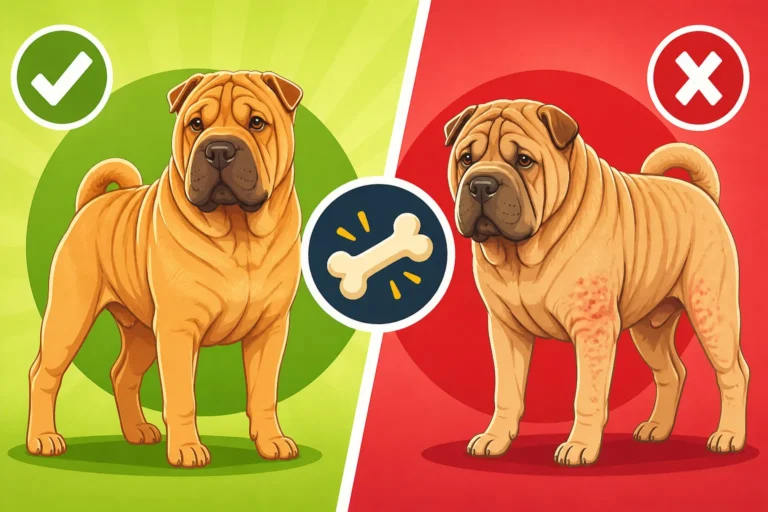
Whether a Bone Mouth Shar Pei Can Be Registered
A breeder may describe a puppy as a “bone mouth” Shar Pei, while the registration paperwork simply lists the breed as Chinese Shar-Pei. That can feel confusing, especially if you are comparing registry options or hoping to show your dog. This guide explains what registration usually means, why mouth type is a separate issue, and what to check before you buy or submit paperwork.
What bone mouth means for Shar Pei registration
Bone mouth is a type description, not usually a separate breed
“Bone mouth” is a common description for a Shar Pei with a less padded muzzle than the heavier, fuller “meat mouth” type. It describes appearance, not necessarily a separate breed or an official registration class. A registry’s paperwork may identify the dog simply as a Shar Pei, without recording whether it is bone mouth or meat mouth.
That distinction matters because breeders and registries use different kinds of labels. A breeder may talk about traditional lines, muzzle shape, coat, or ancestry, while a registry records pedigree details and determines whether an animal qualifies under its own rules. Those systems do not automatically match. The label “bone mouth” alone does not establish that a dog is registered, eligible for registration, or accepted in a particular show class.
If you are unfamiliar with the term, What a Bone Mouth Shar Pei Is explains the common distinction, while How a Bone Mouth Shar Pei Looks Different focuses on visible features. Neither appearance nor a breeder’s description replaces official paperwork.
Registration and show eligibility are separate questions
A dog can be registered with a recognized pedigree registry and still not meet the breed standard used for conformation showing. Registration generally concerns whether the dog’s identity and ancestry meet that registry’s requirements. A conformation judge, by contrast, evaluates how closely the dog’s physical traits match a written standard.
This means a bone-mouth Shar Pei may be eligible for registration if its pedigree and paperwork satisfy the registry’s rules, while its eligibility to compete in a particular show depends on that show’s rules and the breed standard being applied. A dog’s mouth type may be relevant to an appearance assessment even when it does not appear as a separate field on its registration certificate.
The reverse can also happen: a dog may look like a classic example of the breed but lack the documentation required for registration. Looks alone do not prove lineage. For the difference between type labels and the standard, see Which Type the AKC Standard Describes and What a Meat Mouth Shar Pei Is.
There is no single answer for every registry
“Can a bone mouth Shar Pei be registered?” is best answered as: potentially, depending on the registry and the dog’s documentation. Registry requirements can differ, and a breeder’s claim that a dog is “registerable” is not a substitute for confirmation from the organization that will issue the papers.
Before relying on a verbal answer, identify the exact registry. Ask whether the puppy’s litter is eligible, whether the breeder has completed the required litter registration, and what transfer documents you will receive. If a breeder refers to “papers” without naming the registry or explaining what the papers establish, ask for clarification before paying a deposit.
| Question | What it usually concerns | What to verify |
|---|---|---|
| Can the dog be registered? | Eligibility under a specific registry’s rules | Registry name, pedigree requirements, and application documents |
| Is it a bone-mouth Shar Pei? | A descriptive type or appearance label | How the breeder uses the term and whether it is recorded anywhere |
| Can it be shown? | The event’s rules and applicable breed standard | Show eligibility, class rules, and conformation requirements |
| Does registration prove health? | Health history and testing are separate from pedigree | Veterinary records, health screening, and family history |
What to check before accepting registration papers
Confirm the registry and the dog’s identity
Start by asking which registry the breeder intends to use. Do not assume that every organization’s papers carry the same meaning or that registration with one organization automatically qualifies a dog with another. Ask the registry directly whether the puppy or its litter can be registered under its rules.
Check that the paperwork identifies the puppy consistently. The registered name, date of birth, sex, identifying details, breeder information, and parent information should align across the documents you receive. If the puppy is not yet individually registered, ask what paperwork is pending, who must submit it, and what you will need to do after bringing the puppy home.
A simple practical step is to request copies or clear explanations before the sale is final. You do not need to be confrontational. You can say, “I want to understand exactly which registry these papers are for and what I’ll need to complete the transfer.” A responsible breeder should be comfortable discussing the process and giving you time to review the details.
Ask what “registered” means in the contract
The word “registered” can be used loosely in sales conversations. It may mean the litter is registered, that the puppy is eligible for registration, that an application has been submitted, or that the puppy already has an individual certificate. Those are not identical situations.
Read the purchase agreement for details about registration responsibilities. It should be clear whether the breeder will provide an application, complete a transfer, or require you to submit paperwork yourself. If registration is limited or restricted in some way, ask what that restriction means for breeding or competition and whether it can be changed. The rules depend on the registry, so do not rely on a casual explanation when the contract or registry can clarify the terms.
If you are buying a dog for showing, breeding, or participation in a specific event, check those requirements before choosing a puppy. A registration certificate does not promise that the dog will meet every show requirement or be considered a good breeding prospect. For perspective on the breed’s formal type distinctions, Whether the Two Types Are Bred Together and Whether a Bone Mouth Shar Pei Is the Original Shar Pei provide useful background.
Keep pedigree, health, and type claims separate
Registration is not a health certificate. It does not, by itself, show that a dog has been screened for inherited conditions, has a particular temperament, or comes from a line free of health problems. Likewise, a “bone mouth” description does not prove that a dog is healthier than a meat-mouth dog.
Ask for veterinary records and a clear account of health issues in the puppy’s parents and close relatives. A breeder should be willing to discuss relevant breed concerns and explain any health testing they have completed. If the breeder makes a strong claim such as “this type never gets fever” or “this type has no eye problems,” treat that as a reason to ask more questions rather than as proof.
The distinction between type and health is especially important when appearance is part of the sales pitch. Whether a Bone Mouth Shar Pei Is Healthier looks at that question directly. You can also read What Being Saved Did to the Shar Pei's Health for wider context about the breed’s history and health challenges.
If you already have a bone mouth Shar Pei
Find out whether the dog has papers or only a registration claim
If you have adopted or purchased an adult dog and are unsure about its status, gather every document you received: a certificate, transfer form, pedigree, breeder contract, veterinary record, or microchip information. Then contact the named registry and ask what the documents establish and whether the dog’s registration is active or transferable.
If you have no paperwork, do not assume that appearance can replace it. A registry may require specific information about the dog’s parents or the litter, and the process may not be possible without records from the breeder. Ask the registry what options exist before paying anyone who promises to “get papers” through an unofficial route.
A DNA test can be useful for certain questions, but do not assume that it will create a pedigree or prove eligibility for registration. Ask the registry whether it accepts any DNA documentation and what that evidence can establish. The registry, not a seller or an online discussion, is the best place to confirm its requirements.
Decide what you need registration for
The right next step depends on your goal. If you simply want proof of your dog’s recorded pedigree, ask about registration and transfer. If you want to enter a specific event, contact the event organizer or governing body to check eligibility. If you are considering breeding, registration is only one piece of responsible decision-making; health, temperament, structure, and family history also matter.
For a pet owner, registration may not change day-to-day care, but accurate records can still be useful when your dog changes homes, receives veterinary care, or participates in organized activities. Keep the certificate, transfer information, and health records together. If any detail is incorrect, ask the registry how to request a correction rather than altering the document yourself.
If your interest is based on the traditional look of the breed, take time to compare the claims made about type with the dog’s actual documentation and health history. Whether a Traditional Shar Pei Costs More may help you assess another common sales claim: that a particular type or label automatically justifies a higher price.
Watch for warning signs in the sales process
Be cautious if a seller will not name the registry, refuses to show the parents’ information, says paperwork will arrive later without a clear explanation, or pressures you to pay quickly because the puppy is “rare.” A bone-mouth label can be meaningful to a particular breeder or community, but it should not be used to distract from unanswered questions about identity, pedigree, or health.
Ask for written answers to practical questions: Which registry is involved? Is the litter registered or merely eligible? What documents will be supplied? Who completes the transfer? Can the registry confirm the process? These questions help you distinguish a normal paperwork delay from a vague promise.
Registration is one part of understanding a Shar Pei, not a shortcut to deciding whether a dog is healthy or right for your home. Whether you are choosing a puppy or sorting out documents for a dog you already love, verify the paperwork with the registry itself and make decisions based on the whole dog, not the mouth-type label alone.
Disclaimer
This article is for general informational purposes only and does not constitute professional advice. Laws, prices and regulations vary by location and change over time. Consult a qualified professional for guidance on your specific situation.