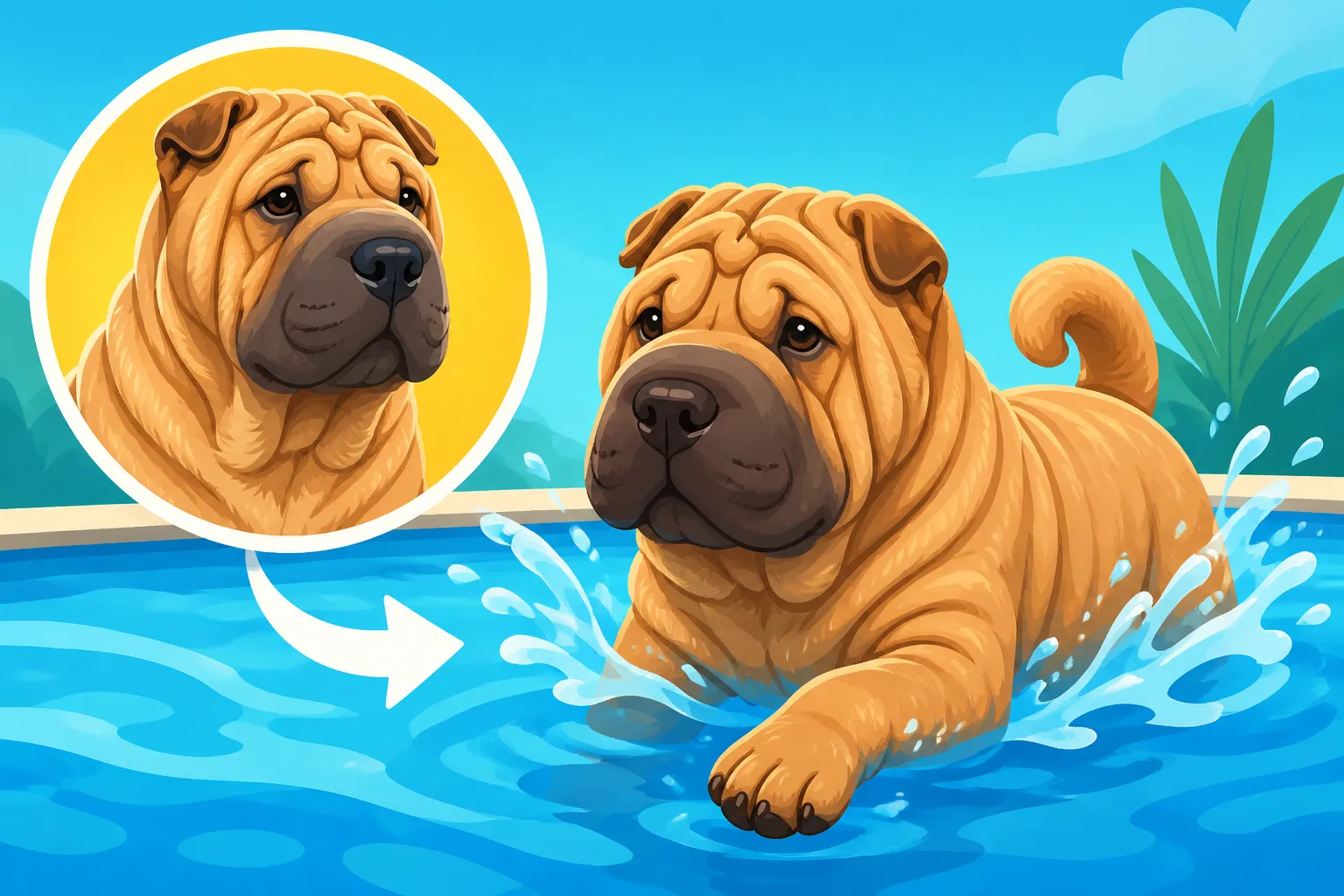
How a Shar Pei Takes to Water
For many dog breeds, a splash in the pool or a run through the sprinkler is pure joy, a quintessential part of being a dog. But if you're a Shar Pei parent, you know that water, for our beloved wrinkled companions, often conjures up more caution than excitement. This guide will walk you through understanding why your Shar Pei might react the way they do to water, how to introduce them safely, and how to manage their unique needs around moisture, from bath time to unexpected puddles.
Why Water Is Often a Shar Pei's Nemesis
Let's be honest, our Shar Pei aren't exactly built like Labradors or Golden Retrievers, those famous water dogs who cannonball into any body of water they can find. There are some very specific reasons why a Shar Pei might eye a kiddie pool with deep suspicion or tolerate a bath rather than relish it. It's not just a quirk; it's often rooted in their unique physical characteristics and historical background.
Physical Characteristics That Make Water Tricky
The very features that make our Shar Pei so distinct and adorable are often the same ones that make them less-than-stellar swimmers or prone to water-related issues. Think about those magnificent wrinkles and those tiny, curled-over ears. They're part of the package, but they also bring challenges.
Firstly, their head shape and short muzzle can make breathing more difficult when their face is submerged or even splashed. While not typically a brachycephalic breed in the same extreme way as a Bulldog, their facial structure isn't designed for efficient water displacement or easy breathing in the water. Secondly, those characteristic wrinkles, especially around the face and neck, can become traps for moisture. If not dried meticulously, these deep folds are prime breeding grounds for yeast and bacterial infections, leading to painful skin fold dermatitis. Imagine constantly having damp skin stuck together – it's just miserable. Thirdly, their relatively heavy, dense body and shorter legs aren't naturally buoyant. Many Shar Pei tend to be "sinkers" rather than "floaters," making swimming a much more strenuous and less instinctive activity than it is for other breeds. They have to work harder to stay afloat, which can quickly lead to exhaustion and panic in deeper water. Why a Shar Pei Cannot See to the Side also plays a role here; their limited peripheral vision means they can easily be disoriented or startled in an unfamiliar water environment.
Breed Temperament and Historical Context
Beyond the physical, a Shar Pei's temperament and their historical role can also influence their relationship with water. These dogs were bred for guarding, farming, and hunting in rural China, not for retrieving ducks from ponds or lounging by the lake. Their instincts lean towards observation and protection, often making them wary of new or unexpected situations, and a large body of water definitely falls into that category for many.
They are known for being independent and sometimes cautious with new experiences. A Shar Pei isn't typically one to dive headfirst into something without first assessing the situation. This inherent wariness can manifest as hesitation or even outright fear when confronted with water, especially if it's deep, moving, or unfamiliar. Their natural aloofness means they often prefer to observe from a distance rather than engage in boisterous water play. While every Shar Pei is an individual, many display a preference for keeping their paws on solid ground, a testament to their heritage where water wasn't a recreational element but perhaps a necessary obstacle or a tool for cooling down when What Temperature Is Too Hot for a Shar Pei.
Introducing Your Shar Pei to Water Safely
Knowing your Shar Pei might not be a natural water baby doesn't mean they can't learn to tolerate, or even enjoy, certain water activities. The key is a slow, positive, and controlled introduction, always prioritizing their comfort and safety. This isn't about forcing them into the deep end, but about building confidence one tiny splash at a time.
Starting Small: Puddles, Sprinklers, and Kiddie Pools
Forget the ocean or a deep lake for now. Begin with the absolute basics, making water a positive, low-pressure experience. A shallow puddle on a walk, a gentle sprinkle from a hose, or a small kiddie pool with just an inch or two of water are ideal starting points. The goal is to let them investigate at their own pace.
If your Shar Pei shows curiosity, reward them with praise, treats, and gentle encouragement. Drop a favorite waterproof toy (many fun options are available on Amazon) into the shallow water to entice them. Never force them in or drag them; this will only create a negative association. For puppies, early, positive exposure is crucial. Consider using an online puppy training resource like BAXTER & Bella to learn techniques for desensitizing your pup to new textures and experiences, including water. You want them to associate water with pleasant things, like play or tasty rewards, rather than fear or anxiety. Repeat these short, positive sessions frequently, gradually increasing the water depth if they seem comfortable. Observe their body language closely: a tucked tail, flattened ears, or attempts to escape are clear signs they're uncomfortable, and you should back off immediately.
Essential Gear for Water Safety
For any water activity beyond a shallow splash, proper safety gear is non-negotiable for a Shar Pei. Because they aren't natural swimmers and can tire quickly, a well-fitting life vest is absolutely paramount. Don't think of it as optional; it's a lifesaver.
Look for a life vest that provides good buoyancy, has a handle on the back for easy lifting (essential for a heavy, often less-agile breed), and is comfortable enough to allow movement without chafing their delicate skin. Ensure it fits snugly but doesn't restrict breathing or movement. Test the vest in shallow water first to make sure your dog is comfortable in it and that it performs as expected. Even in shallow water, a vest can give them the confidence to paddle without expending all their energy just trying to stay afloat. For hotter weather or active play, consider cooling vests or bandanas as well, but always ensure they allow for proper drying afterwards to prevent skin issues.
Supervised, Positive Reinforcement Always
No matter how comfortable your Shar Pei becomes around water, supervision is always key. Even if they've learned to paddle a bit, their stamina might be limited, and their instincts might not be as strong as a true water dog's.
Always be within arm's reach, ready to assist if they falter or panic. Keep sessions short and fun, ending on a positive note before they get tired or stressed. Use high-value treats and enthusiastic praise to reinforce any positive interaction with water. If they wade in, "Good job! Yes! Treat!" If they paddle a few strokes, even better! The goal is to build a positive memory bank. If you find your Shar Pei is particularly anxious, working with a certified professional dog trainer can provide tailored strategies and help build their confidence in a structured way. Remember, the objective isn't to turn them into an Olympic swimmer, but to ensure they are safe and as comfortable as possible around water, especially during necessary baths or accidental encounters. What to Do When a Shar Pei Spikes a Fever might even involve water as a cooling measure, so some comfort around it can be beneficial.
Navigating Water Activities and Hygiene for Your Shar Pei
Once you've tackled the initial introduction, the ongoing management of water-related activities becomes crucial for a Shar Pei owner. This isn't just about fun; it's about their health and well-being, especially concerning their unique skin and ear challenges.
Bathing Your Shar Pei: A Necessity, Not a Luxury
Baths are often the most frequent water encounter for most Shar Pei, and let's face it, they're rarely an enthusiastic affair. Given their skin folds and propensity for skin issues, regular bathing with appropriate shampoos is often a medical necessity rather than just a grooming routine. Drying Is More Important Than Washing on a Shar Pei cannot be stressed enough when it comes to bath time.
When bathing, use lukewarm water and a shampoo specifically recommended by your vet, especially if your Shar Pei has sensitive skin or allergies. Gently but thoroughly wash all their wrinkles and skin folds, making sure to rinse completely. Any residual shampoo can cause irritation. The real work begins after the rinse. Towel-dry them as much as possible, then use a low-heat hairdryer to meticulously dry every single wrinkle, paying special attention to the areas under their chin, around their neck, and at the base of their tail. Don't forget their armpits and groin area! A damp fold is an invitation for yeast and bacteria. Using absorbent wipes from Amazon specifically designed for skin folds can also be helpful for daily maintenance or after bathing to ensure no moisture lingers.
Swimming and Play: Benefits and Risks
While some Shar Pei might learn to tolerate or even enjoy a quick dip, swimming for pleasure needs careful consideration. The benefits might include controlled exercise without stressing joints, especially for an older Shar Pei or one with mobility issues, and cooling down on a hot day. However, the risks are significant.
As discussed, many Shar Pei are not naturally buoyant. They can become exhausted quickly, and panic can set in, leading to dangerous situations. Their limited peripheral vision also makes them less aware of their surroundings in the water, increasing the risk of startling or collisions. If your Shar Pei does swim, ensure it's always in shallow, calm water with a life vest, and keep sessions very short. Never let them swim unsupervised, and always have an easy exit strategy. Avoid strong currents, deep pools, or areas where they might get snagged or become disoriented. Think of swimming as a novelty, not a regular activity, and prioritize safety above all else. A small, shallow splash pad might be a much safer and more enjoyable alternative to a full swimming experience.
Post-Water Care: Ears and Folds Are Paramount
This is where Shar Pei owners truly earn their stripes. The immediate aftermath of any water exposure – be it a bath, a swim, or even just getting caught in the rain – requires diligent care to prevent health problems. Their ears, in particular, are a major concern.
A Shar Pei has notoriously narrow ear canals, making them highly susceptible to ear infections, especially when moisture gets trapped. A Shar Pei Has the Narrowest Ear Canals of Any Breed for a reason, and this anatomical quirk demands attention. After any water exposure, you must thoroughly dry their ears. Use cotton balls or soft gauze to gently wipe the visible parts of the outer ear and ear canal. Never use cotton swabs, as these can push debris deeper and damage the delicate inner ear. Follow up with a vet-approved ear drying solution to help absorb any lingering moisture and acidify the ear canal, creating a less hospitable environment for bacteria and yeast. You can find various effective ear drying solutions on Amazon. Even if your Shar Pei just got wet from rain, give those ears a quick check and dry. For skin folds, inspect and dry them again, applying any vet-prescribed antifungal or antibacterial powder or wipes if necessary. This diligent post-water routine is perhaps the most critical aspect of managing a Shar Pei around water, preventing uncomfortable and costly infections. Whether a Shar Pei's Ears Should Be Dried After Bathing is not a suggestion, it's a command for their health!
Water Activities: Benefits vs. Risks for Shar Pei
| Activity Type | Potential Benefits | Potential Risks | Essential Safety Measures |
|---|---|---|---|
| Shallow Wading | Cooling, low-impact exercise, positive exposure | Skin fold irritation if not dried, ear moisture | Minimal water depth, immediate drying of folds/ears |
| Sprinklers/Hose | Fun play, cooling, positive association | Eye irritation, accidental ingestion, skin irritation | Gentle stream, avoid direct face spray, immediate drying |
| Bathing | Essential hygiene, skin health management | Skin infections, ear infections, stress | Vet-approved shampoo, thorough rinsing, meticulous drying |
| Supervised Swimming | Low-impact exercise, cooling (with vest) | Drowning, exhaustion, panic, ear/skin infections | Life vest, shallow calm water, short sessions, strict supervision, immediate drying |
| Rain Exposure | Natural part of outdoor life | Damp folds, chilling, ear moisture | Quick towel dry, especially folds and ears |
When Your Shar Pei Just Isn't a Water Dog
Despite your best efforts, some Shar Pei simply won't ever enjoy water, and that's perfectly okay. Their comfort and well-being should always come first. Forcing a dog into a situation they fear can lead to severe anxiety, behavioral issues, and even aggression.
Recognizing and Respecting Their Boundaries
It's vital to be able to read your Shar Pei's body language. Signs of fear or discomfort around water include a low or tucked tail, flattened ears, wide eyes, lip licking, yawning, refusing to move, trembling, or trying to hide or escape. If you see these signs, respect them. Don't push further. Your Shar Pei communicates their feelings in a clear way, and ignoring those signals undermines their trust in you and can make future water encounters even more challenging.
Remember that positive reinforcement means you're rewarding desired behaviors, not just hoping they'll endure something they dislike. If they consistently show aversion to water, attempting to make them a swimmer might be counterproductive to their overall happiness and your bond with them. The Shar Pei in Puppy Class often shows a similar cautiousness with new people or dogs, and patience is key there, just as it is with water.
Alternative Cooling and Exercise Options
If swimming or extensive water play isn't a hit with your Shar Pei, there are plenty of other ways to keep them cool and exercised, especially during warmer months. Long walks in the early morning or late evening are a fantastic way to How Much Exercise a Shar Pei Needs without the midday heat. Consider indoor games or puzzle toys to provide mental stimulation when outdoor activity is limited.
Cooling mats, frozen treats, and air-conditioned indoor spaces are excellent for heat management. Some owners use damp towels draped over their Shar Pei's back in a pinch, or provide access to a cool tile floor. The important thing is to ensure they can regulate their body temperature safely without being forced into water if they truly dislike it. A simple paddling pool with barely an inch of water, just enough to dip their paws, might be the extent of their water tolerance, and that's absolutely fine. Their well-being in all aspects of life is what truly matters.
Disclaimer
This article is for general informational purposes only and does not constitute professional advice. Laws, prices and regulations vary by location and change over time. Consult a qualified professional for guidance on your specific situation.


