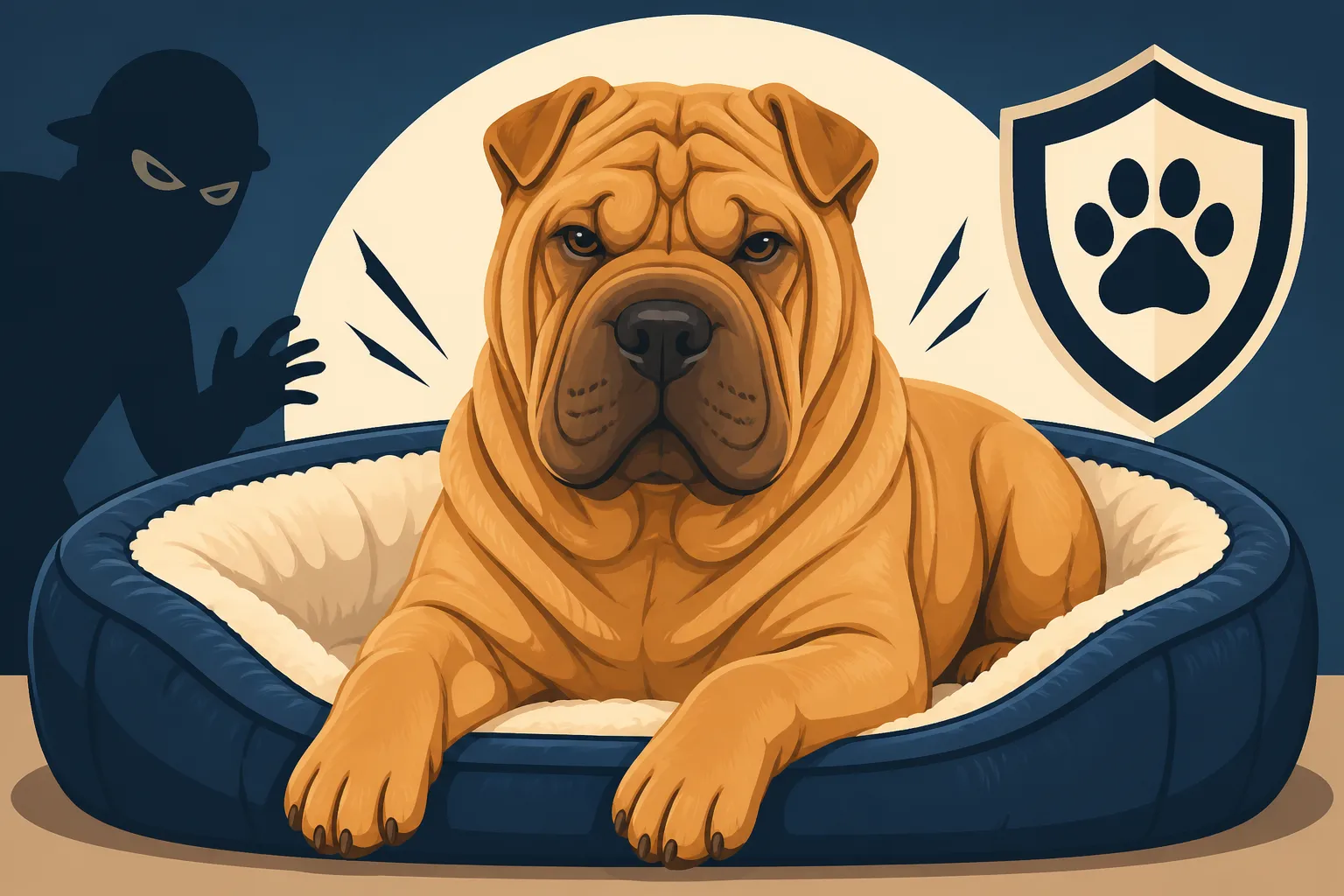
How a Shar Pei Guards Its Bed
It can be incredibly disheartening, and even a little alarming, when your beloved Shar Pei, who usually showers you with affection, suddenly transforms into a growling, teeth-baring sentinel over their bed. This isn't just a quirky habit; it's a serious form of resource guarding that can strain your bond and create an unsafe home environment. This comprehensive guide will explore why your Shar Pei might be guarding their bed, how to identify the signs, and most importantly, provide actionable strategies to manage and prevent this challenging behavior.
Why Shar Pei Guard Resources: The Instinctual Drive
Resource guarding is a deeply ingrained behavior in many dog breeds, and our wrinkly companions are no exception. It stems from a primal instinct to protect valuable possessions – whether that's food, toys, a favorite human, or a cozy sleeping spot – from perceived threats. For a Shar Pei, whose history is steeped in roles demanding independence and watchfulness, this instinct can manifest quite strongly.
Instinctual Roots and Guarding Tendencies
Let's cast our minds back to the origins of the Shar Pei. These dogs weren't originally bred for cuddles on the couch (though they certainly excel at that too, once they choose you!). They were multipurpose farm dogs in rural China, tasked with a variety of demanding jobs, including guarding livestock, protecting property, and even hunting. This background means they possess a natural inclination to be watchful and protective of what they consider theirs.
Consider their historical role: A Shar Pei Was Bred to Guard, Not to Greet. This isn't to say your Shar Pei is constantly reliving ancient battles, but rather that their genetic blueprint includes a strong sense of ownership and territory. Their ancestors needed to be vigilant about scarce resources, and while your dog's bed might not seem like a scarce resource to you, to them, it's a prime piece of real estate, a safe haven. This protective streak extends to other high-value items, which is why some Shar Pei might also display tendencies for Why a Shar Pei Guards Its Food and Its Doorway. It's all part of that inherent drive to secure their perceived assets.
The Shar Pei's Independent Nature
Beyond their guarding lineage, the Shar Pei is renowned for its independent and often strong-willed personality. They're not always eager to please in the same way a Labrador might be; they have their own ideas about how the world should operate. This independence can contribute to resource guarding because they may be less inclined to defer to your wishes when it comes to "their" stuff.
They possess The Headstrong Streak Nobody Trains Out of a Shar Pei, which means they often make decisions based on their own assessment of a situation. If they believe their bed is being threatened, that independent streak kicks in, leading them to stand their ground. It's not personal; it's just how their unique canine brain is wired to function, blending their guarding instincts with a confident, self-assured temperament.
Environmental Factors Influencing Guarding
While genetics and breed traits lay the groundwork, environmental factors play a huge role in whether resource guarding actually develops and how intensely. A Shar Pei isn't born a bed-guarder; it's a behavior that often emerges or intensifies due to specific situations or experiences.
For instance, a dog who felt competition for resources in a past home, or perhaps was even punished for approaching things, might develop stronger guarding behaviors. A chaotic household with multiple pets vying for prime sleeping spots could exacerbate the issue. Even something as simple as inadvertently reinforcing the guarding – perhaps by backing away every time your dog growls, thus teaching them that growling works – can inadvertently train your Shar Pei to escalate their protective displays. Understanding these environmental triggers is the first step toward addressing the behavior effectively.
Understanding Bed Guarding in Your Shar Pei
When your Shar Pei guards their bed, it's more than just a momentary tantrum. It's a communication, albeit one that can be frustrating and even frightening. Learning to read their signals and understanding their motivation is crucial for a safe and successful intervention.
Recognizing the Signs: Subtle and Overt Cues
Resource guarding isn't always a dramatic, snarling display. Often, it begins with subtle cues that dog owners, especially those new to Shar Pei, might miss. Being able to recognize these early warnings is vital for preventing escalation.
Subtle Cues:
- Freezing: Your Shar Pei might suddenly stiffen when you approach their bed, stopping whatever they were doing.
- Hard Stare: They might fix you with a direct, unblinking stare, often with their body tensed.
- Lip Licking or Yawning: These can be appeasement signals, indicating stress or discomfort with your presence near their resource.
- Body Blocking: They might subtly shift their body to position themselves between you and the bed.
- Low Growl or Air Snap: These are often the first clear verbal or physical warnings, indicating their threshold is being approached.
Overt Cues:
- Deep Growling and Snarling: An unmistakable warning, often accompanied by bared teeth.
- Lunging or Barking: Aggressive displays designed to create distance.
- Biting: This is the most serious escalation, indicating the dog feels severely threatened and their earlier warnings were ignored.
It's important to remember that these behaviors are part of a communication ladder. Your Shar Pei isn't being "naughty"; they are trying to tell you, in the clearest way they know how, that they feel their possession is in jeopardy. Ignoring the subtle cues can force them to climb that ladder to more extreme displays.
The "Sacred Space" Mentality
For many dogs, particularly those with a strong guarding instinct like the Shar Pei, their bed isn't just a place to sleep – it's their personal fortress, their sacred space. It's where they feel safest, most secure, and most in control. Any perceived intrusion into this space can trigger their protective instincts.
Think of it from their perspective: this is their soft spot, their scent, their safe zone. When you approach it, especially if you're reaching in or trying to move them, they might interpret it as a direct challenge to their ownership or security. This "sacred space" mentality is why they may guard their bed even if they have many other comfortable places to lie down. It’s about more than comfort; it’s about perceived ownership and security. This is particularly true for a breed that bonds so deeply with its chosen family, as detailed in How a Shar Pei Bonds to Its Family, because that bed might also represent a secure space within their tight-knit human pack.
Distinguishing Guarding from Play
Sometimes, especially with a young or exuberant Shar Pei, it can be tricky to differentiate genuine resource guarding from playful roughhousing or an attention-seeking behavior. However, the distinction is crucial because the intervention methods are entirely different.
Guarding behavior is typically characterized by tension, stiffness, and clear warning signals like growling, lip curling, or a hard stare. The dog's intent is to create distance and protect their item. Their body language will be defensive and often rigid, not loose and wiggly like in play.
Playful behavior, on the other hand, involves a more relaxed body, often a "play bow," and may include nips that don't apply pressure or playful lunges that don't carry aggression. The dog might even invite interaction rather than try to push you away. If you're unsure, observe your Shar Pei's entire body language: ears, tail, eyes, and posture. A stiff, low wagging tail is very different from a loose, high wag. When in doubt, err on the side of caution and treat it as potential guarding until you're certain.
| Behavior Trait | Resource Guarding | Playful Interaction |
|---|---|---|
| Body Posture | Stiff, tense, low to the ground, may block access | Loose, fluid, often invites interaction (play bow) |
| Facial Expression | Hard stare, furrowed brow, bared teeth, lip curl | Soft eyes, relaxed mouth, panting, tongue out |
| Vocalizations | Low growl, snarl, sharp bark, often escalating | Playful barks, grumbles, no baring of teeth |
| Tail Wag | Stiff, low, sometimes rapid but not relaxed | Loose, high, sweeping side-to-side |
| Movement | Retreats with resource, lunges to deter, stands guard | Bounces, runs, bows, nips gently without pressure |
| Intent | To keep possession of an item from perceived threat | To engage in social, fun interaction |
Strategies for Managing Bed Guarding
Managing bed guarding requires patience, consistency, and a commitment to positive reinforcement. The goal isn't to punish the behavior, which can often make it worse, but to change your Shar Pei's emotional response to your presence near their bed.
Creating a Positive Association
The cornerstone of managing resource guarding is to teach your Shar Pei that your approach to their bed isn't a threat, but rather a predictor of good things happening. This is done through positive association.
Start by arming yourself with incredibly high-value treats – think small pieces of cooked chicken, cheese, or hot dogs. When your Shar Pei is in their bed and relaxed, approach slowly, but stop at a distance before they show any signs of tension. Toss a treat onto their bed, or just outside of it, and then immediately back away. Repeat this process many times over several sessions, gradually decreasing the distance you approach from.
The idea is that every time you come near their "sacred space," something wonderful appears. You're not taking anything away; you're giving something. This counter-conditions their negative association (your approach = threat) into a positive one (your approach = yummy treat!). If your Shar Pei is still showing subtle signs of guarding at your initial distance, you're too close – back up until they are completely relaxed. Consistency is key here. Make sure everyone in the household understands and participates in this positive association game.
Safe Approaches and Trade-offs
Once your Shar Pei starts associating your approach with good things, you can begin to introduce the concept of trade-offs. This is especially useful if you need to get your dog off the bed for cleaning, a vet visit, or simply to move it.
Never try to grab your Shar Pei or physically pull them off their bed. This will almost certainly result in an escalation of guarding behavior and could lead to a bite. Instead, use a high-value treat to lure them off. For example, if your Shar Pei is on their bed, toss a treat a few feet away. When they get off to eat it, you can then move or clean the bed without confrontation. This teaches them that leaving the bed voluntarily, even temporarily, results in a reward.
Another technique is to offer a direct trade. If you need them to give up a specific toy they are guarding on the bed, offer an even more enticing toy or treat in exchange. The key is that the item they are getting must be perceived as more valuable than the item they are giving up. Practice these trades frequently in low-stress situations so it becomes a habit. Remember, you're building trust that you won't take their valued possessions without providing something better in return. For stubborn Shar Pei, whose independent streak means they might not always be motivated by what you offer, this can be a slow process. Building this foundation of trust can also help if your dog displays guarding behaviors in other contexts, such as Resource Guarding Around Children in a Shar Pei.
Desensitization and Counter-Conditioning
These are formal terms for the structured training approach we've been discussing, building on positive association and trade-offs.
Desensitization involves gradually exposing your Shar Pei to the presence of people near their bed, starting from a distance where they show no reaction, and slowly decreasing that distance over time. Each step must be paired with positive reinforcement. If they react negatively at any point, you've moved too quickly, and you need to go back to an easier step.
Counter-conditioning means changing your dog's emotional response. Instead of feeling anxious or protective when you approach their bed, we want them to feel happy and excited because they anticipate good things. So, every time you approach their bed, you don't just give a treat, you also say something cheerful and encouraging. You want to change their internal feeling from "Oh no, they're coming for my bed!" to "Yay, treats are coming!"
This isn't a quick fix. It takes time, patience, and many repetitions. For dogs with severe guarding, or those who have bitten, working with a certified professional dog trainer or behaviorist is absolutely essential. They can assess your specific situation and provide tailored guidance. Knowing When a Shar Pei Needs a Behaviorist is crucial for both your safety and your dog's well-being.
Prevention and Long-Term Solutions
The best way to deal with bed guarding is to prevent it from becoming a serious issue in the first place. For existing problems, consistent management and proactive strategies are key to long-term success.
Management in Multi-Dog Households
If you live in a multi-dog household, bed guarding can be particularly challenging. Competition for resources, including prime sleeping spots, can easily escalate. Here's how to manage it:
- Provide Abundance: Ensure there are more beds than dogs, scattered in different areas. Each dog should have multiple comfortable, uncontested resting spots.
- Supervise Meal Times and High-Value Items: If food guarding is also an issue, feed dogs separately. Supervise when high-value chew toys are out, or only offer them when dogs are separated.
- Establish Clear Boundaries: Teach each dog to "go to their mat" or "go to their bed" on cue, and reward them for staying there. This creates individual safe zones.
- Respect Spaces: Teach children and other pets to respect a dog's bed when they are on it. This means no bothering, poking, or trying to move them.
Managing a The Shar Pei in a Multi Dog Household requires careful observation of dynamics and consistent intervention to ensure all dogs feel secure in their possessions. This prevents tension from building up and reduces the likelihood of guarding turning into conflict.
Structured Training Programs
For many Shar Pei owners, formal training can make a world of difference. Structured programs that emphasize positive reinforcement can help you teach your dog appropriate behaviors and build a stronger, more trusting relationship.
Online platforms like BAXTER & Bella offer comprehensive training programs that you can follow at home. These often break down complex behaviors into simple steps, providing videos and resources to guide you. Learning foundational commands like "leave it," "drop it," and "go to your place" can be invaluable in managing resource guarding situations. For instance, if your Shar Pei is guarding their bed, you could use "leave it" for an item on the bed or "go to your place" to encourage them to move to an alternative, neutral resting spot.
These programs also teach you how to read your dog's body language more effectively, helping you intervene at the earliest, most subtle signs of discomfort. Remember, consistency is key, and integrating training into your daily routine, even for short bursts, is more effective than infrequent, long sessions. Think about How Long a Shar Pei's Training Session Should Be – short, engaging sessions often work best for their independent nature.
Consistent Boundary Setting
Shar Pei thrive on consistency and clear boundaries. When it comes to their bed, decide what the rules are and stick to them. Is the bed always accessible, or are there times it's off-limits? Can you approach and touch it freely when they are not on it?
For instance, you might decide that when your Shar Pei is off their bed, anyone can move it or clean around it without incident. This helps reinforce that the bed itself isn't always a guarded resource, but perhaps their presence on it triggers the behavior. If you decide that you get to decide when they get on or off the bed, use cues like "off" or "place" and always reward compliance. Avoid giving mixed signals. If one day you allow them to growl you away, and the next day you try to assert dominance, you'll only confuse your Shar Pei and potentially escalate the guarding. Their independent nature means they will test boundaries, and a firm, fair, and consistent approach is paramount. This can be challenging for a Shar Pei, as they often have a mind of their own, making it difficult to discern if they are truly Stubborn or Independent: Reading a Shar Pei.
Choosing the Right Bed
While not a solution for ingrained guarding, the type of bed can sometimes contribute to the issue, especially in a multi-dog household or if your Shar Pei is particularly sensitive about their space.
- Size Matters: Ensure the bed is appropriately sized. A too-small bed might make them feel more vulnerable and lead to increased guarding, while a generously sized bed offers ample room to stretch out and feel secure.
- Placement: Think about where the bed is located. Is it in a high-traffic area where they constantly feel encroached upon? Moving it to a quieter corner might reduce their perceived need to guard it.
- Washability: Given Shar Pei are prone to skin issues, you'll need a bed that's easy to clean regularly. A quick search on Amazon for "washable dog beds" will yield plenty of results. A clean, comfortable bed contributes to their overall well-being and might reduce stress that could contribute to guarding.
Ultimately, addressing bed guarding in your Shar Pei is about building trust, clear communication, and consistent, positive training. It requires patience and understanding, but with the right approach, you can transform a tense situation into a harmonious one.
Disclaimer
This article is for general informational purposes only and does not constitute professional advice. Laws, prices and regulations vary by location and change over time. Consult a qualified professional for guidance on your specific situation.


