How a Shar Pei Behaves Around Chickens
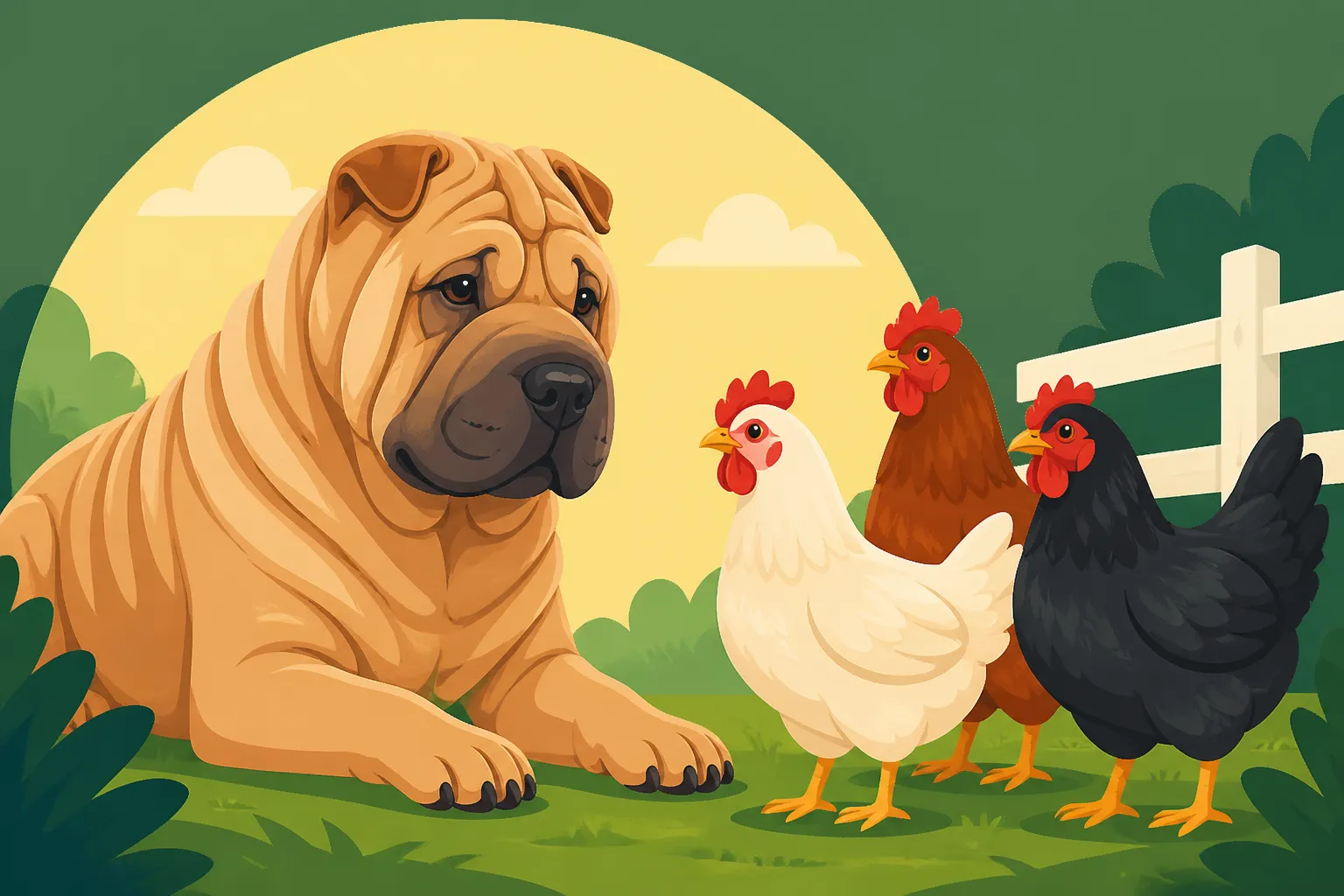
So, you're dreaming of fresh eggs from your own backyard flock, but you also have that wonderfully unique, often independent, Shar Pei curled up on your couch. It’s a common dilemma, and the image of your beloved wrinkly companion happily coexisting with a flock of clucking chickens can feel like a pastoral idyll. However, many Shar Pei owners quickly discover that reality can be a bit more complicated, with instinct often clashing with domestic harmony. This guide will walk you through understanding your Shar Pei’s natural behaviors, assessing the very real risks, and exploring management strategies to keep both your dog and your chickens safe.
The Shar Pei's Natural Instincts: Why Chickens Are a Challenge
It's easy to look at our modern Shar Pei, often a pampered house pet, and forget the deep-seated instincts that lie just beneath their calm exterior. These aren't just fluffy companions; they carry a history that profoundly influences how they interact with the world, especially with smaller, fast-moving creatures like chickens.
A History of Purpose and Prey Drive
The Shar Pei, in its original form in rural China, was a true working dog. They weren't just decorative companions; they were versatile farm dogs tasked with a variety of roles. This included guarding property, herding livestock, and yes, even hunting small game. While the modern breed has been softened by generations of selective breeding for companionship and that distinctive wrinkly appearance, the core genetic programming for these tasks remains. What Job the Shar Pei Held in Rural China touches on this heritage.
Think about it: a chicken is a small, flappy, squawking bird that often runs in a way that triggers a dog's chase instinct. To a Shar Pei, whose ancestors might have helped catch rats or other vermin, a chicken can look like a very tempting, moving target. It's not about malice or cruelty; it's about instinct. This prey drive is a powerful, primal urge that, once triggered, can be incredibly difficult to override, even with extensive training. It’s not necessarily aggression in the human sense, but rather a hardwired sequence of behaviors: spot, stalk, chase, grab, and sometimes, kill.
The Shar Pei's Unique Perception
Beyond the basic prey drive, a Shar Pei’s physical attributes can also play a role in their interactions with chickens. Their unique head shape, with those deep-set eyes and sometimes heavy wrinkles, can actually limit their peripheral vision. This means they might not see a chicken approaching from the side, leading to startling moments that could escalate an interaction. Why a Shar Pei Cannot See to the Side explains more about this aspect of their vision. A sudden movement or sound from a chicken that a Shar Pei didn't anticipate could cause a reactive lunge, even if their initial intention wasn't hostile.
Moreover, Shar Pei are often described as independent and discerning. They bond deeply with their family, but can be reserved or aloof with strangers, both human and animal. This means they might not naturally extend the same "family member" courtesy to a new flock of chickens that they would to, say, another family dog they've grown up with. Their territorial guarding instincts, covered in A Shar Pei Was Bred to Guard, Not to Greet, can also kick in, viewing the chickens as intruders or as property to be guarded from other threats, but not necessarily protected from themselves. It creates a complex dynamic where their inherent protective nature can be unpredictable towards poultry.
Evaluating the Risk: Can Your Shar Pei Coexist with Poultry?
Before you even consider introducing your Shar Pei to a flock of chickens, it's crucial to perform a brutally honest assessment of your dog's individual temperament and your capacity for consistent, vigilant management. Every Shar Pei is an individual, but there are definitely common traits that either heighten or lessen the risk.
Assessing Your Shar Pei's Temperament
Here's where you really need to be objective. Ask yourself:
- Does your Shar Pei have a known prey drive? Have they chased squirrels, rabbits, cats, or even fast-moving children in a way that seems more like hunting than playful pursuit? If they have a history of relentless chasing, catching, or even injuring smaller animals, the risk with chickens is exceptionally high.
- How is their impulse control? Can your Shar Pei reliably ignore distractions when you give a command? Do they have a strong "leave it" or "stay" that works even when they're highly stimulated? The Headstrong Streak Nobody Trains Out of a Shar Pei explains that while Shar Pei are intelligent, their independence can make impulse control training a lifelong endeavor.
- Are they generally calm and unreactive, or easily startled/overstimulated? A dog that becomes over-aroused by fast movements or loud noises is a bigger risk, as chickens are masters of both.
- What is their history with other animals? Have they lived peacefully with cats or other small pets, or do they show aggression or intense fixation? How a Shar Pei Reacts to a Cat might offer some insight, as cat behavior can sometimes mirror chicken flight responses.
Even if your Shar Pei has never shown overt aggression, that deeply ingrained prey drive can surface unexpectedly. It's not about if they'll decide to attack, but when the right combination of stimulation and opportunity might trigger that ancient instinct.
The Role of Chicken Behavior
It's not just about your dog; chicken behavior also plays a massive role. Chickens are often flighty, easily spooked, and prone to sudden, flapping movements and loud squawks when startled. These are precisely the triggers that can excite a dog's prey drive.
- Running and flapping: To a dog, this looks like escape behavior, which often intensifies the chase.
- Squawking: The sound can heighten a dog's excitement and focus.
- Vulnerability: Chickens are relatively small, often slow-moving (until startled), and lack effective defenses against a determined canine predator.
It's a perfect storm of trigger-happy prey and a dog with a built-in desire to pursue. Owners often assume their dog will be "nice" to the new backyard residents, but it's important to remember that "nice" isn't a concept animals apply to prey.
Strict Management and Training: Strategies for Safe Coexistence
If you've assessed the risks and still feel that managing coexistence is a possibility, you must commit to an incredibly high level of management and ongoing training. There is no such thing as a "set it and forget it" solution when a Shar Pei's prey drive is involved.
Impeccable Physical Barriers
This is non-negotiable. Your chickens need a secure, dog-proof coop and run. This means:
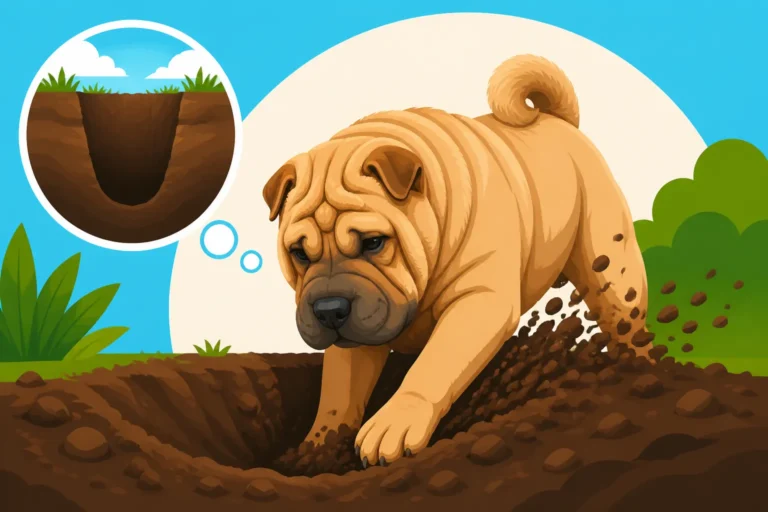
- Robust Fencing: The run should have fencing that is tall enough that your Shar Pei cannot jump over it, and securely anchored into the ground (or even buried a foot or two) to prevent digging under. A determined Shar Pei can be quite an escape artist or digger. How Much a Shar Pei Digs highlights their natural propensity for excavation. Consider heavy-gauge wire mesh, not flimsy chicken wire, which a Shar Pei could easily tear or push through.
- Overhead Protection: Chickens are also vulnerable to aerial predators, but more importantly for your Shar Pei, an open-top run might invite your dog to jump in if the fencing isn't sufficient.
- Double Barriers: Ideally, you'd have a buffer zone between your dog's designated yard space and the chicken run. This could be a second fence line, creating a "no-man's land" that neither dog nor chicken can easily access. This adds a crucial layer of safety.
- Secure Coop: The coop itself needs to be escape-proof for the chickens and predator-proof from the outside, including your dog. Latches should be dog-proof, and any gaps or weak spots reinforced.
When looking for materials for robust fencing, reliable sources like Amazon offer a wide range of options, from heavy-duty welded wire to specialized digging deterrents that can be installed at the base of your fence. Prioritize durability and security above all else.
Supervised Interactions and Leash Control
For any interactions outside of the fully secured chicken run, your Shar Pei must always be on a leash, and that leash should be held firmly by an attentive adult.
- Leash as a Lifeline: Even in your own yard, if chickens are free-ranging, your Shar Pei needs to be leashed. A sudden bolt is all it takes for tragedy. This means no "just for a minute" unsupervised moments.
- Basket Muzzle Training: For initial introductions or even ongoing supervised interactions, a well-fitted basket muzzle can provide an essential safety net. This allows your dog to be present and potentially learn to ignore the chickens without any risk of harm. Always introduce a muzzle gradually and positively, making it a comfortable experience, not a punishment.
- Short, Controlled Exposures: Begin with very short periods of exposure from a distance, rewarding your Shar Pei for calm behavior and ignoring the chickens. Gradually decrease the distance only if your dog remains consistently calm and disengaged.
Training for Impulse Control and Desensitization
This is where the real work comes in, and it's a marathon, not a sprint.
- Reinforce "Leave It" and "Stay": These commands need to be bulletproof. Practice them in increasingly distracting environments, starting far away from the chickens and slowly moving closer. Use high-value treats to make compliance incredibly rewarding.
- Focus on You: Teach your Shar Pei to maintain eye contact and focus on you, even when there are tempting distractions. This is the foundation for overriding instinct. Online training platforms, like those offered by BAXTER & Bella, can provide structured courses and support for building these critical skills in a positive reinforcement environment. They often have modules specifically for impulse control and working around distractions, which are invaluable for a dog like a Shar Pei.
- Positive Reinforcement Only: Punishment, scolding, or harsh corrections will not eliminate prey drive; they will only teach your Shar Pei to be secretive about it or to associate the chickens (or your presence) with unpleasantness, potentially leading to fear or aggression. The goal is to redirect and reward calm disinterest.
- Enrichment: A bored Shar Pei is a Shar Pei looking for something to do, and chickens make for exciting entertainment. Ensure your dog receives plenty of mental and physical exercise daily to burn off energy and satisfy their natural needs. Puzzle toys, interactive games, and regular walks (as detailed in How Far a Shar Pei Should Walk Daily) can make a big difference.
| Strategy | Effectiveness | Required Effort | Risks if Failed |
|---|---|---|---|
| Secure Coop/Run | High | Moderate (setup) | Chicken injury/death |
| Constant Leash Control | High | Very High (ongoing) | Chicken injury/death, dog escape |
| Basket Muzzle | High | Moderate (training) | Reduced immediate risk |
| "Leave It" Training | Moderate | High (ongoing, proofing) | Chicken injury/death |
| Desensitization | Low to Moderate | Very High (slow, careful) | Heightened prey drive, stress for both |
| No Supervision | Zero | Zero | Guaranteed chicken injury/death |
Managing Expectations
Understand that even with the most stringent management and training, you might never reach a point where your Shar Pei can be fully unsupervised with chickens. It’s an ongoing commitment to management. The instinct is powerful, and one lapse in judgment or an unforeseen circumstance could lead to disaster. It's often safer to assume the instinct is always there, lurking, and manage accordingly.
Accepting Reality: When Separate Living Spaces Are the Safest Bet
Sometimes, despite all best efforts, the risks are simply too high, or the constant vigilance required becomes unsustainable. In these situations, accepting that your Shar Pei and your chickens need completely separate living spaces is not a failure; it’s responsible pet ownership.
Recognizing When Coexistence Isn't Working
There are clear signs that attempting coexistence is too dangerous or too stressful:
- Intense Fixation: Your Shar Pei is constantly staring, whining, barking, or lunging at the chickens, even behind barriers.
- Escalating Behaviors: Any attempts to break through fencing, dig under, or find ways to access the chickens.
- Training Plateaus: Despite consistent positive reinforcement, your Shar Pei shows no improvement in impulse control or calm behavior around the chickens.
- Stress in Either Animal: Your chickens are constantly stressed, hiding, or showing signs of fear, or your Shar Pei is overly anxious or frustrated by the presence of the chickens.
- Accidents Happen: If even one incident occurs where your Shar Pei gets too close, injures, or kills a chicken, it’s a clear signal that the risk is too high to continue attempts at co-mingling. Once a dog successfully acts on prey drive, it can reinforce the behavior, making it even harder to manage.
Maintaining Separate Environments
If full coexistence isn't possible, the solution is simple: complete separation.
- Dedicated Dog Zone: Your Shar Pei has its own secure yard or indoor areas where chickens are never allowed.
- Dedicated Chicken Zone: The chicken coop and run are impenetrable fortresses, located in an area where your Shar Pei cannot access them, even if they escape your dog's primary area.
- Supervised Outings: If chickens free-range, your Shar Pei must be indoors or in a separate, secure kennel during that time. If your Shar Pei is outside, the chickens must be securely locked away. This might mean rotating their access to the yard.
- Professional Help: If you're struggling with severe prey drive or reactivity, consider consulting a certified professional dog trainer or a veterinary behaviorist. They can provide tailored advice and strategies, and sometimes, medication can help reduce anxiety or obsessive behaviors, making management easier. When a Shar Pei Needs a Behaviorist can provide more information on seeking expert help.
The Peace of Mind Option
While it might not be the idyllic scene you imagined, providing separate, safe environments for both your Shar Pei and your chickens offers immense peace of mind. You won't constantly be worried about an accident, and both your dog and your flock can live stress-free lives. Sometimes, the most loving and responsible choice is to acknowledge the inherent nature of our animals and provide them with an environment where those instincts cannot lead to harm. Your Shar Pei may be a beloved family member, but their heritage means they view the world in a way that sometimes puts them at odds with feathered friends. Understanding and respecting that is key to responsible pet ownership.
Disclaimer
This article is for general informational purposes only and does not constitute professional advice. Laws, prices and regulations vary by location and change over time. Consult a qualified professional for guidance on your specific situation.