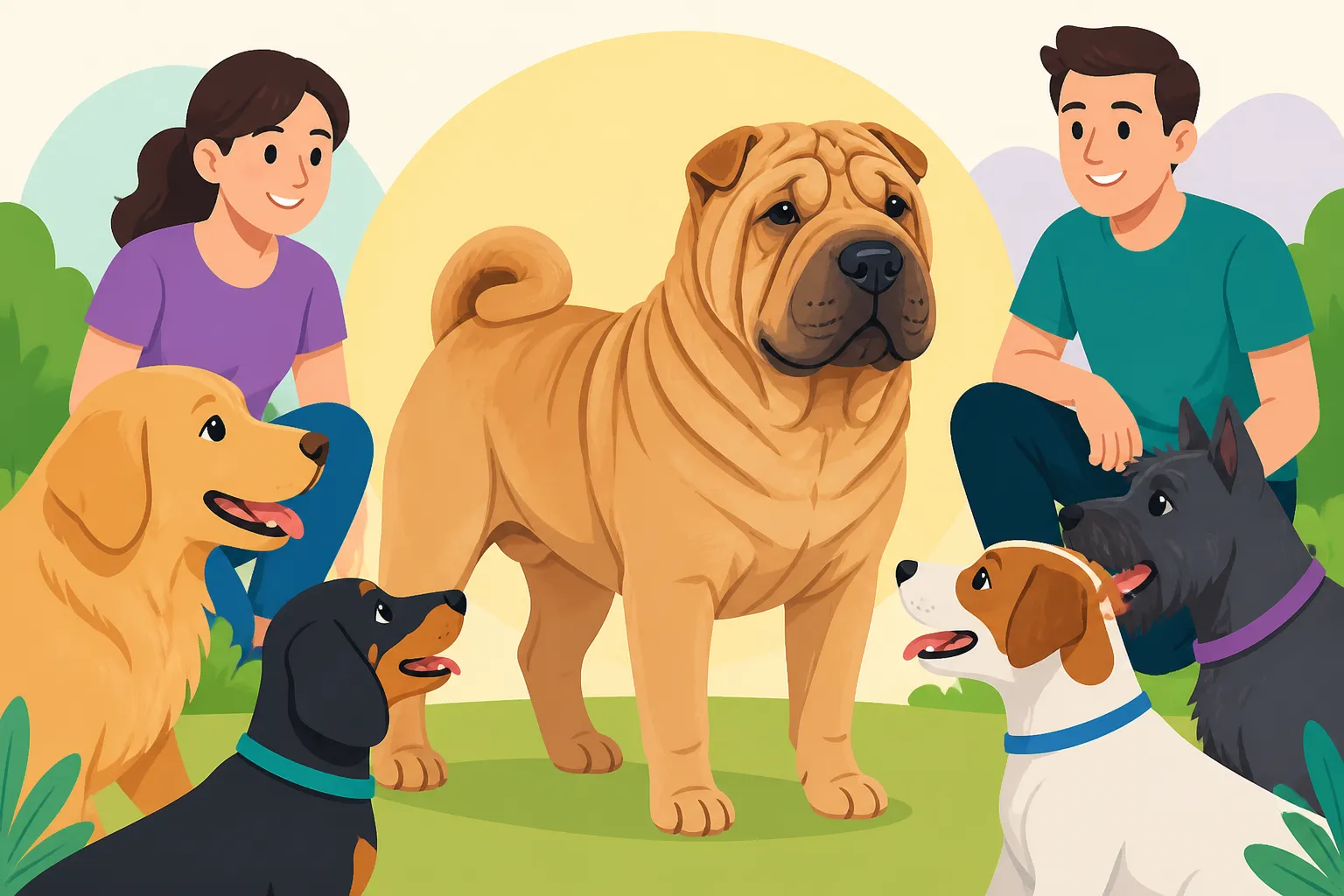
Socializing an Adult Shar Pei
Bringing an adult Shar Pei into your life, or realizing your existing adult Shar Pei missed out on crucial early socialization, can feel incredibly overwhelming when you encounter challenges like fear, reactivity, or avoidance around new people, places, or other animals. Many owners feel frustrated and even isolated, wondering if it's too late to help their beloved companion feel more comfortable and confident in the world. This guide is here to walk you through understanding why adult socialization is different for our wrinkly friends and provide actionable, empathetic strategies to help your Shar Pei navigate social situations more successfully, even if they're past their puppy prime.
Why Socializing an Adult Shar Pei is a Unique Challenge
Socializing an adult Shar Pei isn't quite the same as introducing a fluffy little puppy to the world. For one, puppies have a critical socialization window that typically closes around 12-16 weeks. During this time, their brains are like sponges, absorbing new experiences and categorizing them as safe or not. An adult Shar Pei, especially one who missed out on this window, might have formed strong opinions about the world based on limited or negative past experiences, making it a much more complex endeavor.
Our Shar Pei friends also come with inherent breed traits that influence their social behavior. They were historically bred as guard dogs, and that protective instinct often translates into a natural wariness of strangers and other dogs. They aren't generally the type to greet every passerby with a wagging tail and an open invitation for a belly rub. Their deep-set eyes and wrinkled faces also limit their peripheral vision, meaning things can suddenly appear in their visual field, leading to startling and reactive behaviors that might be misinterpreted by others. Imagine constantly feeling like things are sneaking up on you – it’s no wonder they can be a bit jumpy or defensive. This is part of Why a Shar Pei Startles: It Cannot See You Coming.
Furthermore, an undersocialized adult Shar Pei might have developed deeply ingrained fear responses or even aggressive tendencies. These aren't just quirks; they are often coping mechanisms for a dog that feels unsafe or overwhelmed. They might have learned that barking, lunging, or freezing makes scary things go away, or that retreating keeps them out of trouble. Unraveling these learned behaviors requires patience, consistency, and a deep understanding of your dog's individual triggers. It's not about forcing them to "get over it," but about slowly building their confidence and trust in you to keep them safe, even when the world feels big and noisy. Understanding What Happens to an Undersocialized Shar Pei is key to setting realistic expectations.
Laying the Groundwork: Controlled Environments and Gentle Introductions
The key to successfully socializing an adult Shar Pei is control, gradual exposure, and positive reinforcement. Forget dog parks or busy public places for now. Your goal is to create positive associations with new stimuli in environments where your dog feels secure and where you can easily manage the interaction. Think of it as building a strong foundation, brick by careful brick.
Start with parallel walks. This involves walking your Shar Pei at a distance from another calm, well-socialized dog or a person that your dog needs to get used to. The distance should be far enough that your Shar Pei notices the other party but doesn't react negatively (no stiff body, no barking, no intense staring). The goal is for them to observe without feeling threatened. Over time, as your dog remains calm, you can incrementally decrease the distance, perhaps by a few feet each session. Always reward calm behavior with high-value treats and praise. This isn't just a walk; it's a carefully orchestrated training session. You can find excellent long leashes and training pouches on platforms like Amazon to help manage these sessions effectively.
Another effective strategy is desensitization and counter-conditioning. If your Shar Pei reacts to specific triggers, like someone wearing a hat or another dog on leash, you want to change their emotional response to that trigger. Start by exposing them to the trigger at such a low intensity (very far away, or just a brief glimpse) that they don't react. The moment they notice the trigger without reacting, immediately give them a super-tasty treat. The idea is: "Hat appears, yummy treat magically appears!" or "Another dog walks by, jackpot!" The trigger predicts something good. This takes time, often many, many repetitions, but it fundamentally shifts their perception from fear or aggression to anticipation of reward. How a Shar Pei Behaves Toward Other Dogs can shed more light on their typical reactions.
Reading Your Shar Pei and Managing Reactions in Real-Time
One of the most crucial aspects of socializing an adult Shar Pei is becoming an expert in reading their subtle body language. Shar Pei can be notoriously hard to read because of their natural facial wrinkles and small, often deep-set eyes. Their "wrinkly happy face" can sometimes mask stress or discomfort. Look beyond the face to the whole body: a stiff posture, a low tail or a tail tucked tightly, pinned-back ears, lip licking, yawning (when not tired), turning their head away, or showing the whites of their eyes (whale eye) are all signs of stress. A high, stiff tail or a deep, low growl indicates growing discomfort or warning. Learning How a Shar Pei's Wrinkles Hide Its Expression is vital for any owner.
When you observe these signs of discomfort or impending reaction, your immediate response should be to increase distance or disengage from the situation. This isn't failure; it's smart management and reinforcement that you are your dog's advocate. If your Shar Pei is starting to get overstimulated by another dog on leash, calmly but quickly turn and walk in the opposite direction, creating more space. Once your dog is calmer, you can praise them. The goal is to prevent a full-blown reaction, not to push them through it. Carrying high-value treats and being ready to scatter them on the ground can help create a positive association with disengagement. Many online training platforms, such as BAXTER & Bella, offer resources and courses on reading dog body language and managing reactivity, which can be incredibly helpful.
Recognizing Comfort vs. Stress Cues
It's important to differentiate between genuine comfort and simply tolerating a situation. True comfort usually involves relaxed body posture, a loose wagging tail (not just stiff wags), soft eyes, and perhaps a desire to explore the environment rather than fixate on the trigger.
| Body Language Cue | Interpretation | Action to Take |
|---|---|---|
| Relaxed/Happy | Loose body, soft eyes, wagging tail, sniffing | Continue current interaction, praise, reward |
| Mild Stress/Anxiety | Yawning, lip licking, head turn, averted gaze | Increase distance slightly, observe, offer treat |
| Moderate Stress | Stiff body, whale eye, low tail, pinned ears | Create more space, disengage, reassess |
| High Stress/Warning | Growling, barking, lunging, snapping, tucked tail | Immediate, calm disengagement, safe removal |
| Play Bow | Front end down, rear end up, wagging tail | Evaluate if appropriate play partner, supervise |
Always prioritize your Shar Pei's comfort and safety, as well as the safety of others. If you're encountering repeated issues, or your Shar Pei's reactions are intensifying, it’s a clear sign you need more support.
Knowing When to Call in the Pros: Advanced Support for Complex Cases
Sometimes, despite your best efforts with parallel walks, desensitization, and positive reinforcement, an adult Shar Pei's socialization challenges might be too deeply rooted or complex for you to manage alone. This is absolutely nothing to be ashamed of; in fact, recognizing when you need professional help is a sign of a responsible and loving owner. It means you're prioritizing your dog's well-being and seeking the best possible outcome.
A certified professional dog trainer or, for more severe cases, a veterinary behaviorist can provide invaluable guidance. A certified professional dog trainer, particularly one experienced with difficult or reactive breeds, can assess your Shar Pei's behavior, identify specific triggers, and develop a customized training plan. They can teach you advanced leash handling skills, techniques for managing proximity, and effective communication strategies that build your dog's confidence. For instance, if your Shar Pei struggles with Leash Reactivity in a Shar Pei, a good trainer can teach you how to proactively manage walks.
For situations involving severe fear, anxiety, or aggression, a veterinary behaviorist is often the most appropriate professional. These are veterinarians with advanced training in animal behavior, meaning they can address both the behavioral and potential medical components of your dog's issues. They can determine if underlying pain, anxiety disorders, or other health issues are contributing to the behavioral problems, and they have the ability to prescribe medication if necessary, alongside a comprehensive behavior modification plan. Sometimes, a calmative can make a significant difference in helping a dog learn in situations that would otherwise be overwhelming. Knowing When a Shar Pei Needs a Behaviorist is crucial for their long-term welfare.
Working with a professional isn't a quick fix, but rather an investment in your Shar Pei's future and your relationship with them. They can offer an objective perspective, access to resources, and hands-on guidance that can transform your approach and lead to meaningful progress. Remember, socializing an adult Shar Pei is a marathon, not a sprint, and every small step forward is a victory worth celebrating.
Disclaimer
This article is for general informational purposes only and does not constitute professional advice. Laws, prices and regulations vary by location and change over time. Consult a qualified professional for guidance on your specific situation.


