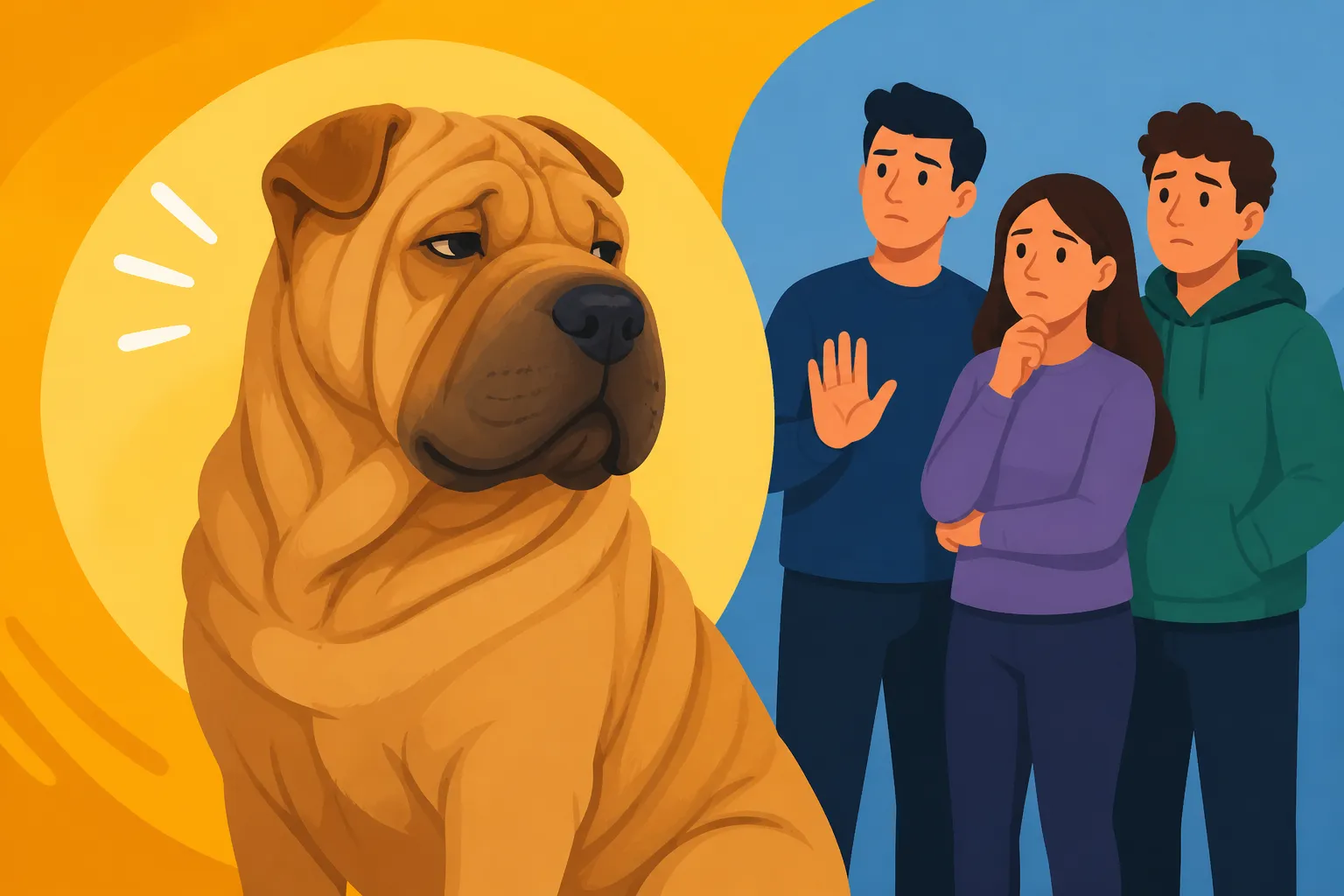
Why a Shar Pei Is Aloof With Strangers
One of the most common things Shar Pei owners hear from strangers is, "Can I pet your dog?" And often, the answer is a polite but firm no. It can feel a bit awkward, even a little rude, but the truth is, many Shar Pei simply aren't built for enthusiastic greetings with every new person they meet. If you've ever felt misunderstood because your Shar Pei acts aloof, guarded, or just plain uninterested in strangers, this guide is for you. We'll dive deep into the fascinating reasons behind this behavior and how you can manage it.
The Shar Pei's Historical Roots and Innate Tendencies
To truly understand why your Shar Pei acts the way they do around strangers, we need to take a little trip back in time, to the very origins of the breed. These aren't golden retrievers; they weren't bred to happily wag their tail at every passerby. Their history shaped them into the unique, often reserved, companions we know today.
Original Purpose and Guarding Instincts
The Shar Pei hails from ancient China, where their primary roles were far removed from being cuddly lapdogs. They were versatile working dogs, serving as farm dogs, hunters, and, crucially, guardians. Imagine a quiet homestead in rural China, needing a vigilant protector against intruders, human or animal. This is the world the Shar Pei was born into. They were bred to be alert, intelligent, and fiercely loyal to their family and property. They needed to assess situations carefully, distinguish friend from foe, and act decisively if a threat emerged. This is why What a Shar Pei Was Originally Bred to Do is so vital to understand.
This guarding instinct isn't something you can easily train out of a Shar Pei; it's hardwired into their DNA. It manifests as a natural wariness towards anything new or unfamiliar, especially new people entering their space or approaching their family. They aren't being mean; they are simply fulfilling a deeply ingrained purpose. When a stranger approaches, your Shar Pei isn't thinking, "Oh, a new friend!" They're thinking, "Who is this person? Are they a threat to my people or my territory?" This inherent cautiousness means that they aren't likely to rush up to someone for pets, especially if that person is loud, overly enthusiastic, or makes direct eye contact, which can be perceived as confrontational.
The Concept of "One-Person" or "One-Family" Dogs
Beyond their guarding instincts, Shar Pei often develop incredibly strong bonds with their immediate family, often earning them the label of "one-person" or "one-family" dogs. This isn't to say they don't love everyone in their household, but they tend to choose one primary person with whom they have an exceptionally deep connection. This loyalty means that while they adore their inner circle, their affection rarely extends much further. They might tolerate friends and extended family after multiple positive introductions, but don't expect them to treat everyone like their best buddy.
This deep attachment to their core family means that anyone outside that circle is automatically viewed with a degree of suspicion or indifference. They don't feel the need to seek approval or attention from strangers because their emotional needs are met by their trusted humans. You'll often see them stick close to their owner, physically positioning themselves between you and an approaching stranger, or simply turning their head away, signaling a clear lack of interest. It's not a snub; it's just their way of saying, "My attention is reserved for my people." This The One Person Streak in a Shar Pei is a hallmark of the breed, a beautiful trait that also explains their reserved nature with outsiders.
Understanding Shar Pei Sensory Input
Their unique physical characteristics, particularly their eyes and their skin, play a significant role in how Shar Pei perceive and interact with the world around them. What might seem like aloofness can often be a direct consequence of their physical limitations and how these affect their ability to interpret their environment and communicate effectively.
Restricted Peripheral Vision
One of the most striking features of a Shar Pei is their deep-set, often small, triangular eyes. While undeniably charming, these eyes, combined with their characteristic facial wrinkles, significantly limit their peripheral vision. Unlike many other breeds that can see a wide arc around them, a Shar Pei has a much narrower field of view. This means things approaching from the side, or even slightly from behind, can take them by surprise. Why a Shar Pei's Field of Vision Is Narrow is not just a cosmetic detail, but a fundamental aspect of their sensory experience.
Imagine trying to navigate the world with blinders on, constantly having to turn your head to see what's happening to your left or right. This is often the reality for a Shar Pei. When a stranger approaches quickly or unexpectedly from the side, a Shar Pei might not register their presence until they are much closer than a dog with broader vision would. This can trigger a startled reaction, which might appear as a sudden bark, a quick retreat, or a tense posture. They aren't necessarily being aggressive or unfriendly; they're simply reacting to an unexpected presence that suddenly appeared in their limited visual field. For them, it's safer to be cautious than to be caught off guard. This is why you'll often see a Shar Pei turn its entire head to look at something, rather than just shifting its eyes.
Subtle Communication Signals
Adding to the challenge of limited vision is the Shar Pei's unique facial structure, particularly their ample wrinkles and smaller ears. In most dogs, facial expressions and ear positions are crucial components of their communication repertoire. A soft eye, relaxed ears, or a gentle wrinkle-free brow are universal signals of friendliness and approachability in the canine world. However, a Shar Pei's natural state often masks these cues.
Their inherent wrinkles can make it difficult for both other dogs and humans to "read" their intentions or emotional state. A furrowed brow that might indicate concern or aggression in another breed could just be how a Shar Pei's face naturally sits. Their small, folded ears also offer fewer visible cues than the erect or expressive ears of many other breeds. This means that strangers might misinterpret a Shar Pei's neutral or wary expression as a sign of unfriendliness, when it might simply be their default. Conversely, a Shar Pei might be attempting to signal discomfort or a desire for space, but these signals are far more subtle and easily missed by an unfamiliar person. How a Shar Pei's Wrinkles Hide Its Expression is a real barrier to easy social interaction. This lack of clear, universally understood body language can lead to misunderstandings, where a well-meaning stranger pushes too close, eliciting a stronger, more protective reaction from the Shar Pei than might have occurred otherwise. Understanding these nuances is crucial for both owners and anyone interacting with the breed.
The Critical Window of Socialization
Socialization is key for any dog, but for a breed like the Shar Pei, with their inherent guarding instincts and unique sensory challenges, it's absolutely paramount. The experiences (or lack thereof) during their formative weeks and months profoundly shape their adult temperament, especially around strangers.
The Impact of Early Socialization (or Lack Thereof)
The early weeks of a Shar Pei puppy's life, generally up to around 12 to 16 weeks, represent a critical socialization window. During this time, puppies are sponges, soaking up information about the world and forming their foundational perceptions. Positive exposure to a wide variety of people, sights, sounds, and experiences during this period helps them develop into well-adjusted, confident adults who view new things as opportunities rather than threats. For a Shar Pei, this means intentionally and carefully introducing them to many different types of people: men, women, children, people wearing hats, people with glasses, people with different gaits, and so on.
If a Shar Pei puppy is kept isolated during this crucial period, or only exposed to a very limited number of people, they miss out on vital lessons about the world being a safe and friendly place. This lack of early, positive exposure to strangers can solidify their natural wariness into deep-seated fear or suspicion. Instead of learning that most people are harmless, they learn to view anyone outside their immediate family as a potential threat. When a Shar Pei Puppy Should Meet New People is not just a suggestion; it's a foundational step to raising a well-adjusted Shar Pei. It's about building positive associations, ensuring that meeting a new person means tasty treats and gentle interactions, not fear or uncertainty.
Consequences of Undersocialization
An undersocialized Shar Pei will almost certainly struggle with strangers throughout their life, and this can lead to a host of behavioral challenges that are difficult, though not impossible, to overcome. Their innate cautiousness, combined with a lack of positive early experiences, often translates into fear-based aggression, extreme shyness, or outright avoidance behavior when confronted with unfamiliar people. They might bark incessantly, lunge, growl, try to hide, or even attempt to bite if they feel cornered or threatened.
This isn't just a nuisance; it's a significant welfare issue for the dog and a safety concern for others. An undersocialized Shar Pei might be unable to cope with routine veterinary visits, grooming appointments, or even a friend coming over to your house. Walks in public can become stressful ordeals, with the dog constantly on edge, scanning for potential "threats." For owners, it means a restricted lifestyle, constantly managing situations to prevent negative encounters. It's a heavy burden, and it's why it's so important to understand What Happens to an Undersocialized Shar Pei and prioritize thoughtful, ongoing socialization from day one. Investing in quality puppy classes, like those offered through programs such as BAXTER & Bella, can provide structured and safe environments for this critical early exposure.
Reading and Respecting a Shar Pei's Boundaries
Since Shar Pei are often reserved with strangers, it's incredibly important for owners to become experts at reading their dog's body language. They might not offer clear, overt signals like a golden retriever, but they do communicate. Understanding these subtle cues and advocating for your dog's space is paramount to fostering positive interactions and preventing escalation.
Recognizing Signs of Discomfort
Shar Pei, due to their unique facial structure, often have very subtle ways of communicating their discomfort. A direct stare can easily be missed behind their deep-set eyes, and ear movements are minimal. However, there are still clear indicators that your Shar Pei is feeling uneasy about an approaching stranger. Look for:
- Lip Licking/Yawning (out of context): These are common appeasement signals, indicating stress or a desire to de-escalate a situation.
- Head Turning/Averting Gaze: Your dog might turn their head away, avoiding direct eye contact with the person. This is their way of saying, "I'm not interested, please back off."
- Body Stiffening: A sudden rigidity in their posture, sometimes accompanied by a low tail set or a tucked tail.
- Whale Eye: You see the whites of their eyes, typically at the corners, when they look sideways without turning their head fully.
- Subtle Trembling or Shivering: A clear sign of anxiety.
- Backing Away/Leaning Away: They will physically attempt to create distance.
- Low Growl or Mumble: Often a "whisper" before a shout, a warning that they are uncomfortable. How a Shar Pei Warns Before It Reacts describes these essential signals.
It's vital for owners to understand that these subtle signals are your dog's polite requests for space. Ignoring them or forcing your dog into an interaction they're clearly uncomfortable with only teaches them that their signals are ineffective, which can lead to them escalating to more overt, potentially aggressive, warnings.
Strategies for Positive Introductions
When you know your Shar Pei is naturally reserved, carefully managed introductions are key. You can't just throw them into a crowded room and expect them to thrive. The goal is to create positive associations and allow your Shar Pei to approach on their own terms, if at all.
Here are some strategies for setting your Shar Pei up for success:
- Advocate for Your Dog: Don't be afraid to tell strangers, "Please don't pet them right now, they're not a fan of strangers," or "We're working on polite greetings, so please keep your distance." Most people will understand.
- Keep Interactions Brief and Controlled: If an interaction is unavoidable, keep it short. A quick "hello" and move on is better than prolonged scrutiny.
- Use High-Value Treats: Ask the stranger (if appropriate and safe) to gently toss a high-value treat away from your dog, creating a positive association without direct contact. Avoid having strangers reach over or down to pet your Shar Pei, especially on the head. This can be very intimidating for a dog with limited peripheral vision. How to Approach a Shar Pei Safely highlights the importance of respectful distance.
- Parallel Walking: If introducing to a new person, walk with them side-by-side (with your dog on the opposite side of you from the new person) for a period before attempting any direct interaction. This allows your Shar Pei to observe and habituate to their presence without pressure.
- Designated "Safe Space": When guests are over, ensure your Shar Pei has a quiet, comfortable crate or room where they can retreat and feel safe without being bothered. This is not punishment; it's a vital tool for managing their stress.
Remember, a successful introduction isn't always about your Shar Pei becoming best friends with a stranger; sometimes, it's simply about them tolerating their presence calmly and without stress.
Managing Encounters with Strangers
Even with the best socialization and understanding, your Shar Pei might always be reserved with strangers. The key is consistent management and continued positive reinforcement to ensure that while they might not be extroverts, they can navigate public spaces and social situations safely and calmly.
Training for Calm Public Behavior
Training isn't about changing your Shar Pei's personality, but about teaching them polite ways to cope with the presence of strangers. The goal is neutrality rather than effusive greetings. Focus on foundation behaviors that build confidence and control in distracting environments.
Consider these training priorities:
- "Watch Me": This cue teaches your dog to make eye contact with you, redirecting their attention away from potential triggers. Practice this in increasingly distracting environments. When a stranger approaches, ask for a "watch me" and reward heavily.
- "Place" or "Mat" Training: Teach your Shar Pei to go to a designated spot and stay there calmly. This is invaluable when guests are in your home or in public settings like a cafe. It gives them a job and a secure boundary.
- Loose-Leash Walking: A solid loose-leash walk is crucial. A dog that pulls and lunges is harder to manage and more likely to react negatively to strangers. Use positive reinforcement techniques and consider tools like a front-clip harness to help manage pulling, easily found on platforms like Amazon.
- "Leave It": This command is excellent for teaching your Shar Pei to ignore passing strangers or tempting distractions.
- Desensitization and Counter-Conditioning: This involves gradually exposing your Shar Pei to strangers at a distance where they remain comfortable, pairing the sight of strangers with high-value treats. Slowly decrease the distance over time, always staying below their reactivity threshold. If they react, you're too close; increase the distance again.
Consistency is absolutely vital. Short, frequent training sessions are far more effective than long, infrequent ones. Enrolling in advanced obedience classes or working with a certified professional dog trainer can provide invaluable guidance, especially if you're dealing with fear-based reactivity. The Shar Pei in Puppy Class is a good start, but continuous training is key.
Tools and Techniques for Management
Sometimes, despite all our training efforts, we need practical tools to help manage situations involving strangers. These are not substitutes for training, but aids to keep everyone safe and comfortable.
- Proper Leash and Collar/Harness: A well-fitting, secure harness (like a Y-front or front-clip harness) or a flat buckle collar with a sturdy leash is non-negotiable for walks. Avoid retractable leashes, as they offer little control.
- "Do Not Pet" Vest/Bandana: These can be incredibly helpful for clearly signaling to the public that your dog needs space. While not everyone reads or respects them, they can significantly reduce unwanted approaches and the awkwardness of having to constantly explain your dog's needs. You can find many options for these on Amazon.
- Muzzle Training: For Shar Pei with a history of fear-based aggression, muzzle training can be a life-saver. A well-fitted basket muzzle allows the dog to pant, drink, and take treats, but prevents bites. It's a responsible tool that allows you to safely expose your dog to situations they might otherwise be unable to handle, such as vet visits or crowded areas, reducing stress for everyone involved. When a Shar Pei Should Wear a Muzzle is important, but proactive training for muzzle acceptance is even better.
- Secure Containment: At home, consider baby gates or a sturdy crate to manage your Shar Pei when guests are over. This provides a clear boundary and reduces the chance of unwanted interactions.
- Routines and Predictability: Shar Pei often thrive on routine. A predictable schedule for walks, meals, and quiet time can reduce overall anxiety, making them more resilient to the occasional unexpected encounter.
| Shar Pei Behavior with Strangers | Interpretation | Recommended Owner Response |
|---|---|---|
| Stiff body, averted gaze | Uncomfortable, needs space | Increase distance, ask stranger to ignore, reward for calm |
| Lip licking, yawning | Stress signal | Remove from situation, redirect attention to owner |
| Low growl | Warning, don't approach | Immediately create distance, advocate for dog's space |
| Turning away, trying to hide | Overwhelmed, seeks escape | Provide an exit, move to a quieter area |
| Tail wag (low, stiff) | Not necessarily friendly | Proceed with caution, observe other body language cues |
| Approaching cautiously, sniffing | Curiosity, potential openness | Allow dog to initiate contact, no forced interaction |
Remember, managing a Shar Pei's aloofness with strangers is an ongoing journey. It requires patience, understanding, and a commitment to their well-being. By respecting their natural tendencies and providing them with the tools and training to navigate the world safely, you can ensure your unique companion lives a happy, well-adjusted life.
Disclaimer
This article is for general informational purposes only and does not constitute professional advice. Laws, prices and regulations vary by location and change over time. Consult a qualified professional for guidance on your specific situation.


