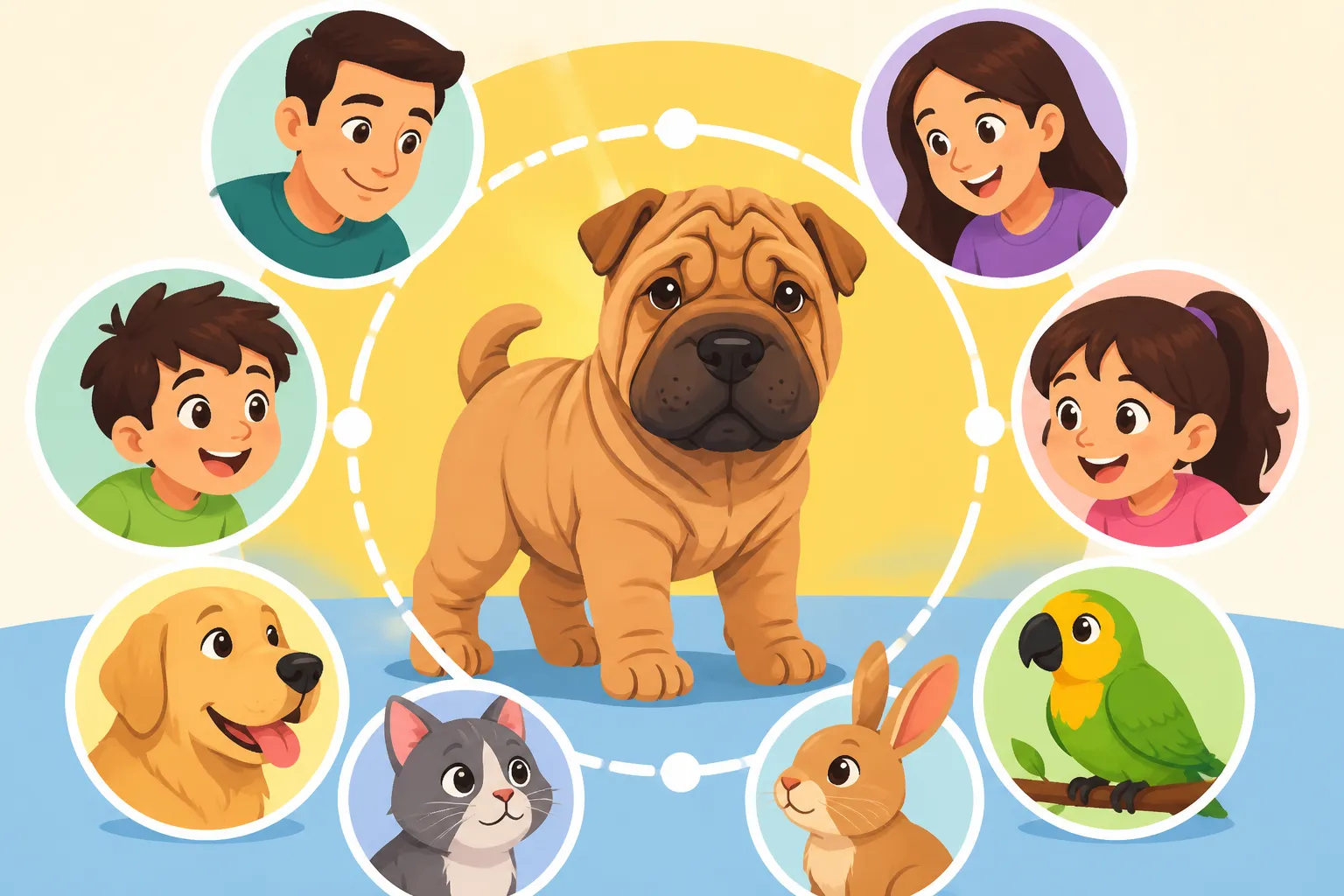
How Widely a Shar Pei Puppy Should Be Socialized
Bringing a Shar Pei puppy home is an exciting time, but many new owners quickly realize that this isn't a breed you can just plop down and expect to become a social butterfly on its own. Their unique history and temperament mean that simply letting them "meet people" isn't enough. This guide will dive deep into what truly comprehensive socialization looks like for a Shar Pei puppy, helping you build a confident, well-adjusted companion from the ground up.
Understanding the Shar Pei's Natural Inclinations
Before we even talk about how to socialize your Shar Pei puppy, it's crucial to understand the foundation you're working with. These aren't your typical golden retrievers who greet everyone with a wagging tail and an open heart. Shar Pei have a deeply ingrained sense of purpose and a very specific view of the world around them, shaped by centuries of their breed's history. Ignoring this natural inclination or trying to "train it out" completely is a recipe for frustration, for both you and your dog.
The Breed's Guarding Roots and Aloofness
Imagine a dog bred to be a guardian on a farm in rural China, responsible for protecting property and family. That's the Shar Pei. They were originally bred for tasks like guarding property and herding, which required a keen awareness of their surroundings and a reserved, watchful demeanor. This isn't just a quirky personality trait; it's hardwired into their DNA. When a Shar Pei is aloof with strangers, it's not rudeness; it's their heritage shining through. They are naturally suspicious of the unfamiliar, whether that's a new person, an unusual sound, or another dog they haven't met before. This means their initial reaction to novelty is often caution, not curiosity.
This inherent guarding instinct also manifests as a strong sense of ownership over their space and their people. They bond intensely with their chosen family, often exhibiting a "one person" streak, but they can be indifferent or even wary of outsiders. If you've ever tried to introduce your Shar Pei to a new friend and found them simply staring, unblinking, or even retreating, you've witnessed this aloofness firsthand. It's not a flaw, but a characteristic that demands respectful and thoughtful management through early, broad socialization. Understanding this helps set realistic expectations for their interactions and guides your socialization efforts away from forcing interactions and towards building trust and confidence. You can delve deeper into their history to understand What a Shar Pei Was Originally Bred to Do.
Why Early Impressions Matter So Much
Given their inherent caution, those early impressions your Shar Pei puppy forms are absolutely critical. Think of their brain as a blank slate or, perhaps more accurately, a canvas that's ready to be painted. Every experience, positive or negative, contributes to the masterpiece – or the messy scribble – of their adult personality. If their early experiences are limited, frightening, or overwhelmingly negative, those foundational fears can become deeply entrenched, making it incredibly difficult to change their perceptions later on.
A Shar Pei puppy isn't born knowing that the mailman isn't a threat, or that the vacuum cleaner isn't a monster. They learn this through gentle, consistent, and positive exposure. The critical period for this learning is short, and it doesn't wait for you to feel ready. Missing out on varied, positive experiences during these formative weeks can lead to an adult Shar Pei who is fearful, reactive, or even aggressive towards anything new or unfamiliar. This isn't just about their happiness; it's about their safety and the safety of those around them. We're talking about preventing an adult dog who barks incessantly at every visitor, lunges at other dogs on walks, or becomes stressed by everyday sounds.
The Critical Window: Before Twelve Weeks
You've probably heard the term "socialization window" before, but for a Shar Pei, it's less of a window and more of a rapidly closing door. This period, roughly from 3 to 12 or 16 weeks of age, is paramount for shaping a well-adjusted dog. It's the time when their brains are most open to new experiences, most resilient to minor stressors, and most likely to form positive associations that will last a lifetime. For a breed with a predisposition to wariness, maximizing this window is non-negotiable.
The 'Socialization Superhighway'
Think of this period as building a superhighway in your puppy's brain. Every positive, low-stress exposure to a new sight, sound, person, or object lays down neural pathways that say, "This is normal. This is safe. This is part of my world." The more diverse and positive these experiences, the wider and smoother that superhighway becomes. When we talk about "widely" socializing a Shar Pei puppy, we're talking about hitting as many different types of stimuli as possible during this time, all in a controlled and positive manner.
This isn't about overwhelming your puppy; it's about introducing novelty gently. A brief, positive encounter with a friendly stranger who offers a treat is far more beneficial than being mobbed by a loud group of kids. Hearing the distant rumble of a truck while safely in your arms, receiving a tasty piece of chicken, teaches them that loud noises aren't inherently bad. Even simple things like walking on different surfaces – grass, pavement, carpet, gravel – or hearing various household sounds like the dishwasher or a doorbell can be part of this crucial superhighway construction. Remember, you want to create positive associations with everything they might encounter in their adult life. The goal is confident neutrality, not necessarily exuberant excitement for everything. This is why many experienced Shar Pei owners advocate for structured Socialize a Shar Pei Before Twelve Weeks or Pay for It Later.
The Risks of Missing This Window
If that socialization superhighway isn't built during this critical period, your puppy's brain begins to solidify different pathways – pathways of fear, caution, and defensiveness. Instead of learning that the world is a generally safe and interesting place, they might conclude it's a place full of potential threats. The risks of missing this window are profound, especially for a breed like the Shar Pei. You're not just dealing with a shy dog; you're setting the stage for potential behavioral problems that can be challenging, expensive, and sometimes heartbreaking to manage.
An undersocialized Shar Pei might develop extreme fear responses to new people, other dogs, or unfamiliar environments. This fear can manifest as barking, growling, lunging, or even attempts to bite when they feel cornered or threatened. They might become territorial, overly protective, or suffer from severe anxiety. Imagine a dog who can't go for walks without reacting aggressively to every passing dog or person, or one who becomes physically ill with stress every time a visitor comes over. These are the very real consequences of inadequate early socialization. Addressing What Happens to an Undersocialized Shar Pei later in life is significantly harder than proactively preventing issues during puppyhood, often requiring intensive behavior modification and professional help.
Broadening the Puppy's World: What 'Widely' Truly Means
"Widely" doesn't just mean quantity; it means variety and quality of experiences. For a Shar Pei, whose instincts lean towards caution, simply exposing them to a lot of everything can be counterproductive and even traumatizing if not managed correctly. Instead, we're aiming for a curated, positive, and diverse set of experiences that build resilience and confidence without overwhelming them. It’s about creating a rich tapestry of associations with different aspects of the world.
Exposure to Diverse Sights and Sounds
Your Shar Pei puppy needs to experience a vast array of common sights and sounds that are part of everyday life, always presented in a non-threatening, positive context. This isn't about forcing them into scary situations, but rather letting them observe from a safe distance while providing treats and praise. Think about taking them for short car rides, exposing them to traffic noises from inside the car, or just sitting on a park bench watching people and dogs go by without direct interaction. The key is to keep these exposures brief and positive, ending on a good note before they show signs of stress.
Consider the different environments they might encounter: busy streets, quiet parks, bustling shopping centers (from a distance, of course, or just the parking lot), the inside of a vet clinic (for happy visits, not just shots!), and even different types of homes. Introduce them to varied sounds like doorbells, sirens, children playing, vacuum cleaners, lawnmowers, and even loud music, always pairing these sounds with something pleasant like a favorite toy or a high-value treat. Tools like sound apps or desensitization playlists can be incredibly useful here. Even just letting them hear the natural sounds of your home life, like the washing machine or the television, while they're relaxed and getting cuddles, helps to normalize these experiences.
Safe Interactions with People of All Kinds
Shar Pei are often aloof with strangers, and without proper socialization, this can escalate to fear-based aggression. Therefore, your puppy needs to meet a wide variety of people – but in a very controlled manner. This means people of different ages, genders, sizes, and appearances. Think about people wearing hats, glasses, uniforms, or carrying umbrellas. People with different gaits, voices, and even those using mobility aids. Each encounter should be positive, brief, and non-threatening.
Instruct friends and family to approach calmly, avoid direct eye contact initially, and offer a treat without forcing interaction. If the puppy approaches, they can gently pet under the chin, but avoid hovering or excessive touching. Never allow anyone to loom over the puppy or pick them up unless they are very comfortable. A great way to manage these interactions is to have treats on hand, perhaps a small pouch you carry from Amazon filled with high-value morsels, so that every new person becomes associated with something delicious. The goal is for your Shar Pei to learn that new people are generally benign and can even bring good things, rather than being threats to be guarded against. Remember, for a Shar Pei, it's about respectful introductions, not boisterous greetings. This will help address Why a Shar Pei Is Aloof With Strangers.
Navigating Encounters with Other Dogs and Animals
While some breeds thrive in dog parks from puppyhood, a Shar Pei needs a much more nuanced approach to canine and other animal interactions. Their tendency towards dog-dog aggression, particularly with same-sex dogs, makes thoughtful introductions crucial. Rather than throwing them into a free-for-all, focus on supervised, positive experiences with calm, well-socialized adult dogs. The ideal scenario involves meeting one well-mannered, vaccinated adult dog at a time in a neutral, enclosed space.
Puppy classes are an excellent, structured way to facilitate these interactions. They provide controlled environments where puppies can learn appropriate play behaviors under the guidance of experienced trainers. You'll want to ensure that any other puppies they interact with are also appropriately socialized and not overly boisterous. Beyond other dogs, think about other species if appropriate and safe. If you have a cat, controlled introductions from a young age are vital. Even exposure to the sights and smells of other animals from a distance – perhaps watching squirrels or birds at the park – can contribute to a broader understanding of their world. The key is always supervision and ensuring positive, safe experiences to prevent negative associations that can be hard to undo. Consider taking your puppy to a well-run The Shar Pei in Puppy Class to maximize controlled social learning.
Tools and Techniques for Effective Socialization
Socializing a Shar Pei puppy effectively isn't just about exposing them to things; it's about how you do it. The right tools and techniques can make all the difference between a confident, curious puppy and a fearful, reactive one. You’re building a foundation of trust and positive association, which requires consistency, patience, and a bit of strategic thinking. It’s an active process, not a passive one, and you’ll need to be prepared to guide your puppy through every new experience.
Positive Reinforcement and Desensitization
These two techniques are the cornerstones of successful Shar Pei socialization. Positive reinforcement means rewarding your puppy immediately for calm or curious behavior in new situations. Did they glance at a new person without barking? "Good boy!" and a treat. Did they sniff a new object? "Yes!" and a tiny piece of cheese. This teaches them that new things predict good things. Desensitization involves gradually exposing your puppy to a stimulus at a low intensity, then slowly increasing the intensity as they remain relaxed and happy.
For example, if your puppy is nervous about traffic, start by sitting in your car parked a block away, giving treats as cars pass. Over days or weeks, you can slowly move closer, always watching for signs of stress and backing off if needed. Never force your puppy into a situation where they are clearly scared or overwhelmed. This can be traumatizing and make the fear worse. Instead, create a safe bubble with you at the center, where all new experiences are associated with comfort, security, and rewards. It's a continuous process of observing your puppy's comfort level and adjusting the intensity of the exposure accordingly.
Structured Puppy Classes and Playdates
For Shar Pei puppies, formal puppy classes are invaluable. These aren't just for learning basic commands; they are prime socialization opportunities. Reputable classes are typically structured to ensure positive, safe interactions with other puppies and people, all under the watchful eye of an experienced trainer. They teach bite inhibition, appropriate play, and how to navigate social dynamics. Moreover, the environment itself – a new building, new smells, new people – is part of the socialization experience.
Beyond classes, arrange one-on-one playdates with vaccinated, stable adult dogs known to be gentle and patient, or with other puppies of similar play styles. Always supervise these interactions closely, keeping them short and positive. The goal is quality over quantity. A few good, controlled play sessions are far better than one chaotic, scary encounter. Avoid dog parks until your Shar Pei is older and has a solid foundation of positive social experiences, and even then, assess them carefully. Many Shar Pei, due to their guarding instincts and preferred independence, simply do not enjoy the free-for-all nature of a dog park.
Incorporating Brands and Resources
There are many resources available to support your socialization journey. For structured learning and guidance, online programs like BAXTER & Bella offer comprehensive puppy training systems that include socialization checklists, virtual classes, and access to trainers. These can be particularly helpful for new owners who want to ensure they're covering all their bases. Their step-by-step approach can guide you through everything from desensitizing your puppy to household noises to introducing them to new people and places safely.
When it comes to practical tools, an online retailer like Amazon can be a goldmine for essential socialization aids. Think about a variety of high-value treats for positive reinforcement, a comfortable front-clip harness for walks, a sturdy long line for safe outdoor exploration, and even specific training books on fear-free socialization. You might also find sound machines to desensitize your puppy to various noises, or puzzle toys to keep them mentally stimulated during quiet observation times. The right gear can significantly enhance your ability to provide diverse, positive experiences for your Shar Pei puppy.
| Socialization Activity | What to Introduce (Examples) | Ideal Age Range (Approx.) | Key Takeaway for Shar Pei |
|---|---|---|---|
| People | Different ages, genders, appearances (hats, glasses, uniforms, walking aids), gentle approaches, quiet voices. | 8-16 weeks & ongoing | Focus on calm, neutral encounters, not exuberant greetings. Treat for non-reaction. |
| Sounds | Vacuum, doorbell, thunder, sirens, children playing, traffic, construction, different music genres. | 8-16 weeks & ongoing | Introduce at low volume, paired with treats/play. Gradually increase volume as comfort grows. |
| Sights | Bikes, strollers, umbrellas, traffic, large vehicles, different animal species (from a distance), varied environments (park, city, pet store from afar). | 8-16 weeks & ongoing | Allow observation from a safe distance. Reward calm curiosity. Avoid forced close-ups. |
| Surfaces | Grass, concrete, carpet, tile, gravel, wood, grates, stairs. | 8-16 weeks | Encourage walking on different textures with positive encouragement. |
| Handling | Ear checks, paw touching, mouth exams, brushing, bathing, towel drying. | 8-16 weeks & ongoing | Make handling a positive experience with treats. Essential for vet visits and grooming. |
| Other Dogs | Vaccinated, calm, well-socialized adult dogs; puppies in structured classes. | 8-16 weeks & ongoing | Highly supervised one-on-one interactions. Avoid dog parks. Quality over quantity. |
Ongoing Socialization: It's Not Just for Puppies
The common misconception is that socialization ends when the puppy period is over, or when your dog reaches a certain age. For a Shar Pei, this couldn't be further from the truth. Socialization is a lifelong endeavor, evolving as your dog grows and matures. While the critical window closes, the need for continued, positive exposure remains. Think of it less as a sprint and more as a marathon, with consistent, gentle efforts yielding a well-adjusted companion over the years.
Maintaining Exposure Through Adolescence
Adolescence in dogs, typically between 6 months and 2 years, can be a challenging time. Just like human teenagers, adolescent Shar Pei might test boundaries, become more cautious of novel things, or even display new fears. What they were fine with as a young puppy, they might suddenly be wary of. This is often a normal part of their development, but it highlights the importance of continued socialization. Don't assume that because they were fine with something at 12 weeks, they will be at 12 months.
Continue to expose your adolescent Shar Pei to different people, places, sights, and sounds, always reinforcing positive associations with treats and praise. Regularly visit new parks (at quiet times), take short trips to dog-friendly stores (if appropriate for your dog's temperament), or simply vary your walking routes. Maintain those positive interactions with familiar, trusted dogs and people. Consider enrolling in an advanced obedience class or a fun activity like scent work to keep their minds engaged and maintain their comfort in novel environments. The key is consistency and not letting their social world shrink as they get older. This sustained effort will also help when considering Socializing an Adult Shar Pei later in life.
Addressing Setbacks and Fear Periods
It's completely normal for dogs, including Shar Pei, to experience "fear periods" during adolescence. These are phases where they might suddenly become fearful of something that never bothered them before, like a specific object, a sound, or even a particular person. If your Shar Pei suddenly seems wary of something new, or even something familiar, don't punish them or force them to confront it. This can exacerbate the fear and create a negative association.
Instead, revert to desensitization and positive reinforcement. Reintroduce the scary stimulus from a distance, pair it with high-value treats, and gradually decrease the distance or increase the intensity as your dog shows comfort. Patience is vital here. If the fear is intense or persistent, or if it seems to be escalating into aggression, it's time to seek professional help from a certified dog trainer or a veterinary behaviorist. They can provide tailored strategies and support to help your Shar Pei overcome these challenges. Remember, every dog is an individual, and setbacks don't mean you've failed; they just mean you need to adjust your approach and potentially seek expert guidance.
Disclaimer
This article is for general informational purposes only and does not constitute professional advice. Laws, prices and regulations vary by location and change over time. Consult a qualified professional for guidance on your specific situation.


