Whether a Shar Pei Belongs at a Dog Park
Shar Pei guardian instincts, independent spirit, and cat-like personality explain why public dog parks are unsafe for this unique breed.
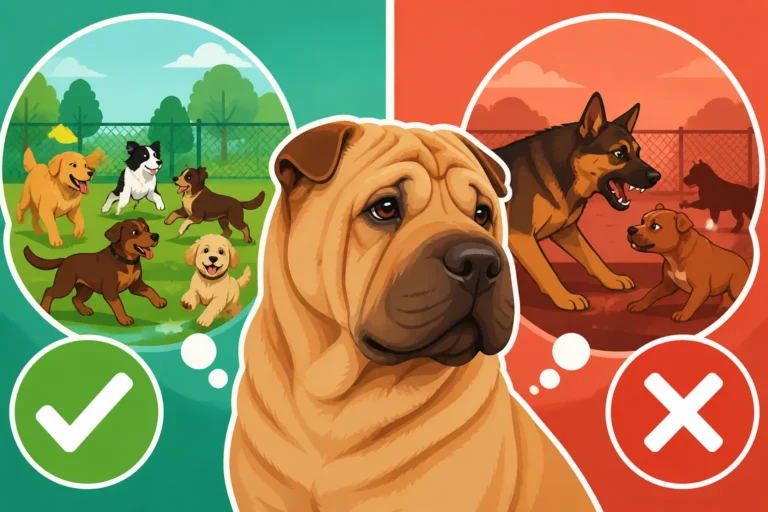
Shar Pei guardian instincts, independent spirit, and cat-like personality explain why public dog parks are unsafe for this unique breed.

Shar Pei temperament, independent nature, and territorial instincts determine whether two dogs can safely live together in one home.

Shar Pei behavior toward other dogs stems from historical guarding and hunting roots that create caution and intolerance.

Shar Pei startling reactions stem from poor peripheral vision and deep sleep, creating a defensive response to sudden surprises.

Safe approaches for strangers meeting a Shar Pei depend on understanding their guarding instincts and limited peripheral vision.

Deep-set eyes, heavy brows, and facial wrinkles restrict peripheral vision and block side sightlines for meat mouth and bone mouth dogs.

Shar Pei temperament and reduced peripheral vision explain how this independent guard dog breed warms up to people gradually.

Shar Pei visitor greetings involve guarding instincts and limited peripheral vision, explained with practical management strategies.

Shar Pei guarding instincts and ancient history in China explain why this reserved breed stays aloof and distant from strangers.

Village farms in southern China bred the Shar Pei as a versatile working dog and vigilant guardian, so its wrinkles and instincts had a practical purpose.