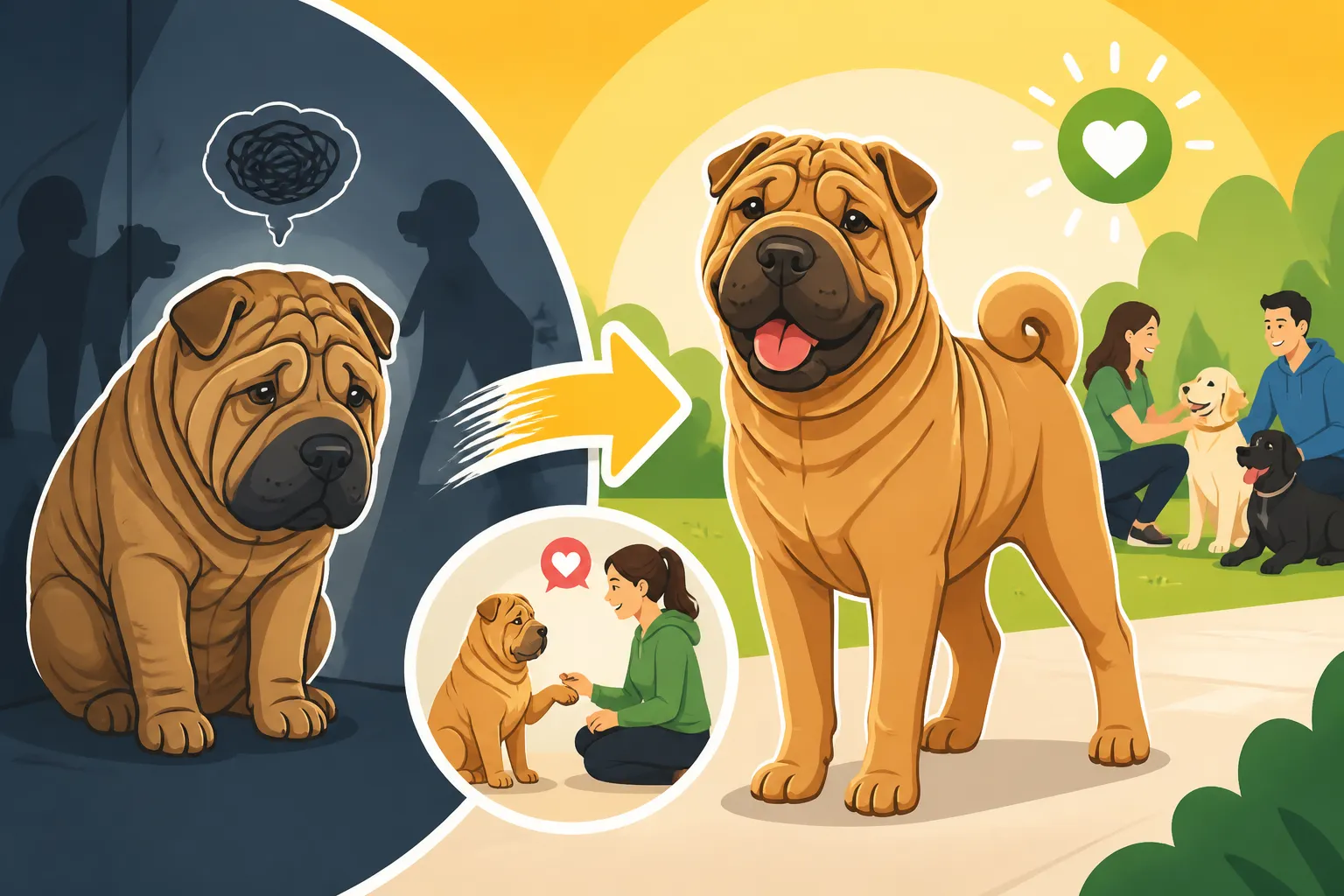
How to Rebuild a Shar Pei That Was Not Socialized
Bringing home an undersocialized Shar Pei, whether a young pup or an older rescue, can feel like you've adopted a beautifully complex puzzle that doesn't quite fit the typical dog mold. These wonderful dogs, with their deep wrinkles and independent spirit, often carry the weight of past neglect when it comes to early exposure to the world, leading to fear, reactivity, or outright aggression. This guide will walk you through the patient, consistent steps needed to rebuild trust and confidence in an undersocialized Shar Pei, helping them navigate their world with more calm and less fear.
Understanding the Roots of Undersocialization in a Shar Pei
When we talk about an undersocialized Shar Pei, we're not just talking about a dog that's a bit shy. For these sensitive and often visually impaired dogs, a lack of appropriate early exposure can manifest in profound ways. Imagine living in a world where everything is a blur at the edges, where sudden movements are alarming, and where your natural instincts tell you to be wary of strangers and strange dogs. That's often the reality for a Shar Pei who missed out on crucial puppy socialization.
Why Early Socialization is Crucial for Shar Pei
Puppies have a critical socialization window, generally considered to be up to about 12 to 16 weeks of age. During this time, their brains are like sponges, eagerly soaking up positive experiences with new sights, sounds, people, and other dogs. For a Shar Pei, this window is arguably even more vital due to their inherent guarding instincts and often limited peripheral vision. A Shar Pei that wasn't properly socialized during this period often grows into an adult who perceives novel situations, people, or dogs as threats rather than opportunities for interaction or simply neutral parts of the environment.
Think of it this way: a well-socialized Shar Pei learns that the mail carrier is just part of the daily routine, not an intruder to be barked at relentlessly. They learn that a child's sudden squeal is just a child playing, not a danger signal. Without these early lessons, every new encounter can be genuinely terrifying for them. This fear can then escalate into reactive behaviors like barking, lunging, or even snapping as they try to create distance from what scares them. It's not about being "mean"; it's about being profoundly uncomfortable and trying to survive a perceived threat. You might find our article Socialize a Shar Pei Before Twelve Weeks or Pay for It Later to be a really helpful read on this topic.
Common Manifestations of Undersocialization
The signs of undersocialization in a Shar Pei can vary, but they often revolve around fear and anxiety. You might see a dog that freezes or cowers when approached by strangers, tucking their tail and trying to become invisible. They might snap or growl if cornered or if someone reaches for them too quickly. Out on walks, they might become a snarling, lunging mess at the sight of another dog, even from a distance.
Other common signs include excessive barking at unfamiliar sounds, an inability to settle in new environments, or extreme reluctance to be handled by anyone outside their immediate family. Some undersocialized Shar Pei might also show resource guarding tendencies, becoming possessive over their food, toys, or even their favorite sleeping spot. This behavior often stems from an underlying insecurity about their resources in a world they don't trust. It's crucial to understand that these behaviors are usually fear-based and not simply defiance. Your Shar Pei isn't trying to be difficult; they're genuinely struggling to cope with their world. Understanding How a Fearful Shar Pei Becomes Aggressive can provide more insight into this progression.
Laying the Foundation for Rebuilding Trust
Rebuilding an undersocialized Shar Pei isn't a quick fix; it's a marathon, not a sprint, built on patience, consistency, and above all, trust. Your goal isn't necessarily to make your Shar Pei the life of every party, but to help them feel safe and secure enough to navigate their daily life without constant fear and stress.
Creating a Safe and Predictable Environment
The first step in helping an undersocialized Shar Pei is to establish a secure and predictable home environment. This means a consistent daily routine for feeding, walks, potty breaks, and playtime. Predictability reduces anxiety, allowing your dog to anticipate what comes next and feel more in control. Designate a "safe space" for your Shar Pei, like a crate in a quiet corner or a comfy bed in a low-traffic area, where they can retreat when feeling overwhelmed. This space should always be a positive place, never used for punishment.
Consider setting up management strategies in your home. If your Shar Pei reacts to people walking past the window, use privacy film or keep curtains closed during busy times. If they guard doorways, use baby gates to create physical barriers and prevent conflicts. Limiting exposure to known triggers within the home helps to lower their overall stress levels, making them more receptive to training. A calm home is the bedrock for building a calm dog.
The Importance of Professional Guidance
While this guide offers many practical strategies, an undersocialized Shar Pei, especially one displaying reactivity or aggression, will significantly benefit from professional help. A certified professional dog trainer, particularly one experienced in fear-based behaviors and force-free methods, can provide invaluable support. Even better is a veterinary behaviorist, who is a veterinarian with specialized training in behavior, as they can assess for underlying medical conditions contributing to the behavior and prescribe medication if appropriate.
These professionals can observe your dog's specific triggers and body language in real-time, offering tailored advice that a general guide simply cannot. They can help you implement a safety plan, teach you precise handling techniques, and guide you through desensitization and counter-conditioning protocols safely. Don't feel like you're failing if you need to call in the experts; it's actually the most responsible and loving thing you can do for your struggling Shar Pei. This is particularly true if you are wondering When a Shar Pei Needs a Behaviorist.
Practical Steps for Gradual Desensitization and Counter-Conditioning
Once you've established a safe home base and potentially engaged a professional, you can begin the slow, deliberate process of desensitization and counter-conditioning. This is about changing your Shar Pei's emotional response to triggers from negative (fear, aggression) to neutral or even positive (calm, happy anticipation).
Controlled Exposure to Triggers
The key here is controlled exposure. You never want to overwhelm your Shar Pei. This means starting with triggers at such a low intensity that your dog barely notices them, or at least doesn't react negatively. For example, if your Shar Pei is reactive to other dogs, you wouldn't take them to a busy dog park. Instead, you might start by walking them across the street from a calm dog far in the distance, just within their line of sight, but far enough away that they don't react.
Use a long line (a lightweight leash 15-30 feet long) in a secure, open area to allow them some freedom of movement while maintaining control. These can be easily found on Amazon. The moment your Shar Pei spots the trigger without reacting negatively, you immediately reward them with high-value treats and praise. The goal is to create a positive association: "Oh, there's that scary thing, but wait! Good things happen when it's around!" Over many, many sessions, you can gradually decrease the distance or increase the intensity of the trigger, always watching for signs of stress and backing off if needed.
| Behavior Goal | Starting Point (Low Intensity) | Progression (Gradual Increase) | Reward Strategy |
|---|---|---|---|
| Accepting Strangers | Person stands far away, not looking at dog. | Person walks slowly, then closer, no direct eye contact. | Toss high-value treats as person appears; praise calm behavior. |
| Tolerating Other Dogs | Dog visible across a large field. | Dog on parallel sidewalk, increasing proximity over time. | Treat and praise before any reactivity; turn away if dog reacts. |
| Handling/Grooming | Quick touch of a paw or ear. | Gradual increase in duration and pressure of touch. | Treat after each successful, non-reactive touch. |
| Loud Noises | Very low volume recording of trigger noise. | Gradually increase volume. | Play classical music or calming sounds during exposure; treat. |
Remember, consistency is vital. Everyone in the household needs to be on the same page regarding training methods and protocols. A consistent approach prevents confusion and reinforces positive associations.
Building Positive Associations with People and Dogs
For Shar Pei who are fearful of people or other dogs, the process is largely the same: create positive experiences. For people, this might involve having a trusted friend stand at a distance, tossing treats to your Shar Pei without trying to interact directly. The person should avoid direct eye contact, sudden movements, or reaching out. Over time, as your Shar Pei shows signs of comfort (relaxed body, no whale eye, sniffing the air), the person can gradually come closer. Think of it as building a "treat machine" – the person simply makes good things happen from a distance.
For dog-reactive Shar Pei, parallel walking with a calm, known dog can be incredibly effective. You and a friend walk your dogs parallel to each other at a distance where your Shar Pei is not reactive. Focus on rewarding your Shar Pei for simply existing in the presence of the other dog, not for interacting with it. The goal is neutrality, not necessarily play. Once again, BAXTER & Bella, an online dog training program, offers fantastic resources on these positive reinforcement techniques and structured exposure that might be beneficial if you're looking for guidance beyond what a local trainer can offer. They emphasize building confidence through positive interaction.
The Role of Confidence-Building Activities
Beyond direct desensitization, engaging your Shar Pei in confidence-building activities can significantly aid their rehabilitation. Obedience training using positive reinforcement is excellent for this. Teaching cues like "sit," "stay," "come," and "leave it" gives your Shar Pei a job to do and helps them understand what you want from them, fostering a sense of control and reducing anxiety. A confident dog is less likely to be fearful.
Puzzle toys, nose work games, and even simple trick training can also boost their self-esteem. These activities engage their minds, providing mental stimulation that can be just as tiring and fulfilling as physical exercise. When your Shar Pei successfully solves a puzzle or learns a new trick, it builds their confidence in their own abilities. This can translate to greater resilience when faced with unfamiliar situations. How Long a Shar Pei Will Work in a Session explores how to tailor training for these intelligent but sometimes stubborn dogs.
Managing Expectations and Ensuring Long-Term Success
Rehabilitating an undersocialized Shar Pei is a journey that can take months or even years, and it's essential to manage your expectations. Some Shar Pei may never become truly outgoing or enjoy bustling environments, and that's perfectly okay. Your success is measured in their increased comfort, reduced stress, and the ability to live a fulfilling life without constant fear.
Patience, Consistency, and Realistic Goals
Patience is your most important tool. There will be setbacks, days where your Shar Pei seems to regress, or moments where your own frustration might peak. These are normal. Recognize them, take a deep breath, and remember how far you've both come. Celebrate small victories, like a walk where they only reacted once instead of five times, or a new person entering the home without a full meltdown.
Set realistic goals. For some Shar Pei, simply being able to walk calmly past another dog on the opposite side of the street is a monumental achievement. For others, it might be tolerating guests in your home without retreating to their safe space. Don't compare your Shar Pei's progress to other dogs. Focus on their journey and their improvements. It's not about forcing them into situations they can't handle, but gently guiding them towards greater comfort.
Ongoing Management and Maintenance
Even after significant progress, an undersocialized Shar Pei will likely require ongoing management. This means continuing to be vigilant about their triggers, avoiding situations that will overwhelm them, and reinforcing positive behaviors. Their brain wiring might always lean towards caution, so proactively managing their environment is a lifelong commitment.
This could involve choosing quiet walking routes, opting for solo walks rather than busy parks, and always being an advocate for your dog. Don't be afraid to politely tell people not to pet your dog or to give them space. Your Shar Pei relies on you to be their protector and interpreter of the world. Continuing with regular short training sessions, even after rehabilitation, helps to keep their minds engaged and reinforces your bond. It's like continuing regular exercise to maintain physical fitness; consistent mental exercise is just as important for their well-being.
When to Consider a Muzzle
For Shar Pei with a history of nipping or biting due to fear or aggression, introducing a muzzle can be a crucial safety tool during the rehabilitation process. This isn't a punishment; it's a responsible management strategy that prevents harm while you work on behavior modification. Muzzles like those from Baskerville or well-fitting basket muzzles found on Amazon allow your dog to pant, drink, and take treats, ensuring their comfort while providing peace of mind.
It's vital to introduce a muzzle positively, using high-value treats and making it a fun, voluntary experience. Never force it on your dog. Muzzle training, done correctly, can actually increase a dog's confidence because they learn that even with the muzzle on, they can still enjoy positive interactions and that it's a tool for safety, not punishment. If you are concerned about aggression or reactions to new encounters, When a Shar Pei Should Wear a Muzzle offers more detailed advice.
Rebuilding an undersocialized Shar Pei takes dedication and understanding, but the reward is a dog who feels safer, more confident, and shares a deeper bond of trust with you. It's a testament to your commitment to their well-being.
Disclaimer
This article is for general informational purposes only and does not constitute professional advice. Laws, prices and regulations vary by location and change over time. Consult a qualified professional for guidance on your specific situation.


