Whether Damp Folds Cause a Shar Pei’s Yeast
If you're a Shar Pei owner, you've likely spent countless hours wiping, cleaning, and worrying about those beautiful, distinctive wrinkles. One of the most common and frustrating battles we face is with skin infections, and yeast often feels like an inevitable enemy. It’s absolutely true that dampness trapped within your Shar Pei’s folds creates the perfect breeding ground for yeast, turning a quirky breed characteristic into a persistent, itchy nightmare for both you and your beloved companion. This guide will walk you through exactly why this happens and, more importantly, what you can do about it.
The Unique Anatomy of a Shar Pei's Folds: A Hidden World
Owning a Shar Pei means appreciating their unique, wrinkled charm, but it also means understanding the anatomical challenges that come with it. Those deep folds aren't just for show; they create an environment that can quickly turn problematic if not managed meticulously.
The Microclimate of a Shar Pei's Wrinkles
Imagine living in a small, perpetually humid tent where the air rarely circulates. That's essentially the internal environment of a Shar Pei's skin fold. The layers of skin lie against each other, trapping moisture, heat, and natural skin oils. This isn't just about external dampness from a bath or a rainy walk; it's about the inherent lack of ventilation. Every crease, every wrinkle, especially around the face, neck, and tail base, becomes a potential incubator for trouble.
When you think about it, most dog breeds have skin that is openly exposed to air, allowing it to dry naturally and breathe. A Shar Pei's skin, however, particularly in the "meat mouth" variety with more pronounced wrinkling, is designed to fold over itself. This design, while charming, completely changes the ecological balance of their skin. It reduces exposure to light, which has natural antimicrobial properties, and creates pockets where moisture can sit undisturbed for hours, even days. This constant humidity is an open invitation for opportunistic microorganisms to proliferate. This is where the battle against itchiness and odor often begins, a frustrating cycle that many owners know all too well.
Mucinosis and Moisture Retention
Beyond the physical structure of the folds, Shar Pei have another unique characteristic that contributes to their susceptibility to dampness and subsequent issues: cutaneous mucinosis. This is a condition specific to the breed, where an overabundance of hyaluronic acid, a gel-like substance, accumulates in the skin. It’s actually what gives Shar Pei puppies their wonderfully puffy appearance and adult dogs their thick, padded muzzle and ample skin.
The problem is, hyaluronic acid loves water. It's designed to hold moisture, which is great for elasticity and cushioning, but when it's present in excess, it essentially turns the skin itself into a sponge. So, even if your Shar Pei hasn't just had a bath or gotten caught in the rain, their skin folds can retain a surprising amount of inherent moisture. This internal dampness, combined with the lack of air circulation in the folds, exacerbates the problem, creating an even more ideal environment for yeast and bacteria to flourish. Understanding What Cutaneous Mucinosis Is is crucial for truly grasping the full scope of your Shar Pei's skin challenges. This isn't just surface-level dampness; it's a deep-seated characteristic of the breed's skin that demands proactive management.
Yeast Infections: The Damp Fold's Unwelcome Guest
So, we know the folds get damp, but why does that specifically lead to yeast? It's all about providing the perfect habitat for a microorganism that's already living on your dog's skin.
How Yeast Thrives in Dampness
The primary culprit behind yeast infections in dogs is a type of yeast called Malassezia pachydermatis. Now, don't panic – this yeast is a normal resident on your dog's skin and in their ears. It's part of their natural flora, usually coexisting peacefully with other bacteria. The issue arises when the delicate balance is disrupted, and Malassezia gets an opportunity to overgrow.
And what gives it that opportunity? You guessed it: a warm, moist, dark environment. The deep, damp folds of a Shar Pei are like a five-star resort for Malassezia. The lack of airflow, the trapped humidity from bathing, rain, or even just the dog's own mucinous skin, creates conditions where this yeast can multiply exponentially. As it grows out of control, it starts to irritate the skin, leading to inflammation, itching, and that tell-tale, unpleasant odor. This is often the point where owners realize something is truly wrong – the casual smell has turned into a pervasive, yeasty funk that you just can't ignore. It's a vicious cycle where the irritation can lead to more scratching, further compromising the skin barrier and making the infection even harder to shake.
Recognizing a Yeast Infection in Your Shar Pei's Folds
Spotting a yeast infection in a Shar Pei's folds can sometimes be tricky because the folds themselves can hide the early signs. You might first notice a faint, slightly sweet or pungent odor, often described as smelling like "corn chips" or old bread. This is your first clue. As the infection progresses, the signs become more pronounced and much harder to ignore.
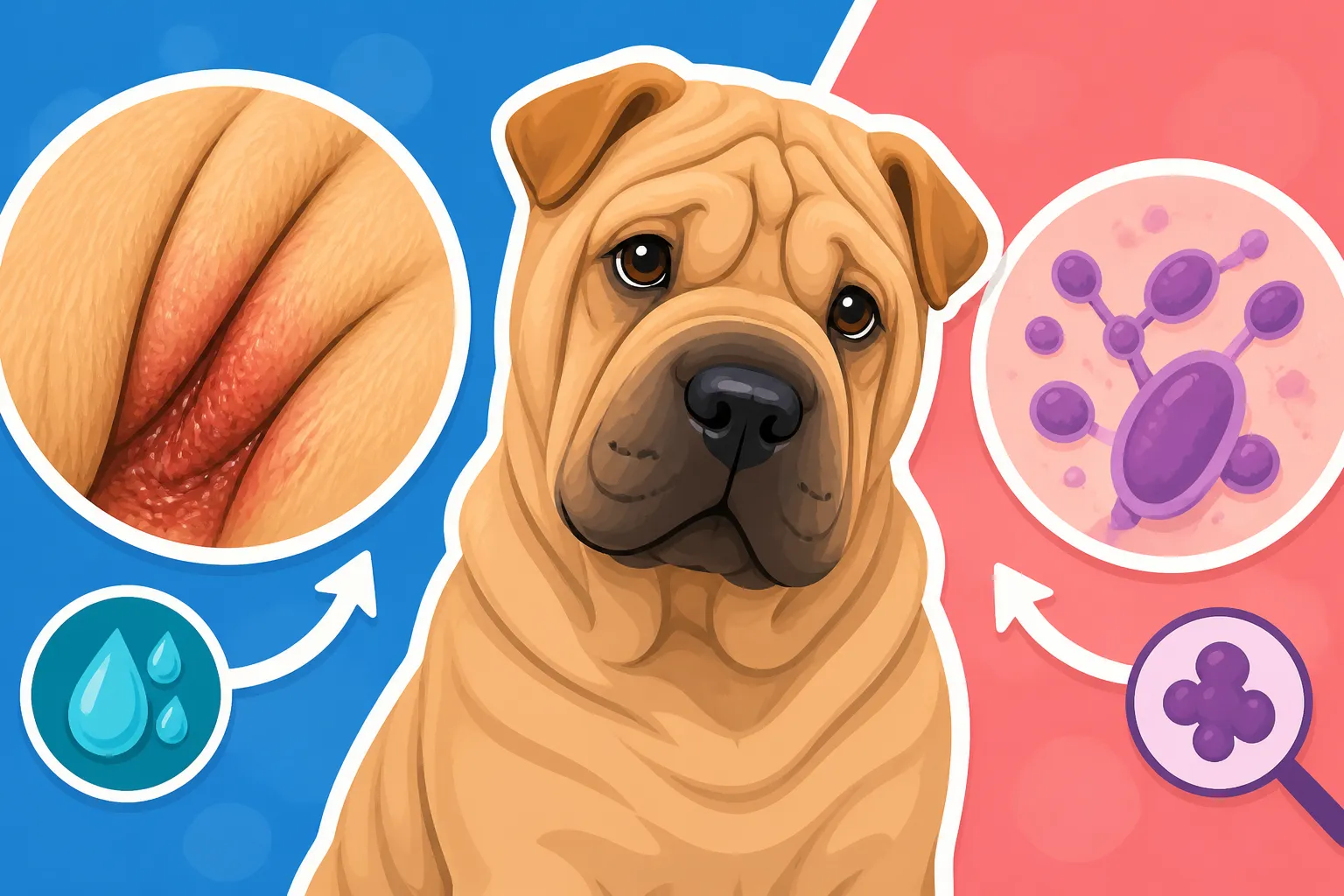
Look for redness within the folds – a tell-tale sign of inflammation. The skin might appear greasy or oily to the touch, and it can start to darken, becoming leathery and hyperpigmented over time. This thickening and darkening are the skin's chronic response to constant irritation. Your Shar Pei will likely be intensely itchy, rubbing their face on furniture, pawing at their ears, or scooting if the infection is around the tail base. They might even become a bit withdrawn or irritable due to the constant discomfort. It's important to remember that these infections can also be bacterial, or a combination of both, so professional diagnosis is always best. However, if you see these signs, particularly that distinct smell, it's highly likely you're dealing with a yeast overgrowth in those perpetually damp areas. Ignoring these signs only allows the infection to deepen and become more entrenched in the skin. Understanding Skin Fold Dermatitis on a Shar Pei gives you a broader picture of these issues.
Here’s a quick comparison to help you differentiate:
| Feature | Healthy Shar Pei Folds | Yeast-Infected Shar Pei Folds |
|---|---|---|
| Appearance | Pink, supple, clean skin; no visible discharge. | Red, inflamed, greasy, sometimes thickened or darkened skin. |
| Smell | Minimal or natural dog scent. | Strong, sweet, yeasty, "corn chip" or rancid odor. |
| Texture | Smooth, soft. | Greasy, oily, potentially crusty or scaly; skin may feel thick. |
| Behavior | No signs of discomfort or itching in the area. | Persistent itching, rubbing, pawing; can be painful to touch. |
| Discharge | None. | Brownish, reddish, or yellowish discharge or debris within folds. |
Preventing Dampness and Managing Yeast in Shar Pei Folds
The good news is that while Shar Pei folds are prone to issues, proactive and consistent care can make a world of difference. It's about diligence and understanding the specific needs of their unique skin.
Diligent Drying Is Key
This might sound incredibly simple, but truly diligent drying after any exposure to moisture is perhaps the single most important step in preventing yeast infections in your Shar Pei's folds. It’s not enough for the top layer of fur to feel dry; you need to ensure every deep crease and fold is completely arid.
After baths, swimming, or even just a walk in damp weather, grab a soft, absorbent towel and gently but thoroughly blot every single fold. For deeper folds, especially around the face and neck, you might need to carefully lift the skin layers to expose the underlying areas. Many owners find a cool-setting hairdryer (never hot!) invaluable for this process. Aim the airflow directly into the folds, moving it constantly to prevent overheating. The goal is to dry the skin, not just the fur, and this takes time and patience. It's a non-negotiable step in your routine to ensure Why a Damp Shar Pei Develops Infection. This isn't a quick wipe; it's a careful, deliberate process. Think of it as actively removing the yeast's favorite habitat. On Chewy or Amazon, you can find small, quiet pet dryers or super-absorbent microfiber towels designed to speed up this process, making it less of a chore for both you and your dog.
Regular Fold Cleaning and Maintenance
Beyond just drying, a consistent cleaning routine for your Shar Pei's folds is absolutely essential. This isn't something you can do once a week and forget about; for many Shar Pei, it's a daily ritual, or at least every other day, especially in areas prone to issues like facial folds or the tail pocket. Every Fold on a Shar Pei Is a Place Something Grows, so you need to be vigilant.
There are many products available specifically designed for cleaning skin folds. Antifungal and antibacterial wipes or solutions containing ingredients like chlorhexidine or miconazole are often recommended by veterinarians. These active ingredients help to keep yeast and bacterial populations in check. Gently wipe the inside of each fold, ensuring you remove any debris, moisture, or waxy build-up. Always follow up with a dry wipe or a blast of cool air to ensure the fold is completely dry after cleaning. Avoid harsh chemicals or human baby wipes, which can be irritating. Your vet can recommend the best specific product for your dog's individual needs. For maintenance, a gentle, soap-free cleanser or plain water, followed by thorough drying, might suffice. This regular cleaning proactively removes the food source for yeast and bacteria, drastically reducing their ability to colonize and cause infection. You can easily find a variety of suitable wipes and solutions on online pet supply stores like Chewy or Amazon. Remember How Often a Shar Pei's Folds Need Cleaning is determined by your dog's individual anatomy and susceptibility.
Addressing Underlying Issues and Veterinary Care
While diligent cleaning and drying are your first line of defense, sometimes yeast infections become chronic or severe, indicating there might be an underlying issue that needs professional attention. If you're doing everything right and your Shar Pei is still battling persistent fold infections, it's time to dig deeper with your veterinarian.
Often, recurrent yeast infections are a secondary symptom of allergies, whether environmental (like pollen or dust mites) or food-related. When a dog has allergies, their skin barrier can become compromised, and inflammation can create an even more hospitable environment for yeast to thrive. Your vet might suggest allergy testing or an elimination diet to identify and manage these underlying triggers. Additionally, some Shar Pei may have more severe mucinosis or genetic predispositions that make them more susceptible. In these cases, your vet might prescribe medicated shampoos, topical creams, or even oral antifungal medications to get the infection under control. For severe cases, especially in deep tail pockets that are constantly wet and inflamed, surgical intervention to remove the problematic fold (a "tail amputation" or "vulvoplasty" for female dogs) might be considered as a last resort to provide lasting relief. Don't hesitate to seek veterinary advice; they can help uncover why your Shar Pei's skin is constantly flaring up and recommend a tailored treatment plan. What a Shar Pei's Skin Tells You Before Its Behavior Does includes these persistent infections, signaling deeper problems.
Disclaimer
This article is for general informational purposes only and does not constitute professional advice. Laws, prices and regulations vary by location and change over time. Consult a qualified professional for guidance on your specific situation.