Whether a Blue Shar Pei Is Recognized
A blue Shar Pei can be recognized as a legitimate coat color, but what “recognized” means depends on the registry and whether you mean breed registration or show eligibility. Blue usually describes a slate-gray dilute coat, not a bright blue one. Here’s how to tell the color apart, what to check in a breed standard, and why coat color alone says little about a dog’s health or quality.
What blue means in a Shar Pei
Blue is a coat color, not a blue tongue
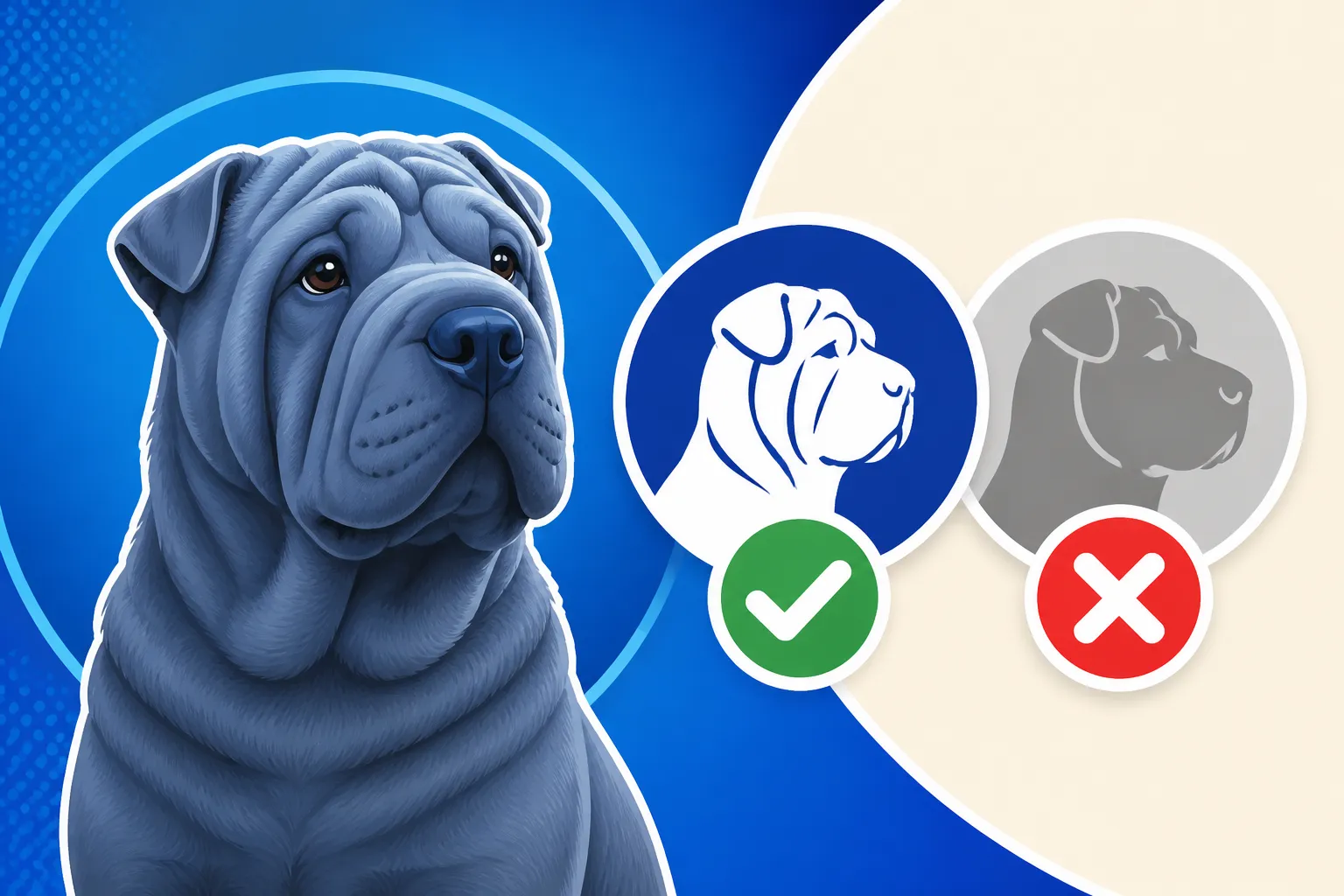
A blue Shar Pei has a gray or slate-colored coat, often with matching dark gray pigmentation on the nose and other exposed areas. The shade can vary: one dog may look like a soft charcoal gray, while another appears lighter or more silvery. Lighting, a recent bath, and the dog’s coat length can all affect how the color looks in photographs.
The word “blue” can be confusing because Shar Pei are also known for their blue-black tongues. That tongue color is a breed feature, not proof that the dog has a blue coat. A fawn or cream Shar Pei can have a blue-black tongue, and a blue-coated Shar Pei does not have a different kind of tongue simply because of its coat color.
If you’re comparing puppies, look at the coat in natural daylight and check the nose and other pigmentation too. Even then, color names used by breeders may not match the exact terms used by a kennel club. For a broader overview of the breed’s accepted colors, see Which Colors a Shar Pei Comes In.
Blue is generally a dilute coat color
In dog coat-color terminology, blue commonly refers to a diluted form of black pigment. The result is gray rather than black. Other dilute shades can include lilac, which tends to look lighter or more muted, and different registries or breeders may use color labels in slightly different ways. That variation can make online puppy listings hard to compare.
A dog described as blue is not necessarily a different breed type, and its coat color does not establish its ancestry or health. If a breeder uses a less familiar label, ask for a clear description of the puppy’s coat and the color recorded on its registration paperwork. A written answer is more useful than relying on a sales photo, where lighting and editing can change the appearance.
A blue coat is also not the same thing as a coat pattern. A solid blue Shar Pei has a coat that appears one main color, though natural shading may occur. That distinction matters because some standards describe solid colors separately from patterned coats. For background on this terminology, read What a Dilute Shar Pei Is.
Whether kennel clubs recognize a blue Shar Pei
Recognition depends on the registry’s wording
Many breed standards describe Shar Pei coat colors using a broad rule that permits solid colors other than white. Under that kind of wording, blue can fit as a solid coat color. However, a registry may also publish a list of color terms, clarify how colors are recorded, or apply separate show rules. So the most reliable answer is not simply “blue is recognized everywhere”; it is to check the rules of the particular organization involved.
For example, recognition can mean several different things:
| What you mean by recognized | What to check |
|---|---|
| Eligible for registration | The registry’s breed and color registration rules |
| Eligible for conformation shows | The current breed standard and show regulations |
| Accepted as a color in a breeder’s records | The breeder’s terminology and the registry paperwork |
| Typical or preferred in a breeding program | The breeder’s health, temperament, and structure priorities |
A blue Shar Pei may be registrable while still being subject to show rules that differ by country or organization. Registration is an administrative record; it does not automatically guarantee that a dog meets every requirement for a conformation class. If you are buying a puppy with plans to show, ask the relevant kennel club or national breed club directly and get the answer in writing.
For more context on how standards may vary across organizations, see Whether the Shar Pei Standard Differs Between Countries. It can also help to compare the rules for other coat colors, such as Whether a Shar Pei Can Be Solid Black and Whether a Cream Shar Pei Is Standard.
Show eligibility is not the same as breed quality
A color can be accepted without being the main measure of a dog’s quality. In a show setting, judges assess the dog against the standard as a whole, including structure, movement, coat, and other breed characteristics. A blue coat does not compensate for a significant structural problem, and a more common color does not by itself make a dog a better example of the breed.
The same distinction matters for pet buyers. A breeder may emphasize a blue puppy because the color attracts attention, but color should not distract from questions about health history, temperament, the parents, and the conditions in which the puppies are raised. Ask what health screening is done, whether the breeder will discuss the breed’s known health concerns, and what support is offered if a puppy develops a problem.
If you are considering a patterned or unusual-looking puppy, check the relevant rules before assuming it is show eligible. The breed-standard discussion in Whether a Flowered Shar Pei Can Be Shown is a useful reminder that registration, color description, and show eligibility are related but not identical questions.
Choosing and caring for a blue Shar Pei
Color alone does not tell you whether a puppy is healthy
A blue coat is not a health certificate. It also does not automatically mean a dog will have more health problems than a Shar Pei of another color. The breed has health concerns that deserve attention regardless of coat shade, including skin and ear problems, eye issues, and familial Shar Pei fever. A buyer should ask about those risks rather than treating a particular color as proof of good or poor health.
Be cautious if a seller claims that blue Shar Pei are always healthier, rarer in a way that guarantees quality, or free from common breed concerns. Those claims need evidence, and color by itself cannot establish them. Likewise, a puppy with a beautiful, even coat can still need routine veterinary care and careful monitoring as it grows.
Pay attention to the puppy in front of you. Look for comfortable movement, alert and relaxed behavior, clean eyes and ears, and skin that is not persistently inflamed or irritated. Ask for the puppy’s veterinary records and make sure you understand which vaccinations, examinations, and treatments have already been completed. For further context on color and skin, see Whether a Dilute Shar Pei Has More Skin Problems.
Keep grooming simple and watch the skin
A blue Shar Pei does not need a special grooming routine just because of its color. The practical priorities are the same as for other Shar Pei: keep the coat clean, dry thoroughly after bathing, and check the skin for redness, odor, dampness, or irritation. Pay particular attention to areas where skin folds meet, since trapped moisture can be uncomfortable and may contribute to skin trouble.
Use products suited to your dog’s skin and follow your veterinarian’s advice if irritation or infection develops. Basic grooming supplies such as a soft brush or dog shampoo are available through pet retailers, including Chewy, but a retail product is not a substitute for veterinary guidance when a dog has persistent itching, sores, or a strong odor. If your veterinarian recommends a specific medicated product, follow the directions provided rather than substituting a general shampoo.
A second mention of Chewy is only relevant for ordinary supplies: it can be one place to compare basic brushes, towels, or dog-safe grooming products, but check labels and avoid assuming that a product is suitable for sensitive skin. If you are unsure whether a wipe, shampoo, or other item is appropriate, ask your veterinary clinic before using it—especially on irritated or broken skin. A third practical point is that a retailer such as Chewy may help you restock routine supplies, while diagnosis and treatment should stay with your veterinary team.
Questions to ask before bringing one home
Ask for precise color and registration details
If a breeder calls a puppy blue, ask what color will appear on its registration documents and which registry will record it. Request recent photos taken in natural light, but don’t treat a photo as definitive proof of the registered color. Coat shade can look different across cameras, indoor lighting, and editing, and puppies’ appearance can change as they mature.
If show eligibility matters to you, ask the breeder to point you to the exact rule that applies. Confirm it with the registry or breed club rather than relying only on a seller’s verbal assurance. This is especially important if a listing uses terms such as “rare,” “exclusive,” or “show quality” as selling points.
Also ask whether the puppy’s parents have relevant health information and what support the breeder provides after the sale. A responsible conversation should cover more than color: it should include veterinary care, the puppy’s socialization, the parents’ temperament, and the health challenges that can occur in the breed.
Put health and temperament ahead of a color label
When choosing between puppies, it is understandable to feel drawn to a particular shade. Still, the best match is the puppy whose health, temperament, and background fit your household—not necessarily the one with the rarest-looking coat. A breeder who welcomes thoughtful questions and discusses potential breed concerns openly is more reassuring than one who focuses almost entirely on color.
Before making a decision, confirm the registry’s rules, review the available health records, and consider the ongoing care a Shar Pei may need. A blue coat can be a recognized and attractive color, but it does not change the responsibilities of owning the breed. You are choosing a dog, not just a coat description.
Disclaimer
This article is for general informational purposes only and does not constitute professional advice. Laws, prices and regulations vary by location and change over time. Consult a qualified professional for guidance on your specific situation.