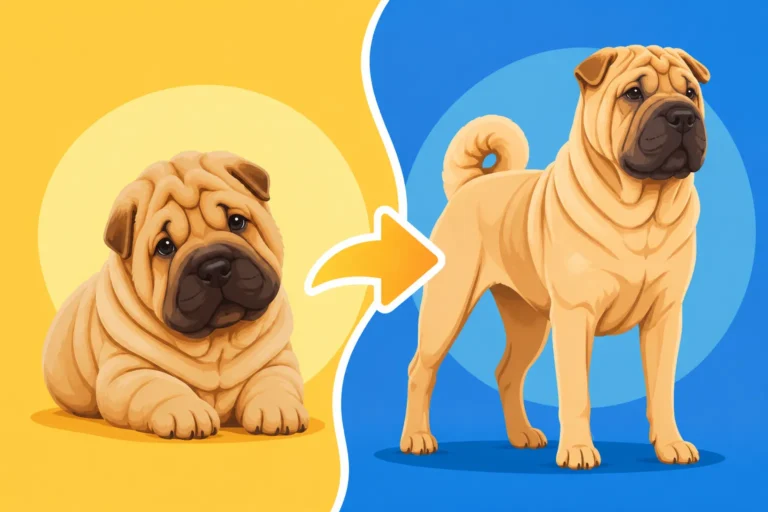
Whether a Shar Pei Has Won Best in Show at Westminster
A Shar Pei’s unusual wrinkles and distinctive silhouette can make it seem like a natural show-ring star, but Westminster’s top prize is a different matter. No Shar Pei has won Best in Show at the Westminster Kennel Club Dog Show. This guide explains what that result means, how a dog reaches the final, and why the breed’s show history is more nuanced than one trophy.
Has a Shar Pei ever won Westminster Best in Show
The short answer is no
A Shar Pei has not taken Westminster’s Best in Show title. The breed can be seen in conformation competition, where dogs are assessed against the breed standard, but no Shar Pei has gone on to win the show’s highest award.
That distinction matters because “has competed at Westminster” and “has won Westminster” are very different claims. A dog may enter the show, win its breed competition, and advance through later rounds without taking Best in Show. Conversely, a breed’s absence from the winner list does not mean it has never been represented in the ring.
For a viewer watching from home, it is easy to assume the dog with the most striking appearance will make it to the final. Westminster judging is not a popularity contest, though, and unusual looks alone do not determine the winner. Judges assess how closely each dog conforms to its breed’s written standard, along with its movement, condition, and overall presentation.
What the record does and does not tell you
The answer to this particular question is about the show’s final award, not the entire history of Shar Pei competition. A Shar Pei could earn recognition in breed judging or perform well within its group and still not win Best in Show. Those achievements are separate steps, and each one narrows the field.
It is also worth separating a breed’s success at Westminster from its standing in other competitions. A dog may earn titles at other shows, have a successful career in the ring, or be admired by breed enthusiasts without winning Westminster’s top prize. One show’s outcome is not a complete report card for a breed.
If you are checking a claim that a Shar Pei “won Westminster,” look closely at what the person means. They may be referring to a breed-level win, a group placement, or a different dog show altogether. Asking whether the dog won Best in Show specifically helps clear up the confusion.
How a dog reaches Best in Show
Breed judging comes first
Westminster follows a progression rather than putting every dog into one enormous final competition. Dogs are first assessed within their breed. The judge compares each entry with the standard for that breed and selects the dog that best represents it in the ring.
For a Shar Pei, that means the judge is looking for the qualities described in the Shar Pei standard—not simply the deepest wrinkles or the most dramatic expression. Breed-specific features matter, but the dog’s structure, movement, condition, and overall balance matter too. A dog that looks especially distinctive to a casual observer is not automatically the one that best meets the standard.
Breed judging can be a close contest, particularly when several dogs are well presented and fit the standard in different ways. The dog selected to represent its breed then advances to the next stage. That is an important achievement, but it is not yet a Best in Show win.
Group judging narrows the field
After breed judging, dogs compete in one of the show’s groups. The Shar Pei is in the Non-Sporting Group. At this stage, it is judged alongside dogs from other breeds in that group, each with its own history, appearance, and standard.
The group round is where a dog’s strengths must stand out among a much wider variety of breeds. Judges are not deciding which breed is universally “best.” They are selecting the dog that, on that day and in that ring, they consider the strongest representative of its breed and group. The group winner advances to Best in Show.
| Stage | What is being judged | What advancing means |
|---|---|---|
| Breed judging | Dogs competing within the same breed | One dog is selected to represent its breed |
| Group judging | Breed winners competing within the same group | One dog is selected to represent that group |
| Best in Show | The group winners competing against one another | One dog receives the show’s top award |
A Shar Pei can therefore be part of Westminster without appearing in the final Best in Show lineup. It would need to be selected at breed level and then win the Non-Sporting Group to reach that final round.
Best in Show is a final-round result
Best in Show is awarded after the group winners have been selected. The finalists represent different groups, so the judge is comparing dogs with very different physical designs and breed histories. The question is not whether one type of dog is better in every setting, but which finalist most convincingly meets its own standard and presents as the strongest overall dog in the ring.
That makes the final result especially easy to misread. A breed that does not win Best in Show may still have had a successful entry, and a dog that reaches the final has already passed several rounds of competition. The top award is a single outcome from a particular show, not a general ranking of every breed’s quality or value.
Why the Shar Pei’s show history can be misunderstood
Recognition and eligibility shape the timeline
The Shar Pei’s place in American dog shows is connected to its formal recognition by the American Kennel Club. If you are trying to understand when the breed could compete in the relevant AKC conformation classes, When the AKC Recognized the Shar Pei is a useful starting point.
Recognition and Westminster success are separate milestones. Recognition establishes a breed’s place within the organized system; it does not guarantee a win at a particular show. A breed can become eligible for competition and take part over time without ever producing a Westminster Best in Show winner.
This can also make historical comparisons tricky. Long-established breeds have had many more opportunities to appear in major shows than breeds recognized later. A dog cannot win a title in a competition category before it is eligible to enter that category. When looking at a breed’s record, it helps to consider both the result and how long the breed has been participating.
The standard is not a contest for the most wrinkles
The Shar Pei’s wrinkled skin is one of its most recognizable traits, and it naturally draws attention in a show ring. But the standard describes a whole dog, not a single feature. Judges consider how the dog is built and moves, as well as the way its breed characteristics come together.
That is why a Shar Pei’s appearance can be captivating to spectators without being the sole deciding factor for a judge. A dramatic outline, deep folds, or a particularly memorable face may catch the eye, but conformation judging is meant to assess the dog as a representative of its breed. For more context on how the written description influences appearance, see Whether the Shar Pei Standard Should Change.
There is also a difference between recognizing a breed’s hallmark and assuming that “more” of that hallmark must be better. Show judging is not simply a contest to reward the most extreme version of a feature. The question is whether the dog fits the standard as a whole and appears sound and well presented.
Breed popularity is not the same as show success
A dog breed can be widely recognized by the public and still have a limited record of top show wins. The Shar Pei’s unusual appearance has made it memorable, but public familiarity does not predict how often a breed will win in the conformation ring. If you are curious about how visibility and registration trends differ, Where the Shar Pei Ranks in AKC Registrations offers a related angle.
A Westminster title is also not a popularity vote among viewers. People may favor a Shar Pei because they love its wrinkles, its dignified expression, or the breed’s distinctive history. Judges, however, use the standards and procedures of conformation competition. Those two perspectives can coexist: a dog can be a viewer’s favorite without winning the event.
The breed’s history adds another layer. The Shar Pei’s modern development and changing popularity have influenced how people think about its appearance and identity. What Being Saved Did to the Shar Pei's Health explores some of that broader history, while The Shar Pei Against the Other Wrinkled Breeds helps place its distinctive look alongside other dogs known for loose skin or facial folds.
What a Westminster result means for Shar Pei owners
It is not a measure of health or suitability as a pet
A Best in Show title is a conformation award. It does not tell you whether a particular breed is easy to care for, a good match for your household, or likely to be healthy. Those questions require looking at the individual dog, its breeding and health history, and the needs of the breed.
For a prospective owner, it is more useful to learn how the Shar Pei’s characteristics affect daily life than to use Westminster wins as a shortcut. The breed’s background, appearance, and care needs each tell a different part of the story. You can explore the historical side through Where the Name Shar Pei Comes From and broader breed context through Whether the Shar Pei Is Recognized Worldwide.
Likewise, a show win should not be treated as proof that every dog of a winning breed is a good fit for every home. Dogs are individuals, and responsible ownership depends on practical considerations such as health care, training, socialization, and the time a household can provide.
It is one achievement within a much larger show world
Westminster is prominent, but it is only one competition in the larger world of dog shows. A Shar Pei’s lack of a Best in Show title there does not erase its participation in conformation or any success individual dogs may have had elsewhere. It simply answers the specific question of whether the breed has received that particular award at that particular event.
So if you are watching Westminster and hoping to see a Shar Pei take the top prize, the breed has not yet done so. If you are trying to decide what the result says about the Shar Pei, the answer is much less dramatic: it describes a show record, not the breed’s worth, health, or potential as a companion.
Disclaimer
This article is for general informational purposes only and does not constitute professional advice. Laws, prices and regulations vary by location and change over time. Consult a qualified professional for guidance on your specific situation.