Whether the Shar Pei Became an Internet Breed
A Shar Pei’s deeply folded skin, small ears, and solemn, wrinkled expression make it instantly recognizable in a photo or short video. That visual appeal has helped the breed circulate online, but it does not mean the Shar Pei became a lasting internet sensation in the same way as a few individual viral pets. Here’s how online attention shaped its image—and what that attention leaves out.
How the Shar Pei Became So Recognizable Online
A face that reads clearly on a small screen
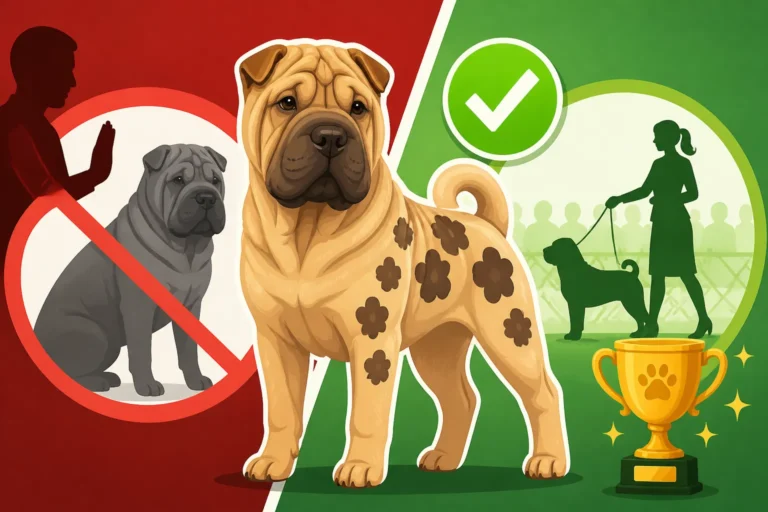
Some dogs need a caption before a viewer can tell what makes them distinctive. A Shar Pei often doesn’t. The loose skin, folds around the head, and compact ears give the breed a striking outline, even in a quick snapshot or a tiny profile picture. Online, where people scroll past countless images at speed, an unmistakable silhouette can be a real advantage.
The dog’s expression also invites interpretation. Depending on the angle, a Shar Pei may look serious, skeptical, sleepy, or adorably puzzled. That gives people an easy setup for jokes and captions: the dog looks like it is judging a bad decision, waiting impatiently, or silently objecting to Monday morning. The humor usually comes from the contrast between a very expressive-looking face and a dog simply sitting still.
Wrinkles are particularly easy to turn into a visual punchline. A puppy with abundant folds may look as if it is wearing an oversized skin suit, while an adult may have a more defined face and fewer folds across the body. This makes Shar Pei photographs easy to recognize and easy to share. It also helps explain why the breed can appear frequently in dog-themed social posts even when a particular Shar Pei has not become famous in its own right.
The appeal is not only about cuteness. A Shar Pei looks unlike the generic image many people have of a dog, so it can prompt curiosity: What breed is that? Is the dog a puppy or an adult? Are those folds normal? For readers who want the breed’s background, Where the Name Shar Pei Comes From provides a starting point beyond the familiar wrinkled face.
Online visibility is not the same as a single viral moment
It is tempting to ask whether one photograph or one meme made the Shar Pei an internet breed. In practice, online visibility is often less tidy. A breed can recur in memes, pet accounts, product promotions, and short videos without being linked to one defining post that everyone remembers. A particular Shar Pei might go viral for a time, while the breed’s broader recognition grows through many separate posts.
That distinction matters. “Internet breed” can mean several things: a dog that appears regularly in popular posts, a breed people recognize from memes, or a breed whose popularity is driven by online attention. Those are not interchangeable. The Shar Pei is especially suited to visual recognition, but that alone does not prove that social media caused a surge in ownership or made the breed universally popular.
Its history of public attention also began well before modern social platforms. The breed drew international notice through media coverage and renewed interest in its survival; the story is explored in One Letter to a Dog Magazine Saved the Shar Pei and Guinness Once Called the Shar Pei the Rarest Dog on Earth. Those older episodes helped introduce the breed to audiences long before people could share a dog video with a tap.
So, yes, the Shar Pei has traits that make it highly shareable online, and the breed has benefited from memorable social-media images. But “the Shar Pei became an internet breed” is most accurate if it means that the breed is naturally recognizable and periodically popular in online dog culture—not that a single viral event transformed it into a universal sensation.
What Viral Shar Pei Posts Show—and What They Leave Out
The folds are the headline, not the whole dog
A post focused on a Shar Pei’s wrinkles usually shows the part that stands out most to viewers. It rarely shows what it takes to care for the dog, how the dog behaves at home, or whether its skin and ears are comfortable. A still image cannot tell you whether the dog is relaxed, itchy, overheated, or simply tolerating a photo session.
Online content can also make a breed seem like a visual novelty. When people see a puppy’s loose skin presented as a joke or a cute feature, they may assume that more wrinkles automatically mean a better or more desirable dog. That is a poor way to judge health or suitability. A breed’s appearance is only one part of the picture, and exaggerated features can bring care needs that are not visible in a quick post. Whether People Buy Shar Pei for the Wrinkles Alone explores the gap between appearance-led interest and the realities of choosing a dog.
The Shar Pei’s distinctive look is connected to breed-specific health considerations, too. Skin, eyes, and ears can need thoughtful attention, and certain inherited conditions deserve discussion with a veterinarian or a responsible breeder. A playful meme cannot communicate those nuances. For a broader view of how popularity and the breed’s history intersect with wellbeing, see What Being Saved Did to the Shar Pei's Health.
This is not a reason to avoid Shar Pei content or to assume that every Shar Pei has serious health problems. It is a reminder to treat a viral image as entertainment, not as a complete portrait of the breed. A dog may look wonderfully photogenic while still needing careful grooming, regular health checks, and a household ready for its temperament and care routine.
A post can encourage interest without preparing someone for ownership
When a breed catches someone’s eye online, the next step may be searching for puppies, rescue organizations, or supplies. That curiosity is understandable. The trouble begins when a viewer mistakes a funny clip for a reliable guide to daily life with the dog. Living with a Shar Pei involves much more than taking appealing photos: owners need to understand socialization, handling, exercise, skin care, and the breed’s individual health history.
For example, a viewer might see a calm Shar Pei sitting beside a child and conclude that every Shar Pei is automatically comfortable around children. One polished clip cannot show the supervision, training, boundaries, or individual temperament behind that moment. Likewise, a short video of a dog greeting another pet does not establish that the breed as a whole will be easy to introduce to other dogs.
Online attention can also flatten differences between dogs. A young puppy with pronounced folds may look very different from an adult, and two dogs of the same breed can have different energy levels, sensitivities, and medical needs. If you are exploring the breed seriously, The Shar Pei Against the Other Wrinkled Breeds can help put its appearance in context, while Whether a Shar Pei Is More Dog Than It Looks speaks to the responsibilities behind the compact, memorable image.
A more useful question than “Is this dog cute?” is “Would this dog fit my actual home and routine?” Consider the time you can give to training and care, whether you can manage veterinary expenses, how the dog will fit with any children or pets, and whether you have access to a veterinarian familiar with the breed. A viral post can spark interest; it cannot answer those practical questions.
How Online Attention Can Affect Shar Pei Buying and Care
The risk of shopping from a viral impulse
A sudden interest in a breed can lead people to browse puppies, accessories, and grooming products before they have learned what the dog needs. Shopping itself is not the problem. The problem is choosing quickly because a dog in a video looked charming, then discovering that the real commitment includes daily care and individual health considerations.
If an entertaining post sends you to retailers such as Chewy, pause before adding products to your cart. A cute video does not tell you which food, shampoo, or grooming tool is appropriate for a particular dog. Ask a veterinarian what is suitable, especially if the dog has itching, recurring ear trouble, or another diagnosed condition. A product marketed broadly to dog owners is not automatically the right choice for every Shar Pei.
The same caution applies to puppy listings and breeder claims. A glossy photo or a lively social account cannot establish that a breeder prioritizes health, provides meaningful records, or will be available to answer questions after a puppy goes home. Ask about the parents, health history, temperament, and the breeder’s approach to raising and socializing puppies. If adopting, ask what is known about the individual dog rather than relying on assumptions about the breed.
| What a viral post may suggest | What it cannot establish | A better next step |
|---|---|---|
| The dog’s folds are adorable | Whether the dog’s skin is healthy or comfortable | Learn the dog’s grooming and veterinary needs |
| The breed is calm in a short clip | How that individual behaves in different situations | Ask about temperament, training, and daily routine |
| A puppy looks unusually wrinkled | How its appearance and needs will change as it matures | Discuss development with a knowledgeable breeder or veterinarian |
| A product appears in a pet video | Whether that product suits your dog | Check with your veterinarian before treating a medical problem |
| A listing looks trustworthy | Whether the source uses responsible breeding or rescue practices | Ask detailed questions and review records in person where possible |
Chewy may be one place an owner looks for ordinary supplies, but a retailer cannot assess a Shar Pei’s health or decide whether a product will treat a skin or ear problem. That judgment belongs with a veterinarian who can examine the dog. This distinction helps keep online shopping in its proper role: useful for finding everyday items, not a replacement for personalized care.
Share the dog, not misleading claims
Owners and fans can enjoy posting Shar Pei photos without turning every post into a breed advertisement. A caption can be funny while still avoiding claims that all Shar Pei are low-maintenance, naturally good with every dog, or defined only by wrinkles. If a post includes a health or training claim, it is worth checking whether it reflects the experience of one dog or sound advice that applies more broadly.
It also helps to respect the dog’s comfort. A dog that is being dressed up, posed, or handled for a video should be able to move away and take a break. Signs of stress can be subtle, and people watching a clip cannot always see what happened before or after it was recorded. The dog’s welfare should come before getting a more amusing shot.
For current owners, sharing less glamorous parts of life can make online portrayals more balanced. A photo of a quiet walk, a patient training session, or a routine grooming check gives viewers a fuller picture than another close-up of folds. It may even help someone who is genuinely researching the breed understand that day-to-day care is part of the relationship.
Chewy can appear in this context as a place to source routine supplies, but an owner should not let a product page or a social-media recommendation stand in for advice tailored to their dog. If a Shar Pei has persistent itching, a bad odor, discharge, squinting, or pain, seek veterinary guidance rather than trying a sequence of products suggested by comments. Online communities can offer companionship and practical experience, but they cannot examine a dog.
So, Did the Shar Pei Become an Internet Breed?
A recognizable online dog, with a longer story behind it
The Shar Pei became a familiar presence in online dog culture because it photographs distinctly and has an expression that people readily turn into humor. Images of wrinkled puppies and serious-looking adults travel well in a fast-moving feed. That gives the breed a form of internet recognition, even without one universally defining viral moment.
But online visibility is only one chapter in the breed’s public story. The Shar Pei was known and discussed before social media, and the breed’s past includes near rarity, renewed attention, and difficult questions about how breeding choices affect dogs. The public image of a cute, folded face can coexist with that more complicated history; it should not replace it.
In other words, the answer depends on what “internet breed” means. If it means a breed with a memorable look that appears in shareable pet content, then yes, the Shar Pei fits. If it means a breed whose identity, ownership, or success is defined entirely by one internet trend, the label is too broad. Its online popularity is real, but it does not tell the whole story.
What prospective owners should take from the attention
If you first noticed the Shar Pei online, there is nothing wrong with letting a photo start your research. Just keep moving beyond the photo. Learn about the breed’s history, typical temperament, health considerations, and care needs; speak with responsible breeders or rescues; and ask a veterinarian what ongoing care might look like for the individual dog you are considering.
If you already share a home with a Shar Pei, online interest can be a lovely way to connect with other owners. It can also create unrealistic pressure to make your dog perform for the camera or match the look of a viral puppy. Your dog does not need to be a meme to be a wonderful companion. A comfortable, healthy dog resting off-camera is every bit as worth celebrating.
For a grounded perspective from the owner’s side, Whether Shar Pei Owners Would Choose One Again can help frame what people may appreciate about living with the breed alongside the work it involves. The most helpful online image of a Shar Pei is ultimately one that makes people curious enough to learn more—not one that convinces them a distinctive face tells them everything they need to know.
Disclaimer
This article is for general informational purposes only and does not constitute professional advice. Laws, prices and regulations vary by location and change over time. Consult a qualified professional for guidance on your specific situation.