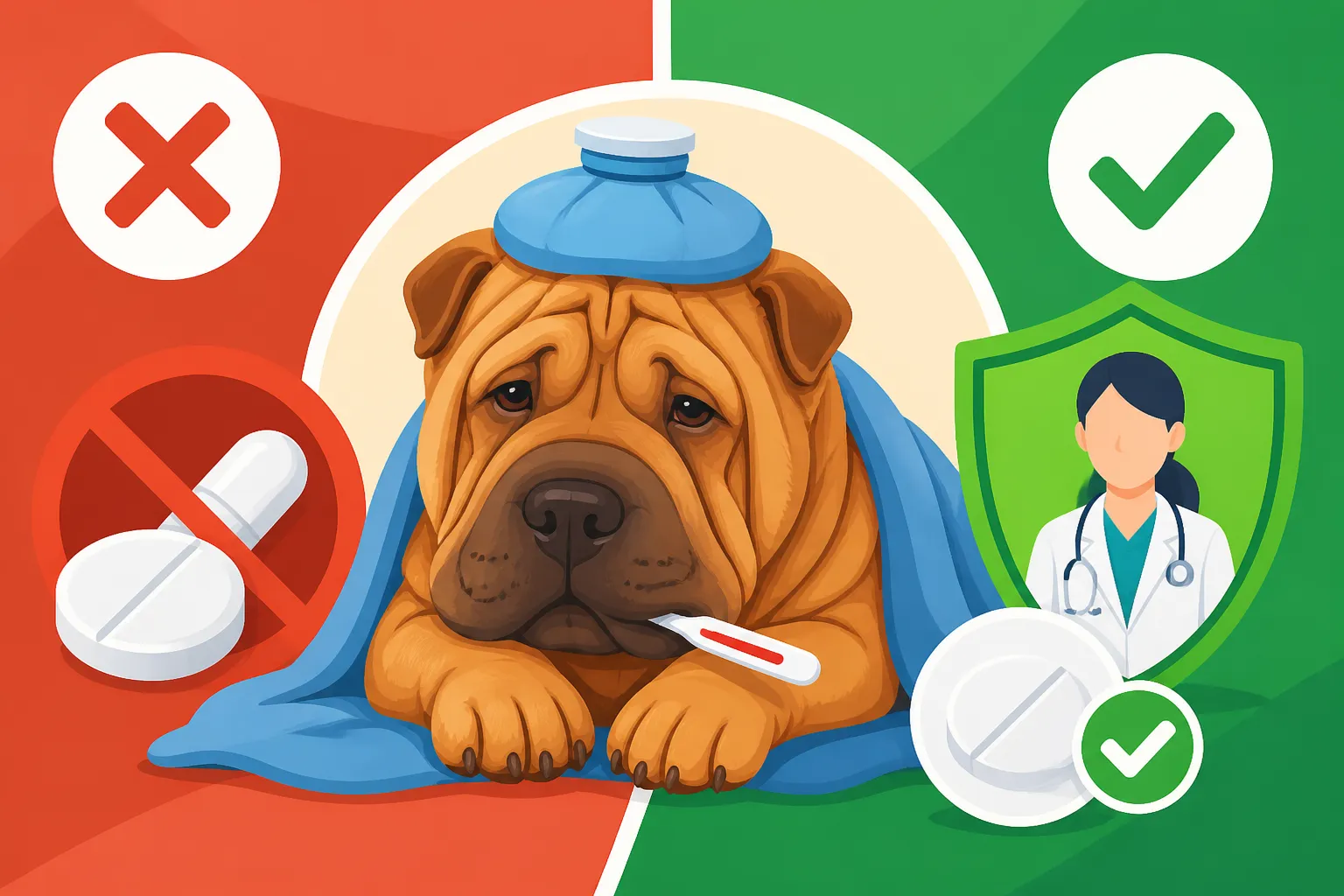
Whether Aspirin Is Safe for a Feverish Shar Pei
That heart-stopping moment when your beloved Shar Pei suddenly seems lethargic, isn't eating, and feels warm to the touch is something many of us know all too well. When their temperature spikes, a common, well-meaning thought might be to reach for human aspirin, but for our unique wrinkly friends, this seemingly simple solution can be fraught with danger. This guide will walk you through why aspirin isn't safe for a feverish Shar Pei and what truly safe, vet-approved alternatives exist to help them feel better.
The Dangers of Aspirin for Shar Pei Fever
It's completely understandable to want to ease your Shar Pei's discomfort quickly when they're running a fever. Many human medications, including aspirin, are readily available in our homes, and it's easy to assume that if it works for us, it might work for them. However, giving your Shar Pei aspirin, especially for the fevers associated with Familial Shar Pei Fever (FSF), is a dangerous gamble. Their physiology is vastly different from ours, and aspirin carries significant risks for dogs, compounded by the specific health predispositions of the Shar Pei breed.
Aspirin's Impact on a Shar Pei's Gastrointestinal System
Aspirin, or acetylsalicylic acid, is a non-steroidal anti-inflammatory drug (NSAID) that works by inhibiting certain enzymes in the body. While this reduces pain and inflammation, it also comes with notable side effects. For dogs, one of the most immediate and common dangers is gastrointestinal upset. Aspirin can directly irritate the lining of the stomach and intestines, leading to symptoms like vomiting, diarrhea, and loss of appetite.
In more severe cases, aspirin can cause painful stomach ulcers and even internal bleeding. Imagine your already sick Shar Pei, feeling miserable from a fever, then having to contend with excruciating stomach pain and the potential for a life-threatening bleed. This is not a hypothetical scenario; it's a very real risk. The unique genetic makeup of Shar Peis, which predisposes them to various inflammatory conditions, doesn't make them more resilient to these gastric side effects; if anything, their sensitive systems might react even more severely.
How Aspirin Affects Blood Clotting in Shar Pei
Beyond the digestive tract, aspirin is well-known for its anti-platelet properties, meaning it interferes with the blood's ability to clot. In humans, this can be beneficial in preventing heart attacks and strokes, but in dogs, it can be a serious problem. If your Shar Pei experiences any internal bleeding – perhaps from an aspirin-induced stomach ulcer, or even a minor injury – their blood will struggle to clot effectively, leading to prolonged bleeding and potentially severe blood loss.
This delayed clotting can be incredibly dangerous if your dog needs emergency surgery for any reason, or if they have an underlying condition that already affects their blood's clotting ability. While less common, some Shar Peis can be prone to certain immune-mediated conditions, and introducing a drug that further complicates their coagulation cascade is simply not worth the risk. It adds another layer of complexity and danger to an already stressful situation.
Renal Concerns with Aspirin Use in Shar Pei
Perhaps one of the most critical concerns for Shar Pei owners when considering aspirin is the potential for kidney damage. NSAIDs, including aspirin, are metabolized by the kidneys and can reduce blood flow to these vital organs, particularly in dehydrated or already compromised animals. Our beloved Shar Peis are unfortunately genetically predisposed to kidney issues, most notably through the development of amyloidosis, which is what actually kills a Shar Pei. This makes their kidneys exceptionally vulnerable.
Giving aspirin to a Shar Pei, especially when they are feverish and potentially dehydrated, can place immense stress on their kidneys, potentially worsening any existing, undiagnosed damage or even precipitating acute kidney injury. Monitoring a Shar Pei's kidneys from as early as two years old is a standard recommendation because of this breed-specific vulnerability. Introducing a drug known to impact renal function without veterinary guidance is a significant risk that could have long-term, devastating consequences for a breed already living with a ticking time bomb in their kidneys.
Understanding Shar Pei Fever and Its Unique Risks
Familial Shar Pei Fever (FSF) isn't just any fever; it's a hereditary auto-inflammatory condition unique to the breed. This isn't a simple bacterial or viral infection that can be "cured" with antibiotics or generic fever reducers. Understanding the nature of FSF is paramount to proper management and explains why a generic approach, like administering aspirin, is inappropriate and dangerous.
The Genetic Link to Shar Pei Fever and Inflammation
The hallmark wrinkles of our Shar Peis, as endearing as they are, are actually linked to the very gene mutation that causes FSF. This mutation results in an overexpression of hyaluronic acid, which gives them their distinctive loose skin, but also leads to systemic inflammation. It's this underlying inflammatory response that triggers the recurrent fevers. It means that when your Shar Pei spikes a fever, it's not simply fighting off a common bug; its own immune system is overreacting in a way that is specific to its breed. This underlying inflammatory process dictates a very different approach to treatment compared to a general fever. Understanding whether breeders knew the wrinkle gene carried the fever can help us appreciate the complexity.
Why FSF is Different from Other Fevers
Because FSF is an auto-inflammatory condition, conventional fever-reducing strategies might not only be ineffective but also mask the true severity of an episode. The fever is a symptom of a systemic inflammatory event, often accompanied by other signs like lethargy, pain, and sometimes swelling of the hocks or muzzle. What a Shar Pei fever episode looks like can vary, but it's always indicative of an underlying problem that requires specific attention.
Unlike a fever caused by an infection that might respond well to a broad-spectrum anti-inflammatory, FSF requires management that addresses the inflammatory pathway itself. This is why medications like colchicine, which modulates the inflammatory response and can prevent amyloid deposition, are often prescribed for Shar Peis with FSF, rather than simple fever reducers. Ignoring the specific nature of FSF and using a general NSAID like aspirin fails to address the root cause and can introduce severe side effects.
The Connection Between Fever and Amyloidosis
The most serious long-term consequence of recurrent FSF episodes is the development of amyloidosis. Amyloidosis is a condition where abnormal protein (amyloid) deposits accumulate in organs, primarily the kidneys, leading to organ failure. Every fever episode, particularly if left unmanaged or poorly managed, increases the risk of amyloid deposition. This is why immediate, correct veterinary intervention is so crucial when your Shar Pei experiences a fever.
The primary goal of managing FSF is not just to bring down the temperature, but to prevent or slow the progression of amyloidosis. This long-term health outlook makes the choice of medication incredibly important. Medications like aspirin that can stress the kidneys further are counterproductive and dangerous in the face of this critical breed-specific disease. Learning whether every feverish Shar Pei gets amyloidosis helps emphasize the importance of early intervention and appropriate treatment.
Safe and Effective Fever Management for Your Shar Pei
When your Shar Pei develops a fever, your first instinct to help them is right, but the method of help is critical. There's a proper, safe sequence of actions to take, always involving your veterinarian. Never underestimate the importance of veterinary guidance for FSF.
What to Do Immediately When Your Shar Pei Spikes a Fever
The moment you suspect your Shar Pei has a fever, the most important first step is to accurately measure their temperature with a rectal thermometer. A normal canine temperature is between 101.0°F and 102.5°F (38.3°C and 39.2°C). Anything above this, especially over 103.5°F (39.7°C), is considered a fever. Knowing what temperature a feverish Shar Pei reaches can guide your urgency. Having what a Shar Pei owner should have at home, including a reliable rectal thermometer, is essential.
Once you confirm a fever, your next step should always be to contact your veterinarian. While waiting for your vet's advice or appointment, you can implement some supportive care at home:
- Offer water: Dehydration can worsen a fever. Encourage your Shar Pei to drink small amounts of water or offer ice chips.
- Create a quiet, cool space: Move them to a calm, cooler room. Avoid drafts.
- Gentle cooling: You can apply cool (not cold) damp cloths to their paws, ear flaps, and groin area. Do not use ice water or immerse them in cold water, as this can cause shivering and actually raise their temperature further. Monitor their temperature regularly during cooling.
Remember, these are supportive measures, not a substitute for veterinary care.
When to Call the Vet – It's Always Sooner Than You Think
For a Shar Pei, any fever episode warrants a call to the vet. It's not a "wait and see" situation. Given the predisposition to FSF and its serious complication, amyloidosis, delaying veterinary attention can have significant consequences. Many owners wonder whether a Shar Pei's fever needs a vet every time, and the answer, for a Shar Pei, is almost always yes.
Your vet will want to know:
- Your Shar Pei's exact temperature.
- Other symptoms: Is your Shar Pei lethargic, refusing food, limping, showing swollen hocks or muzzle, or experiencing vomiting or diarrhea?
- How long the fever has lasted.
- Any previous fever episodes or existing health conditions.
- Whether you have given any medication (be honest!).
The vet might recommend bringing your Shar Pei in for an immediate examination. They may need blood tests to check for signs of infection or inflammation and to assess organ function, especially kidney values, as Why a Shar Pei's Kidneys Need Watching From Two Years Old. They might also check Whether a Shar Pei's Liver Is Affected Too. A timely vet visit ensures that if the fever is indeed FSF, appropriate treatment can begin promptly to mitigate the risks of long-term damage.
Veterinary-Approved Medications and Supportive Care
Once your Shar Pei is at the vet, they can accurately diagnose the cause of the fever and prescribe appropriate medication. Never attempt to guess which fever reducer suits a Shar Pei, as the wrong choice can be detrimental.
The medications a vet might prescribe are vastly different from human aspirin and are carefully chosen to minimize side effects while addressing the fever and inflammation:
- Prescription NSAIDs: If the vet determines an NSAID is appropriate and safe for your dog, they will prescribe a canine-specific NSAID, such as carprofen (Rimadyl), meloxicam (Metacam), or firocoxib (Previcox). These are formulated specifically for dogs and, while they still carry risks, are generally much safer than human aspirin when used under veterinary supervision. They will carefully consider your Shar Pei's kidney function before prescribing.
- Colchicine: For Shar Peis diagnosed with FSF, colchicine is often prescribed as a long-term preventative measure to reduce the frequency and severity of fever episodes and, critically, to prevent or slow the progression of amyloidosis. Whether colchicine helps a Shar Pei is a resounding yes for many, but it's a specific medication for FSF, not a general fever reducer.
- Fluid therapy: If your Shar Pei is dehydrated due to fever, subcutaneous or intravenous fluids may be administered to support organ function and help reduce temperature.
- Other supportive care: Depending on the specific symptoms, anti-nausea medications or gastroprotectants might be given, especially if oral medications are difficult to tolerate.
It's also important to consider pet insurance for these often-unpredictable health events. Many plans, such as those from Healthy Paws, can help with the costs of emergency vet visits, diagnostics, and ongoing medications for conditions like FSF. Knowing that you have financial support can make the decision to seek immediate veterinary care much easier. Always discuss treatment plans, potential side effects, and follow-up care with your vet.
Here's a quick comparison of aspirin versus vet-prescribed NSAIDs for a feverish Shar Pei:
| Feature | Aspirin (Human NSAID) | Vet-Prescribed Canine NSAID (e.g., Carprofen) | Colchicine (for FSF) |
|---|---|---|---|
| Primary Use | Pain, fever, inflammation (human) | Pain, fever, inflammation (canine) | Prevents FSF episodes, reduces amyloid buildup |
| Safety for Shar Pei | NOT RECOMMENDED / DANGEROUS | Generally safer under vet supervision | Safe and recommended for FSF under vet supervision |
| Gastric Risk | High (ulcers, bleeding) | Moderate (monitor for side effects) | Low (primarily GI upset, usually mild) |
| Kidney Risk | High (can exacerbate Shar Pei kidney issues) | Moderate (monitor kidney function) | Low (some GI upset, typically not kidney-focused) |
| Blood Clotting | Inhibits clotting | Minimal impact on clotting at therapeutic doses | No direct impact on clotting |
| Fever Management | Temporary reduction, but high risk | Effective reduction, lower risk | Primarily preventative; direct fever reduction isn't main role |
| Administered By | Owner (high risk of incorrect dose/type) | Vet-prescribed; specific dosage for weight | Vet-prescribed; specific dosage for FSF management |
| Long-Term Implications | Potentially severe organ damage | Generally safe for prescribed duration | Critical for mitigating long-term FSF complications like Amyloidosis Is What Actually Kills a Shar Pei |
This table clearly highlights why reaching for human aspirin is a grave mistake for your Shar Pei. Always consult your veterinarian when your Shar Pei is unwell. The sooner you seek professional help, the better the outcome for your beloved companion, especially with recurrent issues like How Often Shar Pei Fever Recurs.
Disclaimer
The information provided in this article is for educational purposes only and should not be considered a substitute for professional veterinary advice. Always consult with a qualified veterinarian regarding any health concerns or before making any decisions about your pet's medical care.


