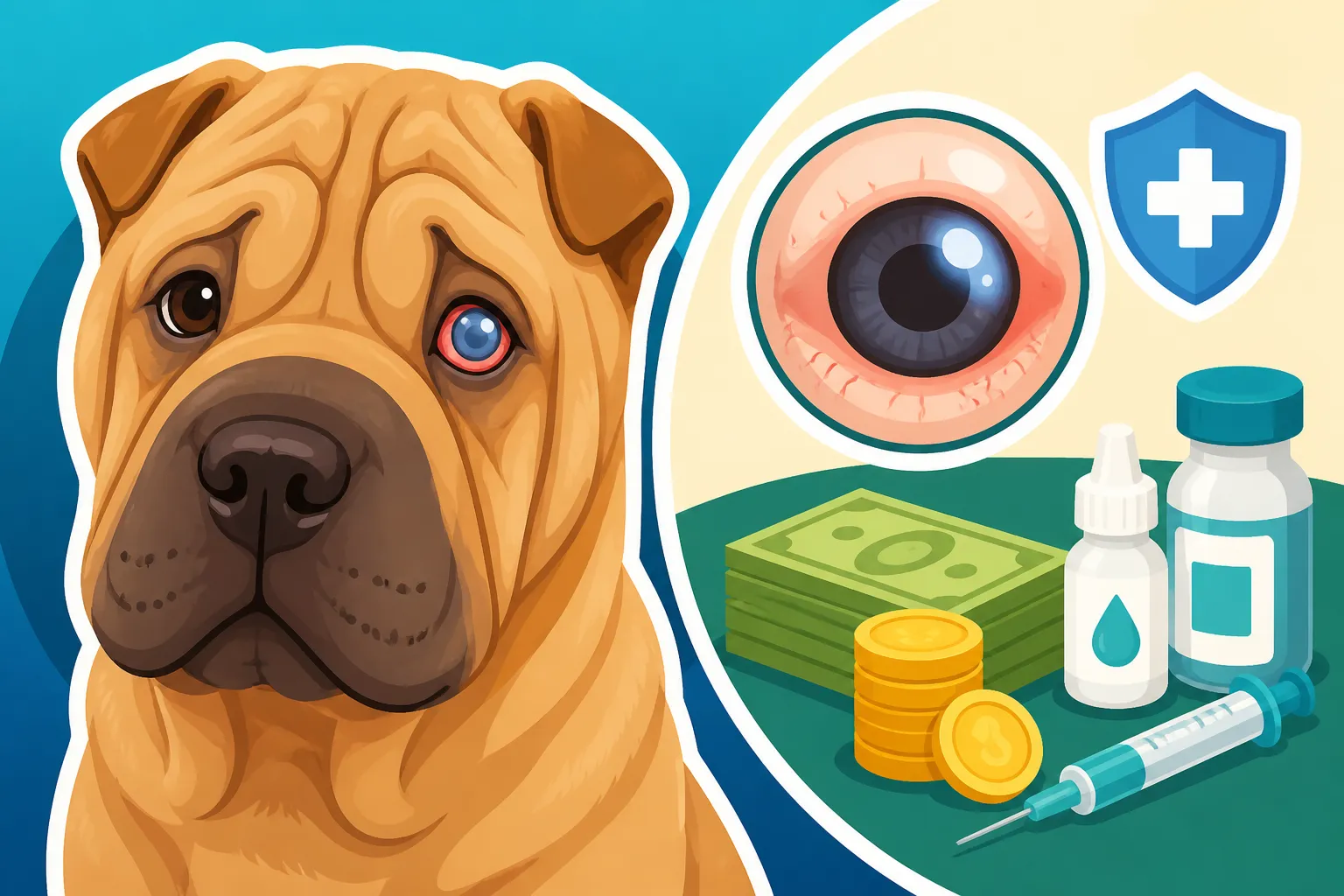
What a Shar Pei’s Corneal Ulcer Costs to Treat
Finding out your beloved Shar Pei has a corneal ulcer can be incredibly alarming and stressful. These aren't just minor irritations; they can be profoundly painful, rapidly worsening, and often lead to significant unexpected veterinary bills. This guide will walk you through what a corneal ulcer entails for a Shar Pei, the typical diagnostic and treatment paths, and the various factors that influence the overall cost of getting your wrinkly friend back to comfort.
Why Shar Pei Are Uniquely Susceptible to Corneal Ulcers
Shar Pei are, by their very nature, a breed predisposed to a host of eye issues, and corneal ulcers sit high on that list of concerns. It's not just bad luck; it's a combination of their distinctive breed traits that unfortunately makes their eyes vulnerable. Understanding these underlying factors is key to realizing why these ulcers aren't always simple fixes and, consequently, why their treatment can become costly.
The Role of Entropion and Deep-Set Eyes
One of the most significant contributors to corneal ulcers in a Shar Pei is entropion. This condition, common in the breed, means that the eyelid rolls inward, causing the eyelashes and surrounding hair to constantly rub against the delicate surface of the cornea. Imagine having a tiny, stiff brush constantly irritating your eye – that's what a Shar Pei with entropion experiences. This constant friction causes abrasions, which can quickly develop into painful ulcers. Entropion in a Shar Pei Puppy Is an Emergency, Not a Cosmetic Issue highlights the urgency of addressing this. Even if entropion isn't severe enough for surgery, the sheer amount of skin and wrinkles around a Shar Pei's eyes can lead to hairs brushing against the cornea.
Beyond entropion, the Shar Pei's deep-set eyes and narrow eye fissures (the opening between the eyelids) also play a role. These features restrict normal tear flow and can trap debris, creating a less-than-ideal environment for corneal health. Their eyes simply aren't as open and exposed to air and proper tear drainage as many other breeds, making them more prone to issues that can compromise the cornea's integrity. What Entropion Does to a Shar Pei Puppy's Eye further explains this particular vulnerability.
Other Contributing Factors: Dry Eye and Coat Texture
Another less obvious factor can be a condition known as "dry eye," or Keratoconjunctivitis Sicca (KCS). While not exclusive to Shar Pei, any breed with conformational issues that affect tear production or distribution can suffer from it. Insufficient tear film means the cornea isn't adequately lubricated and protected, making it more susceptible to damage and slower to heal. If a Shar Pei is experiencing dry eye alongside entropion, the risk of severe or non-healing ulcers skyrockets.
And let's not forget the Shar Pei's famous coat. Especially with a horse coat Shar Pei, the short, stiff hairs can be like tiny needles if they come into contact with the eye. Even a single rogue hair or a few irritating stubble bits from the facial folds can cause enough irritation to start an ulcer. This unique texture, combined with the breed's predisposition to skin issues, means their eyes are living in a challenging neighborhood, increasing the likelihood of corneal trauma.
The Initial Veterinary Assessment and Its Cost Implications
When you suspect your Shar Pei has an eye problem – perhaps they're squinting, rubbing their eye, or there's discharge – your first stop is usually your general practice veterinarian. This initial visit is crucial for diagnosis and laying out a treatment plan, and it's where the first wave of costs will begin to accumulate. Don't underestimate the importance of acting quickly; eye issues can escalate rapidly.
The Diagnostic Process: What Tests Are Performed
Upon arrival, your vet will perform a thorough ophthalmic exam. This isn't just a quick peek; it involves several specific tests to accurately diagnose the problem and determine its severity.
- General Eye Exam: The vet will observe your Shar Pei's eyelids, eyelashes, and surrounding facial structure for obvious signs of entropion or irritation. They'll look for swelling, discharge, or any visible foreign bodies.
- Fluorescein Stain Test: This is perhaps the most critical diagnostic tool for a corneal ulcer. A special orange dye (fluorescein) is applied to the eye. If there's an ulcer or abrasion, the dye will stick to the exposed corneal stroma, glowing green under a blue light. This quickly confirms the presence of an ulcer and often its size and shape.
- Schirmer Tear Test: If dry eye is suspected, a Schirmer tear test might be performed. Small strips of paper are placed in the lower eyelid for a minute to measure tear production. Low tear production contributes to ulcers and impacts healing.
- Ocular Pressure (Tonometry): The vet may also check the intraocular pressure to rule out glaucoma, which can cause similar signs of discomfort but requires very different treatment. This is less common for a straightforward ulcer but important if the eye looks particularly painful or inflamed.
- Sedation: For a particularly painful or uncooperative Shar Pei – and let's be honest, many can be quite stoic or simply resistant when in pain – light sedation might be necessary to get a thorough, safe exam. This adds to the cost, but it's essential for a proper diagnosis, especially if the ulcer is deep or hard to visualize. Whether a Shar Pei Needs Sedation for an Ear Exam might give you an idea of when sedation is helpful for examination in general.
Understanding the Initial Consult and Test Fees
The initial consultation fee itself will vary by veterinary practice, but it's a baseline cost you'll always incur. On top of that, each diagnostic test adds a separate charge. The fluorescein stain, Schirmer tear test, and tonometry each have their own line item. If sedation is required, that's another significant addition due to the medication and monitoring involved.
While these individual costs might seem modest, they add up quickly. It's not uncommon for an initial emergency visit for a painful eye to run into several figures before any treatment even begins. For a Shar Pei owner, this is often the first "surprise" bill, and it’s important to factor this initial outlay into your understanding of Four Bills Every Shar Pei Owner Should Expect. Many pet insurance policies, such as those from Healthy Paws, might cover a portion of these diagnostic costs if your plan includes emergency care and wasn't purchased after the symptoms started.
Treatment Pathways and Associated Costs
Once an ulcer is diagnosed, the vet will outline a treatment plan. The cost of treatment can vary wildly depending on the severity and type of ulcer, ranging from relatively conservative medical management to complex surgical interventions. This is where you really start to see the financial impact of a serious eye condition.
Medical Management: Drops, Ointments, and Oral Medications
For superficial, uncomplicated corneal ulcers, medical management is usually the first line of defense. This involves a regimen of eye drops and/or ointments, sometimes combined with oral medications.
- Antibiotic Drops/Ointments: These are crucial to prevent or treat secondary bacterial infections, which can turn a simple ulcer into a vision-threatening catastrophe very quickly. You'll often be instructed to apply these several times a day.
- Pain Relief/Anti-inflammatory Drops: Atropine drops might be prescribed to dilate the pupil, which helps relieve pain from muscle spasms in the eye. Other anti-inflammatory drops might also be used.
- Serum or Plasma Drops: Sometimes, your vet might recommend drops made from your dog's own blood serum. These drops contain growth factors and other natural healing compounds that can accelerate corneal repair, particularly for slow-healing ulcers. This involves a separate blood draw and processing, adding to the expense.
- Oral Pain Medication: For severe pain, oral non-steroidal anti-inflammatory drugs (NSAIDs) or other pain relievers might be prescribed to keep your Shar Pei comfortable.
The cost here isn't just the initial prescription; it's the duration and frequency of treatment. If your Shar Pei needs multiple types of drops applied four times a day for two to three weeks, those tiny bottles add up. You might find yourself purchasing refills from online pet pharmacies like Chewy to manage costs, but always ensure your vet approves this source and dosage.
Surgical Interventions: When Medical Treatment Isn't Enough
Unfortunately, some ulcers are too deep, non-healing, or complicated for medical management alone. In these cases, surgery becomes necessary, and this is where costs can escalate significantly. Often, this requires a referral to a veterinary ophthalmologist, which itself adds a specialist consultation fee What an Ophthalmology Referral Costs for a Shar Pei.
- Debridement/Grid Keratotomy: For superficial, non-healing ulcers (indolent ulcers), the vet may need to debride (gently scrape away) loose epithelial cells and then perform a grid keratotomy or punctate keratotomy. This involves making tiny scratches on the surface of the cornea to encourage new cells to adhere. This is typically done under local anesthesia with heavy sedation, or sometimes a brief general anesthetic.
- Conjunctival Flap Surgery: For very deep ulcers, especially those that threaten to perforate the cornea (a descemetocele), a conjunctival flap may be performed. This is a delicate procedure where a small piece of conjunctival tissue (the pink membrane lining the eyelid) is surgically attached over the ulcer. This provides a blood supply and structural support to help the ulcer heal. This is a major surgery requiring general anesthesia, specialized surgical skills, and significant post-operative care. This procedure costs substantially more than medical management.
- Temporary Tarsorrhaphy: In some cases, especially after surgery or for very painful ulcers, the eyelids might be temporarily sewn shut partially or fully to protect the healing cornea. This typically needs to be done under sedation or light anesthesia. When a Shar Pei Needs Permanent Eyelid Surgery provides context on how complex eyelid issues can be for the breed.
These surgical procedures are much more expensive than medical drops due to the anesthesia, surgeon's fees, specialized equipment, sterile environment, and post-operative medications. A deep ulcer requiring a conjunctival flap can easily enter the realm of many thousands of dollars.
Comparative Cost Table for Ulcer Treatments
To give you a clearer picture of how different interventions might compare in terms of cost shape, consider this general breakdown. Remember, these are broad categories, and specific situations will always vary.
| Treatment Type | Description | Expected Cost Shape (Relative) | Common Scenario |
|---|---|---|---|
| Initial Vet Visit & Diagnosis | Exam, fluorescein stain, pain assessment, possibly tear test, sedation if needed | Moderate (e.g., hundreds) | First signs of squinting, rubbing, discharge |
| Medical Management (Superficial) | Antibiotic drops, pain relief drops, regular re-checks | Moderate (e.g., hundreds over several weeks) | Simple abrasion, quickly caught, responsive to medication |
| Medical Management (Complicated) | Multiple types of drops, serum drops, oral meds, frequent re-checks | High (e.g., many hundreds to a thousand+ over weeks/months) | Indolent ulcer, dry eye component, slow healing |
| Debridement/Keratotomy | Sedation/anesthesia, scraping, grid procedure, post-op drops | High (e.g., one to two thousand+) | Non-healing superficial ulcer, requires mechanical intervention |
| Conjunctival Flap Surgery | General anesthesia, specialist surgeon, hospital stay, intensive post-op care | Very High (e.g., several thousands) | Deep ulcer, descemetocele, risk of perforation, vision-threatening |
| Specialist Referral | Initial consultation with veterinary ophthalmologist | Moderate (additional hundreds on top of GP vet costs) | Complex cases, need for advanced diagnostics or surgery |
This table illustrates that while superficial ulcers can be managed, deeper or stubborn ones quickly become a significant financial undertaking.
Ongoing Care, Monitoring, and Long-Term Financial Impact
The cost of treating a Shar Pei's corneal ulcer doesn't necessarily end when the initial treatment course is complete or the surgery stitches are removed. Ongoing care, follow-up appointments, and the potential for recurrence or secondary issues can mean a continued financial commitment. It's truly a marathon, not a sprint, for many Shar Pei owners.
Follow-Up Visits and Medication Refills
After initial diagnosis and treatment, regular follow-up visits are non-negotiable. Your vet or ophthalmologist will need to re-examine the eye, often repeating the fluorescein stain test, to ensure the ulcer is healing properly and on schedule. These follow-ups typically occur every few days to once a week initially, then less frequently as healing progresses. Each visit incurs another consultation fee, potentially additional tests, and the cost of any further medication refills.
It’s disheartening to hear that you might need another bottle of expensive eye drops when you feel like you just bought one, but consistency is critical for successful healing. Stopping medication too early can lead to a setback or allow infection to take hold. If your Shar Pei has dry eye or chronic entropion, they may require lifelong medication, like artificial tears or cyclosporine drops, adding a permanent monthly cost to their care. You can often save on these recurring medications by ordering them through reputable online pet pharmacies like Chewy, with your vet's approval.
Potential Complications and Recurrence
Unfortunately, some Shar Pei are prone to recurrent corneal ulcers. This is particularly true if the underlying cause, such as entropion or dry eye, isn't fully resolved. Whether a Shar Pei's Cornea Scars From Entropion gives insight into the lasting damage untreated entropion can cause. A previously scarred cornea is also more vulnerable to future ulcers. Each recurrence means going back to square one with diagnostics and treatment, restarting the cycle of costs.
Complications can also arise. A healing ulcer might develop scar tissue, impacting vision. An infection might become aggressive, leading to uveitis (inflammation inside the eye), or even rupture the eyeball, requiring enucleation (surgical removal of the eye). While rare, these extreme complications are incredibly costly and devastating. Whether a Shar Pei Goes Blind From Untreated Entropion illustrates the severe consequences of neglecting eye health.
Managing Long-Term Costs: Prevention and Pet Insurance
Given the Shar Pei's predisposition to eye issues, proactive management is always the most cost-effective long-term strategy. Regular veterinary check-ups, including specific eye checks, are vital. Whether a Shar Pei's Eyes Should Be Checked Yearly is a question many owners ask, and the answer for a Shar Pei is often "yes, thoroughly." If your Shar Pei has entropion, discussing surgical correction (entropion surgery or eye tacking) with your vet early on can prevent a lifetime of recurrent ulcers and pain. What Eye Tacking and Entropion Surgery Cost on a Shar Pei provides details on the expenses involved with these procedures, but it's often a worthwhile investment compared to repeated ulcer treatments.
Pet insurance is another critical tool for managing these unpredictable, high costs. Policies from providers like Healthy Paws can significantly cushion the financial blow of a major illness or accident, including corneal ulcers, provided the policy was in place before symptoms began. Reviewing your policy carefully to understand what's covered for hereditary conditions common in Shar Pei is crucial.
Lastly, consider setting aside a dedicated emergency fund for your Shar Pei's health needs. How Much a Shar Pei Owner Should Set Aside Monthly is a frequent question because, as you can see, the unexpected can be very expensive. Even with pet insurance, there are deductibles and co-pays. Having a financial buffer can make all the difference in providing the best possible care without undue stress. Feeding high-quality food, perhaps a fresh food option like Ollie, can support overall health and potentially mitigate some inflammatory issues, though it won't prevent mechanical damage to the eye.
Treating a Shar Pei's corneal ulcer is rarely cheap and often involves a dedicated, extended effort. By understanding the causes, the diagnostic process, the range of treatments, and the potential for long-term care, you can be better prepared to navigate this challenging, but ultimately manageable, aspect of Shar Pei ownership.
Disclaimer
This article is for general informational purposes only and does not constitute professional advice. Laws, prices and regulations vary by location and change over time. Consult a qualified professional for guidance on your specific situation.


