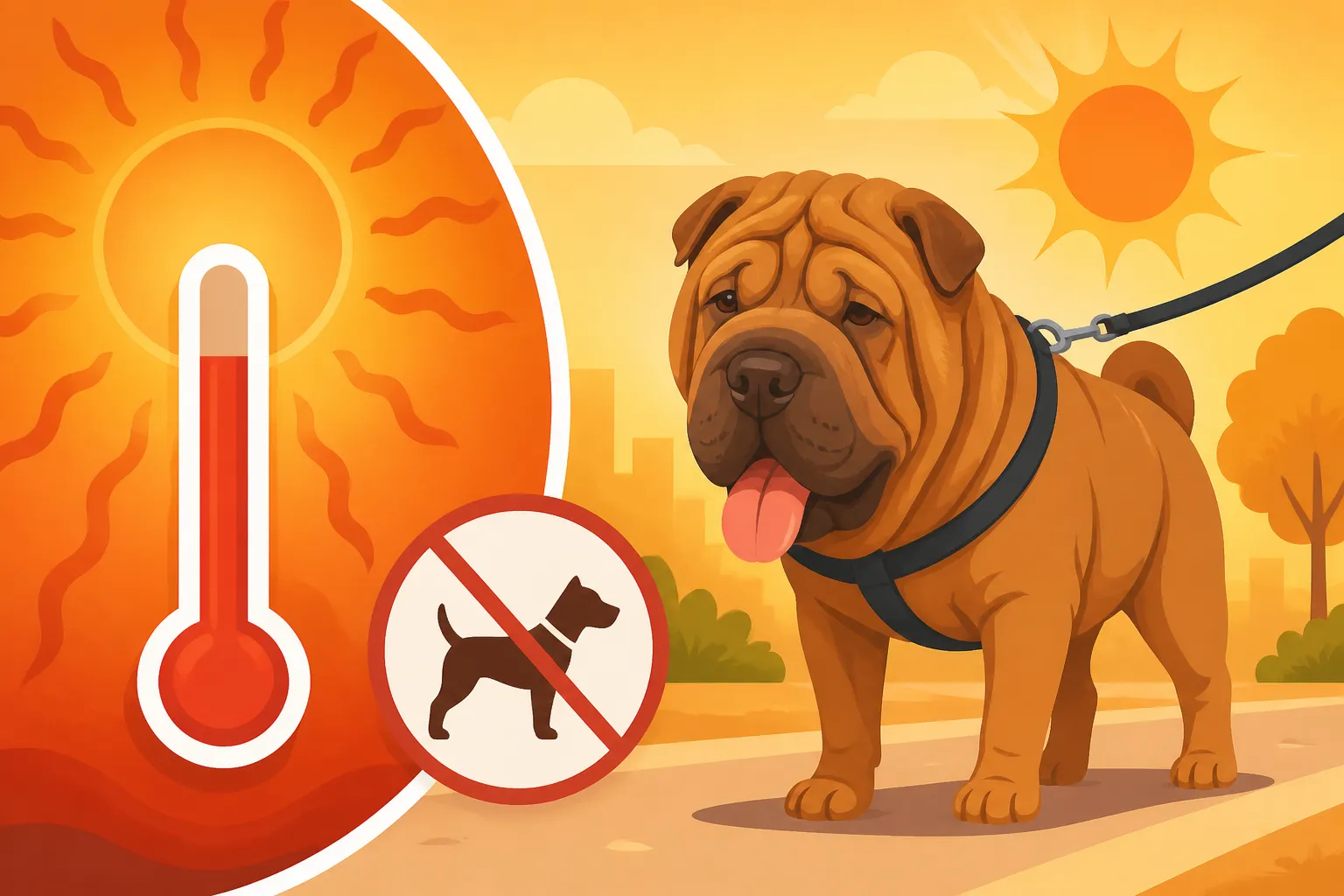
Why Heat Limits a Shar Pei’s Walk
One of the most heart-wrenching things for any dog owner is seeing their beloved companion struggle, and for Shar Pei guardians, the heat can turn a simple walk into a genuine worry. It’s a sad reality that our wrinkly friends just aren't built for sweltering temperatures, and pushing them too far can lead to dangerous, even life-threatening, situations. This guide will walk you through exactly why heat is such a concern for Shar Pei, how to spot the warning signs of overheating, and most importantly, how to keep your cherished companion safe and comfortable when the mercury rises.
The Unique Physiology of a Shar Pei in Heat
You might look at your Shar Pei and see a loyal, quirky companion, but beneath those adorable wrinkles and that distinctive coat lies a physiology that makes them particularly vulnerable to heat. It's not just about them being "warm-blooded" like all dogs; there are very specific anatomical traits that turn up the internal thermostat and make cooling down a much tougher job for our breed. Understanding these unique challenges is the first step toward keeping them safe.
How a Shar Pei's Brachycephalic Features Affect Breathing
One of the most significant factors is their brachycephalic, or "short-nosed," facial structure. While not as extreme as a Bulldog or a Pug, many Shar Pei still possess a somewhat flattened snout and often have narrower nostrils and an elongated soft palate. This combination creates a significant hurdle for efficient breathing. Think of it like trying to breathe through a pinched straw, while also having an extra flap of tissue partially obstructing the airway.
When a dog pants, they're essentially using evaporative cooling – moist air passes over their tongue and respiratory tract, and as the moisture evaporates, it carries heat away from the body. For a Shar Pei, the constricted airways mean they have to work much harder to move the same amount of air. This increased effort generates more internal heat, creating a vicious cycle where their attempt to cool down actually makes them hotter. This is why you'll often hear a Shar Pei panting much louder and seemingly with more effort than a longer-snouted breed after even mild exertion, and it's a huge red flag when the weather turns warm. It's also why many Shar Pei pants more than other dogs, even when it's not particularly hot.
The Impact of Their Coat and Skin on Temperature Regulation
Another factor that contributes to their heat sensitivity is their unique coat and skin. Whether your Shar Pei has the stiff, prickly "horse coat" or the slightly softer "brush coat," neither offers much in the way of cooling. In fact, their short, dense fur can actually trap a layer of warm air close to their body, acting more like insulation than a cooling mechanism. Some Shar Pei also have a surprising amount of undercoat, which only exacerbates this issue. If you've ever felt their coat, you know it's not exactly airy. You can learn more about this in Horse Coat or Brush Coat Changes How You Care for a Shar Pei.
Furthermore, their thick, often somewhat spongy skin, while wonderful for those characteristic wrinkles, doesn't dissipate heat as effectively as the thinner skin of other breeds. It creates a barrier that holds heat in rather than releasing it readily. While dogs don't sweat all over their bodies like humans do (they primarily cool through panting and paw pads), every bit of efficient heat exchange helps, and the Shar Pei's skin and coat simply aren't designed for it.
Why a Shar Pei's Wrinkles Are a Disadvantage in Heat
Ah, the wrinkles! They're what make our Shar Pei so distinctive and adorable, but unfortunately, they're also a genuine liability when it comes to staying cool. These deep skin folds, particularly around the head, neck, and muzzle, act as little pockets that trap heat and moisture. Air circulation gets significantly reduced within these folds, meaning that the skin underneath them can't "breathe" or release heat as easily.
Imagine wearing a heavy, bunched-up sweater in humid weather – that's a bit like what it's like for a Shar Pei with extensive wrinkles. The trapped moisture and heat also create a perfect breeding ground for bacteria and yeast, leading to skin fold dermatitis. This discomfort and potential for infection can add to their overall stress when it's hot, further complicating their ability to regulate their body temperature. It's a constant battle to keep those folds clean and dry, even in mild weather, and the heat only makes it more challenging.
Recognizing the Signs of Heat Stress and Overheating
As devoted Shar Pei owners, it’s absolutely critical that we become vigilant observers of our dogs, especially when the weather is warm. They can’t tell us in words that they’re feeling unwell, so it’s up to us to interpret their subtle (and sometimes not-so-subtle) cues. Don't wait until it's too late; knowing the early warning signs can make all the difference.
Early Warning Signs to Watch For
The moment you step outside with your Shar Pei on a warm day, your internal alarm should be on high alert. The very first thing you'll likely notice is their panting. While Shar Pei are known for being vocal breathers generally, pay close attention to how they're panting. Is it more rapid, deeper, or more labored than usual? Is there excessive drooling or foamy saliva accumulating around their mouth? These are immediate indicators that their body is working overtime to cool down.
Another visual cue is their gums. Healthy gums are typically pink and moist. If you notice your Shar Pei's gums becoming brighter red, almost a cherry red, it means blood vessels are dilating in an attempt to dissipate heat. They might also start seeking shade more actively, even in spots they wouldn’t normally, or show a general reluctance to continue moving forward. A slight staggering or unsteadiness in their gait, or simply a duller, more lethargic demeanor than usual, are also red flags. For more on this, you might find What Temperature Is Too Hot for a Shar Pei helpful. These aren't just minor inconveniences; these are your dog's ways of telling you they're in distress.
Advanced Symptoms of Heatstroke
If the early warning signs are missed or ignored, heat stress can quickly escalate into full-blown heatstroke, which is a medical emergency. At this stage, the symptoms become much more severe and alarming. Your Shar Pei might start stumbling badly, appearing disoriented, or even collapsing outright. Their eyes might look glazed over, and they could have a vacant stare.
Gastrointestinal issues are also common with advanced heatstroke, manifesting as vomiting, which can sometimes contain blood, and severe diarrhea, which might also be bloody. Their gums can change from bright red to a dark, muddy red or even purplish color as their circulatory system starts to shut down. Muscle tremors, seizures, and unconsciousness are grave signs that immediate veterinary intervention is required. Their heart rate will be very rapid, and often erratic. At this point, every second counts, and delaying treatment can have fatal consequences.
Immediate Actions When Your Shar Pei Overheats
Spotting the signs of heat stress is critical, but knowing what to do in those terrifying moments is even more so. Panicking won’t help your dog, but swift, sensible action just might save their life. Remember, mild heat stress can quickly turn into full-blown heatstroke, so don’t hesitate.
First Aid Steps You Can Take at Home
The absolute first thing you need to do is get your Shar Pei out of the heat source immediately. This means getting them into the shade, inside an air-conditioned building, or even into your car with the AC blasting. Once in a cooler environment, your goal is to gently bring their body temperature down. Offer them small amounts of cool (not ice-cold) water to drink. Don't let them gulp too much too fast, as this can cause vomiting.
Next, start applying cool, wet towels or cloths to specific areas: their armpits, groin, and the underside of their neck. These are areas where large blood vessels are close to the surface, allowing for more efficient cooling. You can also wet down their paw pads. If you have a fan, direct it towards them, as this helps with evaporative cooling. It's crucial not to use ice water or immerse them in cold water, as this can cause the blood vessels to constrict, trapping heat inside, and can lead to dangerous hypothermia once their core temperature drops too low. The goal is a gradual, controlled cooling, not a shock to their system.
When to Seek Veterinary Care
While you're performing first aid, if your Shar Pei is exhibiting any of the advanced symptoms of heatstroke—such as severe disorientation, collapse, seizures, or bloody vomiting/diarrhea—you need to get to an emergency vet immediately. Even if they seem to be improving with your at-home efforts, it’s always best to call your veterinarian as soon as you notice distress. Tell them you're coming and describe your dog's symptoms so they can prepare for your arrival. You might think about whether a Shar Pei's fever needs a vet every time, but heatstroke is different and always an emergency.
At the vet, they will be able to monitor your Shar Pei's core temperature safely and provide more aggressive cooling measures, such as intravenous (IV) fluids to combat dehydration and support organ function. They can also administer oxygen, medications to prevent seizures, and check for organ damage, which can be a serious complication of heatstroke. Don't delay—heatstroke progresses rapidly, and prompt professional medical care dramatically increases the chances of a full recovery.
Preventative Measures for Walking a Shar Pei in Warm Weather
Knowing the risks and how to react to an emergency is vital, but ideally, we want to avoid those stressful situations altogether. With a Shar Pei, prevention isn't just better than a cure; it's a non-negotiable part of responsible ownership when the temperatures climb. A little planning goes a long way in ensuring their safety and comfort.
Timing Your Walks and Choosing Locations
This is arguably the simplest yet most effective preventative measure. During warmer months, you absolutely must adjust your walking schedule. Forget those midday strolls; they are simply too risky for a Shar Pei. Instead, aim for early morning walks, ideally before 8 or 9 AM, when the sun is low and the air is still cool. The same goes for evenings – wait until well after sunset, when the pavement has had a chance to cool down. In some climates, this might mean a walk at dawn and another one just before bed. Whether a Shar Pei Should Be Walked Only at Dawn in Summer is a question many owners face.
Beyond timing, consider your route carefully. Seek out shaded paths, like those through parks with mature trees or along quieter, tree-lined residential streets. Avoid open fields or areas with large expanses of asphalt or concrete, which absorb and radiate heat for hours. Grass is always a better option than pavement on a hot day, as it doesn't retain heat in the same way. Even a few degrees difference in surface temperature can make a huge impact on your Shar Pei's comfort and safety.
Essential Gear and Hydration Strategies
Never, and I mean never, leave home for a walk with your Shar Pei in warm weather without water. Carry a dedicated water bottle for your dog and a portable, collapsible bowl. Offer them water frequently, even if they don't seem overly thirsty. A few sips here and there can help prevent dehydration.
Beyond water, there's some excellent gear that can offer an extra layer of protection. Cooling vests or bandanas, which you soak in water and then wring out, work on the principle of evaporative cooling. While they won't magically make your dog immune to heat, they can provide significant relief for short periods. You can find many options on platforms like Amazon. For protection against hot pavement, consider dog booties. They might look a bit silly, but they can prevent painful burns on delicate paw pads. And, while it's not strictly gear, having a well-trained dog who responds promptly to commands makes walks much more efficient and less stressful for both of you; resources like BAXTER & Bella can help with building those foundational skills, so you're not lingering longer than necessary in the heat.
Monitoring Your Dog and Understanding Their Limits
Even with all the preventative measures in place, constant vigilance is your best friend. Your Shar Pei will have good days and bad days, and their tolerance for heat can vary. Pay close attention to their body language throughout the walk. Are they lagging behind? Are they panting more heavily than they did five minutes ago? Are their ears pinned back, or are they trying to pull toward every patch of shade? These are all signals.
Understand that your Shar Pei's limits are likely much lower than those of many other breeds, and certainly lower than your own. What feels like a pleasant warm stroll to you could be putting them at risk. Don't push them to "just finish the block" if they're showing signs of distress. It's always better to cut a walk short and head home early. Remember, How Easily a Shar Pei Overheats is a real concern, and it's our responsibility as owners to be their advocate.
Adapting Your Shar Pei's Exercise Routine to the Climate
Living with a Shar Pei means constantly being aware of their unique needs, and that definitely extends to their exercise. You can't just keep up the same routine year-round, especially if you live in a climate where summers get truly hot. Adaptability is key to keeping them both physically and mentally stimulated without putting their health on the line.
Alternative Indoor Activities for Hot Days
When it's simply too hot or humid to safely walk your Shar Pei outside, that doesn't mean exercise needs to go out the window entirely. Instead, shift your focus to indoor activities that provide mental stimulation and some light physical exertion. Puzzle toys, where your dog has to figure out how to get treats, are fantastic for engaging their minds and can tire them out almost as much as a physical walk. You can find a wide variety of these on sites like Amazon.
Structured indoor training sessions are another excellent option. Work on new tricks, refresh old commands, or practice some basic obedience. Even 15-20 minutes of focused mental work can be incredibly satisfying for a Shar Pei. Brands like BAXTER & Bella offer online programs that can give you tons of ideas for indoor training and enrichment. You can also play indoor fetch in a long hallway, or hide treats around the house for them to sniff out – a low-impact activity that taps into their natural instincts. Remember, while a Shar Pei does need exercise, How Much Exercise a Shar Pei Needs might be less than you think, especially when it's hot.
Safe Outdoor Play in Mild Weather
Even on days that aren't scorching but are still warm, you need to be mindful of outdoor play. Short, moderate walks during the coolest parts of the day are often fine. Focus on sniffing and exploring rather than intense cardio. Avoid anything that involves sustained running or jumping. If your Shar Pei enjoys water, supervised access to a shallow kiddie pool can be a wonderful way for them to cool off and play at the same time. Just make sure the water is clean and refresh it regularly.
Always remember that even "mild" weather can be deceiving, especially with humidity. Monitor your Shar Pei closely and cut the activity short if you see any signs of panting or discomfort. A quick dip in the pool followed by some quiet time indoors might be the perfect compromise. Don't forget that How Far a Shar Pei Should Walk Daily needs to be re-evaluated on warm days.
Long-Term Heat Management in Their Living Environment
Managing your Shar Pei's comfort in the heat isn't just about walks; it's about their entire living environment. If you live in a hot climate, a reliable air conditioning system isn't just a luxury; it's a necessity for a Shar Pei. Ensure they always have access to a cool room, preferably one with tile or another cool surface they can sprawl on. You can read more about this consideration in Whether Air Conditioning Is a Shar Pei Expense.
Outdoors, if your yard is fenced, ensure there are ample shaded areas throughout the day. Shade cloths, umbrellas, or even strategically placed bushes can make a big difference. Never leave them outside unsupervised for extended periods in warm weather. Inside, consider investing in raised dog beds, which allow air to circulate underneath them, keeping them cooler than traditional beds directly on the floor. Cooling mats, which activate with pressure or simply stay cool, can also be a welcome relief for them to lie on.
Comparing Heat Stress Signs
It's helpful to visualize the progression of heat stress so you know when to act decisively. This table outlines the key differences between early discomfort and severe heatstroke.
| Symptom | Early Heat Stress / Discomfort | Advanced Heatstroke / Emergency |
|---|---|---|
| Panting | More rapid/forceful than usual, audible, consistent | Extremely labored, gasping, irregular, struggling for breath |
| Drooling / Saliva | Increased drooling, clear saliva, some foaming | Profuse, thick, ropey saliva, heavy foaming |
| Gums | Bright red, moist | Dark red, purple, pale, or grayish; tacky or dry |
| Behavior / Energy | Restless, seeking shade, reluctant to move, slightly lethargic | Stumbling, disoriented, collapse, seizures, unconsciousness |
| Vomiting / Diarrhea | Absent or mild | Severe, potentially bloody |
| Body Temperature (Rectal) | Elevated (e.g., 103-104°F / 39.4-40°C) | Dangerously high (e.g., 105°F+ / 40.6°C+) |
| Coordination | Slightly off, perhaps slower to react | Unsteady, stumbling, losing balance, unable to stand |
Always err on the side of caution. If you see any of the advanced symptoms, it's a veterinary emergency.
Disclaimer
This article is for general informational purposes only and does not constitute professional advice. Laws, prices and regulations vary by location and change over time. Consult a qualified professional for guidance on your specific situation.


