How a Shar Pei Warns Before It Reacts
One of the most disheartening things for any dog owner is feeling like they don't truly understand their beloved companion. With a Shar Pei, this feeling can be particularly acute, as their unique physical characteristics often mask the clear warning signals that other breeds might display. Many owners find themselves caught off guard, wondering how their usually calm Pei suddenly snapped or growled, completely missing the subtle cues that were there all along. This guide is here to unravel those hidden messages, helping you learn to read your Shar Pei's nuanced body language so you can prevent misunderstandings and build a stronger, safer bond.
The Unique Challenges of Reading a Shar Pei's Body Language
Let's be honest, trying to decipher what's going on in a Shar Pei's head can sometimes feel like trying to read a book in a foreign language without a dictionary. Their distinctive looks, while incredibly charming and iconic, actually present some significant communication hurdles. It's not that they don't try to tell us things; it's that their physical traits make those messages much harder for us, and even other dogs, to pick up on. This often leads to situations where both human and dog feel misunderstood, creating a cycle of frustration and potential conflict.
Why Wrinkles Are a Double-Edged Sword for Communication
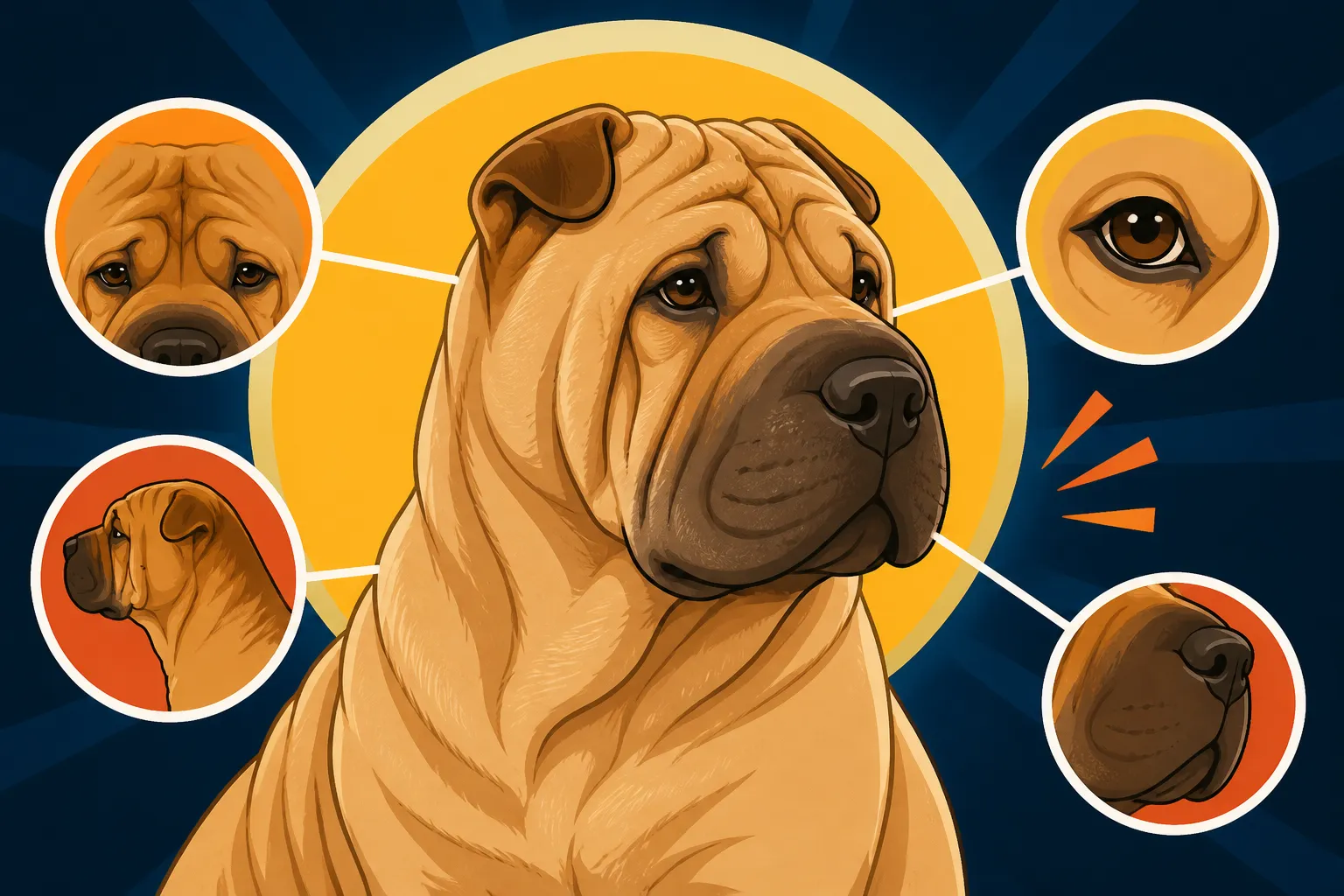
Those adorable, velvety wrinkles that define a Shar Pei are, unfortunately, also masters of disguise when it comes to expressing emotions. In most dog breeds, a furrowed brow, a tense muzzle, or a clear lip curl are unmistakable signs of discomfort, stress, or an impending snap. You can see the muscles working, the skin pulling, the clear lines of worry or anger etched on their face.
With a Shar Pei, it's a whole different ball game. Their deep folds and abundant loose skin can completely obscure these critical facial signals. A dog that might be feeling incredibly stressed or even on the verge of reacting could present a seemingly placid or even sleepy-looking face because the wrinkles simply don't allow for the same range of visible expression. This means that a Shar Pei might be offering multiple subtle warnings through facial tension or lip movements, but we, as owners, simply can't see them clearly. Imagine trying to smile or frown with a blanket draped over your face – that's somewhat what it's like for a Shar Pei trying to use typical canine facial cues. This lack of clear facial communication is a massive frustration for owners who genuinely want to understand their dog but feel like they're constantly guessing.
The Small, Recessed Eyes and Limited Peripheral Vision
Another striking feature of the Shar Pei, their small, often deep-set eyes, adds another layer of complexity to their communication. Not only are these eyes prone to issues like Entropion in a Shar Pei Puppy Is an Emergency, Not a Cosmetic Issue, but their placement and the surrounding skin folds can significantly restrict their field of vision. This means a Shar Pei has quite limited peripheral vision compared to many other breeds. They can't easily see things approaching them from the sides without turning their entire head. You might have noticed that your Shar Pei turns its whole head to track something, rather than just shifting its gaze – this is why.
This limited vision means they can be easily startled, especially if approached unexpectedly or from behind. Imagine living in a world where things just suddenly appear in your line of sight, often without you seeing them coming. This can make a dog naturally more prone to defensive reactions. If they can't see a perceived threat clearly approaching, they might skip some of the earlier, subtle warnings and jump straight to more urgent signals out of surprise or fear. Understanding Why a Shar Pei's Eyes Limit Its Peripheral Vision is crucial, as it directly impacts how they perceive their environment and, consequently, how they might warn you of their discomfort. It puts an even greater onus on us to learn their other, less obvious, signs of stress and to always approach them with care and clear communication.
Deciphering the Shar Pei's Subtle Warning Signs
Because a Shar Pei's facial expressions are often obscured, and their vision can make them prone to being startled, learning to read their entire body, not just their face, becomes incredibly important. These dogs communicate, but they do it in ways that require a keen eye and a deep understanding of their unique physiology. It's a bit like learning to read between the lines, focusing on the whole picture rather than just the obvious headlines.
The Early, Almost Invisible Signals of Discomfort
Many Shar Pei warnings begin subtly, almost imperceptibly, especially to an untrained eye. These are the "whispers" before the "shouts," and catching them early is key to preventing escalation. If you miss these, you might find yourself saying, "He just snapped out of nowhere!" when in reality, your dog was trying its best to tell you it was uncomfortable long before that point.
Look for signs like:
- Lip Licking: This isn't always about food. A quick, darting tongue flick across the lips, especially when no food is present, is often a sign of stress or mild anxiety.
- Yawning: Again, not necessarily tired. Out-of-context yawning (when they've just woken up or aren't settling down for a nap) can indicate stress or an attempt to self-soothe.
- Rapid Blinking: Faster than normal blinking, or even a sudden wide-eyed stare (often referred to as "whale eye" where you see the whites of their eyes), suggests tension.
- Body Stiffening: This is huge. The dog might suddenly become very still, their muscles subtly tensing up, or they might slightly lean away from whatever is making them uncomfortable. This isn't a relaxed posture; it's a dog preparing to either freeze or flee.
- Head Turn Away: They might physically turn their head or entire body slightly away from the perceived stressor, trying to disengage. This is a polite request for space.
- Panting (without exertion): If your Shar Pei is panting heavily but hasn't just exercised or isn't hot, it's a strong indicator of stress.
These signals are fleeting and often happen in milliseconds. Imagine a child excitedly rushing towards your Shar Pei, or a stranger reaching out to pet them. Your Pei might give a quick lip lick, a brief head turn, or stiffen slightly. If these tiny signals are ignored, the dog feels its initial, polite requests for space have been dismissed.
Escalating Cues: When the Warning Becomes Clearer
When those early, subtle signals are missed, a Shar Pei will often escalate their communication, hoping to get their point across more effectively. These are still warnings, not aggression, but they are much clearer indicators that your dog is feeling pressured and needs help.
More overt signs to watch for include:
- Whale Eye: As mentioned, this is when you can see the whites of their eyes, particularly the crescent moon shape above or below the iris. It means they're watching something intently, often with fear or apprehension.
- Low Growl: A Shar Pei's growl can be surprisingly deep and guttural, but it might also be very subtle, almost a rumble in their chest, initially. It's not always a loud, aggressive sound, especially in the early stages. This is a clear "back off" signal.
- Tense Mouth and Lips: Even if the wrinkles hide a full lip curl, you can often see tension around their muzzle. Their lips might be pressed tightly together, or they might subtly show just the very front teeth, almost a grimace, rather than a full snarl.
- Tail Stiffening or Tucking: A stiff, low-set tail, or one tucked tightly between the legs, is a definite sign of fear or extreme anxiety. Some Shar Pei have naturally high-set, curled tails, so any deviation from their typical relaxed tail carriage is important to note.
- Closed-Mouth Panting: While open-mouthed panting can indicate stress, sometimes a highly stressed Shar Pei will pant with its mouth almost closed, breathing shallowly and rapidly.
It's vital to understand that these escalating cues are your dog saying, "I'm really uncomfortable now. Please give me space." They are not being "aggressive" in a malicious sense; they are attempting to communicate their boundaries. Ignoring these only pushes them closer to a reactive outburst. If you're looking for resources on understanding dog behavior and positive reinforcement, online platforms like BAXTER & Bella can offer excellent virtual training programs that delve into these aspects. They can help you build communication skills with your dog even before issues arise. Remember, How a Shar Pei Behaves Toward Other Dogs and its individual temperament will dictate how quickly it escalates, so recognizing these early signs is paramount.
| Warning Level | Common Shar Pei Signs | Interpretation |
|---|---|---|
| Subtle | Lip licking, yawning, rapid blinking, head turn away, stiff body, appeasement gestures, closed mouth panting | "I'm mildly uncomfortable, please notice me." |
| Moderate | Whale eye, low growl/rumble, tense muzzle, stiff tail, freezing, ears flattened, body slightly lowered | "I'm stressed and need space. This situation needs to change." |
| Overt | Snarling, full teeth display, lunging, snapping, biting (without contact) | "You've ignored my warnings. I will defend myself if necessary." |
| Reactive | Biting (with contact), sustained aggression | "All my warnings were missed. I feel I have no other choice but to physically react." |
Actionable Steps for Owners: Responding to a Shar Pei's Warnings
Understanding these subtle and escalating signals is only half the battle. The other, equally crucial part is knowing how to respond effectively. Your reaction can either de-escalate a tense situation or, unfortunately, make it worse. The goal is always to prevent your Shar Pei from feeling the need to issue such strong warnings in the first place, but when they do, your calm, informed response is everything.
Creating a Safe and Predictable Environment
Prevention is always better than cure, especially with a breed as sensitive and particular as the Shar Pei. Creating a predictable, safe environment for your dog goes a long way in reducing their stress levels and the frequency of warning signals.
- Consistent Routines: Dogs thrive on routine. Knowing when meals, walks, and playtime will happen helps a Shar Pei feel secure. Sudden changes can be unsettling.
- Designated Safe Spaces: Ensure your Shar Pei has a quiet, comfortable spot where they can retreat and be left undisturbed. This might be a crate, a specific bed in a low-traffic area, or even a separate room. Teach children and guests that this is your dog's "do not disturb" zone.
- Managed Interactions: Be the gatekeeper for your dog's interactions. Don't let strangers or enthusiastic children rush up to them. Teach people to approach calmly, allow the Shar Pei to sniff first, and never force interaction. Many Shar Pei are naturally reserved with strangers, a trait stemming from their guarding instincts, as A Shar Pei Was Bred to Guard, Not to Greet. Respect that they may not want to be petted by everyone.
- Early and Appropriate Socialization: This cannot be stressed enough. Socialize a Shar Pei Before Twelve Weeks or Pay for It Later is not just a catchy phrase; it's a critical window of development. Exposing your Shar Pei puppy to a variety of sights, sounds, people, and appropriate dog interactions in a positive way during this time can help them develop into a more confident adult less likely to feel overwhelmed and issue warnings.
- Leash and Harness Management: When out and about, a well-fitting harness (avoiding pressure on their delicate neck/throat area) and a sturdy leash are essential for control and safety. Products from Amazon offer a wide range of options, allowing you to find a comfortable fit for your unique Shar Pei physique, which is vital for preventing skin irritation and ensuring you have gentle control if you need to create distance quickly.
By proactively managing their environment, you reduce the triggers that might make your Shar Pei feel uncomfortable, thereby reducing the need for them to communicate their stress.
Immediate Response and De-escalation Techniques
When you do spot those warning signs, your immediate response is critical. The goal is to acknowledge your dog's communication and reduce their stress without punishment.
- Create Distance: The simplest and often most effective response is to calmly increase the space between your Shar Pei and whatever is making them uncomfortable. If a child is too close, gently move the child away. If a strange dog is approaching too fast, smoothly step between them or turn and walk in another direction.
- Redirect Attention (Gently): If appropriate, you can try to gently redirect your dog's attention with a calm voice or a favorite toy, but only if they are not already in a high-stress, "freeze" state. If they're fixated, redirection might not work and could even add pressure.
- Remove the Trigger: If possible, remove the source of discomfort. This could mean asking a guest to step back, moving to a quieter area, or putting your Shar Pei in their designated safe space for a break.
- Avoid Punishment: Never, ever punish your Shar Pei for growling, lip licking, or showing other warning signs. While it might suppress the behavior in the short term, it teaches your dog that warning is not allowed. This is incredibly dangerous, as a dog that is not allowed to warn will often go straight to biting with no discernible signals beforehand. You'll end up with a dog that snaps "out of the blue," which is terrifying and preventable.
- Positive Reinforcement: Once the situation is de-escalated and your Shar Pei is calm, reward them for their calm behavior. This reinforces that settling down and not escalating is a good choice. Building trust through positive reinforcement is key to improving your Shar Pei's confidence and your communication. Consistent, clear communication will also help you to understand How a Shar Pei Shows Affection when they are feeling comfortable and secure.
Remember, you are your Shar Pei's advocate. It's your job to protect them from situations that make them uncomfortable and to listen when they try to tell you something.
Understanding the Shar Pei's "Freeze" and "Fight" Response
Sometimes, despite our best efforts, or due to past experiences before they came into our lives, a Shar Pei might progress through its warning signals very quickly, or even skip some entirely. This is where understanding their "freeze" response – often the last communication before a reactive outburst – becomes absolutely vital.
The Moment Before the Storm: Freeze Behavior
The "freeze" is a critical, often misunderstood, stage in a dog's escalation of stress. It's the point where a Shar Pei has tried to communicate discomfort through subtle cues, and then more overt warnings like a low growl or whale eye, but feels those signals have been ignored or are insufficient. So, they go completely still.
A Shar Pei in a freeze state might:
- Become rigidly still, almost like a statue.
- Stare intensely at the perceived threat, unblinking.
- Have a low, guttural growl that might be barely audible, rumbling deep in their chest, or they might be completely silent.
- Have a very stiff, tense body posture, often leaning slightly forward or bracing themselves.
- Their eyes might be wide, showing a lot of white, fixed on the trigger.
Many owners misinterpret this "freeze" as calmness or a sign that the dog is accepting the situation. They might even think, "Oh, he settled down." This is a dangerous misinterpretation. For a Shar Pei, the freeze is a desperate, last-ditch effort to avoid confrontation. It's them saying, "I really don't want to react, but I'm being pushed too far, and I feel trapped." This response is deeply rooted in their historical function as guardians; they are hardwired to assess, stand their ground, and protect. It links back to A Shar Pei Was Bred to Guard, Not to Greet, and this instinct can manifest as a deep reluctance to back down if they feel threatened. This is particularly true if they feel like The One Person Streak in a Shar Pei means they must defend their chosen human.
If you see your Shar Pei enter this "freeze" state, immediate and careful intervention is required. Any further pressure, a sudden movement towards them, or a reaching hand can easily push them over the edge into a full reactive response.
When Warnings Are Ignored: The Reactivity
When all previous warnings – the subtle cues, the escalating signals, and finally, the "freeze" – are missed or disregarded, a Shar Pei will feel it has no other option but to physically react. This is where a snap, lunge, or even a bite can occur.
The frustrating reality is that many owners describe these incidents as "out of nowhere" or "unprovoked." But from the Shar Pei's perspective, they have been shouting increasingly louder messages that went unheard. The "fight" response is not malicious; it is a desperate act of self-preservation from a dog that feels cornered, threatened, and completely unheard. Because Why a Shar Pei Is Hard to Read due to their physical attributes, these reactive moments can seem especially sudden to us.
It's crucial to understand that:
- Rapid Escalation: A Shar Pei might move from a subtle sign to a bite very quickly, especially if they've learned that their subtle warnings are ineffective, or if they've been punished for them in the past.
- The "Mouthy" Response: Some Shar Pei might air snap or mouth at the threat as a final warning before a full bite. Don't dismiss this; it's a very serious signal.
- Consequences: Reactive behavior can have severe consequences, leading to injuries, behavioral labels, and sometimes even the difficult decision of rehoming.
If your Shar Pei has reached the point of physical reactivity, it's not a training issue you can tackle with basic obedience. This indicates a deep-seated stress or fear response, and you absolutely need to consult a qualified professional. This means a certified professional dog trainer or a veterinary behaviorist who understands the unique nuances of the Shar Pei breed. They can help you implement a behavior modification plan that addresses the root cause of the reactivity, rather than just suppressing the symptoms. Remember, understanding What a Shar Pei Does When Surprised is a key component to preventing these high-stress situations.
Disclaimer
This article is for general informational purposes only and does not constitute professional advice. Laws, prices and regulations vary by location and change over time. Consult a qualified professional for guidance on your specific situation.