How a Clicker Works on a Shar Pei
Many Shar Pei owners find themselves tearing their hair out over training, convinced their beloved wrinkly companion is either too stubborn, too independent, or simply "not built" for traditional obedience. It's easy to feel defeated when your Shar Pei stares blankly, decides a command is optional, or simply walks away. But what if I told you there's a powerful, fun, and highly effective tool that can bridge that communication gap and transform your training experience? This guide will delve into how a clicker works on a Shar Pei, showing you how this little device can unlock their potential and foster a deeper, more positive relationship.
Understanding the Shar Pei Mindset and Why Clicker Training Clicks
Let's be real, Shar Pei aren't your typical golden retrievers, eagerly waiting to please. They come with a rich history as independent working dogs, bred for guarding and various roles where self-reliance was key. This strong sense of independence often gets mislabeled as "stubbornness," leading to a lot of frustration for well-meaning owners. You might find your Shar Pei giving you "the look" when asked to do something they deem unnecessary, or simply choosing to ignore you if the motivation isn't clear enough. This isn't defiance; it's often a highly intelligent dog asking, "What's in it for me?" or "Is this truly worth my effort?"
Traditional training methods, which often rely on force, coercion, or even punitive measures, tend to backfire spectacularly with a Shar Pei. They don't respond well to harsh handling or feeling physically pressured. Instead of learning, they might shut down, become resistant, or even develop defensive behaviors. Imagine being constantly told what you're doing wrong without ever really understanding what you should be doing. It's disheartening for both ends of the leash. That's why understanding The Headstrong Streak Nobody Trains Out of a Shar Pei is so important before you even begin training.
This is where positive reinforcement, and specifically clicker training, shines for our unique Shar Pei companions. Positive reinforcement focuses on rewarding desired behaviors, making your dog want to offer those behaviors again. Instead of punishing mistakes, we celebrate successes. This approach builds trust, fosters enthusiasm, and encourages your Shar Pei to think and problem-solve, rather than just mechanically follow commands out of fear of correction. It's about teaching them to love learning, not just tolerate it.
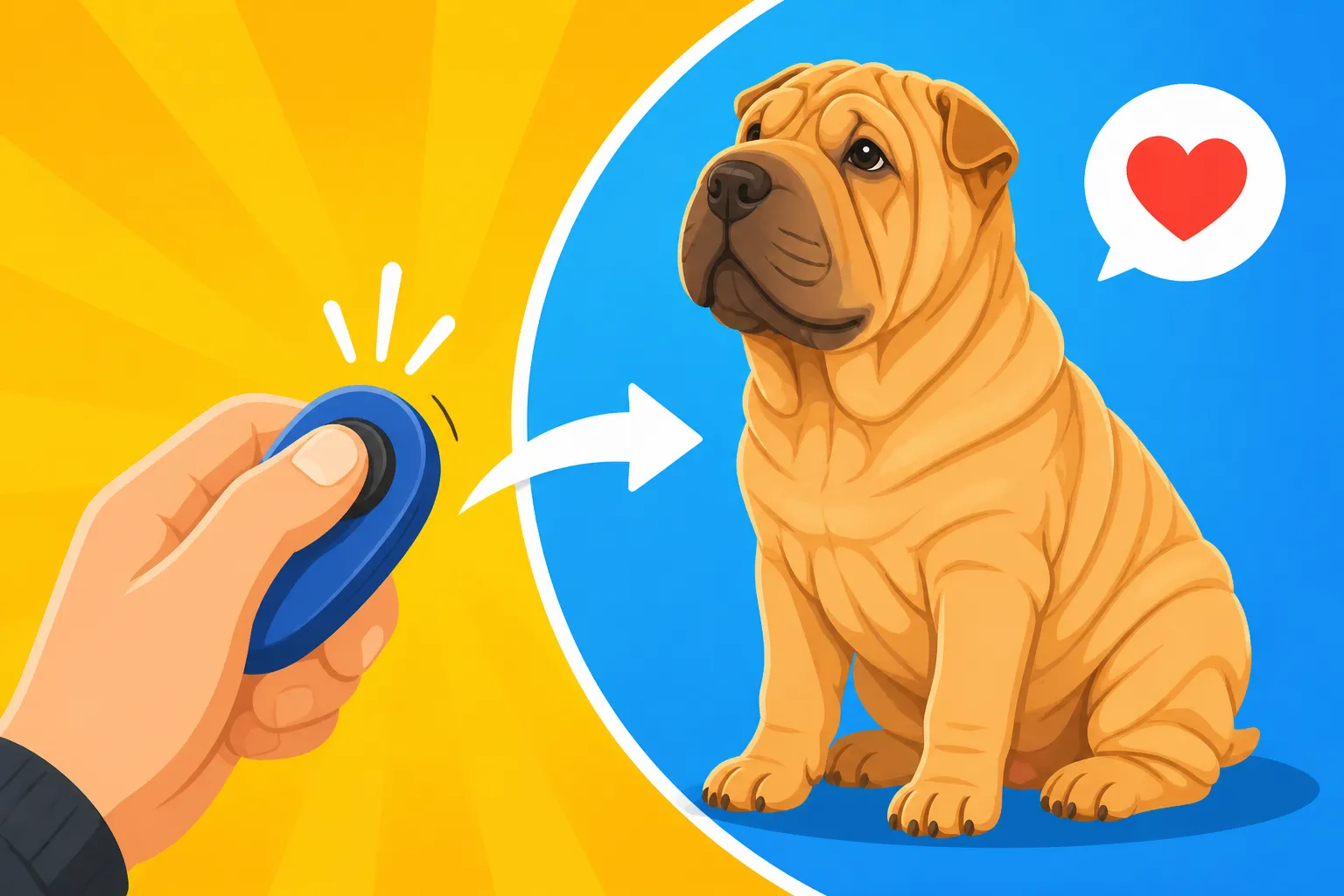
The clicker itself is a game-changer because it provides incredibly precise communication. Think of it as a camera shutter. The instant your Shar Pei performs exactly what you want – whether it's a perfect "sit" with all four paws on the ground, or a momentary glance back at you on a walk – the clicker marks that precise moment. This immediate, consistent, and distinct sound tells them, "YES! That's it! Good job, a reward is coming!" Unlike a verbal "Good boy," which can vary in tone and timing, a click is always the same, making it crystal clear to your intelligent but discerning Shar Pei what action earned the treat. This clarity is especially helpful for a breed that can be Stubborn or Independent: Reading a Shar Pei, as it leaves no room for misinterpretation. It's a bridge to understanding, rather than a barrier of guesswork.
Your First Steps with Clicker Training Your Shar Pei
Embarking on clicker training is an exciting journey, and setting yourself up for success from the very beginning is key, especially with a breed as discerning as the Shar Pei. The first step, naturally, is to acquire a clicker. There are many types available, from simple box clickers to button-style ones with wrist straps, which can be super handy when you've got treats in your other hand. You can find a wide variety of options on platforms like Amazon, making it easy to pick one that feels comfortable in your hand. The type doesn't matter as much as your consistency in using it.
Once you have your clicker, the very first thing you need to do is "load" it. This isn't complicated at all, but it's the foundation of everything that follows. The goal is to teach your Shar Pei that the sound of the click always predicts a delicious reward. To do this, simply click, then immediately give your Shar Pei a high-value treat. Repeat this about 10-15 times in a short session. Don't ask for any behavior; just click, then treat. What you're doing is creating a positive association: "Click means good things are coming!" You'll know it's working when your Shar Pei's ears perk up or they look at you expectantly after the click.
The treats you choose are absolutely vital for a Shar Pei. These aren't dogs known for working for praise alone; they need serious motivation. This means high-value, small, and soft treats that they can eat quickly without getting distracted. Think tiny pieces of cooked chicken, cheese, hot dogs, or commercially available soft training treats. Dry kibble usually won't cut it for initial training or when working on challenging behaviors. Remember, for a Shar Pei, the phrase How Food Motivated a Shar Pei Is is often the secret handshake to their cooperation. The better the treat, the more invested they'll be in figuring out what they did to earn that magical click.
Finally, keep your training sessions short, sweet, and frequent. Shar Pei, despite their intelligence, aren't built for long, repetitive drills. Their attention spans for concentrated work are often brief, and they can get bored or frustrated quickly if a session drags on. Aim for 2-5 minute sessions, several times a day, rather than one long 30-minute session. Short bursts keep it fun, prevent boredom, and ensure your Shar Pei remains engaged and eager for the next session. This respects their independent nature and their natural tendency to switch off if not adequately stimulated in small doses. If you're wondering How Long a Shar Pei's Training Session Should Be, the answer is almost always "shorter than you think." End on a high note, even if it means finishing after just one successful repetition of an easy behavior.
Applying Clicker Training to Common Shar Pei Behaviors
Now that your Shar Pei understands the magic of the clicker, it's time to put it to work! Clicker training is incredibly versatile and can be used to teach everything from basic manners to complex tricks, and even to modify problem behaviors. The beauty is in its precision and consistency, which really benefits a Shar Pei who appreciates clear communication.
One of the most effective ways to start is through capturing and shaping. "Capturing" means clicking and treating a behavior your Shar Pei offers naturally. For example, the moment your Shar Pei sits on their own, click and treat. Don't ask them to sit, just capture it when it happens. Over time, they'll realize that sitting earns them a reward, and they'll start offering the behavior more frequently. Once they're consistently offering the sit, you can add your verbal cue ("Sit"). "Shaping" is similar but involves rewarding successive approximations of a desired behavior. If you want your Shar Pei to lie down, you might click and treat for a head dip, then for a half-crouch, then for a full lie-down. This breaks down complex behaviors into achievable steps.
Gaining and maintaining your Shar Pei's focus is another area where the clicker excels. Due to their deep-set eyes and prominent facial folds, Shar Pei have quite limited peripheral vision. This means they can be easily startled if approached from the side or behind, as they simply can't see you coming. For more on this, check out Why a Shar Pei Startles: It Cannot See You Coming and How Much a Shar Pei Can See to Its Sides. Because of this, teaching them to look at you, or even just check in with you, is invaluable. You can start by simply holding a treat near your face. The moment your Shar Pei makes eye contact, click and treat. Repeat this until they are readily looking at you when you raise your hand or make a soft sound. This creates a foundation for engagement, especially in distracting environments.
Leash manners and addressing reactivity are huge areas where clicker training can make a massive difference for a Shar Pei. Many Shar Pei can be wary of strangers or other dogs, leading to barking, lunging, or freezing on walks – behaviors often labeled as Leash Reactivity in a Shar Pei. Instead of punishing these reactions, which only increases their anxiety, clicker training allows you to reward calm, appropriate behavior. For instance, if your Shar Pei spots another dog at a distance but remains calm, click and treat. If they ignore a passerby, click and treat. You are literally clicking for them not reacting, or for simply noticing and choosing to re-engage with you. This changes their emotional response to triggers from negative to positive.
You can take clicker training far beyond basic obedience. Want your Shar Pei to target your hand? Click for nose touches. Want them to go to their bed? Click for moving towards it, then for stepping on it, then for lying down. It's fantastic for teaching specific behaviors, like patiently waiting at the door before going out, or even fun tricks like a bow or a spin. The clear, instant feedback means they quickly understand what you want, even with their strong opinions. And if you're starting with a puppy, incorporating clicker training into The Shar Pei in Puppy Class can set them up for a lifetime of positive learning experiences.
Troubleshooting and Maximizing Your Clicker Training Success
Even with the most motivated Shar Pei and the tastiest treats, you might hit a snag or two. It's completely normal for a Shar Pei to lose interest, especially if they decide a particular task isn't worth their while or if they're just not feeling it that day. If your Shar Pei seems disengaged or starts walking away, it's a clear sign that something needs to change. First, evaluate your treats – are they high-value enough? Maybe they're tired of chicken and would prefer a sliver of cheese. Second, check the environment. Is it too distracting? Shar Pei often do best learning in quiet, familiar spaces before gradually introducing more stimulation. Finally, is the session too long or the task too hard? Break it down into smaller, easier steps, and always end before they get bored. Remember, How Fast a Shar Pei Gets Bored of Repetition is often quite fast!
One of the most common mistakes in clicker training is timing the click incorrectly. The click needs to happen precisely at the peak of the desired behavior. Clicking too early, too late, or multiple times for the same action can confuse your Shar Pei. They'll struggle to understand what exactly they did to earn that click. Another pitfall is over-clicking or not eventually phasing out the clicker. While essential in the beginning, the clicker is meant to be a bridge, not a crutch. Once your Shar Pei consistently performs a behavior on cue, you can start transitioning to verbal praise and jackpot treats occasionally, slowly fading the clicker out for that particular behavior. It's about associating the verbal cue with the action and the reward, rather than relying solely on the clicker.
To truly maximize your success, integrate clicker training into your daily life. It's not just for formal training sessions. Use it to reward good behavior you see around the house, like calmly greeting a visitor, settling on their mat, or politely waiting for their food bowl. This helps reinforce that good choices are always rewarded, and it makes training a natural, ongoing part of your relationship, rather than a chore. Even small moments of positive reinforcement add up to a well-mannered and happy Shar Pei.
Finally, don't hesitate to seek professional guidance if you're feeling stuck. While clicker training is straightforward, executing it perfectly can take practice. A certified professional dog trainer, especially one experienced with independent breeds, can observe your technique, offer personalized advice, and help troubleshoot specific behavioral challenges. Many excellent online resources and programs are available too, offering structured lessons and support. Companies like BAXTER & Bella provide comprehensive online dog training programs that incorporate positive reinforcement techniques, which can be a fantastic resource for Shar Pei owners looking for guidance from home. Knowing When a Shar Pei Needs a Behaviorist is crucial, and it's never a sign of failure, but rather a responsible step towards ensuring your beloved companion gets the best support possible. Investing in expert help can make all the difference in building a strong, clear, and joyful relationship with your unique Shar Pei.
Disclaimer
This article is for general informational purposes only and does not constitute professional advice. Laws, prices and regulations vary by location and change over time. Consult a qualified professional for guidance on your specific situation.