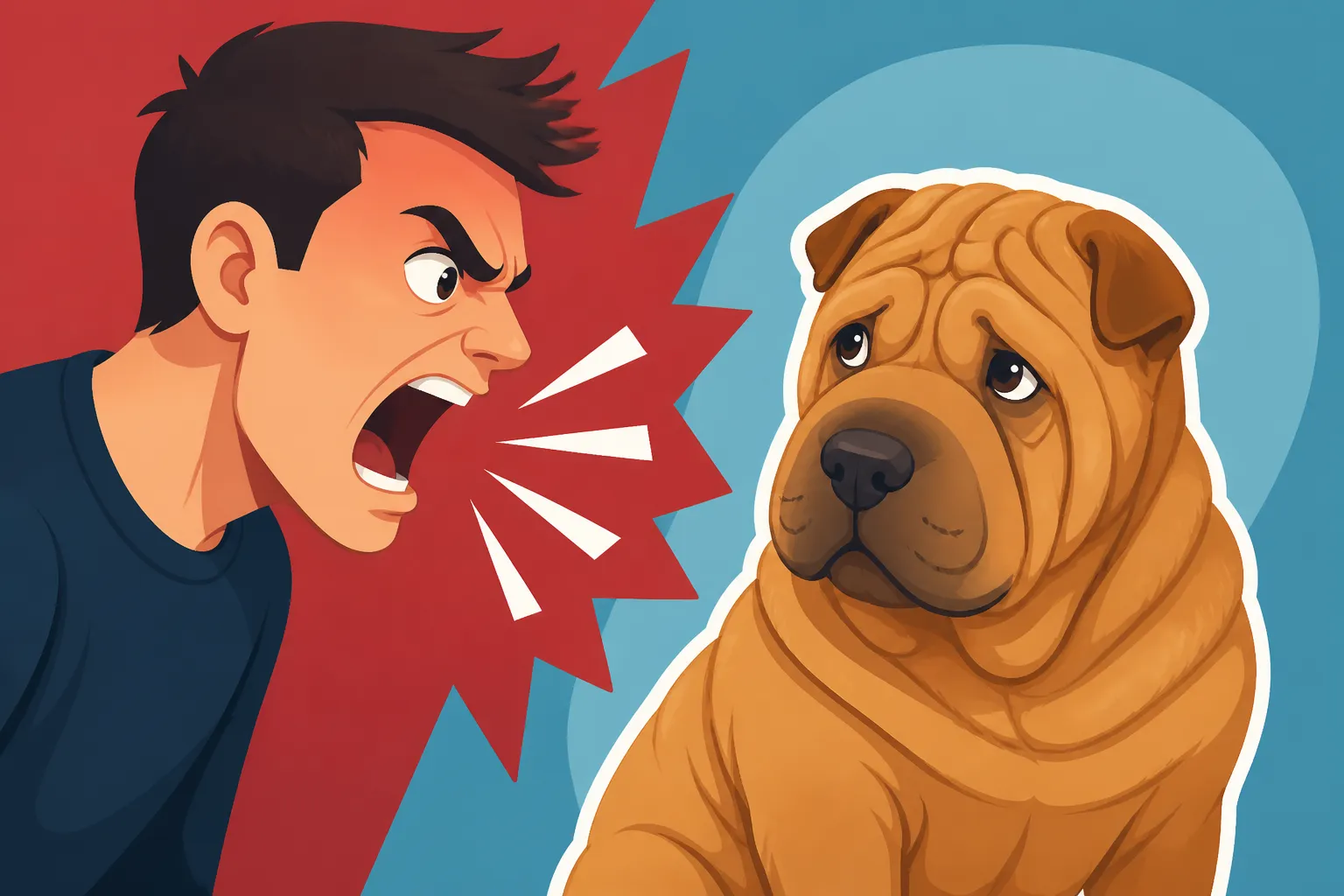
How a Shar Pei Reacts to a Raised Voice
It's a common scenario, isn't it? You're frustrated, maybe your Shar Pei just chewed up your favorite slipper for the fifth time, or perhaps they've decided that "stay" is merely a suggestion when a squirrel dashes by. In the heat of the moment, it's easy to let your voice rise, to add a sharp edge to your tone. We've all been there. But if you own a Shar Pei, you've probably noticed that a raised voice rarely, if ever, gets the reaction you're hoping for. In fact, it often seems to make things worse. This guide will delve into why that is, what you can expect when you raise your voice, and how to foster a more effective and harmonious communication style with your wonderfully unique companion.
Why Shar Pei Don't Respond Well to Harsh Tones
Understanding your Shar Pei's intrinsic nature is key to understanding their reaction to a raised voice. These aren't dogs who thrive on being yelled at, corrected harshly, or made to feel intimidated. Their history and inherent personality traits mean that a loud, angry tone is more likely to shut them down or create resistance than elicit compliance. It’s not about defiance; it’s about how their brains are wired and how they perceive the world around them, particularly their human companions.
Their Independent Nature and How It Interacts with Tone
The Shar Pei breed has a deeply ingrained independent streak. They were originally bred for a variety of tasks in ancient China, from guarding property to herding, which required them to think for themselves rather than constantly looking to a handler for direction. This isn't a Golden Retriever, eager to please and easily deterred by a stern word. Your Shar Pei sees himself as a partner, not a subordinate. When you raise your voice, it doesn't translate to "pay attention and do what I say" in their mind. Instead, it often comes across as an unwarranted attack or a challenge to their intelligence and autonomy. They might view it as inconsistent leadership, especially if you usually speak to them calmly.
This independent nature means they're less likely to be intimidated into submission. Instead, a harsh tone can trigger a defensive reaction, making them even more stubborn or leading them to completely disengage. Imagine if your boss screamed at you every time you made a mistake; would you work harder and be more loyal, or would you start looking for another job? Your Shar Pei feels a similar sense of injustice. They're trying to figure out what went wrong, and an aggressive tone rarely provides the clear, consistent information they need. The Headstrong Streak Nobody Trains Out of a Shar Pei isn't just a quirk; it's a fundamental aspect of their being, and it significantly impacts how they process communication.
The Impact of Their Unique Vision and Hearing
Beyond their personality, the physical characteristics of a Shar Pei also play a role in their reactions. Their deep-set eyes, surrounded by those wonderful wrinkles, give them a somewhat limited field of vision, especially peripherally. They often turn their whole head to see things clearly, and they might not always register subtle body language cues that other breeds would pick up easily. When your voice suddenly escalates, it can be disorienting, especially if they haven't seen your face clearly to read your expression. It can feel like an abrupt, unprovoked sound from an unseen source, adding to their confusion and unease.
Then there's their hearing. Shar Pei have notoriously small, tightly folded ears that are prone to issues, but they are still highly sensitive. A sudden, loud noise, particularly a human voice laced with anger, can be startling and overwhelming. It's not just the volume, but the emotional intensity behind it that can be jarring. They may not understand the words, but they certainly pick up on the emotion. This can be particularly true if they have sensitive hearing or have experienced ear discomfort in the past. Combine this auditory assault with their often stoic expression – How a Shar Pei's Wrinkles Hide Its Expression – and you might misinterpret their blank stare as defiance when it's actually a sign of processing discomfort or confusion.
What a Shar Pei's Reaction Looks Like
You might expect a dog to cower, run away, or perhaps even try to appease you with exaggerated submissive gestures when you raise your voice. While some dogs might, a Shar Pei's reaction often manifests quite differently, reflecting their unique blend of independence and sensitivity. It’s crucial to learn to read these signs, subtle as they sometimes are, to understand the impact of your tone.
The Subtle and Not-So-Subtle Signs of Stress
When a Shar Pei encounters a raised voice, their immediate reaction often isn't outright panic. Instead, you might see a subtle shift in their demeanor. Their ears might flatten slightly, or they might turn their head away, avoiding eye contact. This isn't rudeness; it's a classic canine appeasement gesture, a way of saying, "I'm not a threat, please calm down." You might notice their body stiffen momentarily, or they might lick their lips repeatedly. These are all subtle indicators of stress and discomfort.
In more pronounced cases, especially if the harsh tone is sustained or frequent, a Shar Pei might become visibly tense. Their tail might drop or tuck, even if it usually carries in a confident curl. They might try to create distance, slowly backing away or moving to another room. Some might even yawn, a common stress signal in dogs. It’s a sad thing to witness when your beloved companion, who normally enjoys being close, suddenly wants to put space between you. Ignoring these signals can erode the trust you’ve worked so hard to build, making future training and even simple interactions much harder. This behavior is a clear message about How a Shar Pei Responds to Harsh Handling.
The Risk of Withdrawal or Shutting Down
One of the most concerning reactions to a consistently raised voice or harsh treatment is withdrawal. A Shar Pei, when faced with communication they perceive as aggressive or unfair, can simply shut down. This means they stop engaging, stop trying to understand, and retreat mentally. They might lie down and refuse to move, even if you continue to give commands. They might stare blankly, appearing unresponsive. This isn't stubbornness in the typical sense; it's a coping mechanism where they've learned that any interaction, especially a vocal one, can lead to unpleasantness.
This 'shutting down' can be particularly heartbreaking because it often mimics a lack of intelligence or willingness to learn, when in reality, it's a deep emotional response to feeling overwhelmed or unsafe. If your Shar Pei consistently withdraws, it can lead to longer-term behavioral issues, including a reluctance to come when called, difficulty with new commands, and a general wariness around you. They might even develop a tendency to "hold a grudge" – How a Shar Pei Holds a Grudge – meaning that a negative interaction can linger in their memory, affecting their willingness to cooperate in the future. This emotional shutdown is counterproductive to any training goal and damages the precious bond you share.
Building Trust and Effective Communication
So, if yelling and harsh tones don't work, what's a frustrated Shar Pei owner to do? The answer lies in understanding their unique psychology and embracing positive, consistent communication methods. This approach not only yields better results but also strengthens the incredible bond you share with your dog.
The Power of Calm and Consistent Training
With a Shar Pei, consistency and calm delivery are your most powerful tools. They respond best to a steady, even tone that conveys confidence and leadership without aggression. When you give a command, say it once, clearly, and in a neutral or encouraging voice. If they don't respond immediately, resist the urge to repeat yourself in a louder voice. Instead, gently guide them into the correct action if necessary, then immediately reward them. This teaches them that the command means a specific action, not that the volume of your voice will escalate until they comply.
Positive reinforcement is the golden rule here. Shar Pei are often quite food-motivated, so tasty treats can be incredibly effective. Use treats, praise, and gentle petting to reward desired behaviors. This creates a positive association with training and with you, making them want to engage and learn. Think of it as a partnership: you're showing them what you want them to do, and they're choosing to cooperate because they know good things will happen. Regular, short training sessions, perhaps 5-10 minutes a few times a day, are far more effective than long, frustrating ones. It's about building a foundation of trust and understanding, not about dominating them. Enrolling your Shar Pei in The Shar Pei in Puppy Class (or adult classes) can be incredibly beneficial for learning these techniques from experienced trainers.
Tools and Techniques for Positive Reinforcement
Beyond just treats and praise, there are many tools and techniques that foster positive reinforcement and effective communication with a Shar Pei. Clicker training, for example, can be highly effective because the click is a precise marker for the exact moment they perform the desired behavior, followed immediately by a reward. This clarity helps them understand exactly what they did right. How Food Motivated a Shar Pei Is can certainly be leveraged here; find out what they truly love and use it as high-value rewards.
When it comes to walking or managing reactive behaviors, consider using a well-fitted harness instead of a collar that might put pressure on their neck and throat. This can make them feel more comfortable and less prone to reacting defensively. For leash training, focus on rewarding loose-leash walking rather than correcting pulling with harsh jerks. Remember, techniques like Why a Prong Collar Is Wrong for a Shar Pei and Why an Electric Collar Is Wrong for a Shar Pei are not only ineffective for this breed's temperament but can cause significant physical and psychological harm, leading to fear and aggression rather than respect. Tools and training programs like those offered by BAXTER & Bella can provide structured, positive, online guidance for owners seeking to build a strong, trust-based relationship without resorting to harsh methods. Investing in durable, engaging toys from places like Amazon can also provide an outlet for their energy and mental stimulation, reducing the likelihood of unwanted behaviors stemming from boredom or frustration.
| Communication Style | Shar Pei Reaction (Likely) | Long-Term Impact |
|---|---|---|
| Raised/Harsh Voice | Stress signals, withdrawal, disengagement, increased stubbornness, potential fear. | Erosion of trust, anxiety, reluctance to interact, possible aggression (defensive). |
| Calm/Consistent Voice | Attention, engagement, willingness to learn, feeling of security. | Stronger bond, reliable obedience, confident demeanor, positive association with handler. |
| Physical Correction | Fear, pain, resentment, aggression (defensive), breakdown of trust. | Behavioral problems, fear-based aggression, reluctance to be handled, avoidance. |
| Positive Reinforcement | Enthusiasm, eagerness to please, quick learning, strong recall, happy disposition. | Deep trust, strong bond, well-adjusted and confident dog, joy in companionship. |
Long-Term Behavioral Implications
The way you communicate with your Shar Pei, especially when you're feeling frustrated, has profound long-term implications for their behavior, your relationship, and their overall well-being. It's not just about one moment; it's about the cumulative effect of your interactions.
The Cycle of Fear and Aggression
If a Shar Pei is regularly subjected to a raised voice, harsh corrections, or intimidating behavior, it can initiate a dangerous cycle. The initial stress and withdrawal can escalate into fear, and a fearful dog, when pushed, can become aggressive. This isn't because they are inherently "bad" dogs, but because they are reacting out of self-preservation. When they feel threatened or unfairly treated, and their attempts to appease or withdraw are ignored, they may feel their only option is to defend themselves. This can manifest as growling, snapping, or even biting. How a Fearful Shar Pei Becomes Aggressive is a crucial piece of knowledge for any owner.
This isn't a behavior you want to see in any dog, let alone a powerful and protective breed like the Shar Pei. Once a dog learns to use aggression as a defense mechanism, it becomes incredibly difficult to unlearn. It can lead to a breakdown of the human-animal bond, making your dog difficult to manage in public and potentially dangerous in certain situations. It underscores the critical importance of patience and positive methods from the very beginning. Preventing this cycle by building a foundation of trust and respectful communication is far easier and more humane than trying to fix it later.
When to Seek Professional Guidance
Sometimes, despite our best efforts, a Shar Pei might develop behavioral issues that are challenging to manage on our own. If you find your Shar Pei consistently reacting negatively to your voice, showing signs of fear, aggression, or extreme withdrawal, it's a clear signal that you need external help. This is particularly true if the behavior is escalating, if you feel unsafe, or if your bond is severely strained. Don't hesitate or feel ashamed to seek professional guidance.
A qualified professional, such as a certified dog behaviorist or a positive reinforcement trainer specializing in guardians breeds, can provide invaluable insight and create a tailored plan. They can help you understand the root cause of your Shar Pei's reactions, identify specific triggers, and teach you effective, humane strategies for managing and modifying behavior. This isn't a sign of failure; it's a sign of a responsible and loving owner who prioritizes their dog's well-being. Sometimes, a fresh pair of expert eyes can see what we, as frustrated owners, miss. Knowing When a Shar Pei Needs a Behaviorist can be a turning point for many relationships. Remember, every interaction shapes your Shar Pei, and choosing kindness and understanding over frustration will always yield the best long-term results.
Disclaimer
This article is for general informational purposes only and does not constitute professional advice. Laws, prices and regulations vary by location and change over time. Consult a qualified professional for guidance on your specific situation.


